
(Syrian Coast) When news of the fall of the Assad regime reached Imad Asaad on the morning of 8 December 2024, he laughed loudly and irreverently. The man in his forties quickly opened the door and rushed to his village of Al-Dee, ten kilometres west of the Qadmus area on the Syrian coast. He knocked on the door of one of the houses. It was around 8am. Imad continued knocking until he woke up the people inside.
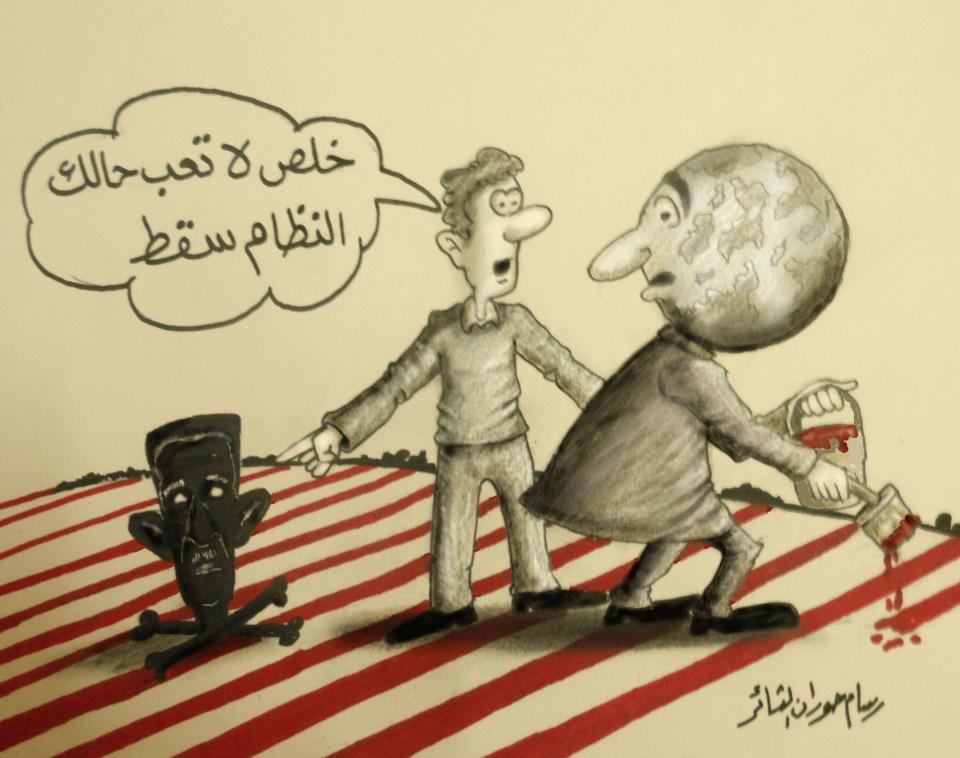
A young girl came out, and Imad asked her to call her father, Firas, at the time the secretary of the Ba’ath Party in their village. For 20 years, he had never taken off his black glasses during the meetings of the party branch, established in the village half a century earlier by ‘comrades of the Ba’ath struggle’ during the rule of Assad's father. Imad did not wait for Firas to open his mouth, immediately beating him. He hit him in the stomach, then slapped him on his left cheek, then his right, and finally knocked Firas to the ground with a third blow. Firas did not utter a word, except to try to cover his face with his hands to protect himself from Imad's blows, before the latter pulled out his phone and filmed the scene in silent defiance. From behind the door, Imad announced loudly, “I am in my home, if anyone wants to ask why or complain”.
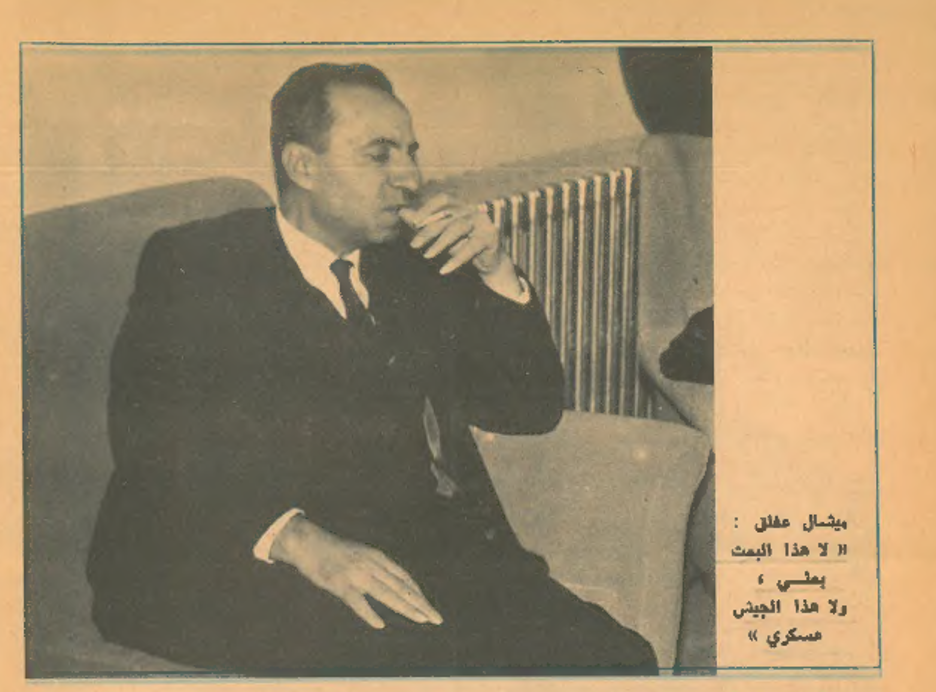
Imad was one of the victims of the security reports written by the party secretary at the beginning of Bashar al-Assad's regime against the people of his village. He is the son of a peasant family like Firas's, and there is no record of political activity in his family's history. Nevertheless, Imad remained unemployed for two decades because of a single report in which Firas wrote about ‘Imad's sharp tongue against the party’, born on 7 April 1947. In 1952, the Arab Socialist Party, founded by Akram al-Hawrani, merged with the Arab Ba’ath Party to become the Arab Socialist Ba'ath Party, which came to power on 8 March 1963 as a result of a military coup and remained in power until the fall of Bashar al-Assad's regime on 8 December 2024.
A graduate of the Faculty of Arts, Imad repeatedly tried to apply for government competitions at the Ministry of Education, Foreign Affairs, and others. His appointment was rejected without any apparent or stated reason, until one of his relatives in the security branch intervened on his behalf. Firas's report remained a barrier between Imad and a normal life spent farming, cultivating crops, and doing some translation work. In his modest home after the fight with Firas, Imad sat thinking: "The Ba’ath Party has disappeared. The party of workers and farmers. It has disappeared”.
Imad recounts his experience of waiting and disappointment. “I was among many who considered the Ba’ath Party to be fighting for the peasants, workers and small earners, and because Firas was the secretary of the party branch in our village, he had a great influence on everything: from acceptance of jobs and studies to social relations. I rebelled against the lies and hypocrisy in my village and raised my voice dozens of times, saying that we needed to change our relationship with people and comrades. Firas Bek did not like my words. So he had reported me to the security authorities. Imagine a comrade expelling another comrade with a report to the security authorities, who hold life and death power in a Ba'athist country”.

Testimonies of Survivors of the Coast Massacre (4).. Observations by a relief volunteer
12 April 2025
Dr. Muhammad Ibrahim, former secretary of the Ba'ath Party division at Tishreen University, explains this story by saying: "From the 1970s until the beginning of the new century, government jobs required a person to be a member of the Ba’ath Party, as the security authorities requested a party report to approve the person's appointment to the job or even to pass the government appointment competition”.
This continued for a long time, then became less prevalent after 2005 as a result of the encroachment of the security state itself, but it left a significant mark on a number of those who refused to join the Ba’ath Party or attempted to criticise it, such as Imad, who finally welcomed its dissolution “with mixed feelings: joy that we were rid of the party security apparatus, and anxiety about the future, which does not yet look promising”.
The relief Imad felt came in a way that no one expected. “The decision to suspend or dissolve the party was a complete surprise. We were informed via a message on WhatsApp. No official document, no meeting of the central leadership, and no organisational authority that issued this decision”. This is according to Dr. Bassam Abu Abdullah, a member of the party's last central committee and director of the Ba’ath Party's central preparatory school in Damascus for six years, explaining the story of the last few hours he experienced in Damascus.
The message Abdullah received via a party group on WhatsApp on 9 December 2024 states: “As a result of the current circumstances in Syria, the party places itself at the disposal of the new authorities and places its mechanisms and properties in their hands and at the disposal of the Syrian Ministry of Finance. The party also places itself at the disposal of the political administration” established by what was formerly known as Hayat Tahrir al-Sham, now ruling Syria. Abdullah says that “the message came without any signature or reference, and was issued in the name of the Assistant Secretary-General, Ibrahim Hadid. It is an illegal decision that is not subject to any organisational basis, similar to the decision to dissolve the party in 1958, which was taken without consulting the party base”.
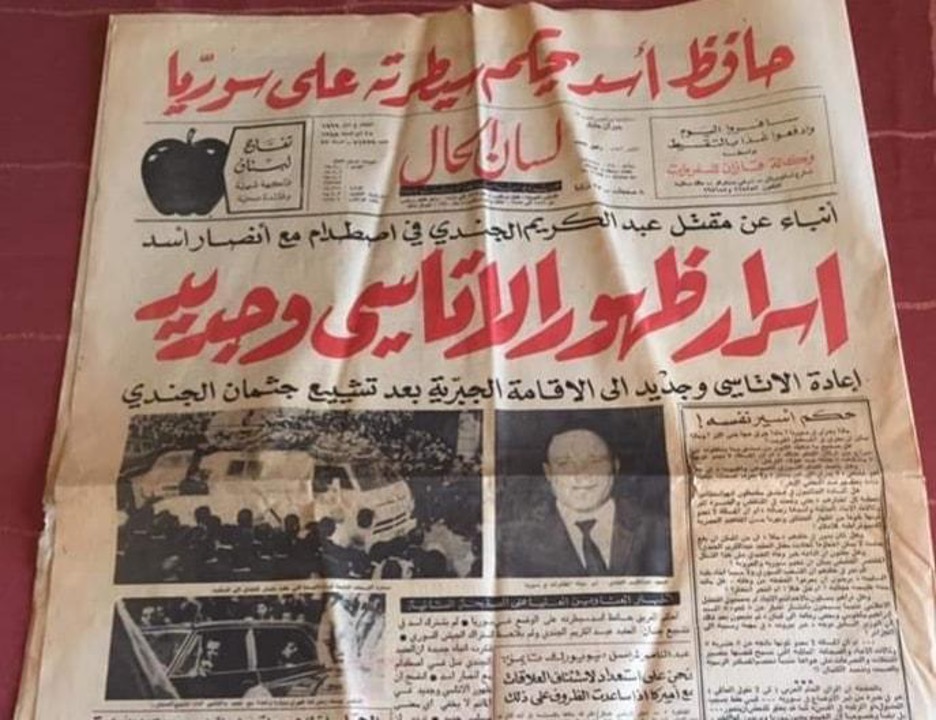
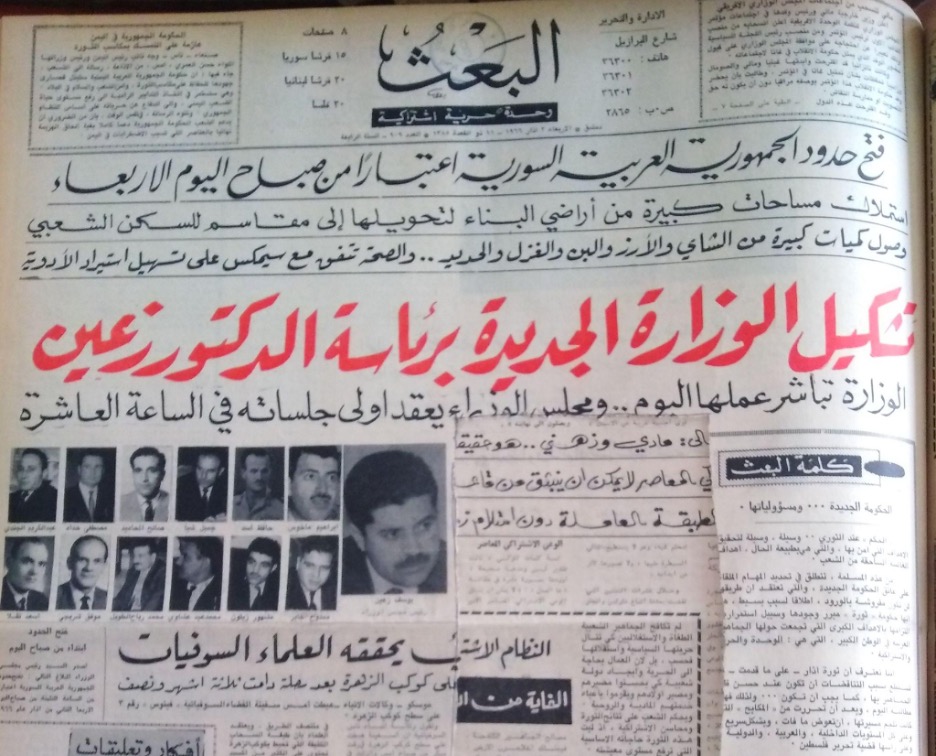
Throughout its long history, the Ba'ath Party has undergone many changes, transforming from an active ruling party to a mere front for military rule. With Hafez al-Assad's rise to power in 1970, the party underwent an internal restructuring that reflected a balance between international powers and focused on the middle class. A truce with Israel also began, but the party no longer carried the political weight that had characterised it in its early days. “In the late 1970s, security tensions escalated, with the intensification of the power struggle against the Muslim Brotherhood, the increasing dominance of the security services, and the continuation of espionage and reporting until the end of Hafez al-Assad's rule," says Anas Jouda, head of the National Construction Movement in Damascus.
Jouda believes that "the party lost this role at the beginning of Bashar's reign and distanced itself from active participation in decision-making, limited to internal balances and higher interests. This performance plunged the party into political stagnation, turning elections into mere formalities for managing the status quo without any real representation, and contributed to the party's separation from its base and its transformation into a worn-out institution that had lost its national and strategic role".
While Bassam Abu Abdullah received the news of the party's dissolution via WhatsApp, the secretary of the Ba’ath Party's first division at the Regi tobacco factory in Latakia, Engineer Aktham (who asked that only his first name be mentioned), heard about it on social media. "We heard from people that the secretary of the Ba’ath Party branch in Latakia, Haitham Ismail, had left the city for an unknown destination, along with a number of other members of the Assad family and their associates. The branch office was left open, and within hours it was looted and nothing remained. Our comrades disappeared without a trace. When I passed by the branch later, a group of public security officers were moving around nearby and lighting fires to keep warm using the party's magazines".
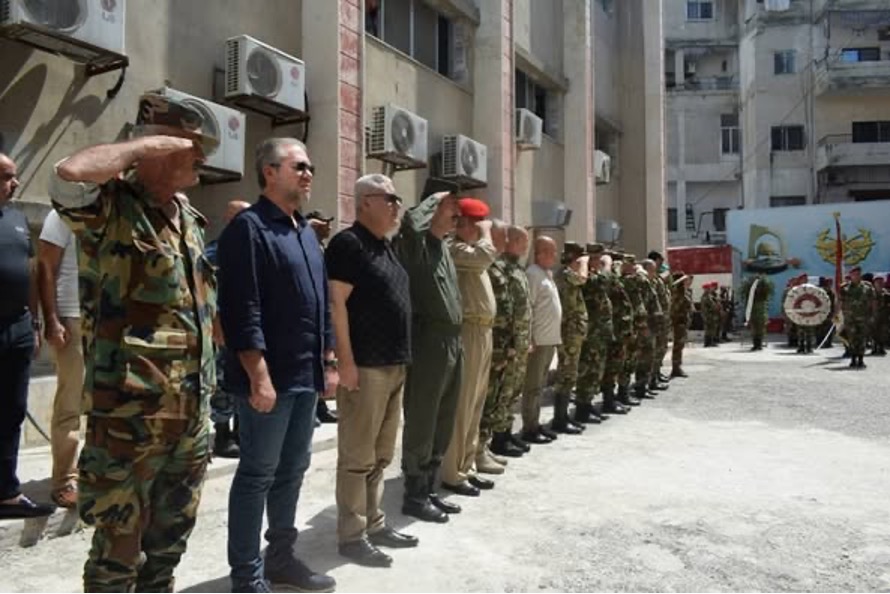
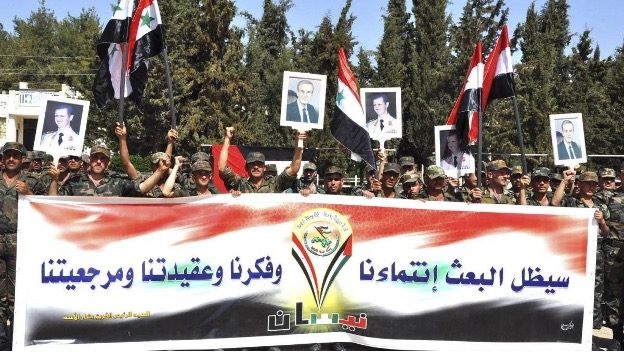
When Untold attempted to contact a number of Ba’ath Party leaders currently residing in Syria, some of them refused to discuss the party's final hours. Grief and a sense of betrayal were evident, unwilling to open this sensitive file at this time.
Ultimately, the mere departure of the secretary-general, which led to the collapse of the party, means that it wasn’t an institutional party. Rather, with absolute power, it turned into a clinically dead body. In fact, “the absence of political rivals led to the party's collapse, and as long as there are no political rivals, the party and any other party will become weak", says Bassam Abu Abdullah, who also points to the phenomenon of corruption. “In the recent local administration and People's Assembly elections, bribes were paid in gold and ounces to secure positions, and the price of gold rose in the market as a result. Gold coins became the accepted currency for reaching the leadership, and gifts were no longer acceptable”.
Instead of holding democratic elections based on individual candidacy and democratic party competition, as stipulated in the party's statute, in June 2024, the party conducted what it called ‘party primaries’ with the aim of selecting members for its list for the People's Assembly elections that were subsequently held in September 2024. In this regard, Dr. Qusay (who declined to give his surname for security reasons), director of an internal office in the Qatari leadership, said to Untold that: "The results of party consultations are not binding on the leadership: they have a monopoly on the final decision to select candidates, often imposed by central decisions. Names were often chosen based on the ‘higher national interest’ as determined by the party's leadership’, with the possibility of excluding successful names in the consultation stages in favour of other candidates".

It was not only the internal elections, officially suspended since 1979 by decision of the Ba’ath Party's leadership, that killed the party since its merge with the state and the security apparatus. “The grassroots lost any role in political decision-making, and the party became a sluggish bureaucratic institution lacking initiative and innovation, with no taste for Syrian political life, with bureaucratic bloat becoming a refuge for all those fleeing their official jobs”, says Qusay, a doctor in political science from the Higher Institute of Political Science in Damascus.
Silently, 7 April 2025 passed by, with no one noticing that this day had been a public holiday in Syria for more than 60 years. Even if institutions did not close, they were still obliged to hold celebrations. The Baathist flags that once flew alongside the Syrian national flag are now rare, and difficult to find in the markets. The same is true of Baathist ideas, as it is difficult to find anyone who defends them. The wave of Arab nationalism that coloured the lives of Syrians for decades, making them forget their Syrian identity and patriotism, has come to an end. In the constitutional declaration issued by transitional president Ahmad al-Sharaa, talking about the defunct Assad regime, its symbols were criminalised (paragraph 3 of Article 49) without directly naming what these symbols mean and whether they include the Ba’ath Party as one of the symbols and institutions of that period.
No one talks about the Ba’ath Party today, at least in the public sphere, and people barely remember the chant that millions of children used to repeat: “7 April, comrades, the birth of the giant party”.
Today, the political administration established by Hayat Tahrir al-Sham is replacing the Ba’ath Party in all its affairs, in a strange scene that marks the end of a long era for the party that “led the state and society”.
When Untold asked Dr. Bassam Abu Abdullah whether it is possible to erase 75 years of struggle, he replied: "It is possible, because struggle is not just words. When personal interests, the cult of power, and opportunism prevail, the inevitable end of every political project is sealed. All of the above does not negate the fact that the Ba’ath Party has achieved important accomplishments on a general level, but it has failed in the process of self-development. This means that we must think about a future political project that takes into account past mistakes and the developments and transformations Syria is witnessing, a project that believes in democracy, political pluralism, freedoms, and human rights regardless of religious or national affiliation".
For his part, Imad continues to live with the repercussions of the security report written by the party official in his village Al-Dee, a report that "was like a court ruling on my life. Two whole decades were lost to farming and daily work, and today I hope that things will change for the better after the separation of party politics from public office. However, on the other hand, new issues have arisen that may prevent me from being reappointed... the curse of sectarianism".
Firas chose to remain silent when we asked him about Imad's assault, and he refused to remove his glasses or file a complaint with the new regime's official authorities.