
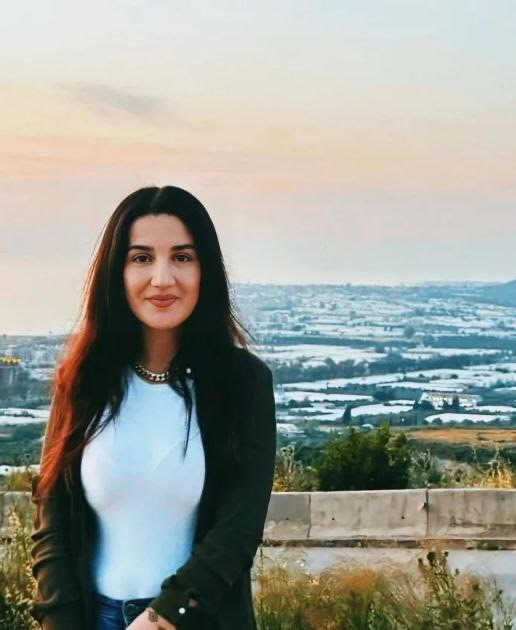
(Tartus) "I was going to attend my niece’s engagement party, carrying my baby son and my heart was full of joy. I didn't know that everything would be stolen from me: my safety and even my son!” Nawal, 32, wished she had died the day of the massacre in the Qusur neighbourhood of Baniyas, one of a series of massacres against civilians on the Syrian coast between 6 and 10 March 2025.
At her home in Tartus, Nawal spoke to Untold using a pseudonym, in a faint voice mixed with tears, while her sister Fatima held her hands and added details that her memory was trying to forget. “I will never forget the sound of gunfire and the face of Um Abdo saying ‘Come to me, no one here will suspect you’re Alawite or even touch you’. If she hadn't helped us, we would definitely be under the ground now". Rana, Fatima’s daughter, listened more than she spoke, as if she were still living through that night.
According to a report by the Syrian Network for Human Rights (SNHR), "the events in Baniyas included extrajudicial killings, field executions and systematic mass killings motivated by revenge and sectarianism, as well as the targeting of civilians, medical and media personnel and humanitarian workers. The violations also affected public facilities and dozens of public and private properties, causing waves of forced displacement affecting hundreds of residents, as well as the disappearance of dozens of civilians and members of the internal security forces, which led to a sharp deterioration in the humanitarian and security situation in the affected areas."

“To whom will I say good morning from now on!”
20 March 2025
The massacre in the city of Baniyas claimed the lives of “at least 803 people, including 39 children and 49 women (adult females), in the period from 6 to 10 March 2025,” according to the same report.
All began after a group of armed men affiliated with the Assad regime attacked public security forces on 6 March 2025. SNHR recorded the deaths of “at least 172 members of the security, police and military forces (internal security forces and Ministry of Defence) by armed groups outside the state framework linked to the Assad regime, in addition to the killing of at least 211 civilians, including a humanitarian worker, as a result of direct fire carried out by these groups".
“We are responsible for what we have not done, as much as we are responsible for what we have done”. These words spoken by French philosopher Jean-Paul Sartre seem to have been written for Nawal, yet they apply to all Syrians. Nawal still carries the guilt of surviving the massacre in the city of Banias. When she arrived with her seven-month-old baby on 6 March to attend her sister Rana's daughter's engagement party, erything indicated that it was a normal day: the pancake seller on the street corner spreading his dough on a copper tray, the sound of the call to prayer, the smell of the sea mixed with the smoke from the famous Banias refinery.
Rana, 24, spoke to Untold also on condition on anonimity. For her engagement day, she had chosen a sky-blue dress and decorated her hair with small white roses. She wanted her party to be small, with only relatives and neighbours attending. She described the homemade sweets on the table, the juice and coffee prepared by her father, and the plate of dates and nuts.
A few hours before the party began, a family member's mobile phone started flashing with notifications and text messages coming in on WhatsApp: “Be careful, don't go outside. There are new roadblocks on the road to Banias”. “There is terrible news about problems and tensions in the villages near Banias”.
Silence reigned for a moment, as if the walls themselves were breathing with fear and listening to the whispers. Nawal sat on the cold floor, clutching her baby tightly in her arms, trying to make him feel safe. She felt something mysterious in her chest, a mixture of terror and an instinctive defence of her child's life. She pulled him closer to her, as if trying to prevent the whole world from approaching him. She whispered to herself, in a voice so soft that only her heart could hear: “If anything happens, God will be his protector”.
When fear suffocated the alleys
About two hours later, at around 4pm, and two hours before the party was scheduled to begin, it seemed “as if the sky had suddenly decided to fall on us”. Heavy gunfire began, Nawal recounts, accompanied by the smell of gunpowder wafting in through the open windows, and the sound of cars approaching from afar, casting shadows of terror on the walls.
Nawal and those with her quickly descended to the damp basement beneath the building. Each step echoed faintly off the concrete walls, as if the place itself were suffocating with fear. She held her baby in her arms, his small body trembling with cold and terror, his eyes wide as if he knew that something was threatening their lives.
Fear clung to their skin, palpable in their trembling hands and pounding hearts, almost audible in the silence of the basement. The closest sound to them was the heavy footsteps slowly approaching the entrance of the building where they were hiding in the damp basement, accompanied by the creaking of a dilapidated door that shook with every step.

How Will I Recover from Their Eyes?
02 April 2025
Then came the sharp sound of someone knocking on one of the building's doors, followed by a direct, short, unhesitating question: “Are you Alawites?”
The silence that followed the question was heavy, as if it were holding everyone's breath. Every second stretched into a minute, and every heartbeat felt like a bullet suspended in the air. That question alone was enough to separate life from death, between possible survival and a deadly fate awaiting those who answered.
Nawal felt as if the air had disappeared and every part of her body was on edge. She looked at her sister Fatima and saw in her terrified eyes the same fear that filled her own heart, and she swallowed her tears with difficulty. Everything around them was charged with dread: the echo of sound, the coldness of the walls, and the spectre of death looming in the darkness.
Fatima, Rana's mother, pulled her veil over her face and said in a barely audible voice: “Don't make a sound, don't say anything, stay quiet”. This was the first time she had worn a veil. She thought that she and her family might survive if she concealed her Alawite identity with a white lie or “false hope”.
Suddenly, the sound of gunfire pierced their ears. Nawal screamed hoarsely, “They've entered the house next door!” Instinctively, and driven by fear, the eight people in the basement moved around aimlessly. Everyone tried to find a place to hide or a window to see what was happening. Some ran towards one of the small windows, their eyes scanning the darkness outside, but everything was blurry, drowned out by the intermittent screams and the smoke seeping into the neighbourhood.
Nawal felt her body tighten with terror, her eyes never leaving the baby, trying to protect him from everything: from the bullets, from the darkness, from the fear that was beginning to creep inside her. Fatima stood beside her, whispering softly as if talking to herself: "Oh God... Let us survive this night".
The basement was only five steps away from the building's entrance, the steps that separated them from the outside world. It was no more than four metres long and about two and a half metres wide. The ceiling was low and the walls bare. On the street side, there was a small rectangular ventilation window that let in some light. Through it, anyone who dared to approach could glimpse some of the darkness and movement outside.
The sound of gunfire intensified, accompanied by small explosions, while fear consumed their hearts, before the hand of mercy arrived. Fatima recounts that their neighbour in the same building, Abu Abdo, a man in his sixties with a wrinkled face and long life experience, had gone out to scout the street. He returned home trembling, his voice a mixture of anxiety and fear.
When his wife, Um Abdo, asked him in a trembling and cautious tone, “What's the situation outside?”, he took a deep breath before replying in a low but urgent voice: “It's catastrophic! The situation is tragic. Our neighbour Fatima and her family are in the basement. We must take them in and defend them”.
Abu Abdo's words were like an alarm bell, and Um Abdo realised the extent of the danger surrounding the neighbourhood. But she did not hesitate. She sat by the window watching the gunmen until they left temporarily. Then, she opened the door cautiously, avoiding any noise. She descended into the basement with quick but cautious steps and called out to Nawal, Fatima and the rest of the family in a low but sharp voice: “Come to me quickly, everyone, don't stay here!”
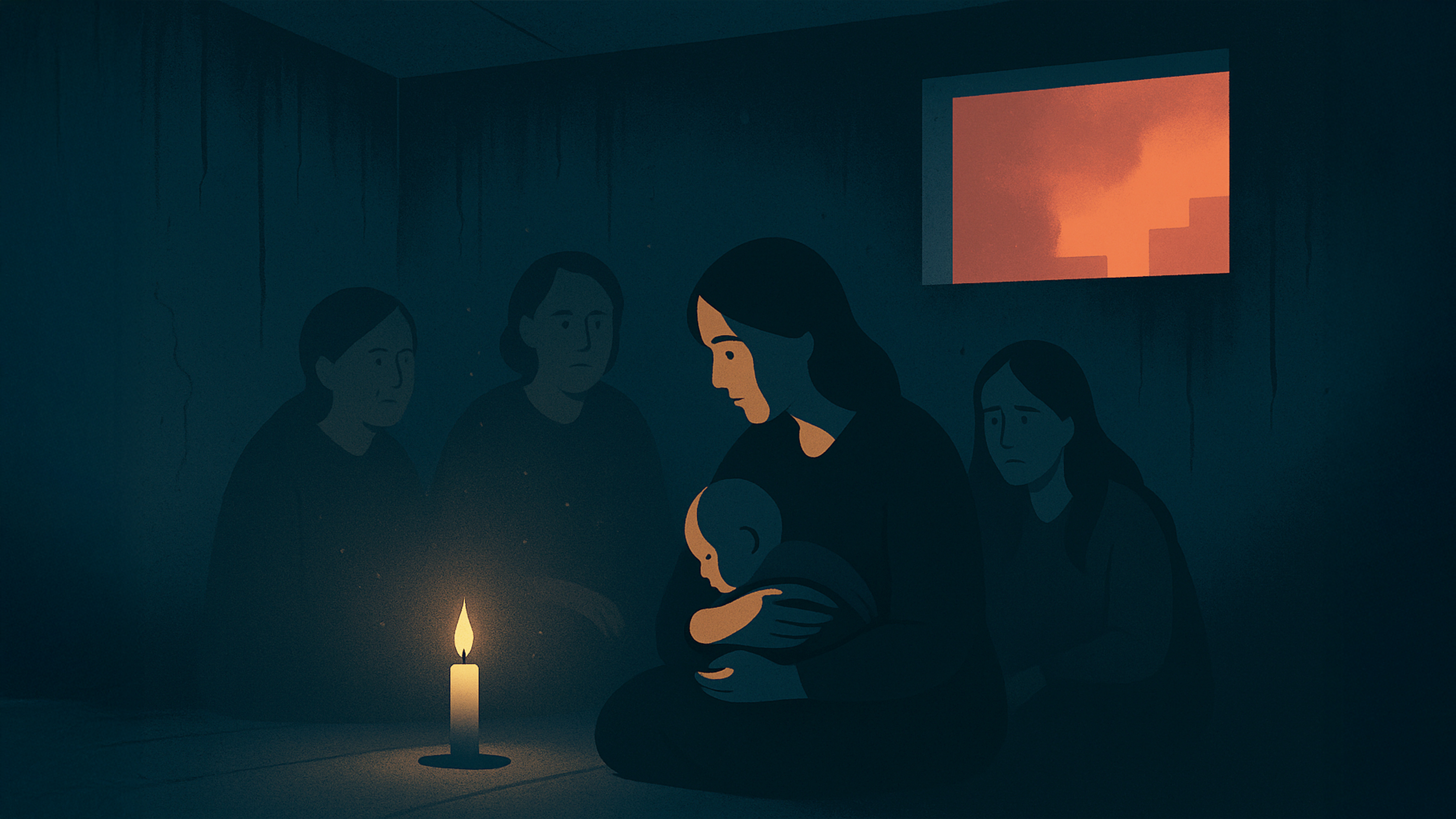
It was a moment of fear mixed with determination. Um Abdo was fully aware of her desire to protect her neighbours and at the same time realised the danger of what she was doing, as she might pay with her life for this humanitarian act.
Breathing heavily, fear in their eyes, Nawal and her sister’s family entered Um Abdo's house, still unable to believe what was happening to them. They were now inside the walls of a safe house, protecting them, even if only temporarily.
A safe haven amid the killing
Everyone entered. Fatima clasped her fingers tightly together, her tension making her grip tighter, and tried to keep her voice low so that no one outside would hear her and ask about her affiliation and find out her religion.
Through a small opening, Abu Abdo saw the shadow of a person passing by the window, footsteps heavy and mixed with the sound of shouting: “This is Alawite, come in!”
Nawal's heart pounds as if it wants to burst out of her chest. The baby cries because of the cold and panic. Um Abdo also cries silently, lights a candle and places it in the corner of the house. Nawal describes to Untold that the only sound breaking the silence was the sound of footsteps returning from the backyard. The face of one of the neighbours appears through the cracked door, saying in a voice thick with fear: “I saw them take an old man to the roof. They asked him if he was from the Alawite sect, and he said yes. Then I heard a shot”.
The neighbours had learned through their WhatsApp group that some Sunni families were hiding their Alawite neighbours to protect them from arrest or imprisonment. When some of them fell asleep from exhaustion and fear, Nawal remained awake, holding Rana's small hand between her fingers in a silent attempt to ease the anxiety.

Civil Society Spotlight: The Massacres on the Coast
08 April 2025
On the morning of 7 March, they decided to leave for the Russian army's Hmeimim military base in Latakia. Danger loomed over them after reports of house searches and identity checks, which meant that the threat was still present, not to mention the danger to the family that had protected them.
After contacting relatives and searching for the best way to survive, and based on the advice of Abu Abdo and Nawal's husband, they went to the base. Her husband followed later, as it was impossible for him to enter the city of Banias at that time.
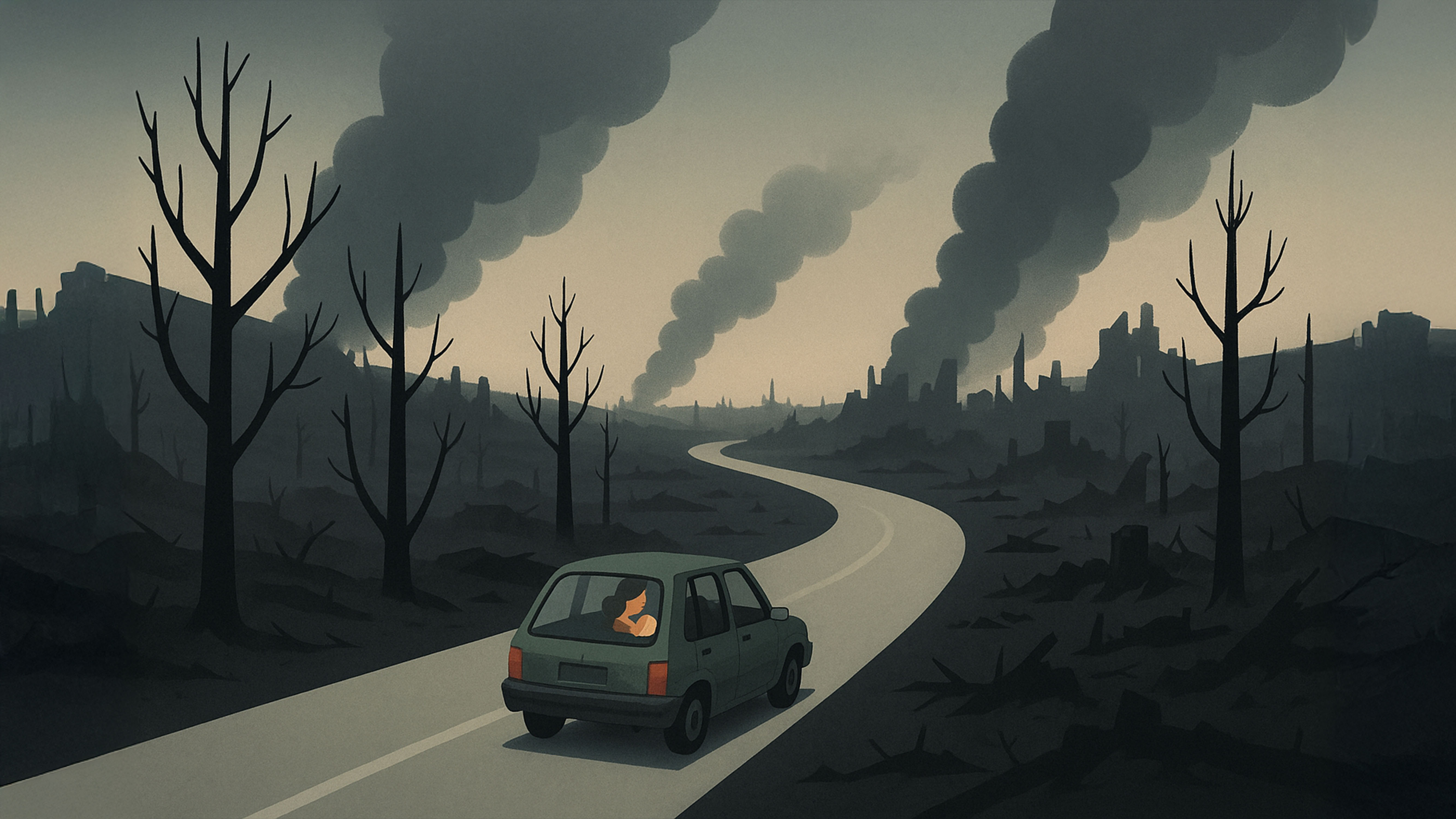
Abu Abdo contacted a Sunni driver he trusted. He agreed to take on the task, and so began an arduous escape along winding, muddy roads, surrounded by dense forests and scorched land. The villages they passed through looked like ghost towns; houses were partially destroyed, windows smashed, doors broken, while columns of black smoke rose into the grey sky, as if the earth was trying to swallow up every trace of life there.
Fear fills the car like dust and smoke. Nawal holds her baby tightly in her arms, trying to calm him down, while his eyes widen and his little hands hit her chest with every jolt of the car. Rana sits next to her mother, holding her hand. Fatima's husband sits in the back seat, trying to compose himself so he can appear calm.
As they approached the base gate of Hmeimim, Russian soldiers shouted orders in a raised voice, carefully searching cars and looking suspiciously at passengers' faces, as if trying to detect any potential threat.
Inside the base, hunger and terror were equally severe. People lay on the ground, sharing worn blankets that offered no protection from the cold night or the fragmented dreams that haunted them. Children cried and women searched for food or water.
Amidst this scene, Nawal sat on the cold ground under the shade of a damp wall. Her infant was wrapped in a thin scarf that barely covered him from the bitter cold. His small body shivered violently, and his face was so pale that his features seemed almost transparent, as if they were about to melt into the air. Every breath he took seemed like a small battle between life and death, and his eyes revealed a fear that no one knew how to alleviate.
Nawal tried to breastfeed him, but her milk had dried up. “I was so scared that my milk had dried up. My son was getting weaker and I couldn't feed him,’ she told Untold, crying, feeling helpless and guilty.
Every word that came out of her mouth was laden with anxiety, her small hand trying to warm the child, while her heart screamed silently, trying to comfort him and give him a sense of safety that she herself had not known since the moment she left Banias.
Return to Tartus
On the second day of their stay at the Hmeimim base, on 8 March, Nawal's husband managed to secure a large car for them, after paying a large sum (the amount was not disclosed) to a driver he had known and trusted for a long time and who worked in the area. The driver, also a Sunni, agreed to take them on the dangerous journey from Hmeimim to Tartus, despite the obvious risks along the way.
The road was like a death trap, stretching across open spaces, winding roads, and villages reduced to rubble and ashes. Every tree and every corner of the road seemed to hide a potential danger, and the air itself was heavy with the smell of smoke and dust. None of them exchanged a word during the journey, and every movement or sound seemed like a silent threat.
Even the child, who usually filled the space with crying, surprised everyone with his complete silence throughout the journey, as if silence had become a form of survival, a common language between the survivors and their only guardian in the face of the dangerous road. Nawal held the child tightly in her arms, while watching every movement in front of the car with her eyes wide open, her heart beating fast with every passing car or shadow on the side of the road.
When they arrived in Tartus, tension and fear still weighed heavily on them. They stayed in a small house owned by Fatima's relative. Despite its simplicity, the house was enough to give them a temporary sense of stability, with its walls painted in dull colours and cold tiled floors. A small window overlooked the narrow street, and a wooden door, with its constant creaking, reminded them of caution, and the imminent death that had come to them from where they least expected it.
Just one day after their return from the Hmeimim base, the child began to weaken more and more. His temperature rose significantly and his pulse became weak. Nawal tried to feed him powdered milk, but he refused it and vomited, then fell into a deep sleep from which he did not wake.
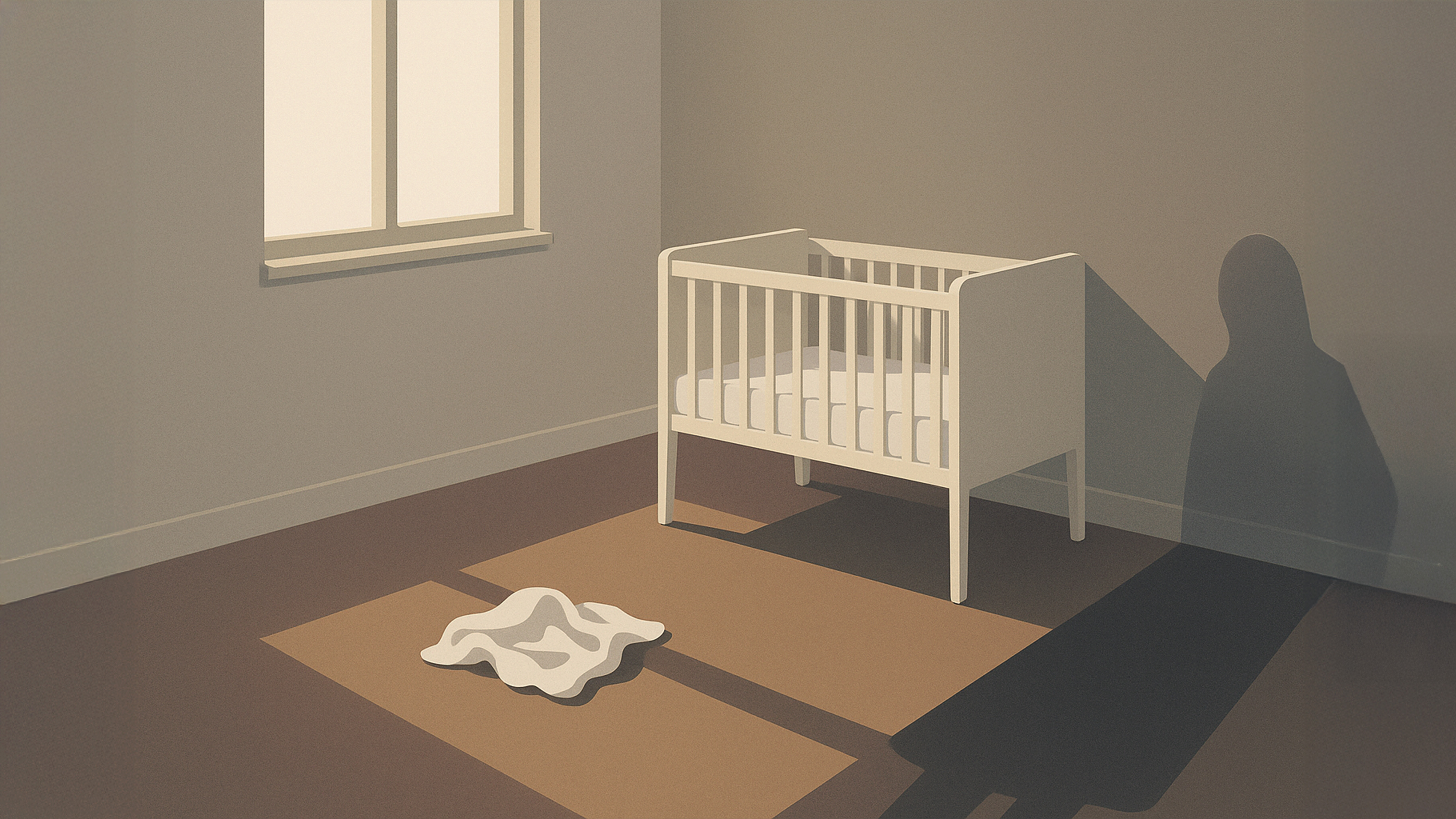
It was a long, harsh night, with no light, as if the night had conspired with grief to hide the breath of the house. Nawal collapsed and sat on the floor, hugging his small body, which was beginning to grow cold in her arms. Nawal did not scream. She did not cry. She lost consciousness, unable to bear the death of her infant son.
The next morning, on 10 March, the baby was washed and wrapped in a white cloth. Rana, her aunt's daughter, sat next to him under the dim light, covering his face with a trembling hand, her tears falling silently and helplessly.
Nawal's husband, overwhelmed by shock and grief, prayed constantly and refused to look at his baby's face when he was confirmed dead. He also refused to hand him over to the nurse who had come from the Red Crescent in response to a phone call from her sister Fatima as a last-ditch attempt to save him. But God's will was faster than the arrival of the ambulance. Nawal's husband refused to believe that his son had really passed away, and he had only come out of his shock when Nawal shouted at him and said, “Why didn't you come with me to Baniyas? Why weren't you with me here to protect us?”
Nawal spoke to Untold in a broken voice about that moment, about the guilt that clung to her like a shadow that would not leave her. She said that she sometimes blamed her husband, just to ease the burden of the question on herself, to convince herself that someone other than her was responsible for her child's death. She asked him to stay on 6 March and join her on 7 March, but he was unable to do so due to work commitments. However, she knew deep down that she was fighting the impossible: “I am the one who carries the guilt. I feel like I am not a good mother, and I am very afraid to have another child in this country”.

Destruction of Forests on the Syrian Coast
20 January 2025
After two weeks of temporary accommodation at Nawal's house, they were able to rent another house thanks to the money they received. Nawal's neighbours and strangers who heard their story responded with human compassion. This money served a dual purpose: it helped them rebuild their living space and also alleviated some of the psychological burden they had carried throughout their journey of escape.
Some humanitarian organisations working in the city also provided a range of aid that was vital for their stability: kitchen utensils, clothes, bedding, olive oil, za'atar, makdous, and various grains. All these things represented hope for them that life could go on, and a feeling that someone cared about them: that humanity was not completely dead despite all the bloodshed and terror they had witnessed.
Since the death of her baby, Nawal has not stopped crying. Her neighbour, Hiam (pseudonym, 50), says that every day she hears Nawal crying when she tries to go to sleep.
Nawal tries to pray, but she feels that she doesn't even deserve forgiveness, because she survived while her son died. Um Abdo, who played a major role in saving several families, told Untold via WhatsApp: “There is no such thing as sectarianism when you see innocent blood before your eyes. That day, I felt that God was testing our hearts, not our sects”.