
On 7 September, a number of residents of the village of Al-Hari, in the countryside of Al-Bukamal in eastern Deir ez-Zor province, began banging pots and pans in the village to coincide with the lunar eclipse. The villagers participated in this event with the aim of scaring away a mythical creature and forcing it, through the noise of the pots and pans, to stop swallowing the moon and spit out what it had swallowed, according to their beliefs. The banging continued until the eclipse ended. Finally, the mythical creature retreated and released “our moon”, according to Suad from a village five kilometres east of the city of Al-Bukamal, near the Iraqi border. Most of the village's residents belong to the Al-Jagaifa clan, part of the Al-Dulaim Arab tribe that has been in the area for centuries.
Suad is 35 years old. She finished secondary school and married a relative who divorced her after joining the armed opposition forces in early 2012. His involvement in this new path was a significant change in his life: he no longer had enough time to fulfil his family duties and maintain his marital relationship: he left behind two children, now in school.
“We know that lunar eclipses occur because of the Earth's movement around the sun”, Suad says on a phone call with Untold. “But there are those who participate in the drumming who believe, even today, that it will influence and convince the mythical beast to stop swallowing the moon”. Suad laughs and continues, “The conviction comes from the result: the more we bang the pots, the less the moon is eclipsed. Therefore, the method is effective”.
These rituals are not without risk. They were accompanied by random gunfire that injured civilians in the village (population is approximately 12,000). According to Suad, the eclipse itself was the reason for the shooting. “Like all Syrians, any event is cause for shooting”. The young woman adds that weapons are widespread in the village, as in most areas of Deir ez-Zor province. “Hardly a day goes by without us hearing about a murder or theft in the village, and it doesn't stop there... We hardly leave our homes after dark except for the most urgent necessities. The chaos in the countryside is frightening for us women”.
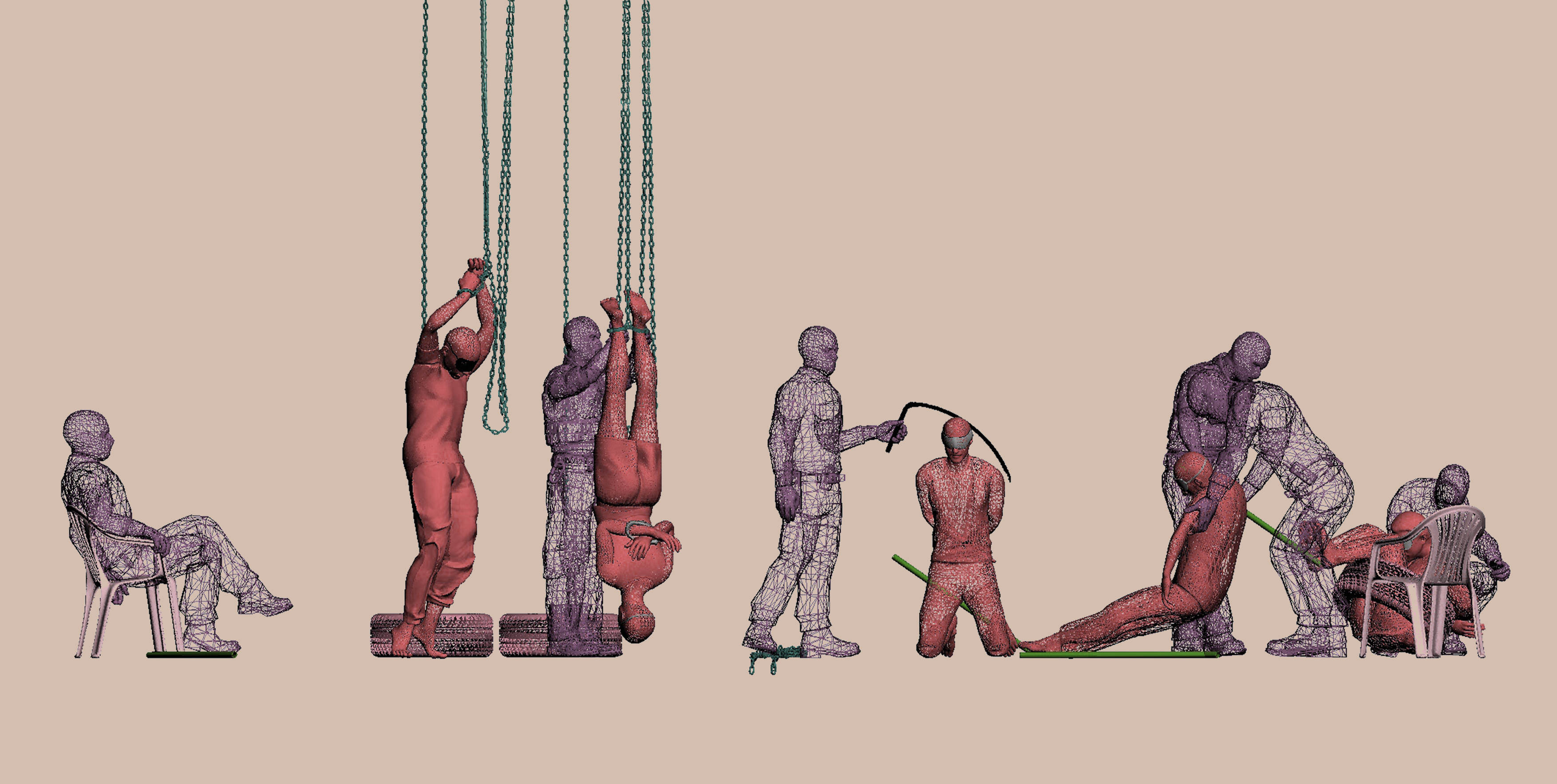
The Virtual ISIS Prisons Museum
15 November 2024
The arrest last May by the General Security Forces of the well-known drug dealer in Al-Hari, Ahmed Hussein Al-Ali Al-Jughaifi, nicknamed ‘Al-Hoot’ (The Whale), along with a number of his sons and grandsons, and members of the smuggling network run by the family in Al-Bukamal, reveals the complexity of the security situation. Security forces seized a cache containing various types of weapons.
With the fall of the Assad regime and the withdrawal and disintegration of the former Syrian army, Deir ez-Zor remained divided between areas controlled by the Syrian Democratic Forces (SDF) east of the Euphrates River and those west of the Euphrates came under the control of the new government. The city witnessed a new influx of military and security forces affiliated with transitional authorities, mostly from the Deir ez-Zor countryside, at a time when more than two-thirds of the city's infrastructure had been destroyed. It is not easy to determine the number of arrivals from the countryside compared to the number of residents since 2011, including refugees returning from abroad. However, with the fall of the Assad regime in December 2024 and the disintegration of the former state and security institutions, new forms of relationships emerged among these groups.
“Al-Shawaya”
The people of Al-Hari belong to what the city's residents call “Al-Shawaya”. It is a name that Suad says does not bother her, but rather makes her proud. After all, she is a daughter of that environment, which she prefers to the crowded, desolate city where no one knows anyone. In her village, everyone shares their lives, rituals and dreams.
There are several stories circulating about the name, as explained in an interview with Untold by Zuhair al-Saho, a researcher and political activist from Deir ez-Zor, living in Germany. “The first traces the name back to the Aramaic word ‘shawiyu’, meaning ‘hospitable’, a trait for which they were known. The second links it to the word ‘sheep’ because they specialised in raising them and did not master any other profession. A third account sees the term as describing the stage of their civilization when they became ‘followers’ or subjects of stable societies”.

In an article, Mr. Al-Saho explains: “The eastern region of Syria has witnessed the formation of distinct population identities in recent centuries. Alongside the nomadic Bedouins, who became a minority, and the urban dwellers (hadar) working in trade, industry and services, the Shawa emerged. The title Shawi spread from the mid-19th century to refer to those belonging to the countryside in the eastern regions. As this tribal group worked in livestock breeding (such as sheep and goats), their lifestyle shifted to become more like that of semi-nomadic Bedouins who worked in agriculture and livestock, moving from a desert lifestyle to a semi-sedentary agricultural lifestyle on the outskirts of rural areas and cities, especially around the Euphrates and its tributaries. Like other Syrians, they have become more interested in education, and their families include educated elites, both men and women”.
Deir ez-Zor has had many names, as noted by its historian Dr. Abdul Qadir Ayash, in his book Civilisation of the Euphrates Valley, Euphrates Cities - Syrian Section. Its oldest names are Bartah and Jidirah, as mentioned in the dictionary of countries under the name Deir al-Rumman, and it was also known as Deir al-Sha'ar and Deir al-Asafir. Finally, the word ‘al-Zour’ was added to its name in the Ottoman administrative formations in 1864 to distinguish it from other places bearing the name (Deir).
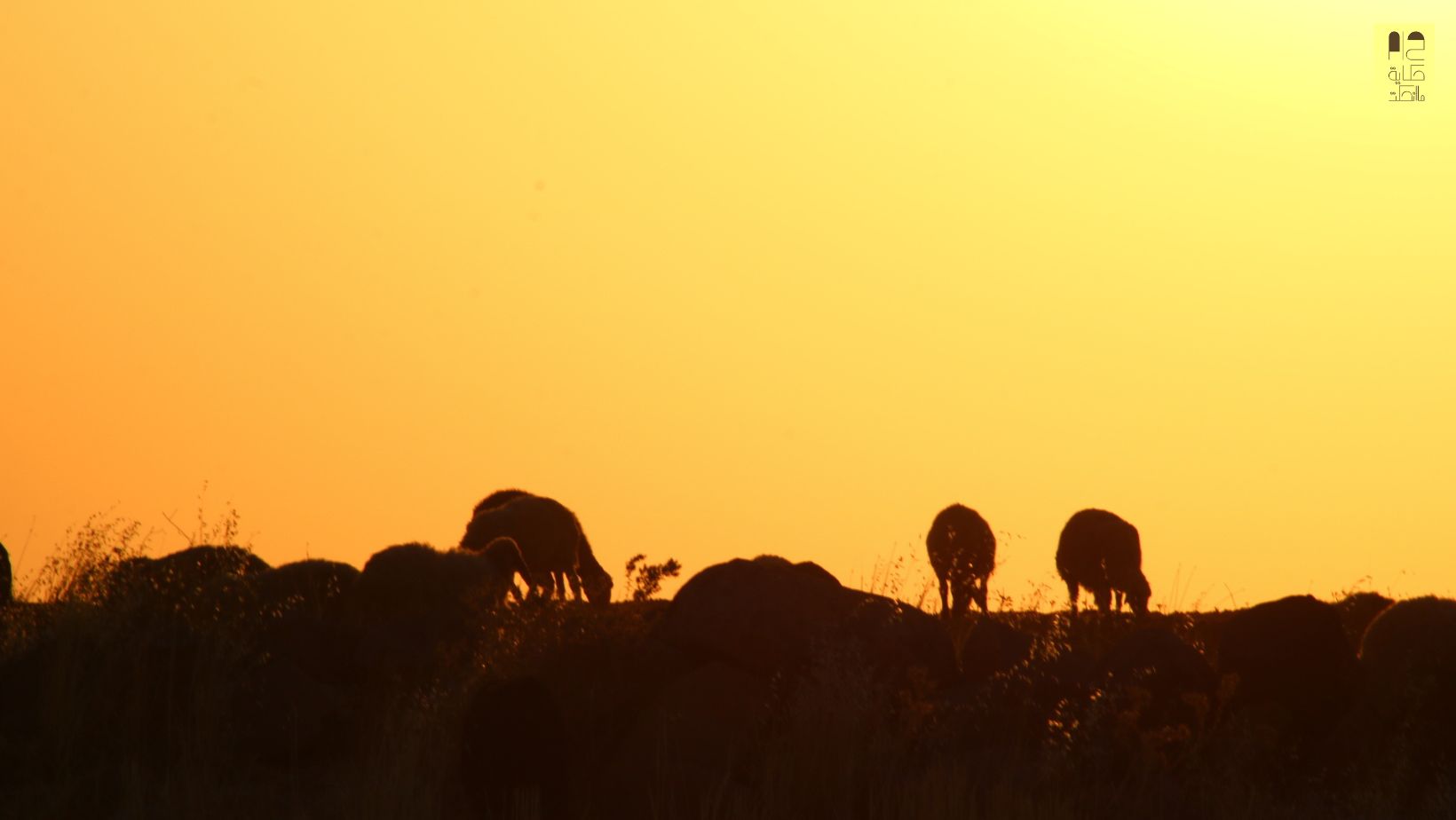
‘The Gulf of Syria’ is the name given to Deir by Syrians. It is not only known for its small horned beans, but also produces wheat and cotton on a large scale and has a wealth of livestock known to traders in the Gulf and Iraq, represented by Awassi sheep, distinguished by the quality of their meat, high milk production and adaptability. As for oil, it remains a secret, or perhaps it is forbidden to talk about it. The people of Deir ez-Zor can only watch with regret as it leaves their land, while real development eludes them, leaving some of their villages in a pre-oil era, with no electricity, water or roads until the second decade of this century.
The market and the Bridges
Every few months, Suad travels to Deir ez-Zor to visit her friends from her clan. Her older brother accompanies her in their Toyota, known locally as a ‘shas,’ as they pass through a number of towns and villages in Deir ez-Zor scattered along the banks of the Euphrates River. Near Al-Bukamal, the car crosses the Al-Sweia Bridge and enters the relatively quiet town. Al-Bukamal has a population of approximately 340,000 (2014 statistics), and the number is likely higher due to displacement from neighbouring areas.
About ten kilometres from the city of Deir ez-Zor, on the left side of the motorway, lies the military and civilian airport. The airport is currently being rehabilitated under the auspices of the United Nations Development Programme. There is not much air traffic these days, unlike in the days of the previous regime, when the airport was a key strategic location for transporting weapons, personnel, stolen goods and a small amount of cargo to other cities.
The girl enters with her brother Deir ez-Zor, wearing her traditional Bedouin dress: a colourful headscarf and cloak, with a little blush and lots of kohl. She does not have to take a ferry: the road from her town to Deir ez-Zor is on the left bank of the Euphrates River, as she explains to us. Entering from Port Said Street just before the city, she heads towards her destination in the informal neighbourhood of Al-Joura. People coming from the right bank of the river use locally made diesel-powered ferries from one of the river crossings after the collapse of all six bridges over the Euphrates, including the most famous one known as the Suspended Bridge, once a landmark of the city.
The Deir ez-Zor Suspended Bridge was built between 1927 and 1929 during the French Mandate over Syria and Lebanon by a French company called Fougerolle, operating under the French army at the time. The Suspended Bridge, intended for pedestrians, connected the two banks of the Euphrates River in the heart of the city. It was 450 metres long and 36 metres high, first lit in the 1940s and used by pedestrians and cars in one direction only. This remained the case until 1980, when the government stopped cars from crossing the bridge in order to preserve it, and built another bridge nearby, known as the Political Bridge, as it was located next to the former political security branch. On 2 May 2013, the Suspended Bridge was hit by artillery fire that struck the third pillar supporting its main metal cables, causing its collapse, amid accusations between the former regime and the opposition about who had bombed it. The Political Bridge was destroyed in 2014.
In addition, the suffering of civilians in Deir ez-Zor worsened after the Syrian Democratic Forces (SDF) cut off the dirt bridge connecting the two sides of the city (Al-Jazira and Al-Shamiya) on 24 December 2024, less than a month after the fall of the regime, before local efforts contributed to its reopening last March.
Before Suad went to her relatives' house, she asked her brother to take her on a tour of the markets, in slow recovery after the fall of the regime. The young man and his sister descend to the entrance of the Al-Maqbi market, one of the oldest markets in Deir ez-Zor, established during the Ottoman rule in 1865. It includes several commercial sections such as spice shops, blacksmiths, and of course clothing, the most important for Suad.
In the market, it is difficult to distinguish the residents of Deir ez-Zor from those who have come from the countryside for one simple reason: they dress and speak similarly. In one respect, modernity has erased the formal differences, as most people, both men and women, now wear European-style clothing, although some have retained their traditional dress (the abaya for women and the dishdasha for men). As for the conversations between people, it is almost impossible to distinguish one word from another.
It is no longer merely a matter of similarity in dress and dialect, but rather the inevitable result of a long-term economic and social transformation. Rural dwellers are no longer simply visitors to the city market as customers or itinerant vendors, as they once were. The year 2011 may mark a turning point in their relationship with the city, as a result of the launch of military operations and the formation of fighting brigades, including the Al-Nusra Front. Ahmad Al-Ghabra, a merchant in the Al-Maqbi market and a resident of Deir Al-Madina, says: “Until the last decade, rural residents did not own many shops in the city, but then they began to flock to the city and buy houses and real estate in general, becoming part of the city's economic fabric. The migration from the countryside to the city has not stopped since then, and it has been accompanied by a change in customs, traditions and atmosphere. There are no longer any rural residents in Deir”, he said.
This influx increased with military operations in rural areas and the city, and refugees headed towards the safe area under the control of the former Syrian regime (mainly the city), specifically towards its informal neighbourhoods such as Al-Joura.
Security is an issue
Some 15 years after the start of the uprising, veteran journalist Abdullah Jadaa explains that Deir ez-Zor today bears little resemblance to the city it was before the fall of the regime. "Clan nepotism is evident in administrative appointments, and this approach has transcended the divide between rural and urban areas, sparking criticism even within the clans themselves. On top of that, there are hundreds of armed groups in the province that do not alert the Ministry of Defence or the Interior, most from the former National Defence Forces or the Tribal Army once affiliated with Iran: they now move with complete freedom. Official agencies such as the General Security and the police do not respond immediately when a crime or fight is notified, but wait for three reports of the same incident, due to the large number of false claims, lack of mechanisms, and the proliferation of weapons. Even when they do respond, it can take at least an hour for the patrol to arrive”.
Journalist Jadaa points out that "the actual protection of the towns is in the hands of elements of the former regime and Iranian militias after they joined the public security forces, with the presence of some migrants affiliated with the Syrian Ministry of Defence near the river opposite the SDF areas, and the spread of former ISIS members among the population in civilian clothing. In short, the security situation here is bad. A while ago, a local resident told me that he saw his neighbours' house being robbed at gunpoint, but he did not report it to the police because he knew that the robbers would finish the job before the police arrived and he could not intervene: he would be killed". Untold was unable to verify this information on the ground.
The situation does not stop there. Last June, a fight broke out between mobile vegetable sellers near Al-Koukh in the Al-Jabaila area of Deir ez-Zor and police officers after the decision to relocate the popular market. In the same month, a number of intellectuals and activists in Deir ez-Zor issued an open statement (signed by 570 people) addressed to transitional president Ahmad al-Sharaa, entitled ‘The National Statement of the People of Deir ez-Zor’. It called for an end to the marginalisation of Deir ez-Zor residents in the administration of their city and for corruption to be addressed, criticising the spread of nepotism and appointments based on tribal loyalties. The statement is calling for the formation of an independent presidential committee to visit the province and listen to the demands of the people, with the local administration being restructured on the basis of competence.
In the same context, employees and intellectuals from Deir ez-Zor protested against the authorities' intention to convert the Deir ez-Zor Museum into administrative offices, arguing in a similar letter to the transitional president that this was not merely a functional change, but rather an obliteration of cultural identity and a squandering of local and global human heritage. The museum is the only one in the region and houses the province's prehistoric heritage. Untold learned upon contacting a number of concerned parties that the issue had been resolved and that an agreement had been reached to keep the museum as it is.
"What breaks my heart”, one of the expatriates returning to Deir ez-Zor recounts, “is that you go to the educational complex and see this worker who used to be a Ba'athist organising pro-government marches and glorifying the president and the stories go back to finding him in the same place. Don't the young people who were displaced deserve to stay in this country? We're back in the same cycle. So-and-so sent me away, and things are the same as they were before. This situation made me feel that it was time to leave. I never thought about leaving before".
In addition, there is a housing crisis ravaging the city. Rents have risen in the absence of official plans to rebuild the largely destroyed city, coupled with the poor health situation in hospitals that lack even the most basic equipment, staff and medicines. Mohammed Hawija, a young man who works at the Directorate of Education, says that he had to go to the National Hospital for emergency treatment, where he was asked to buy the necessary injections himself. Meanwhile, many cases are referred to Damascus, he noticed.
My short odyssey in the (new) Syrian security branches
26 August 2025
On the other hand, journalist Abdullah believes that “these service crises – housing and health- are merely a symptom of a deeper transformation in the city's social and economic structure. After decades of marginalisation under the previous regime, rural residents saw the fall of the regime and the collapse of its institutions as an opportunity to claim a share of the city and its resources". He believes that they are no longer coming as cheap labour or transient customers, but as an active economic force with capital acquired during the years of the revolution and invested in real estate and trade. This has reshaped the city's economic and social landscape and widened the margins of competition for already scarce resources.
The population shift had the potential to be a historic opportunity for integration and coexistence under effective and service-oriented governance, but the absence of the state and its institutions turned this natural transformation into a source of tension and friction. According to a long-standing member of the Deir ez-Zor City Council, who asked not to be named, “Instead of working to draft a new social contract that recognises and regulates the new demographic reality, it is being dealt with through nepotism and tribal loyalties, which fuels a sense of marginalisation among all parties and makes it easy to blame the ‘other’, whether they are newcomers or long-time residents, instead of addressing the real governance failures that prevent reconstruction and deepen the daily crises of the population”.
On 11 September, the ‘Deir al-Ezz’ campaign was launched to raise funds for reconstruction in the province, and the campaign ended with $25 million raised. It is not known exactly who will manage the funds. Suad watched the event on a television connected to a battery powered by solar panels, because the electricity situation has not improved much since the fall of the regime. She donated $100 to the campaign without announcing her name on the screen.
That night, there was no eclipse in the sky.