

This article was produced as part of the "Her Turn - دورها", a joint initiative between the "Women Who Won the War" platform and the German organization "TAZ".
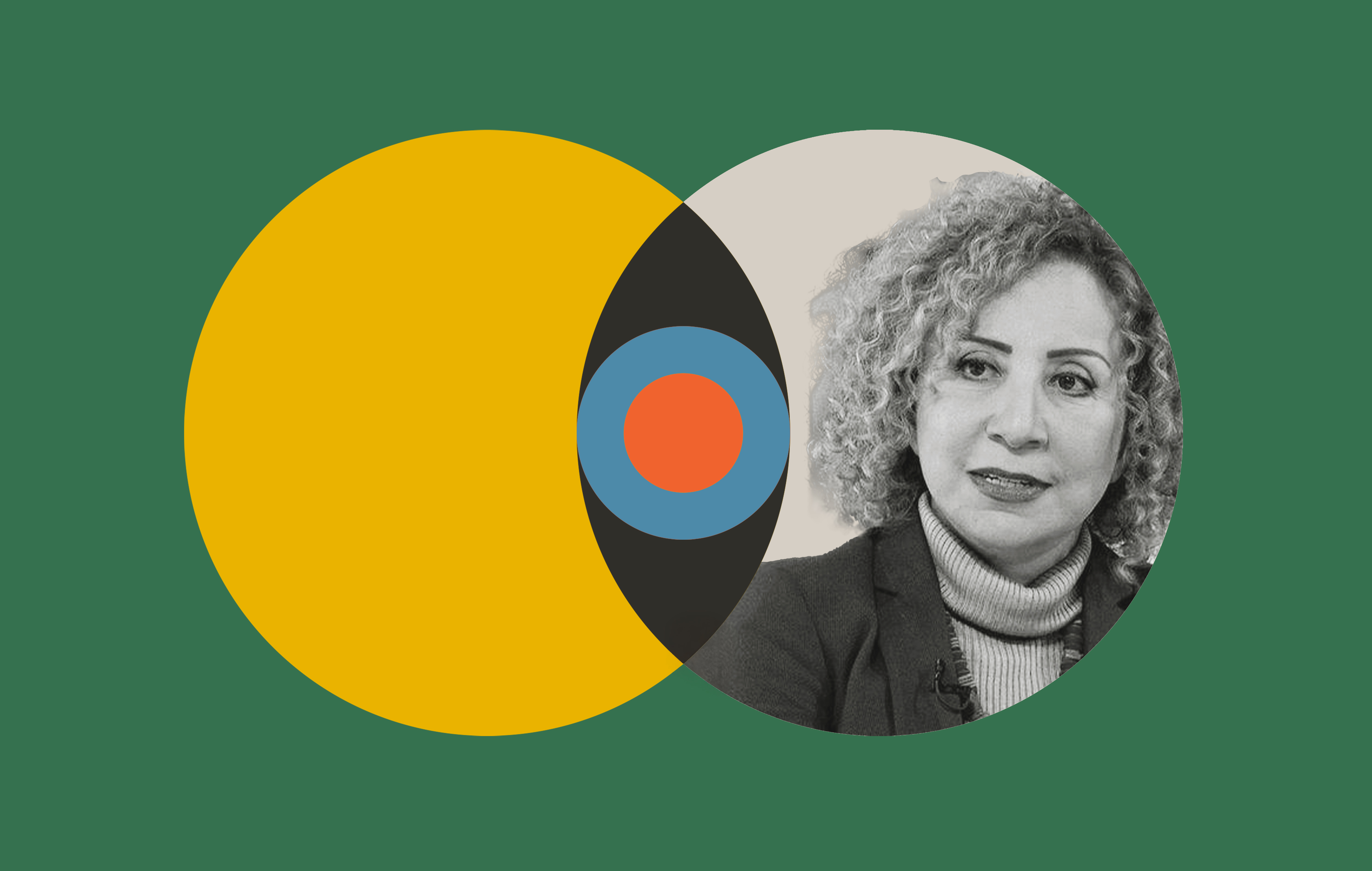
From leading a school strike in the late 1960s to protest tyranny, to leaving Damascus and returning in 2025 after the fall of the Assad regime, Dr. Maya Rahbi's activism has remained unbroken. Today, she puts her expertise as a researcher and feminist activist directly into the complexities of the new reality and the challenges of civil work on the ground.
Rahbi has a diverse professional and union background. Born in 1954, she is a physician who graduated from Damascus University in 1977. She specialized in internal medicine in France and Germany, practiced at her own clinic in Damascus, and was a faculty member at the Syrian European University, where she also headed the university clinic. During this period, she published books on medicine, short stories, and novels.
Her academic and professional career is inseparable from her political and civic activism. She became involved in public life in 2000 through committees dedicated to revitalizing civil society and contributed to the founding of numerous women's and human rights organizations, most notably the "Equality/Women's Studies Center" in 2012 and the "Al-Rahba Publishing House". Her activities included training hundreds of women on gender issues, participating in drafting gender-sensitive political and legal documents, and representing civil society in the Geneva talks and the negotiating body. In addition to her role as a consultant to several international organizations, she has enriched the Arabic library with numerous feminist publications, such as "Islam and Women" and "Feminism: Concepts and Issues", among others.
In this interview, Dr. Al-Rahbi discusses the reality of Syrian women after the fall of the regime and the challenges facing civil work. She offers a critical perspective on current political participation and explains why she considers the "Nationality Law" a top priority in the legal battles that can be fought today. In our conversation, she also discussed mechanisms for protecting the property of displaced women and the role of young women in leading the change towards equal citizenship.
Jullnar Ali: Dr. Maya, how do you assess the public space available today for women's participation in political and social life? And do you believe that "equal citizenship" is closer to being achieved than it was decades ago?
Maya Rahbi: The presence of women in the public sphere is currently very limited and does not reflect their capabilities at all. Syrian women, with their history and their long struggle for equal citizenship and women's participation in decision-making, are unfortunately not on the right track. Sadly, I must say that the current situation regarding women's participation is far from promising, despite the overwhelming joy we felt at the fall of the regime.
JA: But what are the reasons behind this view?
MR: The reason is that we are still trapped within the orbit of the global patriarchal capitalist system. When one armed patriarchal force seizes power, succeeding another, the dream of a "democratic state" based on equal citizenship and participatory governance will not easily materialize under these circumstances.
"Free speech is a mutual responsibility"
17 April 2026
The current government is a narrow circle of "former fighters" unwilling to cooperate with anyone outside its ranks. This isolation leads to the exclusion of diverse Syrian talents, and the country cannot function this way. There is a lack of transparency and mutual distrust between the government and the people.
JA: You led the first school strike in the late 1960s and experienced your father's persecution as a diplomat opposed to the Ba'athist regime. How do you draw on this legacy today to convince the younger generation, and women in particular, that democratic change is a long-term struggle?
MR: I sometimes think that I may not live to see the day this world order changes, the day the “so-called Israel” control over the entire region ends, or the day a democratic state is established and equal citizenship is guaranteed.
I was aware of this from the beginning; of course, I don't mean since childhood, but generally speaking, realizing such truths can cause a kind of frustration or shock, and you always need to find new energy to continue what you started. But in reality, it's not me giving energy to the new generation; it's the young women who give it to me. When I see them still holding onto hope for change, I regain my ability to persevere.
JA: Regarding Musawa organization, which you founded in 2012 from the heart of Damascus under dire security conditions, and which resumed licensed operations in 2025, is it open today to all women and organizations? And how does its work mechanism operate?
MR: At Musawa, we adopted the French institutional model, based on an administrative structure and a team of volunteers, completely distancing ourselves from the partisan approach that characterizes the work of many Syrian organizations. While we believe that volunteering is the foundation of civil work, we recognize that the harsh conditions in Syria make unpaid volunteering difficult. Therefore, we balance our work between funding and available resources.
The organization began as a research center and publishing house for feminist thought. We then moved to field empowerment through three centers in rural Damascus, but security pressures forced us to close them in 2018. To date, we have managed to build a network of relationships with approximately 80 organizations, but reactivating these centers remains contingent on securing funding.
JA: How can this intellectual output be translated into tangible legal and social services that help women in Damascus and other governorates?
MR: Frankly, I've discovered through personal experience that volunteer work alone isn't enough in an economically devastated environment. It's not just about the trainer volunteering their time to deliver the training; it also includes essential logistical costs like transportation and providing for the needs of the participating women. While international donors are still considering their options since the fall of the regime, I have a major grievance against Syrian businessmen. They are the ones being called upon to support the stability of their country and fund these awareness-raising efforts, yet they are unwilling to contribute a single penny to a service that helps educate the community.
JA: Is there any prospect for government cooperation in women's empowerment activities?
MR: The current government is a narrow circle of "former fighters" and is unwilling to cooperate outside its own circle. This isolation leads to the exclusion of diverse Syrian talents, and the country cannot function this way. There is a lack of transparency and mutual distrust between the government and the people.
JA: Since 2020, you have been working on a project concerning property, housing, and land rights. How are you practically contributing today to protecting the property of displaced women who lack documentation in the current legal chaos?
MR: We proposed establishing legal clinics throughout Syria with full-time female lawyers to assist women in obtaining their official documents from the courts. We submitted the request to several donors, but none responded. I believe that Syrian civil society is currently in a state of "complete paralysis" due to the lack of funding and the absence of government cooperation.
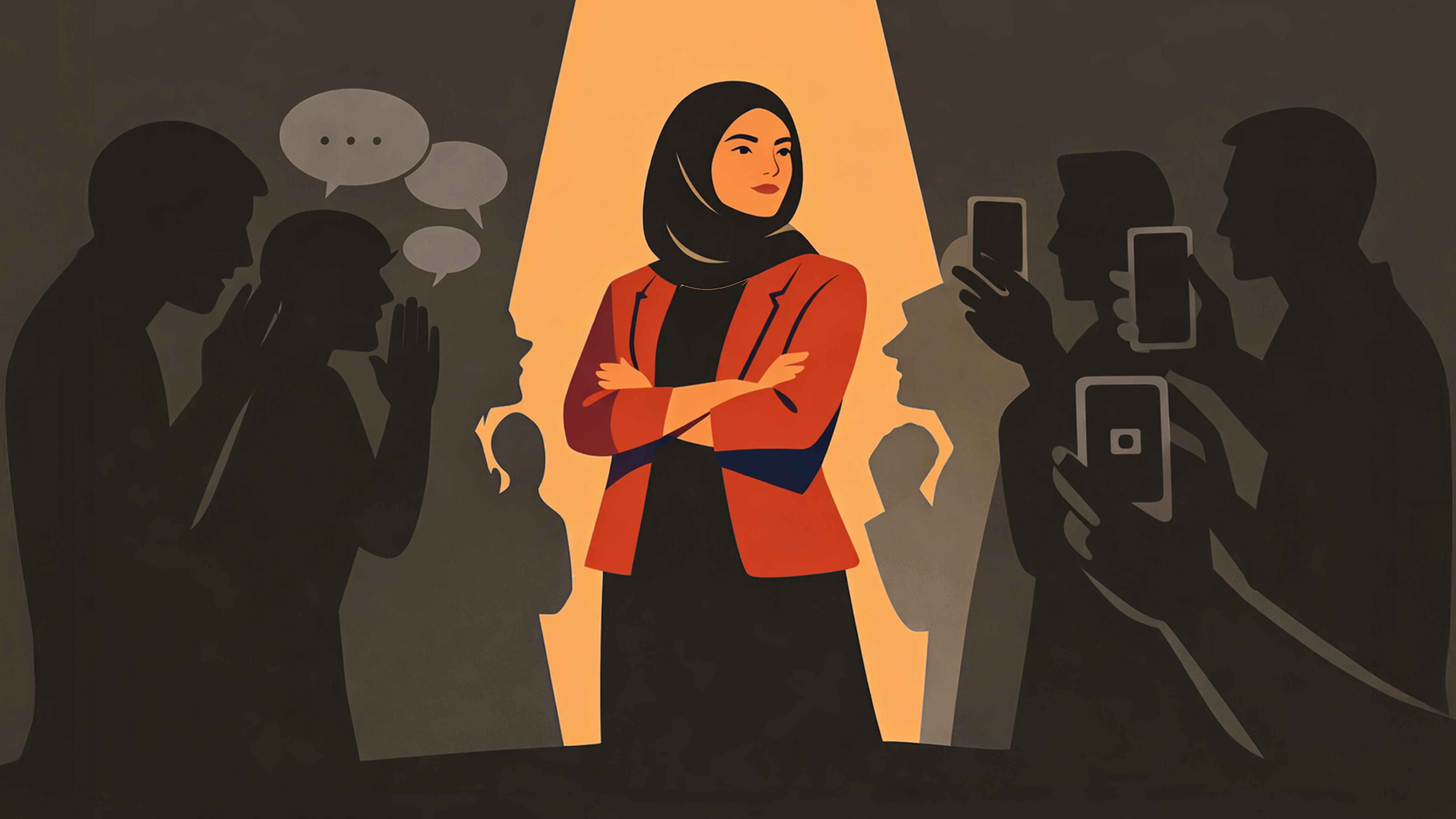
JA: Will you play a role in collective efforts to protect Syrian female journalists from harassment and ensure their voices, and the voices of victims, are heard? And how might this be done?
MR: This is a very difficult question, especially with social media becoming a battleground for extremists. For now, I have chosen silence and to wait for tensions to subside. This is not an abandonment of the struggle, but rather a strategic retreat until we can rebuild the ranks of the feminist movement, which, like the rest of civil society, is fragmented.

Civil Society Spotlight - Episode 13
30 April 2026
I believe that Syrian civil society is currently in a state of "complete paralysis" due to the lack of funding and the absence of government cooperation.
JA: You previously prepared booklets on "Gender-Sensitive Constitutions". How can we, together, work to transform these provisions into a popular culture embraced by men as well as women to ensure justice?
MR: We return to the same point: we are waiting for a reawakening of conscience among patriotic Syrian business leaders to support civil society work, or for the "humiliating" foreign funding that compromises our work. If resources become available, we have projects ready for implementation, such as the "Shared Agenda Against Violence" through training, workshops, and community dialogues. We also need to advocate for reconstruction to target people, not corporations, and to ensure the state does not relinquish its responsibility for education and healthcare.
JA: How can we, as Syrian women, contribute to building local peace and preventing the recurrence of conflicts in our neighborhoods and villages?
MR: Civil society has a significant role to play here if it reaches even the smallest village and engages with community leaders - teachers, doctors, and even religious figures - to spread the concepts of peace and justice. However, currently, we see people entrenched behind "pre-state" affiliations (clan, sect, region), and this is extremely dangerous and delays reconciliation.
JA: Many people may find that women's demands are not a priority compared to major political priorities. Do you think the environment is suitable for forming a Syrian feminist pressure group to confront discriminatory laws, regardless of the circumstances?
MR: Feminism, at its core, is a political movement that aims to change the existing patriarchal and capitalist system. Some Syrian feminists separate their struggle from the daily demands of the people. I believe my primary demand right now is improving the living conditions of Syrians, based on Maslow's hierarchy of needs. Therefore, I cannot demand women's rights without first demanding their right to life, their right to return from the camps, and their right to live with human dignity. Thus, we must not detach ourselves from the concerns of the people; rather, we must gender-sensitive all national issues. Instead of isolating our struggle, we demand gender-sensitive transitional justice and gender-sensitive reconstruction.
JA: What is the first legal battle you are currently fighting in Syria, or that you would like to fight?
MR: If it were up to me, I would choose to change the Personal Status Law immediately. However, in politics, we must consider what is possible and realistic. Therefore, we are currently advocating for and fighting to change the Nationality Law for several reasons. First, this law is civil and not tied to Islamic Sharia, unlike the Personal Status Law, which is always subject to religious interpretations that make changing it complex and thorny (as we recently saw in the Grand Mufti's statements about the need to align laws with Sharia). Second, we have sensed a degree of willingness or openness within the government to implement this law. Third, and most importantly, this change will benefit very broad segments of the population, not only women but also thousands of children deprived of nationality and any documentation proving their existence. We are working on this issue through workshops in Damascus and Qamishli, as well as at the regional level.
JA: When we talk about justice, we must also talk about geographical justice for women. How can we contribute today to ensuring that justice and development projects reach women in marginalized urban and rural areas?
MR: The previous regime was adept at marginalizing rural areas and creating a divide between provinces, to the point that we lost the common language between urban and rural women.
We need to start from scratch to build bridges of communication, and I am personally ready to go to the smallest village in Syria. We have previously engaged in dialogue with tribal and religious leaders online, and we found a positive response when we presented the concepts of justice and rights without tension.