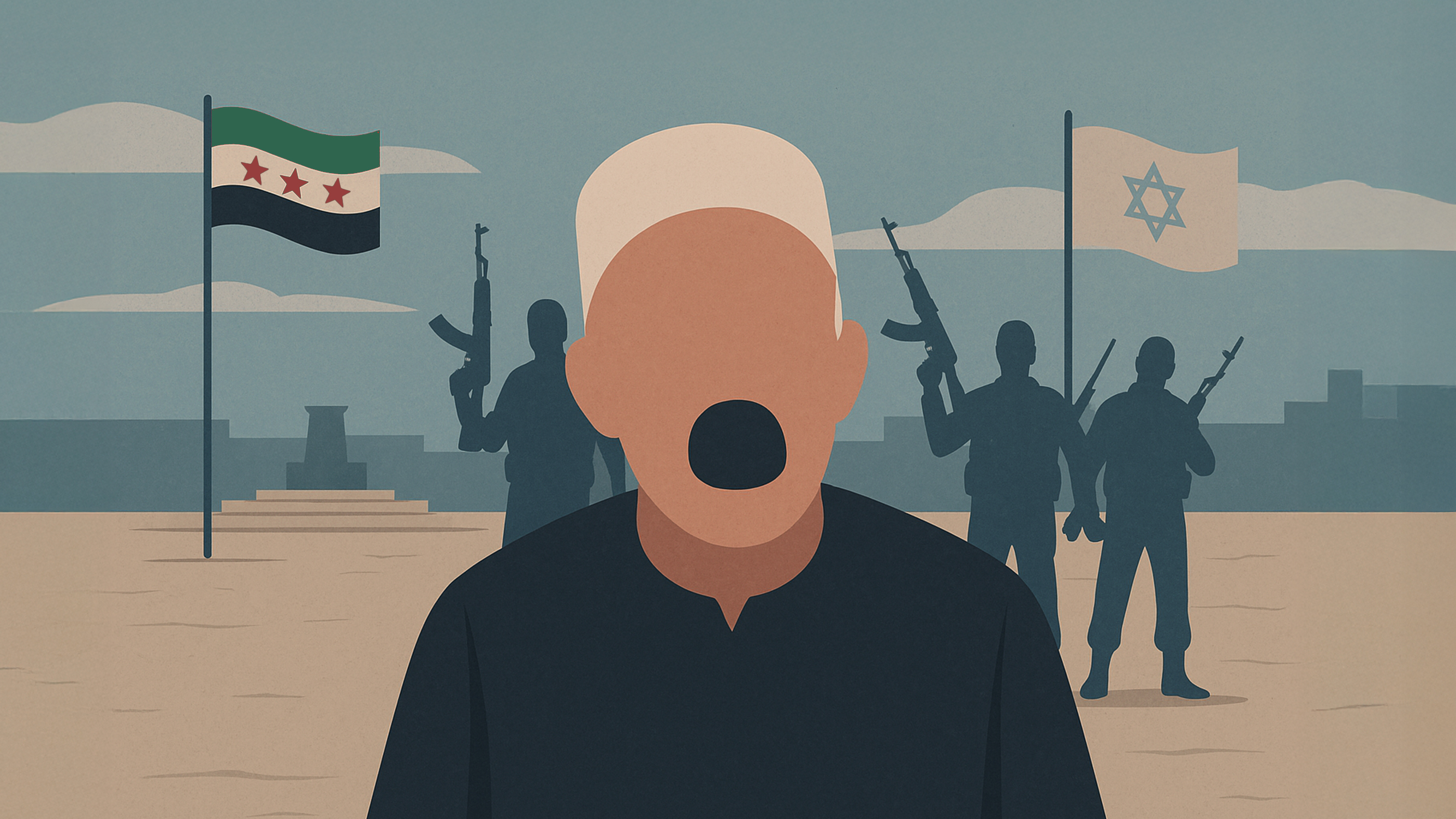

“Civil Society Spotlight” is a series aiming at highlighting and contextualising the voices of Syrian civil society organizations, activists, journalists, and people who advocate for positive solutions, human rights, democratic values, and social justice.
The context
A wave of kidnappings and enforced disappearances of women in Syria has taken a sectarian character, as it occurred between March and July alongside the massacres in coastal and southern areas, which are mainly inhabited by Alawites and Druzes.
The interim government in Damascus considered the incidents to be “related to family or social problems” and, on 22 July 2025, its National Commission for Investigation and Fact-Finding into the events on the Coast announced that it had “not received any official reports of incidents of women being kidnapped” in the region. This position, however, contradicts reports published by human rights international organisations and media, such as the United Nations Human Rights Office, Amnesty International and Reuters, documenting the disappearance of 33-38 Alawite women in different provinces of the coast.
In mid-July, in Sweida, with the outbreak of sectarian violence and military tensions between Bedouin tribes and members of the Ministries of Defence and Interior on one side, and Druze factions on the other, similar incidents happened. Damascus denied and disregarded all the abuses, as it also failed to take action to uncover the events.
On 21 August, UN experts published their documentation on violations committed by Syrian government forces since 13 July, including killings, abductions, theft and sexual violence against women. According to the report, armed groups affiliated with the government were involved in the abduction of at least 105 Druze women and girls, 80 of whom remain missing.
The day after the UN report was out, official media outlets announced that ‘internal security forces in the province had freed a number of kidnapped civilians and handed them over to their families,’ sparking widespread discontent among Syrians for the contradiction with the government's previous narrative denying any violations.
Video footage also documented armed men, supposedly belonging to the Syrian government, kidnapping Druze women. One of the fighters involved in the abduction of a Druze family, including two women, a month later appeared alongside the Syrian Minister of Culture. The family was later released in an exchange deal, as reported by Suwayda 24.
“Silence is also a crime”
Civil society organisations specialised in women's rights were outraged by these crimes.
The Syrian Feminist Lobby, an independent organization advocating for women’s rights in national agendas, issued two separate statements in June, in which they strongly condemned the crimes and demanded the authorities to investigate and hold those involved accountable. The Lobby also called for the return of the kidnapped women to their families unharmed, urging the Ministry of Social Affairs to form support committees to provide psychological, medical and legal assistance to the victims.
In a new pronouncement, later in August, they highlighted the gravity of the sexual violations documented by United Nations reports, with the fate of dozens of Alawite women still unknown. “We call for transparent international investigations and demand an end to irresponsible media coverage of the abductions”, they stated, emphasizing that “justice for the victims and support for the survivors are essential conditions for achieving justice and building a just and sustainable peace in Syria”. They also participated in advocacy campaigns such as the Save the Women of Sweida.
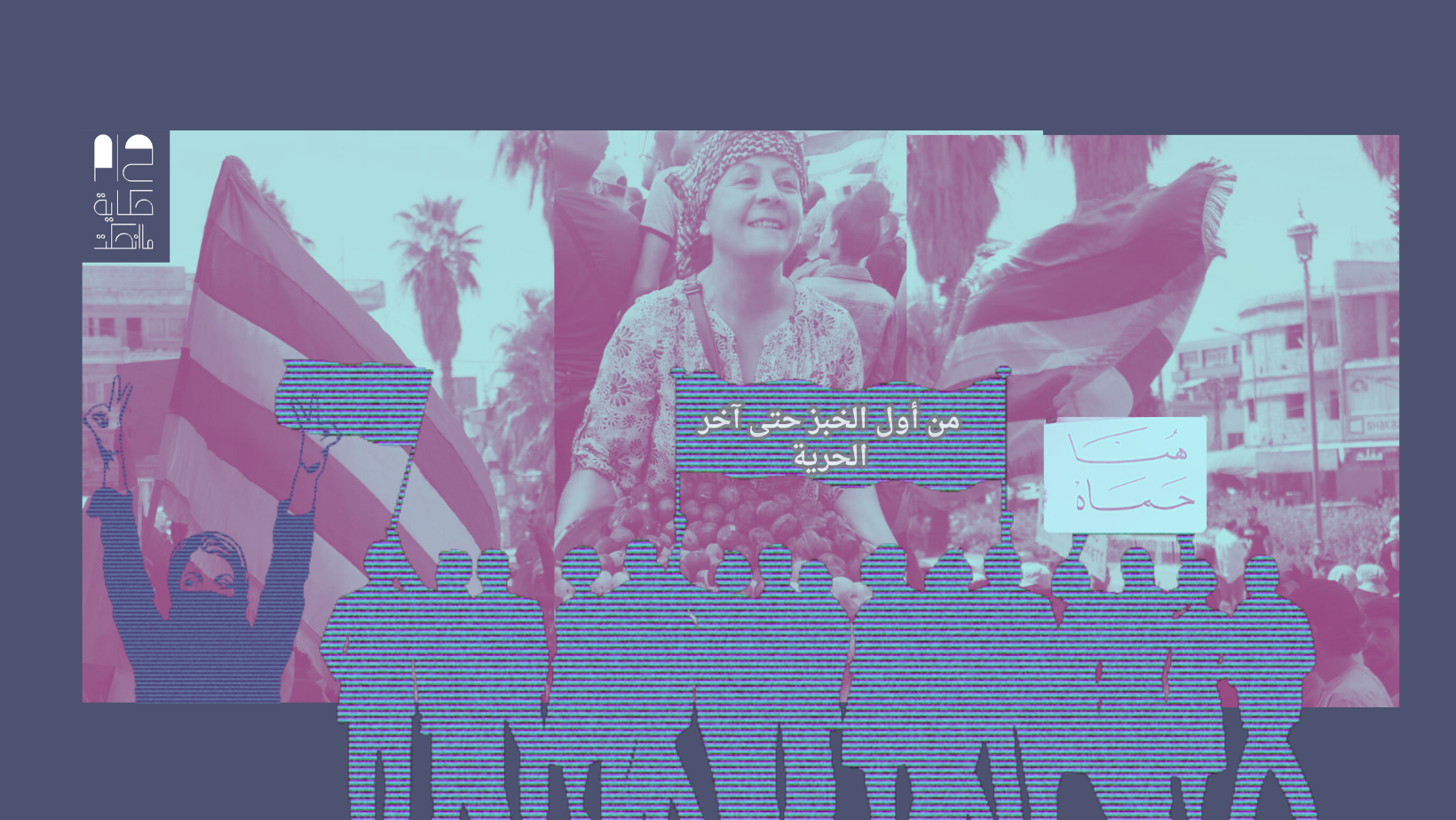
Protests in Sweida: From First Bread to Last Freedom
09 October 2023
Another prominent feminist independent organization, the Syrian Women’s Political Movement, released a statement against the sectarian kidnappings of women on the Syrian coast, which they described as “a double crime against women and society” and a serious violation of civil peace. The statement also criticised the slow pace of transitional justice and the absence of transparent mechanisms to hold perpetrators accountable, which opens the door to an endless cycle of violence and revenge.
The movement did not make a specific declaration on the abducted Druze women, but in a general statement on the situation in Sweida, issued on 24 July, it stressed the need to protect women in times of conflict and to prevent the use of sexual violence as a tool of war, in line with Security Council Resolution 1325.
Other organizations, while reacting less vehemently, labeled the abductions as ‘human rights violations’ which involved assaults on women and, in some cases, forced marriages, calling for official action to hold those involved accountable and protect women.
The Civil Action Movement in Syria, for example, condemned the abductions of Alawites women and the accompanying killings and ethnic cleansing, as well as the targeting of other minorities. It considered these practices to be ‘systematic’ and called for the formation of an independent international tribunal to investigate the crimes.
A group formed after the fall of the regime, the Syrian Democratic Assembly, warned on 23 April of an increase in kidnappings in the coastal region and the Homs countryside, holding the ‘de facto authority’ fully responsible. The statement explained that the victims were forced to give false accounts to tarnish their reputations, and were subjected to sexual slavery under the guise of ‘marriage’.
The people of Sweida, with the World Druze Organisation, organised a protest on 30 August to demand the release of the abductees and the right to self-determination.The same happened ten days later when the civil group Sabaya Sind renewed its silent protest with the same request, confirming that the vigils would continue every Tuesday evening until everyone is released and their fate revealed.
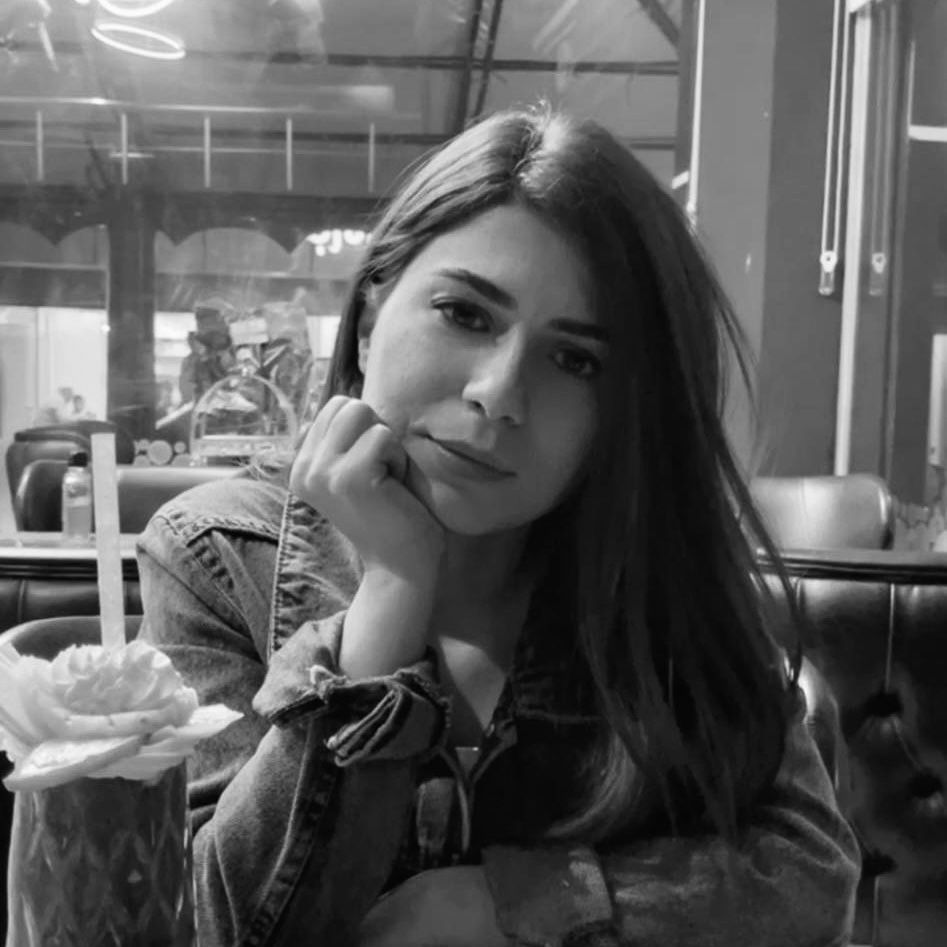
Rima Flihan, a feminist activist and executive director of the Syrian Women's Lobby, said in an interview with Untold that “civil society organisations' response to incidents of women being kidnapped has been mixed”. While some organisations have taken the issue seriously, “many others have not shown the necessary concern and appear less courageous than before in the face of violations by the current authorities”, she added.
Untold talked also to feminist activist and media personality Baraa Salibi who agrees with Flihan, pointing to the role of political and sectarian influences, which have led to a weak or delayed response from some organisations. “Some focused on violations by one side and ignored others, which weakened their credibility and marginalized the suffering of victims”.
Feminist activist Wijdan Nassif wrote several posts on her Facebook page defending the cause of the abducted women, noting that “the abduction of women is a defined war crime, and silence about it is a major crime”. She criticised the lack of initiatives to find out their fate and sharply questioned women and human rights organisations’ absence, despite their previous focus on issues such as the impact of the siege on Sweida or the disruption of education of women.
Individual voices rise above the silence
If official statements from some civil society organisations were not particularly abundant, civil activists (including those working in CSOs), journalists and writers raised their voices in larger numbers. "I wish the government would take this issue more seriously and conduct real investigations”, commented Lubna al-Kanawati, executive director of the organisation Women Now, on the Reuters investigation into the abduction of Alawite women.
Dozens of women in Sweida organised numerous solidarity vigils in the city's squares, demanding the return of women abducted and forcibly disappeared. Among these was a protest on 7 September, where its banners read: “Abducted women are a red line, freedom for the women of Sweida now, save Syrian women from the hands of Daesh, we will not stop demanding them back, we want them safe among us”.
On 3 August, Al-Hasakah (in the areas under AANES) witnessed a women's protest in solidarity with the women of Sweida and in condemnation of the violations, with the slogan “We demand to know the fate of the abducted women”.
Human rights activist Ghina al-Shomari asserted that kidnapping and sexual violence are being used as tools to humiliate local communities in Sweida and break their will, emphasising urgent demands, including the release of all kidnapped women.
For her part, civil activist Maryam Shamdin announced her resignation from her position as vice-president of the Syrian Community Association in France, due to the association's “deviation from representing all Syrians and its limitation to a single intellectual and ideological spectrum.” She considered that this meant “legitimising the violation of freedoms, especially those suffered by women in the Coast and Sweida”. In a separate Facebook post, she said that treating violence against women as a ‘minor detail’ obscures half the truth: rape, kidnapping, enslavement and executions are not isolated violations, she stressed, but part of a systematic strategy to attack the Druze community.
Journalist Fadi al-Dahouk said that the authorities denied for weeks women’s kidnappings during the Sweida attack, before Brigadier General Ahmad al-Dalati appeared announcing the “liberation of the kidnapped Druze women”.
“The scene was not a rescue but a whitewashing of the crime”, he wrote, citing footage of frightened women covered with rags as if they were seals of humiliation.
In an attempt to dispel misinformation, journalist Wahaj Azzam expresses another point of view: the women who appeared in another widely circulated video with Sweida Governor Mustafa al-Bakour were not kidnapped, as some had claimed, but were rescued after two of their relatives were killed. He explained that they were taken to the Daraa countryside, where a local family hosted them and later returned to Sweida. Azzam clarified the story in order to spread the truth and to emphasize the solidarity of some families in Daraa who had protected the Druze women, transporting them out of the conflict zones.
Circulating the video as evidence of the kidnapping of Druze women “aims to create discord and inflame public opinion with hate speech and misinformation” said journalist Omar Sheikh Ibrahim, “and it requires everyone to confront this falsification, deception and divisive rhetoric”.
Monitoring and pressuring the authorities
Organisations can play a significant role by pressuring the authorities to take responsibility for releasing the abductees and holding the perpetrators accountable, feminist activist Rima Flihan believes, given the transitional government's neglect of the investigation into the kidnapping of Alawite women and its denial, as well as the direct responsibility of its factions for the kidnapping of women in Sweida. Organizations can also provide social, legal, health and psychological support to the survivors, monitoring the authorities' performance and launching advocacy campaigns.
Similarly, activist Baraa Salibi ,in her interview with Untold, states that given the Syrian authorities' denial towards the crimes of abduction, it is the responsibility of human rights and women's organisations to work to document cases of abduction professionally and impartially. The focus should be on collecting survivors' testimonies and evidence that can be used for accountability, and to pressure governmental and non-governmental parties to release the women and reveal their fate.
List of civil society organisations and key activists mentioned in this article:
Rima Fleihan, Executive Director of Syrian Feminist Lobby
Baraa Salibi (feminist activist and media personality)
Syrian Women’s Political Movement
Civil Society Movement in Syria
Civil society group Sabaya Sand
Lubna al-Kanawati, Executive Director of Women Now
Ghina al-Shoumari (Human Rights activist)
Maryam Shmadin (Civil society activist)
Wejdan Nassif (Feminist Activist)
Fadi al-Dahouk (Journalist)
Wahaj Azzam (Journalist)
Omar Cheikh Ibrahim (Journalist)