
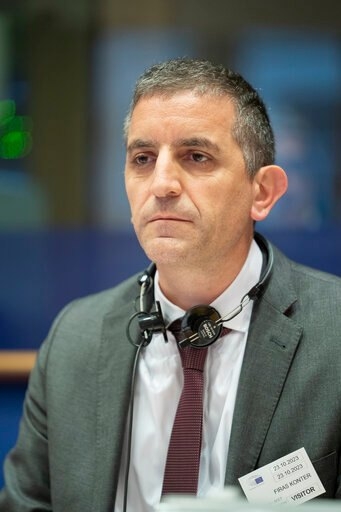
The article published here was originally a post in French on Firas Kontar's Facebook account.
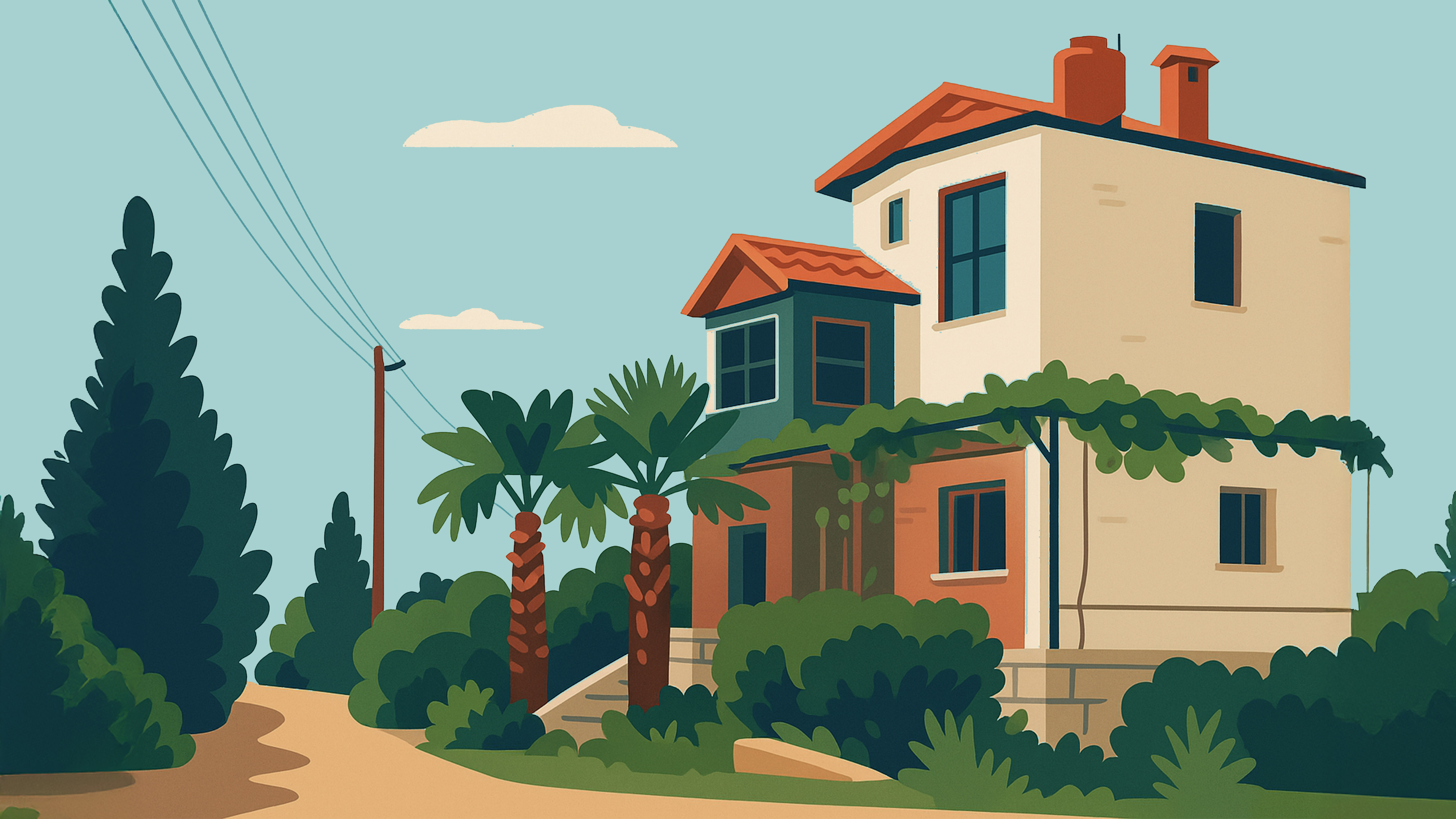
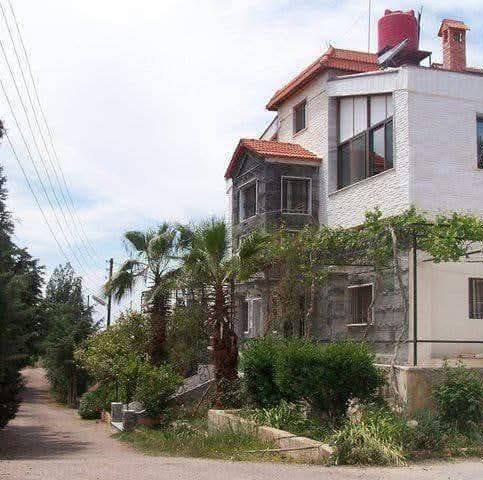
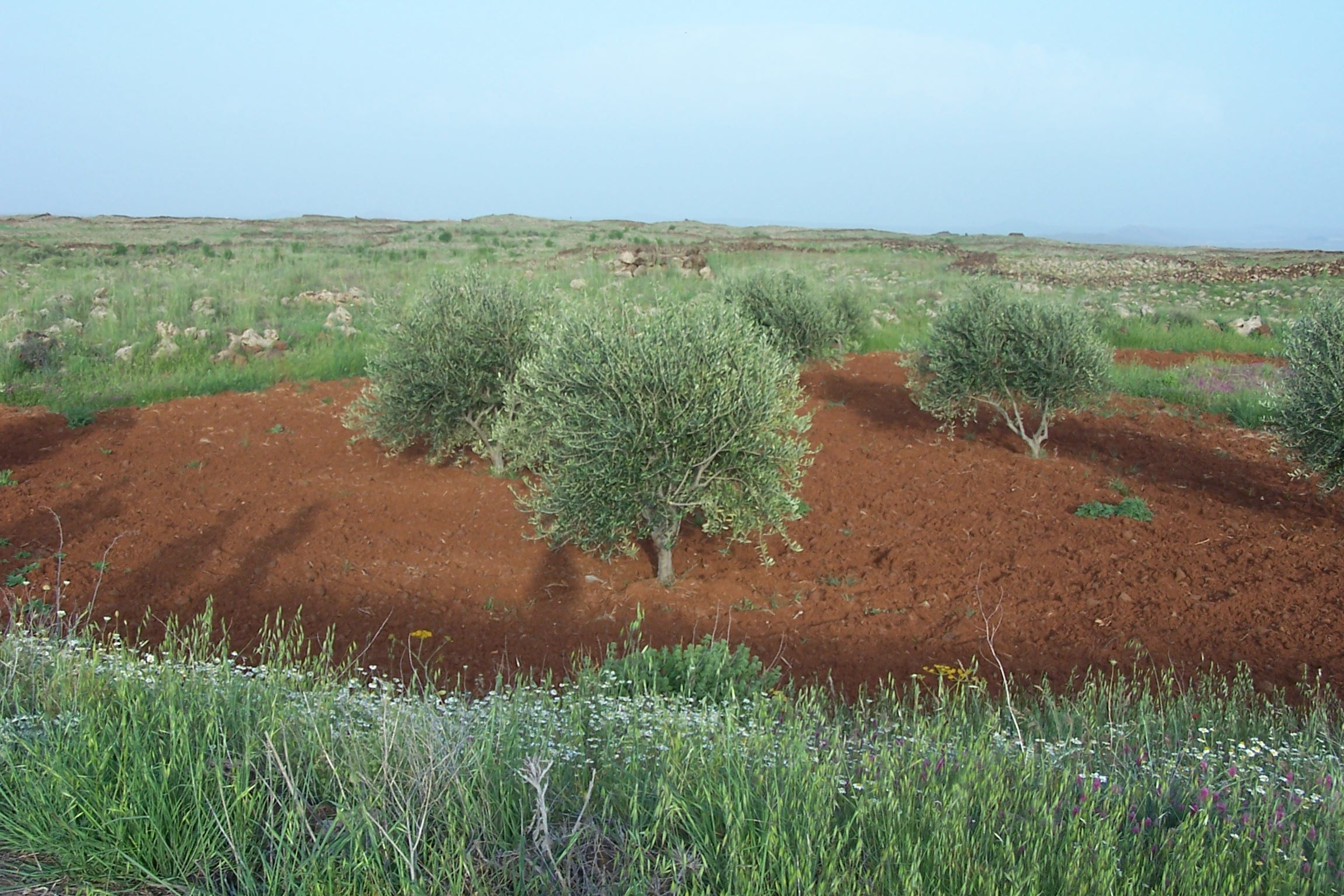
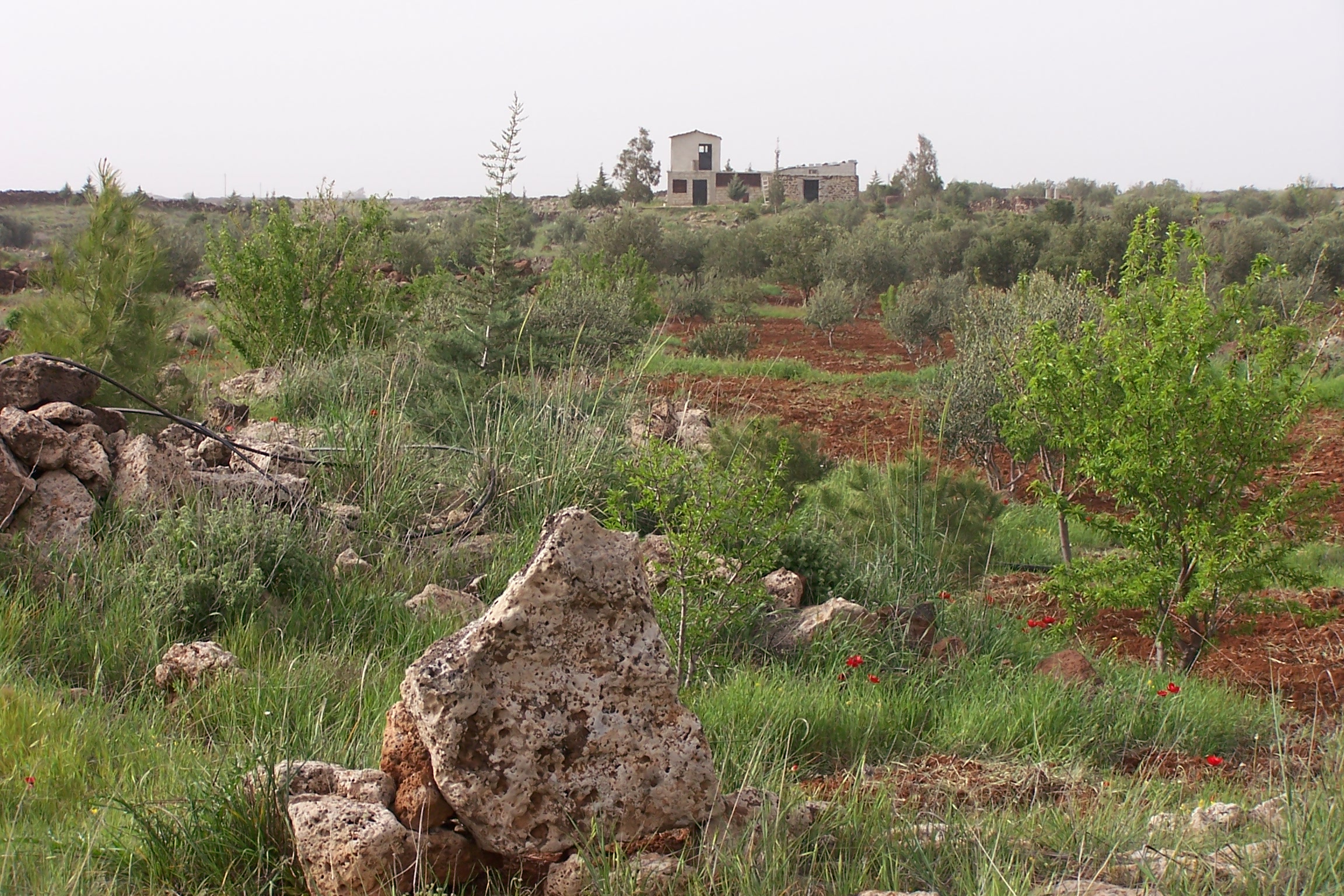
This is my parents' house, located in the village of Dama, in the part of the province of Sweida occupied by government troops in Syria. Around this house, my father planted more than 3,000 trees: a true nourishing forest that allowed several families to live for over 30 years.
We do not know today the state of the house and, more generally, the farm. All we have are videos showing the Syrian government troops and their allies rejoicing in burning down all the houses of the Druze in the village of Dama.
My father had planted the first trees – olive trees – in the early 1970s, on part of my grandfather’s land. It was then one of the first olive groves in the region. My grandfather was not very happy at the time: he lived from growing cereals and feared being deprived of a hectare of land, especially since the olive tree takes time to produce. My father, who worked as a teacher while continuing his studies, therefore bought another hectare of land from him. The house was built later, in the early 1980s, but it was not truly completed until the 2000s.
One of the families operating the farm was that of Abu Jassem, from the Bedouin tribes of the region. It is a family that had fought alongside the Druze tribes during the different colonial periods. There was a very old pact between our families and that of Abu Jassem: at the time of the Ottoman Empire, it was entrusted to them the protection of travelers wishing to make the pilgrimage to Mecca, the Hajj. This agreement, made between the Ottoman Empire, the Druze and some Bedouin tribes, aimed at securing the Hajj road that passed near the village of Dama. Abu Jassem’s family lived very beautiful years in this farm before leaving around 2010 in their village of Wakam, located near Dama.
During the Revolution, Abu Jassem’s son, Jassem, was killed in Saydnaya prison. I often talked about him, I mourned him like a brother.
In 2011, when the Bedouin hamlets near Dama were looted and burned by government troops, I sent my father 6,000 €. With a committee formed of Druze personalities, they set up a fund intended to support the Bedouins in the reconstruction of what had been destroyed. For several months, this committee provided material assistance to these Bedouin families.
This is how peace has been maintained between the Druze and the Bedouins for more than 13 years of revolt, even as Assad has continued to seek to stir up civil conflict. It wasn’t simple: on both sides, some were trying to fuel tensions. But the wisdom of both communities eventually prevailed.
After the fall of the regime, Abu Jassem reconnected and wanted to return to operate the farm. We were also hoping for his return. He had been expelled from his village by the supporters of Assad and was waiting for a reconciliation to return. My father, like others, was working on this reconciliation in the region. There were a few disputes left to settle – notably cattle raids and some material goods –, but nothing insurmountable.
The new transitional power decided otherwise, however. Instead of supporting reconciliation initiatives, he launched a hate campaign against the Druze, culminating in the invasion of Sweida province in mid-July. In a few months this transitional government has destroyed decades of peaceful coexistence. Today, 33 localities burned and looted remain occupied by government troops.
About 200,000 people lost their homes, including 20,000 Bedouins and 180,000 Druze. The human toll remains provisional: it is estimated that between 2,000 and 3,000 civilians were killed, overwhelmingly Druze, with dozens of Bedouin victims.
The rift caused by this invasion within the Druze population is largely minimized by the propaganda of the new regime, which only accentuates the gap between the Druzes and the majority Sunni Arab component. This ethnic cleansing is even ridiculed: songs to the glory of 'scissors' are sung at weddings or celebrations in Syria. Why? Because government troops used scissors to cut the beard and whiskers of the Druze during the invasion, an ultimate humiliation, before executing them—or not.
On Sunday 12 October, a fundraising campaign was organized by the transitional government, supposed to "help with the reconstruction" of the province of Sweida. The same people who destroyed it are organizing a party today to rebuild it. This festival took place in the locality of Sawara, emptied of its inhabitants, dozens of whom were massacred by government troops. The new regime now accepts the return of the inhabitants, provided that they pledge allegiance to it and accept the authority and protection of those who raped, killed, burned and pillaged the Druze.
In the spirit of Islamist supremacism that drives the current regime, this "protection" is presented as an act of generosity towards the Druze population. The human life of others is so insignificant to them that they do not understand the mourning that affects a minority of 500,000 people who have lost more than 2,000 of their own.
Today, the entire Druze community finds itself on the edge of a precipice whose outcome it does not see. What future for the Druze in a Syria blinded by supremacist and victimalistic discourses, where religious identity has taken precedence over national identity?