
“Civil Society Spotlight” is a series aiming at highlighting and contextualising the voices of Syrian civil society organizations, activists, journalists, and people who advocate for positive solutions, human rights, democratic values, and social justice.
For the first time, the ‘Day of Dialogue with Syrian Civil Society’ (Brussels 9) conference was held in Damascus on 15 November 2025. It has been organised since 2017 in Brussels as part of the annual conference on supporting the future of Syria, an interactive platform that brings together civil society organisations and non-governmental organisations inside the country and in neighbouring countries. Their aim is to exchange experiences and perspectives and contribute to shaping policies that guide international support for Syrians.
This first conference, held after the fall of Bashar al-Assad's regime in late 2024, was jointly organised by the Syrian transitional government and the European Union and focused on empowering Syrian civil society to play an effective role in the transition process. More than 500 participants took part, with independents and representatives of 355 civil society organisations, including organisations from the Kurdish ‘self-administration’ areas of north-eastern Syria, while organisations working in Sweida, southern Syria, boycotted the conference. The transitional government participated in the conference, represented by Foreign Minister Asaad al-Shibani, Social Affairs Minister Hind Qabwat, and others. International actors participated with representatives from the European Union, its member states, neighbouring countries, the United Nations, and international non-governmental organisations.
Participants discussed the main priorities for the transitional phase in Syria, specifically transitional justice, social cohesion, and the transition from humanitarian aid.
Gender-Sensitive Transitional Justice in Syria...A Conversation with Lama Kannout
28 June 2025
The conference organisers emphasised that this represents an important step by the European Union in its support for a secure, empowering and independent civil space in Syria, and demonstrates the Union's willingness to accompany Syrians on their path towards reconciliation and social cohesion. While many organisations praised it as a window for conveying their voices within Syria and expressing their opinions and needs, critical voices have also emerged: they questioned the independence of civil society at this sensitive stage in the country's history, stressing the need for civil society organisations not to become an extension of political agendas.
These voices criticised the mechanism of invitation at the conference: entire components were excluded, as well as the token presence of some, questioning whether the event truly represented all Syrians.
Broad participation from civil society
On the day before the conference, 14 November 2025, nine civil society organisations issued a joint position paper criticising the political deadlock at the domestic level compared to the political progress at the international level. They called for the reopening of the national dialogue on transparent and participatory grounds, the formulation of national programmes for social reconciliation, the review of the interim constitutional framework to ensure the separation of powers and limit the concentration of powers in the hands of the transitional president, as well as the strengthening of the independence of the judiciary and efforts to ensure the comprehensive representation of all components. It also stressed the need for women to be represented by at least 40% in transitional institutions, to activate oversight and anti-corruption mechanisms, and to exclude financiers of the war economy from public contracts.
Positive comments and praise prevailed among the reactions of civil society organisations. Organisers and participants considered the conference in Damascus to be a ‘historic turning point’ and a step towards supporting the Syrian-led transition process.
The Hand in Hand Relief and Development Organisation considered the conference a “new door and horizon” for civil action in the country after the fall of the regime. The organisation emphasised its role as an active partner in promoting civil action and supporting recovery efforts, thereby contributing to building a more stable and equitable future for all Syrians.
Syrians for Truth and Justice also affirmed that the conference provided a space for direct communication and coordination with actors in civil society, where experiences were exchanged and shared visions for building a democratic Syria that respects human rights and promotes civic participation and equal citizenship. Dialogue is the first step towards achieving a just and inclusive Syria, they noted, and the success of the transition process requires genuine political will and recognition of the rights of all Syrians.
Likewise, lawyer Mazen Darwish, president of the Syrian Centre for Media and Freedom of Expression, considered that the importance of the event lay in the fact that it was “the first time that a direct dialogue had taken place between civil society and the Syrian government inside Syria on issues and challenges Syrians are facing”.
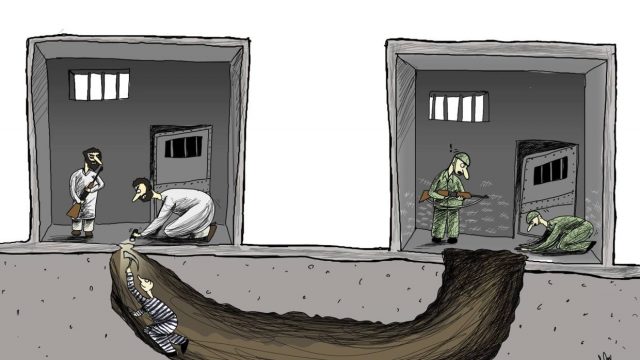
On Freedom of Expression: The Case of Freedom Raise
03 May 2017
The roundtable discussions addressed topics of concern to Syrians and their future. Some organisations focused on building practical partnerships with government institutions and put forward several recommendations. On the issue of transitional justice, Mohammad Reza Jalki, head of the National Commission for Missing Persons, emphasised the complexity of the missing persons issue and, therefore, the need [to link it to transitional justice] to achieve sustainable peace and genuine reconciliation.
For her part, Rana Sheikh Ali, director of the Darat Salam initiative, said she was proud to share her experience as a citizen and civil society activist. She spoke at the roundtable on governance, the inclusion of marginalised groups and institution building, emphasising the importance of transparency as a basis for restoring trust between citizens and the state, and the role of law in creating an environment that encourages active participation. She noted that this initiative represents a first step among many necessary steps to ensure that people's voices are heard and contribute to leading change.
Ahmed Musa Al-Hashlum, director of the Inmaa organisation, addressed the role of civil society in protecting civil space, the need to strengthen legal frameworks, as well as addressing key challenges and developing appropriate mechanisms and strategies.
Multi-level criticism
It was noteworthy that the organisers sought to emphasise its inclusive nature. Representatives of organisations working in the Kurdish areas of north-eastern Syria participated, and Kurdish was used in the simultaneous interpretation of the conference for the first time in an official event of this level.
However, according to many organisations and activists, this was not enough to consider participation open to all. PÊL- Civil Waves representative spoke at the tables on youth empowerment and institutional governance about the importance of participation, representation and constitutional recognition of linguistic diversity, criticising the absence of Kurdish activists as keynote speakers and the government's monopoly on the transition process. He called for civil society organisations to network in order to lead a parallel process that would correct the transition, expand the framework of transitional justice, and ensure comprehensive accountability for all parties involved in past and present violations.
Activist Naz Hami also criticised “the absence of the voices of Sweida organisations, the lack of representation of women and Kurdish components at the round tables, despite the availability of Kurdish translation: all these represent several gaps that are more than just minor details; but rather part of the problem”. She emphasised that a genuine commitment to democracy and human rights requires respect for social, linguistic and cultural diversity, and that the Kurdish language is a fundamental right and not merely a formal addition to translation services. Therefore, there is still a long way to go to achieve a comprehensive and sincere national dialogue that represents everyone.
Journalist Jandi Khaldi wrote that the absence of representatives and speakers from the Kurdish community made the dialogue incomplete, unbalanced and unfair. Meanwhile, Shiar Nio, programme director at the Arta Media and Development Foundation, said that the Syrian government's involvement in organising the conference between the European Union and civil society is, on the one hand, a positive sign of the government's openness to involving civil society in building the state and its institutions. On the other hand, it may place organisations under its mercy and control, not only through licensing and funding requirements, but also through interference in their orientations, priorities and management. Therefore, the independence of civil society must be protected and ensured that it is not subject to any political domination.
For his part, Farhad Ahmi, director of the organisation PÊL- Civil Waves, told SyriaUntold that this year's Day of Dialogue conference in Damascus is of symbolic importance and provides a platform for Syrian civil organisations to get to know each other and network. However, he added that it does not meet the aspirations for genuine, organised and sustainable participation in discussions about the country's future: the time allocated for discussions was limited and he did not notice any participation in preparing the conference agenda or identifying the key issues that need to be discussed, especially what happened in the Coast and then in Sweida. He concluded that Syrians need genuine and comprehensive dialogue, not symbolic and superficial events, and that they need to address the major challenges to ensure a shared and just future for all.
Boycotts and contradictions
On the other hand, civil activist Tima Issa believed that the conference revealed fundamental problems, most notably the absence of clear criteria for selecting participants and the predominance of politics after its opening and closing by the transitional government. The absence of media figures, artists, and unions made the definition of civil society narrow and limited. Issa considered that the outcomes of the sessions were not accurate and that the roles of the three parties remained incomplete: civil society had no real influence, the European Union did not exert pressure to correct representation, and the government missed an opportunity to build serious communication with the various components.
Mohammed al-Abdullah, executive director of the Syrian Centre for Justice and Accountability, also criticised the transitional government's selection of participants, telling SyriaUntold that the transitional government's foreign and social affairs ministries reviewed the lists of candidates and removed a number of names of individuals and organisations nominated by the European Union. He explained that “his name had been put forward as a speaker”, but he was apparently excluded, considering that “the authorities are not very interested in hearing an impartial opinion”.

For Five Days, Sweida’s Soul Was Crushed—Its People, Homes, Crops, and Livestock... and So Was Mine, Trapped in Berlin
04 August 2025
Several civil society organisations in Sweida announced their boycott of the conference in a statement issued on 9 November, demanding that their position be included in the event documents and read out to the audience. They considered that the participation of the transitional government, accused of committing “grave violations” in their governorate renders the dialogue meaningless, asserting that no dialogue process can be built “under impunity”: the crimes of murder, rape, displacement and kidnapping committed in the province are documented and the involvement of those responsible for them contradicts the principles of the European Union.
The statement also criticised the ‘contradiction’ between the conference's agenda and the values of justice and governance it promotes, and the government's practices on the ground, calling on Syrian organisations to shoulder their moral responsibility and not remain silent about the violations. They further demand that the European Union review its approach to ensure that the ‘dialogue’ becomes a political cover that bypasses the victims, and to renew its commitment not to partner or engage in dialogue with violators before achieving genuine accountability and justice.
List of civil society organisations and key activists mentioned in this article:
Joint position paper from civil society organisations for the ‘Day of Dialogue’ conference
Pel-Civil Waves (Civil Society Organisation)
Hand in Hand Relief and Development Organisation
Mazen Darwish (Activist and lawyer)
Syrian Centre for Media and Freedom of Expression
Rana Sheikh Ali (Director of the ‘Dar al-Salam’ Initiative)
Naz Hami (Activist and civil society worker)
Jandi Xalidi (Journalist)
Shiar Neyo (Activist and programme director at Arta Media and Development Foundation)
Tima Issa (Civil activist)
Ferhad Ehme (Activist and director of Pel-Civil Waves)
Mohammed Al-Abdullah (Executive director of the Syrian Centre for Justice and Accountability)