
This text was prepared as part of the forum ‘Urgent Narratives: Invisible Violence in the Syrian Conflict’, organised by a number of Syrian civil society organisations in Berlin on 22–23 January 2025. The purpose was to reveal manifestations of structural and symbolic violence in post-2011 Syria, and to analyse them from an intersectional perspective.
The case study examines representations of the Syrian narrative in a selection of feature films from recent years (2017–2024), most of which were produced by non-Syrian creative teams. The first draft was written in November 2024 and focused primarily on Syrian characters, particularly actors and actresses, in a selection of films. The draft explored the extent to which these films, made outside Syria, had adequately portrayed the various forms of violence suffered by Syrians since 2011. However, the fall of the regime on 8 December 2024 led to a re-examination of the thesis, as it became necessary to extend the question of invisibility to the public sphere in Syria and to the early moments of exiled Syrian artists returning to their homeland - artists whose absence from the Syrian narrative portrayed on screen was one of the starting points of this research.
The second version of the text was developed in the early weeks following the fall of the Assad regime. This was the version presented at the ‘Invisible Violence’ forum in January 2025. Though its publication now comes more than a year later, the initial questions raised by the shift in power dynamics have been retained. The aim was not to present definitive conclusions about invisibility in the arts in Syria today, but rather to pose a series of questions about the representation of the violence experienced by Syrians, particularly as the stories of detainees began to appear for the first time on Syrian screens within the country.
At the beginning of the 1960s, because of air pollution and, above all, water pollution in the countryside (the blue rivers and the clear canals), the fireflies began to disappear. This was a striking and disturbing phenomenon. After a few years the fireflies were gone. Today there remains only a rather poignant memory of them. Those who remember them cannot recognize themselves in the young people of today, and therefore can no longer have the fine regrets of the past. That ‘something’ which happened about ten years ago I will call the disappearance of the fireflies.’
(Pier Paolo Pasolini, The Void of Power in Italy, 1975)
“Certainly, as Pasolini noted, water pollution in the countryside is killing them, and air pollution in the city as well. We know also that artificial lighting—streetlights, spotlights—considerably disturbs the lives of fireflies, as it disturbs the lives of all nocturnal species. In extreme cases, this can lead to suicidal behavior, for example, when firefly larvae climb onto utility poles and pupate… dangerously exposed to diurnal predators and to sunshine that dries and kills them.
We must know that, in spite of all, fireflies have formed their beautiful, luminous communities elsewhere.”
(Georges Didi-Huberman, The Survival of Fireflies, 2009)
Representations of the Syrian Narrative in Films: The Syrian Character Between Reality and Fiction (2011–2024)
Since the outbreak of the peaceful protests in March 2011 and the descent into war, a large number of documentary and fiction films have been produced addressing different aspects of the Syrian story, regardless of whether they support or oppose the narrative of the early days of the Syrian revolution. Documentary films have been the primary form of expression, as they are best suited to capturing the nature of events in Syria over the past fourteen years, particularly films documenting the violations, repression and destruction suffered by the Syrian people at the hands of the regime and its allies. Examples include films such as Silvered Water (Osama Mohammed, 2014), For Sama (Waad Al-Khatib, 2019), and Little Palestine: Diary of a Siege (Abdullah Al-Khatib, 2021). Other documentaries focus on the atrocities committed by the Islamic State and other extremist Islamist groups. This type of film appeals to, and feeds, Western audiences’ fears of these movements, which have also carried out attacks on their own soil. A quick search for the word ‘Syria’ on mainstream platforms such as Netflix and Amazon Prime Video is enough to bring up dozens of titles that fall into this category: Syria: The Jihad Fleet (2015), In the Name of the Father, the Son and Jihad (2016), Women of Daesh (2019), Nine Days in Raqqa (2021), and many other films promising scenes designed to instil fear.
There have been fewer fiction films produced about Syria since 2011. Fiction is more complex in terms of development, financing and production, and may take a long time to complete, making it difficult to keep pace with unfolding events. Furthermore, these films need support from foreign production and distribution companies—particularly European and American ones—from the initial conception through to international festivals and screening venues. By contrast, numerous European and American feature films, as well as television series, deal with extremist Islamist groups in Syria without making even the slightest reference to the political and historical causes that led to their emergence. In this type of film, one is likely to find one or more European or American (white) characters embarking on an extremely dangerous ‘adventure’ in areas where ISIS has spread, either to fight it or to rescue a character who has been ‘misled’ into joining it. There are many examples of this, most notably Escape from Raqqa (2019), the French series Le Bureau des légendes (2015–2020), in whose first season the actor Fares Al-Helou appears as Bashar al-Assad’s cousin, and the American series Homeland (2011–2020).
Over time, the figure of the Syrian refugee—man, woman or child—has also appeared, often in a stereotypical manner and without any clear reference to the reasons that drove them to leave their country. This is one of the most prominent forms of invisibility affecting the contemporary representations of Syria. This tendency to erase the historical reasons for displacement can be observed in films like Green Border (2023) by Agnieszka Holland and Les Barbares (2024) by Julie Delpy.
There is another category of feature films produced within Syria that served as regime propaganda, most notably those directed by Najdat Anzour, which “stripped the opposition of their sense of patriotism and reduced them to a group of monsters”. However, this subject is not explored further in the case study. Nor does the study address Arabic-language films that have approached the Syrian narrative from their own perspective, such as certain Lebanese and Tunisian productions. This genre emerged in Lebanon because of the large number of Syrian refugees who migrated there, and in Tunisia because of the involvement of a number of Tunisians jihadists in Syria.
We chose to focus on a selection of feature films based on specific criteria: films produced outside Syria or supported by foreign entities; feature films based on a written screenplay; films that include Syrians in exile among their cast and crew; films that have reached a wide audience; and films that take a position opposed to the official narrative, even if they do not state this explicitly. These criteria made it possible to formulate fundamental questions regarding the representation of the Syrian narrative in a selection of feature films that have attracted attention in recent years, both popularly and critically, and to begin analysing the position of Syrians—particularly actors and actresses—in embodying their own story in their various places of exile. Portrayal here refers to giving a body to the character and their story, and to the contribution this embodiment can make to achieving justice for Syrians through fiction and imagination.
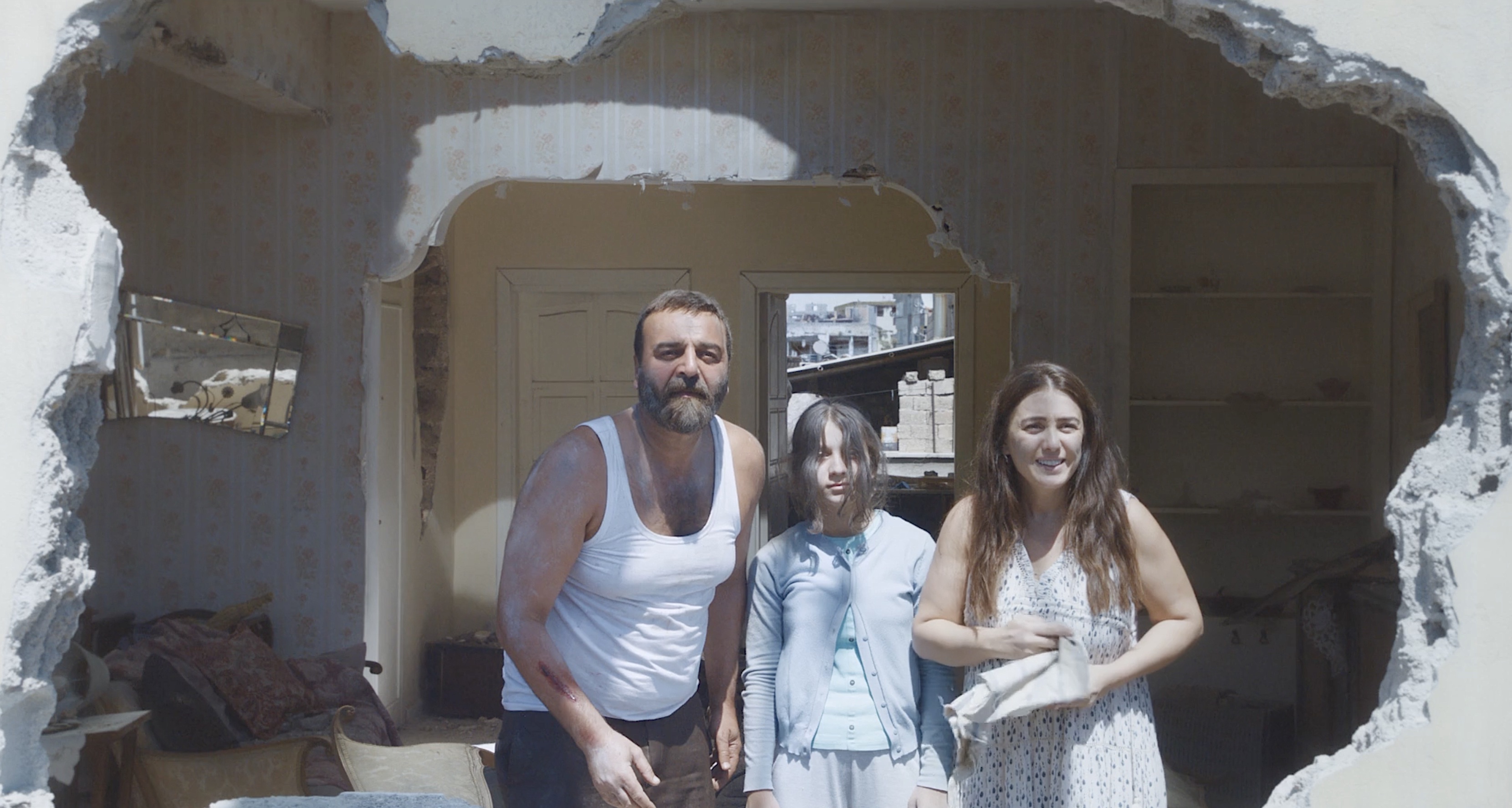
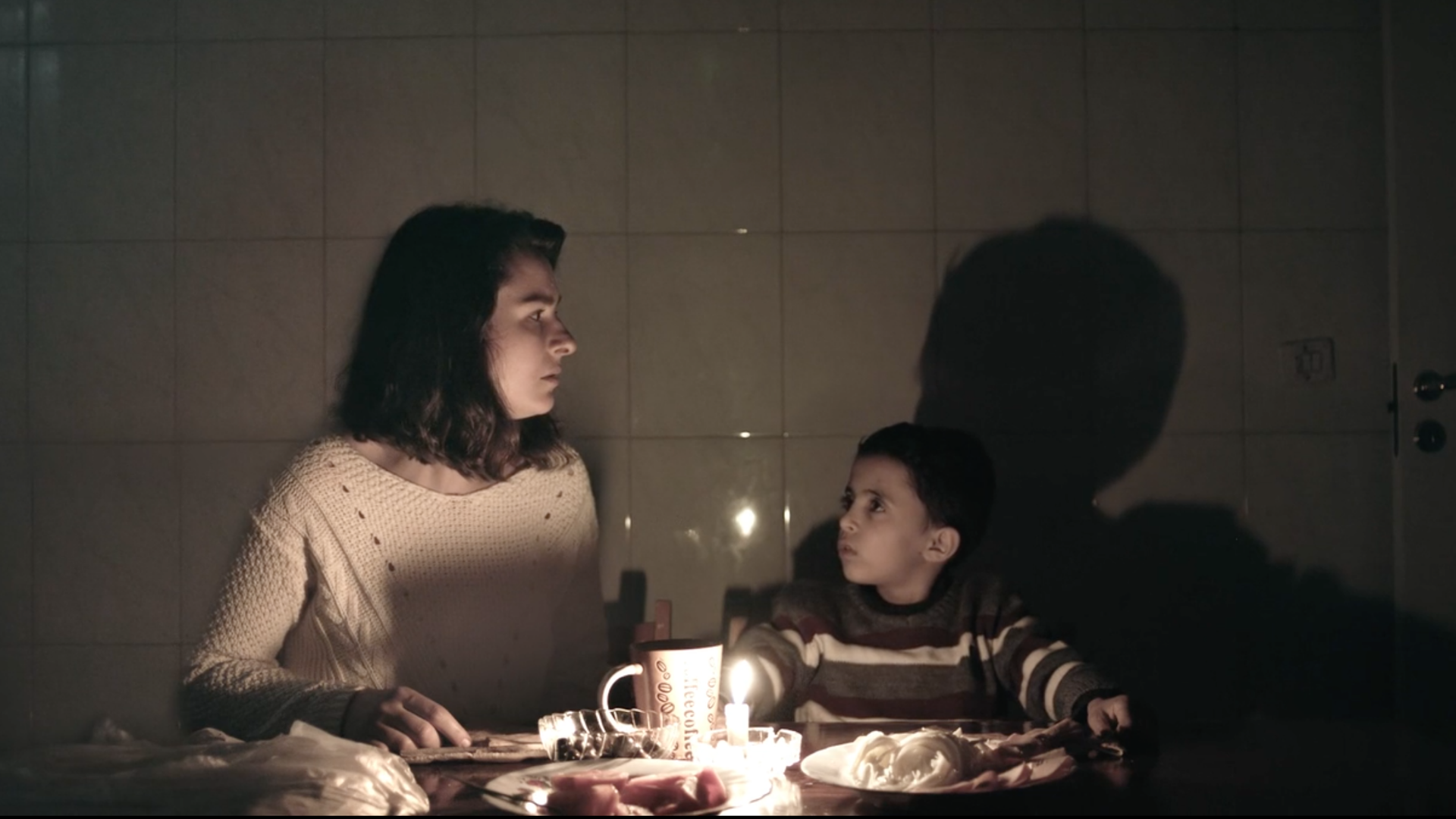
Perhaps the earliest example of a film that draws on the Syrian narrative in a non-Syrian context is Insyriated, directed in 2017 by Philippe Van Leeuw. The events of the film are supposed to take place in an apartment in Damascus during the war. Yet the members of the ‘Syrian family’ referred to in the film’s original French title, Une famille syrienne, are played by the Palestinian actress Hiam Abbass, the Syrian actor Mohsen Abbas and the Lebanese actress Diamand Bou Abboud.
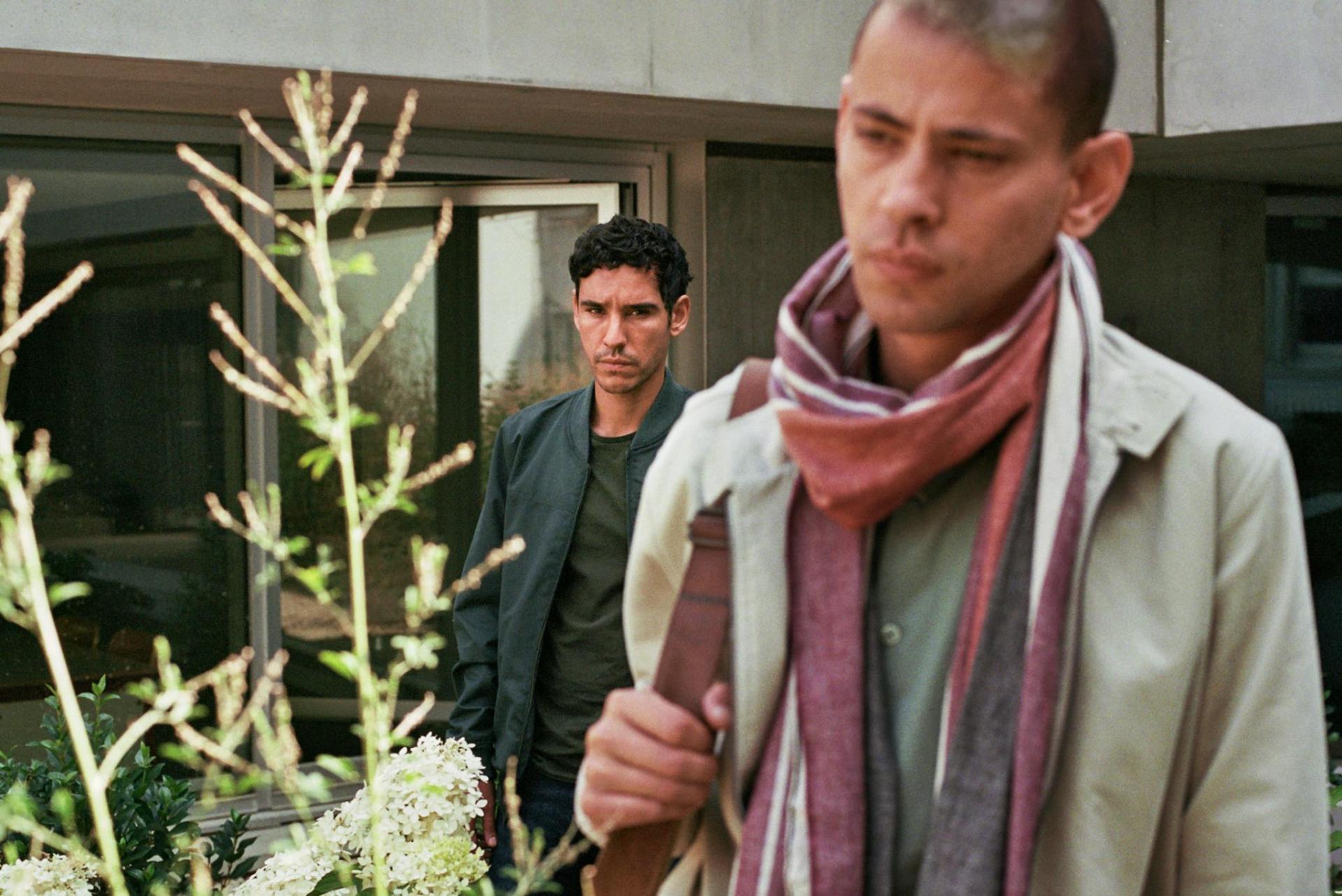
A second notable example is The Ghosts (Les Fantômes, 2024) by the French director Jonathan Millet, which tackles the question of justice head-on through the story of a Syrian refugee who has escaped the regime’s prisons and is searching in exile for those who tortured him. The role of the survivor is played by Tunisian-Italian actor Adam Bessa, while the role of the torturer is played by Palestinian actor Tawfeek Barhom. ‘Authentic’ Syrian voices are mainly confined to the character of a young refugee doctor, played by the Syrian actress Hala Rajab, as well as to conversations taking place during a video game in which an anonymous group of Syrians searches for torturers and war criminals who have themselves fled to Europe. Audio recordings of testimonies by former detainees are also played. As I watched the film, some of the voices in the video game and the testimonies sounded familiar. It took me only a few minutes to put faces to those voices: they belonged to Syrian actors and people working in the cultural sector whom I know personally. This moment formed the central question of the case study: isn’t it violent for Syrians to be reduced to mere, faceless voices? Isn’t it disturbing for Syrian stories to be told in Palestinian, Lebanese or Tunisian accents—each with its own histories of violence that may ‘obscure’ the Syrian narrative—while Syrian voices remain suppressed or hidden in their own country and invisible in exile?
I shared these questions with some of the people involved in these films, such as the Lebanese actress Dalia Naous, who played Syrian roles in Escape from Raqqa, Green Border and Les Barbares, as well as the Syrian actress Hala Rajab, who was involved in casting for The Ghosts, acted as a script consultant, and played the female lead in the film. Their answers largely overlapped, as they attributed the absence of Syrian actors from these roles to several factors, including decisions made by European production companies, box-office considerations, the fact that many Syrian actors are not accustomed to auditioning, and the fear among some Syrian actors that participating in such films might affect their chances of securing roles in television productions made by Arab channels, particularly those in the Gulf. I also discovered that Syrian actors are considered too ‘theatrical’ in the eyes of European directors and producers, who tend to favour a more restrained style of performance.
This was confirmed by the London-based Syrian director Soudade Kaadan. In the interview I conducted with her on 10 January 2025, a month after the fall of the regime, she stated: “Syrians, and Arabs in general, are emotional by nature, and they have every right to express their emotions.” Her comment came in response to criticism levelled at Samer Al-Masri’s performance in Nezouh (2022), in which he portrayed a father who insists on staying in his devastated neighbourhood despite his wife’s (Kinda Alloush) insistence that they leave to save their own lives and that of their youngest daughter, after all her sisters had fled the country with their husbands. In this context, Kaadan explains: “Our films are sometimes expected to be told through Western acting styles. Arab actors are expected to express their emotions like Scandinavian actors would do, speaking little and barely raising their voices. Samer Al-Masri authentically embodied the character of the simple Syrian man, the conservative city-dweller who refuses to leave his home. It may have seemed theatrical to some, but in reality it was closer to the truth. Many members of the audience wrote to me saying, ‘This is the first time I’ve seen my father represented as he really is on screen’, while others whispered after the screening, ‘That’s my father’. They felt that they were being portrayed on screen and that they had not been erased to please Western audiences.”
Kaadan therefore insists on working with Syrian actors despite the reservations of European production companies, adding: “Many foreign companies are reluctant to accept my insistence on casting Syrian actors, for reasons that include the difficulty of travelling on a Syrian passport, a preference for actors who are more fluent in foreign languages, and funding requirements. Some funders stipulate that actors must hold the nationality of the funding countries, which limits casting options to a few names who may not be suited to the role as written. I believe it is important that our stories are told through the voices of our actors, and that they stand with me at international festivals to present our films. Not only because, as a people who have lived through war, we deserve to tell our story, but because I believe in the talent of our actors beyond national borders. Cinema is not an individual endeavour, but a collective experience, and we can only change the current challenges and constraints by working together.”
Kaadan not only defends her characters’ emotions, but also ensures that her choice of actors reflects the film’s political stance: “My choice of actresses such as Sawsan Arsheed (The Day I Lost My Shadow, 2018) and Kinda Alloush (Nezouh, 2022), who clearly supported the Syrian uprising, is also significant. In my films, I have focused on the human aspect of what Syrians have endured, even if the themes are not explicit; yet a glance at my casting choices is enough to understand their political stance in opposition to the Assad regime.” Kaadan is also concerned with the representation of violence in the Syrian context: “How do we talk about the violence Syrians have endured without showing that violence on screen? When the blood and pain are so personal—the pain of Syrians, of whom I am one—I cannot build my films on the visual aesthetics of that violence. I chose to focus on the city I know, Damascus, and on the stories of women in our society in recent years.”
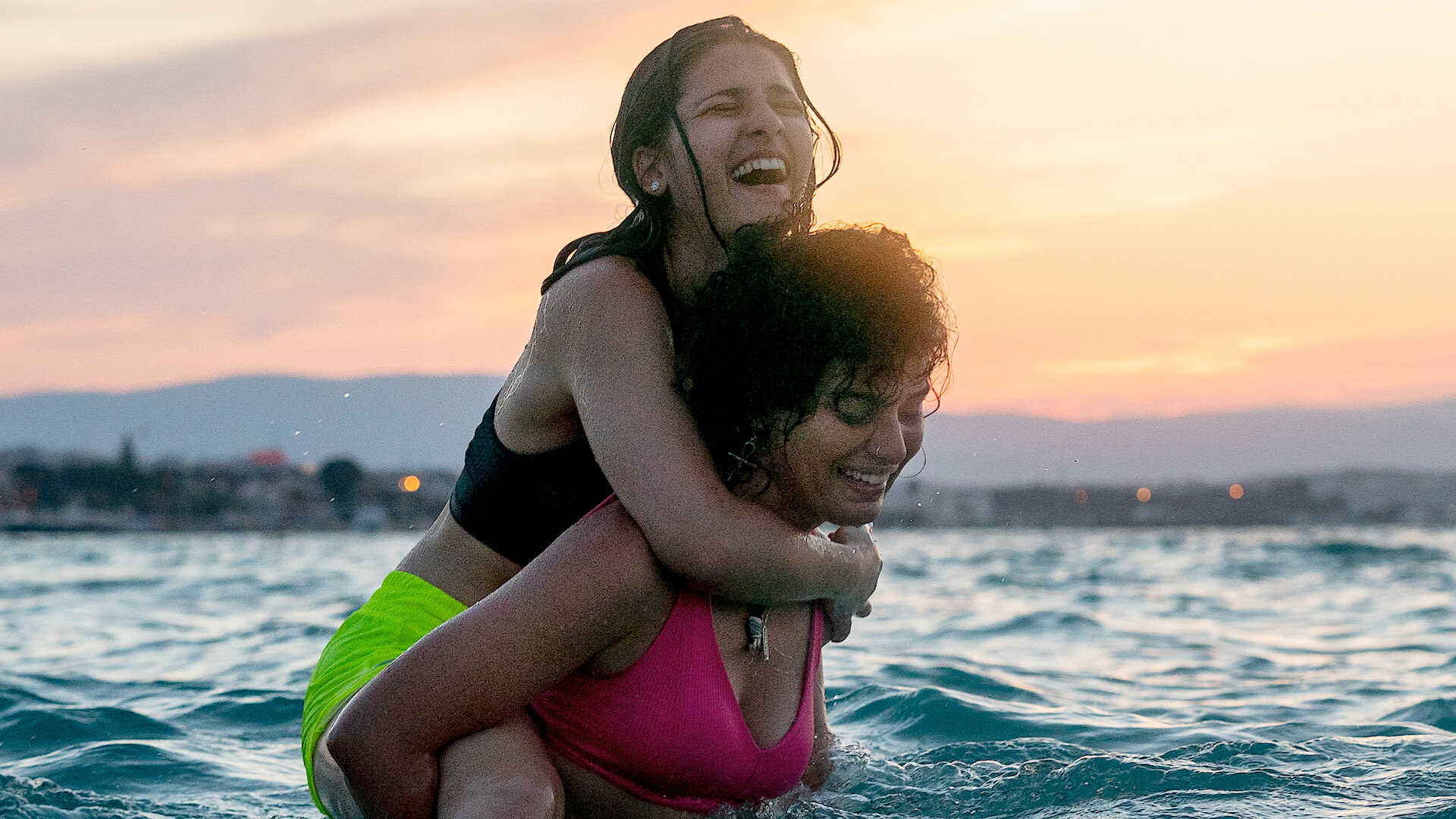
This ‘meaning’ to which Kaadan refers is the most notable element missing, for example, from The Swimmers (2022), produced by Netflix and directed by the British-Egyptian Sally El-Hosaini. The film tells the story of the swimmers Sarah and Yusra Mardini and their journey from Syria to the 2016 Olympic Games. This “success story” appears to be aimed less at a Syrian audience than at one drawn to the sisters’ resilience and adaptability rather than to the deeper reasons that drove them to leave. The sisters are played by the Lebanese actresses Manal Issa and Nathalie Issa. The film therefore tells a Syrian story in English with a Lebanese accent.
Although Manal Issa accepted the role of swimmer Yusra Mardini, she levelled numerous criticisms at the British production company and the streaming platform, Netflix, for their ‘superficial and orientalist treatment of the story.’ In her statements, Issa says that she turned down the role several times because she believed that a Syrian actress should portray this character. Indeed, in this Syrian story, there is only one Syrian actress in a leading role: Kinda Alloush, who plays the mother of the two swimmers. Not only is there a series of implausible narrative elements and stereotypical portrayals of Arab female characters, but there is also no mention of why there is a devastating war in Syria; it is as if Syrians had decided to kill one another for no reason. Here too, the invisibility of the repression faced by members of the popular uprising, the resulting violence and displacement, and the role played by the Assad regime in the emergence of armed groups and in the violence they perpetrated—particularly of a jihadist nature—amounts to a clear erasure and appropriation of the Syrian story.
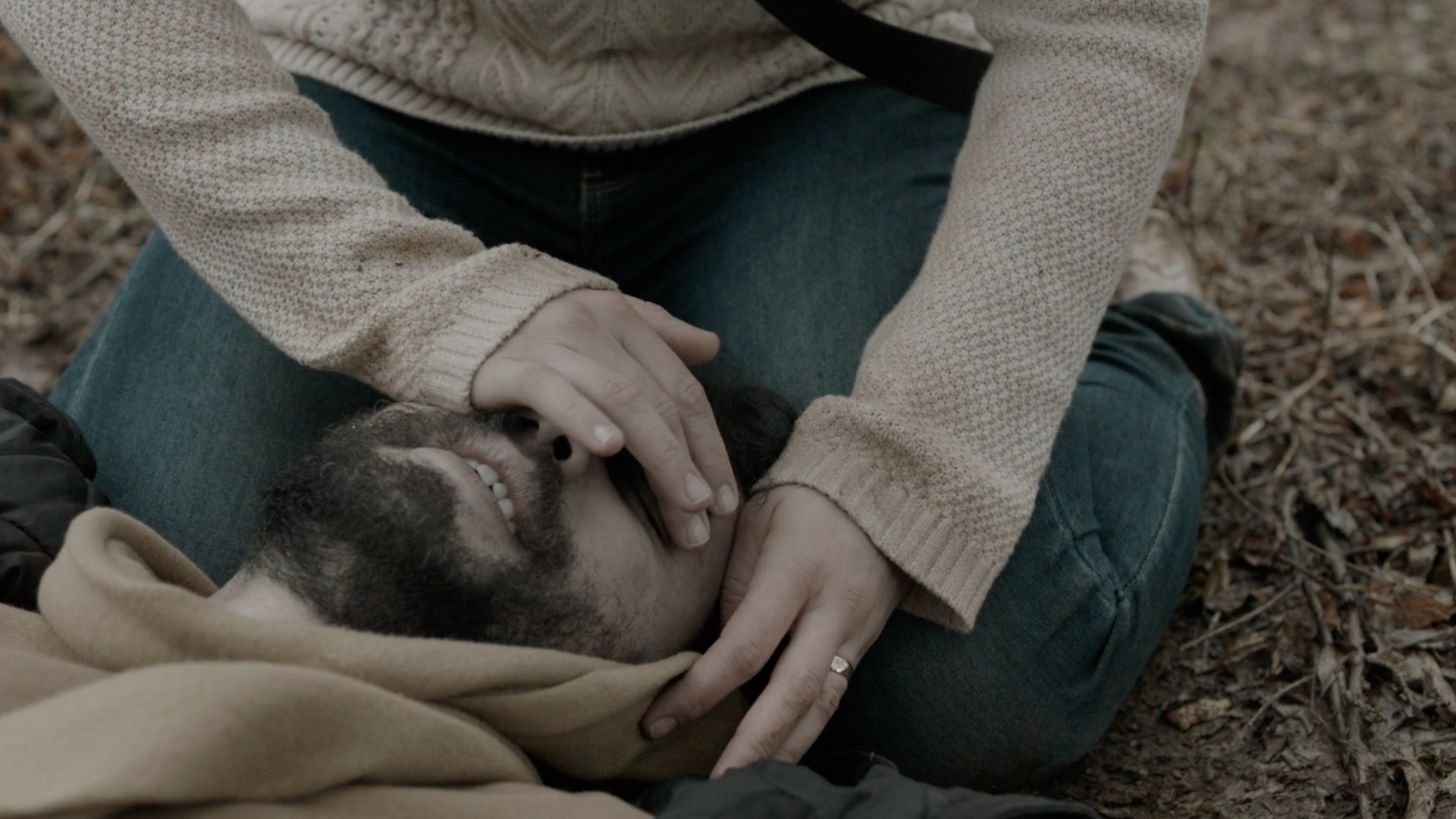
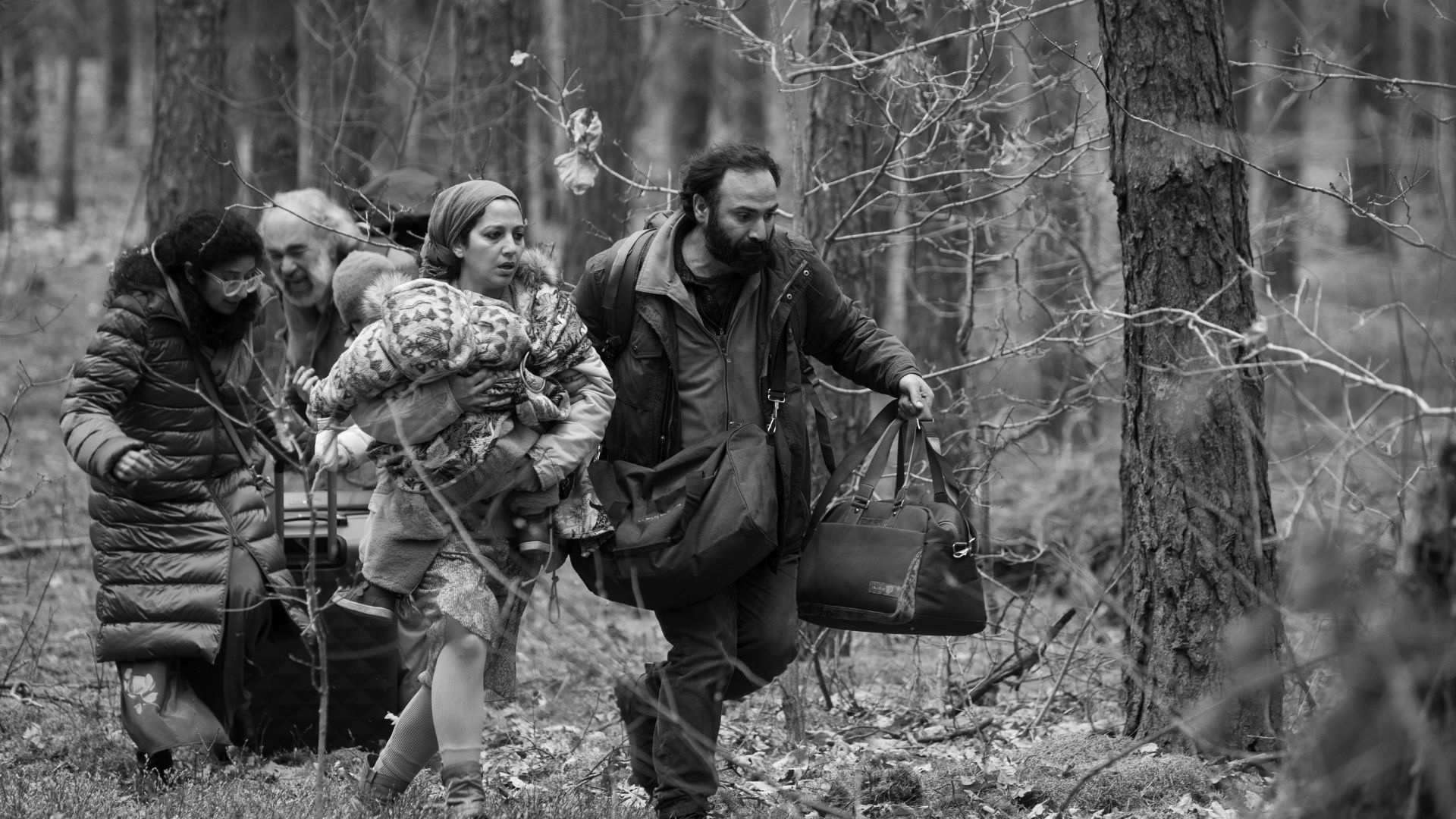
In Green Border, for example, the story begins with the journey of a Syrian family consisting of a father (the Syrian actor Jalal Al-Tawil), a mother (the Lebanese actress Dalia Naous), a grandfather (the Syrian actor Mohammed Al-Rashi), and two children. The family arrives by plane in Belarus to begin their journey on foot towards Europe. Judging by the family’s humble appearance, we assume that they have fled one of the areas subjected to siege and bombardment by the Assad regime, and that this is what drove them to leave Syria and embark on this tragic journey. In one scene, the father turns his back to the camera, revealing clear marks of flogging. We assume that he was tortured in the regime’s prisons, before we understand that he was actually flogged by Islamist groups for smoking a cigarette. Here, the invisibility of the broader Syrian reality is laid bare, as is the invisibility of the tortured Syrian body. The reasons Syrians sought refuge are reduced to Islamist groups alone, creating a narrative that oversimplifies Syrian history and its complexities.
These observations raise a broader question: why examine invisible violence in the Syrian context through feature film? The portrayal of Syrian characters—their stories and the direct and indirect violence they have endured over the past fifteen years, and even before—seems central to post-2011 narratives. Fiction also invites comparison with literature, theatre, visual art and other forms of expression, allowing us to ask questions about diversity, inclusion, cultural appropriation and authenticity in representations of Syria today. We borrow these questions from European and American contexts, where doing justice to characters in all their ethnic, historical and gender diversity has become both a political and an ethical statement.
From Exile to Resurgence: Initial Questions on the Return of Syrian Artists, Justice and Representation
I completed the first part of this case study on 23 November 2024, fifteen days before the fall of the Assad regime. As I followed the advance of the armed factions towards Damascus, new questions began to emerge. How should the artistic and cultural production on Syria over the past decade be interpreted if the regime did indeed fall? And would the fall of the regime necessarily mean the end of exile? The question of exile had preoccupied us because the regime had succeeded in convincing us—through violence and repression—that it was indeed ‘eternal’.
Once the regime had truly fallen, and as we followed scenes of prisons being opened, detainees being released, and secret dungeons and regime houses being stormed, the question of invisibility took on a deeper and more terrifying dimension. Images of return then began to spread, charged with joy and hope, resembling a mass wedding sweeping across social media, while the search for the disappeared was accompanied by images reminiscent of concentration camps. In this climate, we also followed the celebrations marking the return of actors and celebrities who had fled the regime, at the same time as channels such as Al Arabiya (part of the MBC Group) provided a platform for Syrian celebrities known for their loyalty to the Assad regime and their harsh attacks on colleagues who opposed it, allowing them to justify their positions and “turn over a new leaf.”
It was then that I realised that the question from which I had set out—the invisibility of Syrian artists, specifically actors and actresses, in exile—was largely incomplete: what about the invisibility of the Syrian artist in their own country over the past fourteen years? While I have always defended the need to maintain professional and intellectual ties with Syria itself, in all its geographical and cultural diversity, it seems that I did not delve deeply enough into the meaning of the disappearance of a large number of Syrian artists from public spaces within their own country, and into the violence of their invisibility as producers of representations and aesthetics, and as witnesses to history in their own country.
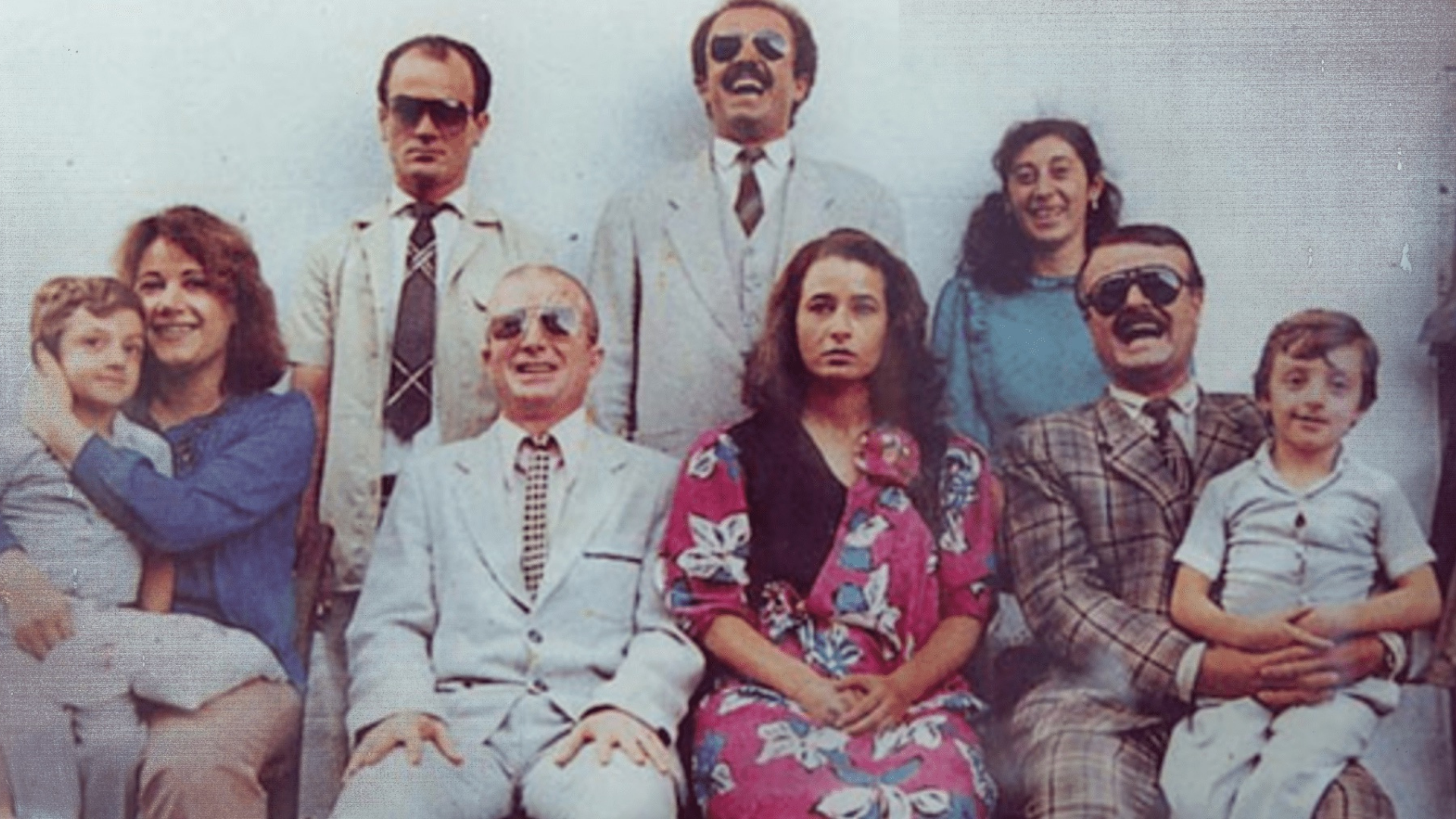
One of the films I focused on in the case study was The Day I Lost My Shadow (2018) by the director Soudade Kaadan, in which the disappearance of the shadow becomes a metaphor for arrest and enforced disappearance—phenomena that have come to define the years of revolution and war. When I began to think about the “disappearance” of Syrian artists from their country and the possibility of their “shadows” returning after the fall of the Assad regime, the question of invisibility took on another, more complex dimension: from the invisibility of the Syrian artist in exile, to their actual or symbolic disappearance within their own country, and finally to the invisibility of Syrian towns and villages—the place itself—in films and television dramas opposed to the regime. This was due either to the impossibility of filming inside Syria, or because those places had literally disappeared under barrel bombs and been reduced to rubble.
On 24 November 2024, the day after I sent the first draft of this case study, The Syrian Observer (citing Al-Araby Al-Jadeed) published an article in English entitled “Syrian Opposition Actors Banned from Returning.” The article discusses actors and well-known artistic figures who took a clear stance against the regime, leading to their “erasure” from the public sphere and from government-affiliated television channels. In a paper by Ziad Adwan, published in the thirtieth issue of Qalamoun magazine under the title “The Syrian TV Series: Between Cultural Elevation and the Appropriation of Culture”, he explaines how, from the 1990s onwards, Syrian actors became “the most attractive people in Syria”, “appearing in television interviews and at social events, speaking on politics, the economy, education, generational conflict, art and television series”. The paper addresses the “disappointment” felt by actors and actresses who believed they could have had a real impact at the start of the popular uprising. This is exemplified by the statements made by the actor Samer al-Masri regarding the mediation that Bashar al-Assad had personally asked him to undertake with the people of Douma, and his failure to “stop the bloodshed”.
Artists, particularly leading figures in television drama—including actors, directors and writers—faced intense pressure from the regime to make public statements supporting Assad and accusing the revolution of treason, sabotage and terrorism, owing to their widespread popularity among “ordinary” citizens. This does not mean that all actors supported the popular uprising, or that those who did openly declared their support for it; some chose to remain silent, for reasons that are also worthy of discussion, chief among them economic factors and fear of arrest. However, those who took a clear stance in favour of the uprising were soon forced to flee their country—that is, to “disappear” from it. Among them are prominent names such as Fares Al-Helou, Jamal Soulayman, Mohammed Al-Rashi, Jihad Abdo and Reem Ali, as well as the late May Skaf and Fadwa Suleiman, and many others across various artistic fields. Some have truly disappeared, the most famous of whom is the actor Zaki Kordello, whose fate remains unknown to this day.
TV star Maxim Khalil marked his return to Syria with a visit to Sednaya Prison following its liberation, before heading to Umayyad Square to address the crowds celebrating his return. He took the opportunity to call for the establishment of a civil state and to highlight the positions taken by Syrian female artists who stood in solidarity with the revolution. He mentioned the actresses Sawsan Arsheed, Yara Sabri and Kinda Alloush, the singer Assala Nasri, and the director Waad Al-Kateab. He spoke about the role of women in Syrian society, in what resembled a ‘visionary’ response to the interview that Aisha al-Dibs would give days later, on 28 December 2024, on TRT, following her appointment as head of the Women’s Affairs Office within the Political Affairs Department of the Syrian Transitional Government. We also saw Yara Sabri upon her return to Damascus, demanding that the fate of detainees and the forcibly disappeared be revealed and that justice be served. She quickly launched a campaign concerning the fate of the daughters and sons of detainees, pointing to the responsibility of the Ministry of Social Affairs and Labour in this matter and the need for full disclosure.
The regime fell, and the Syrian actor reappeared in the public sphere, resuming the role they had sought to play at the start of the uprising. It was only a matter of days after the liberation of Sednaya Prison that the production of a television drama recounting the story was announced, quickly confronting us with ethical questions regarding the portrayal of crimes against humanity when the victims have not yet recovered and justice has yet to be served.
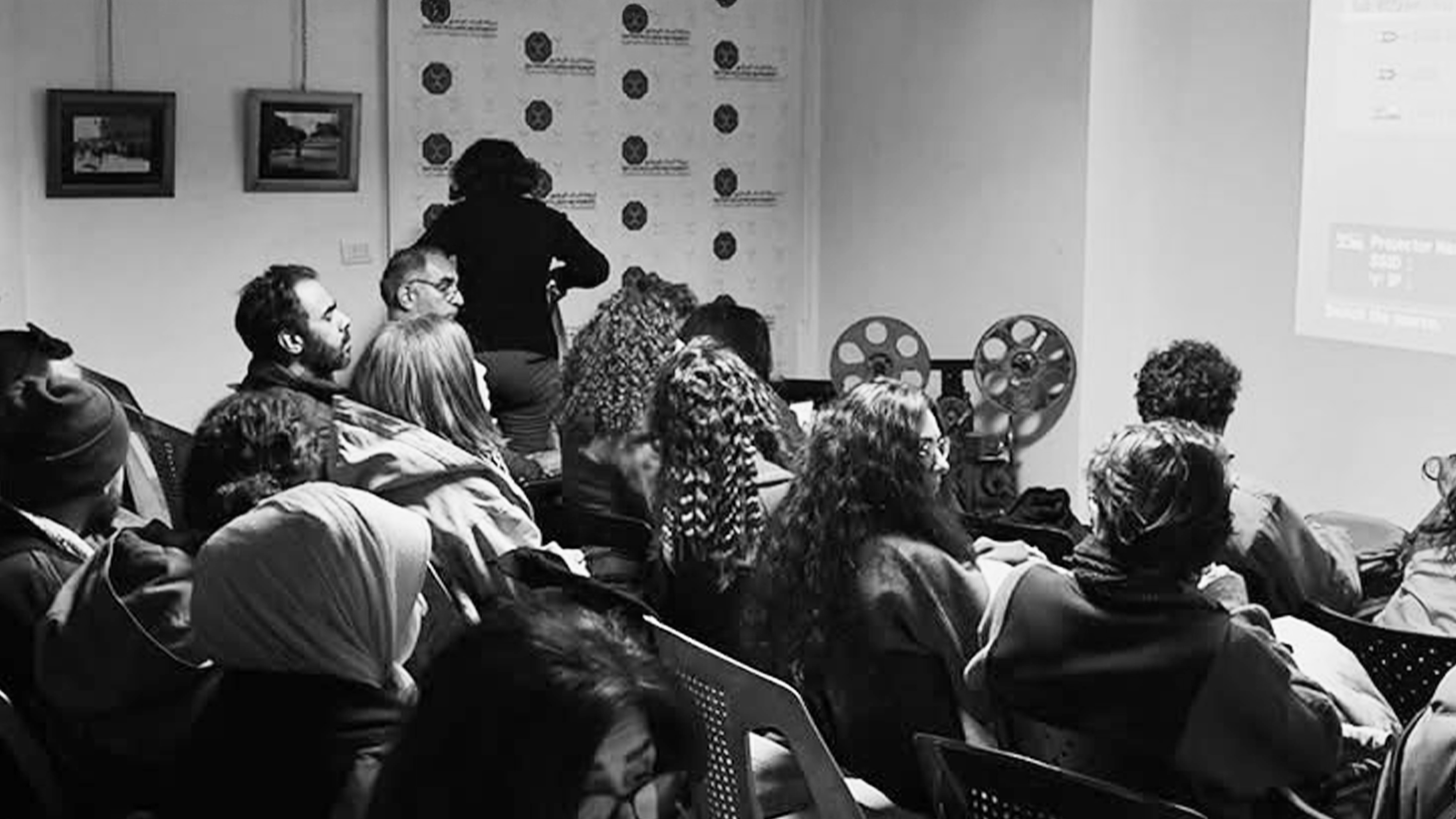
On 15 January 2025, five weeks after Assad’s downfall, the film Stars in Broad Daylight (1988) by the director Ossama Mohammed was screened at Zawaya Gallery; it had been banned by a personal decree issued by Hafez al-Assad immediately upon its release. It was common for certain films to be banned as soon as they were completed, condemning them to a life in exile at international festivals and within closed circles. Similarly, the Shahid platform (also part of the MBC Group) announced that it would screen the series Tomorrow We Meet (written by Iyad Abu al-Shamat and directed by Rami Hanna), produced in 2015. This decision marks a turning point in the long-standing suppression of the Syrian narrative, even on Arab channels, which had chosen not to produce or broadcast works dealing with the reality of Syrians following the outbreak of the revolution and its descent into war.
Artistic and cultural narratives, and those who produce them, are returning to the Syrian public sphere and to regional and international platforms after a long period of marginalization, invisibility and the normalization of the Syrian situation as an everlasting tragedy. However, the fall of the regime does not mean that exile has ended and receded into the past. Not all Syrians have returned to Syria; some are unable to return for administrative reasons, while others do not wish to return at all.
In my conversation with Soudade Kaadan, the question of return was raised, along with what might change in her work following the fall of the regime. Her response conveyed both optimism and concern. It seemed that the political transition had liberated her narrative and pushed the screenplay she was working on in previously unforeseen directions. Nevertheless, the possibility of an official screening remained tied to shifting and unreliable standards regarding what is considered “acceptable” in the public sphere. Her experience illustrates the nature of this transition: one of her earlier films faced objections of a religious and moral nature, while a later film sparked debates about the representation and interpretation of events. What is striking is that these objections were not confined to a particular political phase, but persisted in different forms before and after the transition, reflecting a change in the nature of social sensitivities rather than their disappearance.
When Nezouh was screened at a recent film event inside Syria—after having been banned from official screening under the Assad regime—an unexpected controversy arose over the portrayal of events and the way they were narrated. By contrast, the film was also screened in private venues and film clubs, where audiences welcomed it as the return of a Syrian film to the country after years of absence, and many stressed the importance of the presence of artistic voices that had previously been outside the official framework.
This shift in the nature of the debate not only changes the locus of accountability, but also raises a broader question about evolving standards of censorship, the representation of narrative and reality, and who has the right to tell them in the public sphere during this uncertain transitional phase. Can this “reappearance” be complete without the return of the works produced by Syrian artists in exile, with all the transformations and experiences they embody, which are inseparable from the broader Syrian narrative? Is it not also a matter of justice that Syrians inside Syria should be able to see the works that have been produced about them and for them in an exile that was itself deeply violent for those who lived through it?
This case study was inspired by the words of the Italian director and writer Pier Paolo Pasolini (1922–1975), taken from one of the last texts he wrote in the months leading up to his assassination on 2 November 1975. In this text, published on 1 February 1975 in the Italian newspaper Corriere della Sera, Pasolini invokes the disappearance of fireflies due to air and water pollution in order to discuss the disappearance of marginal forms of life amid the transition from Mussolinian fascism to a post-Second World War fascism characterised by capitalism and fundamentalist Christianity. In Survival of the Fireflies (2009), French philosopher and art historian Georges Didi-Huberman draws on biology, philosophy, cinema and literature to discuss this idea, as well as on Pasolini’s own career as a director, poet and thinker, in order to suggest that the disappearance of the fireflies does not signify their extinction, but rather a change in the conditions of their visibility. Fireflies may disappear from view when the conditions of light and vision change, without disappearing altogether. Didi-Huberman argues that fireflies appear and disappear in unexpected places, possessing the ability to hide and reshape themselves.
When the Assad regime fell in Syria and new questions began to take shape regarding disappearance, invisibility and reappearance, I remembered this debate between two thinkers who never met: Pasolini’s pessimism, in what Didi-Huberman described as the “lament for the fireflies”, and Didi-Huberman’s reading, which sees the disappearance of the fireflies as a shift in the conditions of their visibility rather than a declaration of their extinction.
Today, with questions surrounding the future of the arts and culture in Syria, and as certain exclusionary tendencies begin to reveal themselves, one cannot help but wonder whether our fireflies will once again vanish from view, and whether the fall of the Assad regime will be enough to ensure their survival and keep them from being burned once more. I borrow the fireflies of Pier Paolo Pasolini and Georges Didi-Huberman to reflect on the disappearance and return of artists in the contemporary Syrian context: not because the light has gone out—for fireflies are active in the dark—but because the conditions of visibility have changed, and with that change, so too do the places where things appear and the meaning of the narrative.
Organisations participating in the Invisible Violence Forum:
– Ettijahat
– Independent Culture
– Al-Jumhuriya.net
– Syrian Centre for Policy Research
– Syria Has Not Been Subjugated
– Dawlati
– Syrian Women Journalists Network
– Women for Shared Spaces