
The Kurdish issue in Syria and Turkey has reached a critical juncture since the fall of the Assad regime last December and the gradual implementation of negotiations between the government of Recep Tayyip Erdoğan in Turkey and the Kurdistan Workers' Party (PKK), which has declared its intention to disarm.
Meanwhile, Ankara continues to pressure the Kurdish-led Syrian Democratic Forces (SDF) in north-eastern Syria, trying to force them to dissolve within the central state and deny them special status.
However, this time the Turkish government is being cautious, as it doesn’t want to jeopardise the Turkish-Kurdish peace talks with Kurdish leader Abdullah Öcalan. The longtime prisoner is reported to have advised the SDF not to lay down their arms before reaching a satisfactory deal with Damascus. Analysts believe that Turkish President Erdoğan wants to secure the support of Turkey's Kurds to ensure a prolongation of his current presidential term, while claiming that he only wants "a Turkey free of terrorism".
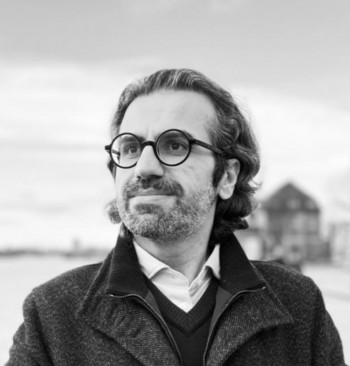
To explore the Kurdish issue in Syria and Turkey, and the expected developments in negotiations between the SDF and the Syrian Interim Government led by Ahmed al-Sharaa amid a war of words and military hostilities between the two sides, Untold interviewed Dutch expert Wladimir van Wilgenburg.
Wladimir van Wilgenburg is a reporter and analyst. He has covered the war against the Islamic State in northern Syria and Iraqi Kurdistan as well as other topics for international media and has conducted research for several think tanks. He co-authored two books on the Kurds of Syria: one on their experiment with self-rule in 2019 and the other on the U.S.-Syrian Democratic Forces partnership against the Islamic State in 2021. He holds an MA in Conflict Studies from Utrecht University and an MA in Kurdish studies from Exeter University.
Sulaiman Abdullah: How do you evaluate the agreement reached on 10 March between the head of the interim government and Mazloum Abdi, the commander of the SDF, particularly in the wake of the massacres on the coast?
The regime has fallen. But a Syrian Kurdish family continues its endless marathon of displacement
23 December 2024
Wladimir van Wilgenburg: The Syrian Democratic Forces have always wanted to reach an agreement with Damascus, even during the previous regime. So this is nothing new, despite pressure from the United States, which aimed to reduce its troop numbers in Syria.
SA: Do we have a concrete agreement?
WW: The non-binding agreement includes some specific points like a ceasefire and the return of IDPs to their areas, but the agreement misses a specific point: will Syria be a decentralized state or a centralized state? As a result, there are still major disagreements between Damascus and the SDF. The deal also includes the integration of civilian and military institutions in the northeast, without specifying clearly how to implement that.
SA: The interim Syrian government has accused the SDF of delaying the implementation of the agreement. Has the SDF's approach really changed, or is each side simply taking advantage of favourable (inter)national circumstances? For example, the US made clear it favors centralisation. And then there is Sweida, with its separationist currents.
WW: I don’t think the SDF's approach has changed much — it's still the same position — but events on the coast with the Alawites, and Damascus's attempt to forcibly integrate Sweida by military force, have created more distrust between the SDF and the central government. Damascus has also used tribal mobilisation against the Druze and could do the same against the SDF. This is especially likely since some of the tribes that fought against the Druze in Sweida live in the areas now under SDF control.
SA: How would you evaluate the SDF's decision to convene the 'Northeastern Syria Components Conference'? Was it a calculated move in response to the Suwayda massacre, or a reckless one that provided the government with an excuse not to take part in the Paris meeting?
WW: I think the aim was to put more pressure on Damascus to accept decentralisation, and to form alliances with other groups in Syria who also favour it. This is especially pertinent after the events in Sweida.
However, Damascus's decision to cancel the Paris meeting was more closely linked to Turkey's opposition to hold the meeting in Paris, given Turkey and France discrepancies in the past.
SA: A report published a few days ago maintains that HTS struck a deal with small groups in Sweida, which facilitated the passage of the interim government's forces. Does the SDF fear something similar could happen to them, given the high presence of Arabs among their ranks?
WW: Well, during the fighting in Manbij, a group affiliated with the SDF’s Manbij Military Council switched sides and joined the offensive of Turkish-backed groups. So, it is possible that Arab fighters in the SDF could switch sides. In the past, Arabs in Deir ez-Zor preferred the SDF over Damascus, also because of the Iranian-backed groups.
But now that the Assad regime has fallen and the Iranian groups have been expelled, some tribes may prefer integration with Damascus.
It should be noted though that the SDF and YPG initially had no plans to go to Deir ez-Zor, but were pushed by the Americans to defeat ISIS and remove the last territory in their control.
I don’t think Turkey would provide military support for an attack on the SDF by deploying the Turkish army and drones. However, Turkey could provide intelligence support if Damascus were to attack the SDF.
SA: In a recent interview with Rudaw TV, Qutaiba Idlibi, the Syrian Foreign Ministry's official for US affairs, introduced himself as a Kurd. He said that some Kurdish hardliners refer to people like him as 'Arabized Kurds'. He also argued that Kurds living in Damascus, Hama, Aleppo and Latakia are not represented at the Kurdish Unity Conference. Is this an attempt by the interim government to pick Kurds who fit their agenda?
WW: It is true that Kurds in Arab majority areas were not much included in the Kurdish Unity Conference, but this is also because they are more integrated with the culture of the Arab majority and support non-Kurdish parties.
Of course, Damascus can use Kurds who have joined the government as an argument that Kurds are represented, but there are currently no Kurdish armed groups, to my knowledge, that can be used against the SDF. There are civilian Kurdish technocrats who joined the new administration in Damascus but they have no strong tribal base or military groups. There were a few Kurdish FSA groups in the past that fought the SDF and YPG in Afrin (but they were later marginalised, and their commanders were arrested). There are also Kurdish Islamists who are allied to the HTS, but they are often from outside of Syria, like from Iranian Kurdistan.
SA: In a recent article, journalist Ambreen Zaman quotes an Iraqi Kurdish academic that the Kurdistan Workers' Party's decision to lay down its arms is an attempt to save the SDF project in Syria. He says: “The mother sacrificed herself for the baby” Do you agree?
WW: I am not sure. The PKK has had peace talks with the Turkish state in the past. But definitely it will make it easier for the SDF to deal with Turkey and the new government in Damascus. The peace talks between the PKK and the Turkish state had already begun before the fall of Assad, when the political situation was still quite frozen.

Civil Society Spotlight: Episode III
14 May 2025
SA: The Turkish leadership is unable to overcome a threshold, namely the acceptance of a special Kurdish status in Syria, something it has not accepted in Turkey itself, insisting on dissolving the Kurdistan Workers' Party and getting them to lay down their arms. Is the Turkish government's refusal to accept a special status for the SDF in Syria a matter of psychology?
Turkey prefers a strong, centralised state in Syria and wants the SDF to disband. This is despite the fact that a strong centralist state in Syria under the Assad regime led to the Syrian revolution. If talks between the SDF and Damascus fail, there is a possibility that the SDF will hold direct talks with Turkey.
SA: A parliamentary committee has been formed in Turkey to consider reconciliation with the Workers' Party. Devlet Bahçeli, the leader of the Turkish Nationalist Movement Party, says he expects the reconciliation process to be completed by the end of this year. Would Turkey be risking the entire process by supporting an attack on the SDF in Syria?
WW: I don’t think Turkey would provide military support for an attack on the SDF by deploying the Turkish army and drones. However, Turkey could provide intelligence support if Damascus were to attack the SDF. When Turkish-backed groups attacked Manbij and Tal Rifaat, they did not receive the same level of support from Turkey as they did when they attacked Afrin in 2018 or Serekaniye and Tal Abyad in 2019. This doesn't mean that conflict within the new Syrian army is not possible. This includes Turkish-backed groups and the SDF. Moreover, some of the Turkish-backed factions would rather listen to Ankara than Damascus.