

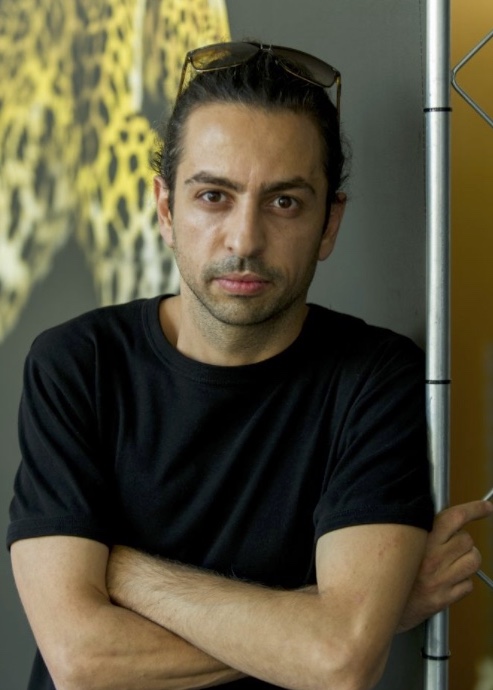
Back in 2017, founding a cinema club in Jaramana, in the southeastern outskirts of Damascus, was not part of Nasser Munther’s plans. An engineer active in the field of astronomy before the 2011 revolution and an opponent of the Assad regime, Munther did not want to leave the country despite all the violence. The question that preoccupied him and his companions at that time was: “What needs to be done at this stage?”
During the years of revolution and conflict, the Jaramana area remained neutral, and the city has become a refuge for many Syrians fleeing war and repression. Although under the control of the regime and its security services, the population density and sectarian differentiation has given this district a state of independence and stability for the whole 14 years. Though, any political and independent initiative was almost impossible under the authoritarian regime.
Munther owned a rich digital archive of films. After military operations in the Damascus area calmed down following the displacement of the people from al Ghouta, he became convinced of the need for cultural action. Taking advantage of the unique situation in Jaramana, he founded a cinema club, to nurture and spread his passion for cinema.
“The cinematic space we created would open the door to free discussion of social issues”, he says. Indeed, before the fall of the regime, “the club screened films that addressed the themes of tyranny and political freedoms, and the discussions that followed raised questions of justice”. The club also carried out projects such as open-air screenings in collaboration with civil society organisations, targeting children and teenagers. It attracted a diverse audience in terms of age and ethnicity, becoming a space for breaking taboos and opening up national dialogue.
“I tried to change the general mood of Jaramana's neutral audience towards the Syrian regime, and to spread awareness of its danger to all segments of the Syrian people” he continues, “especially to the minorities that Assad claimed to protect in the face of the extremist attacks against the ‘secular regime”.
But nothing would have told the Jaramana Cinema Club’s founders and members that soon these discussions could happen freely and officially.
The fall of the Assad regime was a historic milestone, ending a long and bloody period and opening the door to a new phase that is no less harsh and complex. When opposition forces moved towards the capital Damascus, the Druze of Jaramana rose up and overthrew the regime in their city on the night of 8 December 2024.
With the power change, the Cinema club found itself facing a pivotal moment. It officially announced itself for the first time, then launched its first public initiative titled "Freedom Cinema" to screen previously banned films about the Syrian revolution.
It was at this point that I was invited to screen a selection of my work.
For me, the idea of returning to Syria after a forced absence of 14 years was a necessity dictated by nostalgia and a sense of belonging to a homeland we did not choose.
Ammar al-Beik: What a Strange Life...
31 May 2024
On my return journey, I carried with me a longing and the films I had made during my years in exile, without having any clear idea of where I would show them. It was simply a desire to share them with my compatriots who had lived through the revolution and the war at home. I arrived in the province of Daraa on 3 January 2025 via the southern Jordanian border crossing, before my films led me to Damascus and Aleppo.
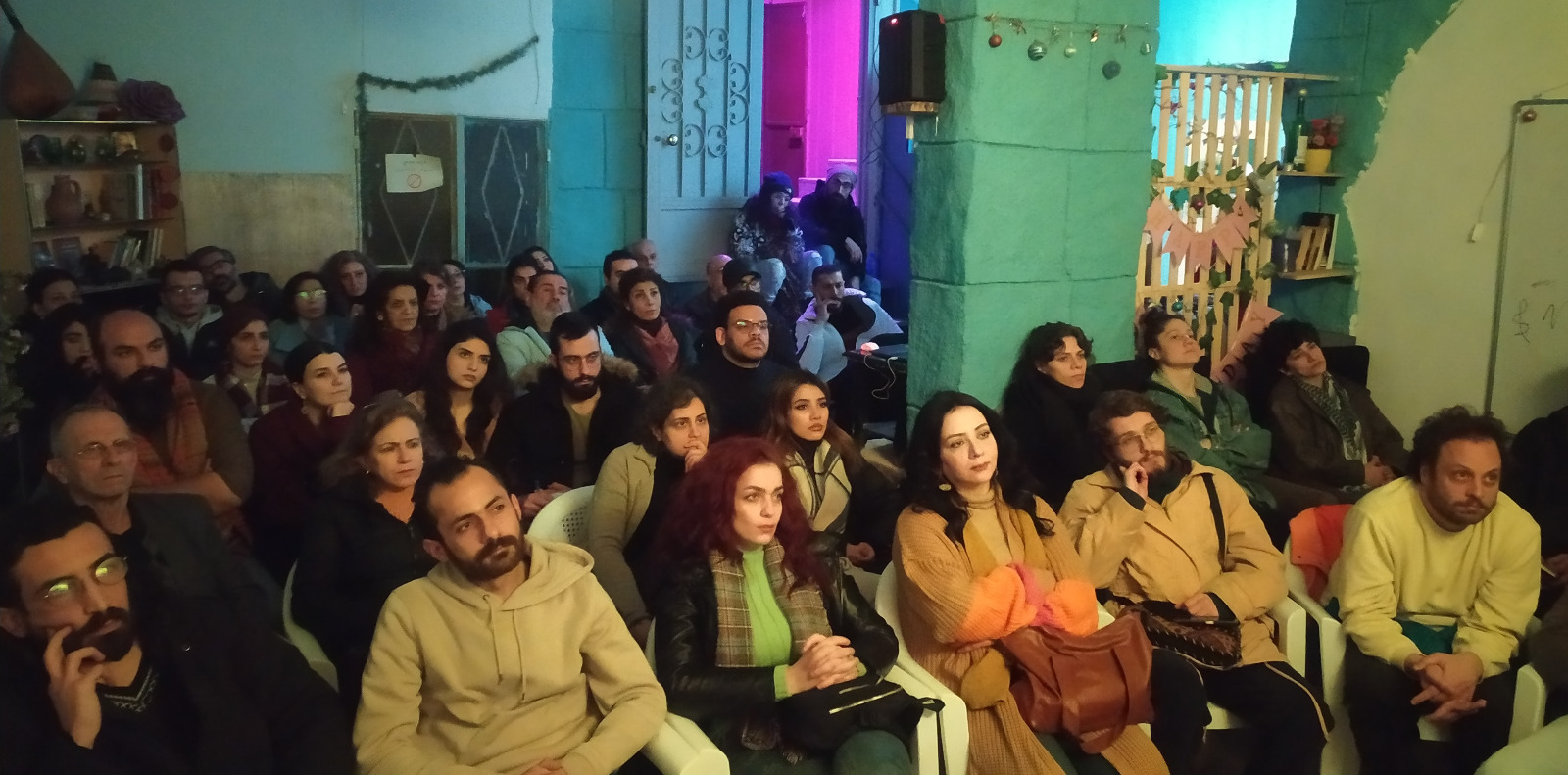
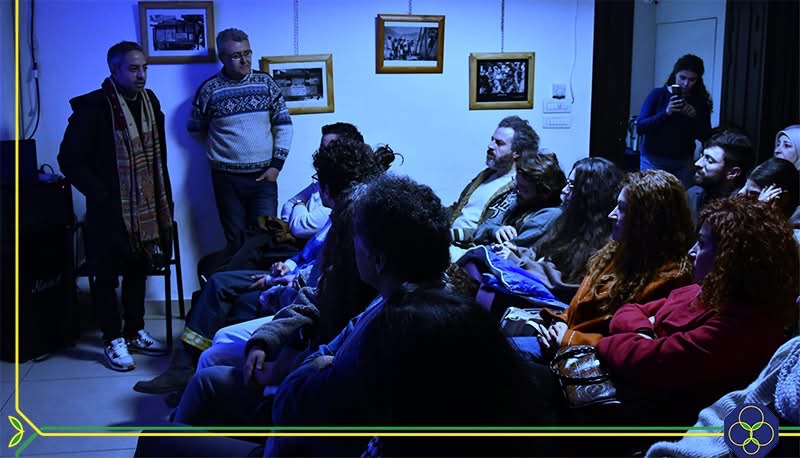
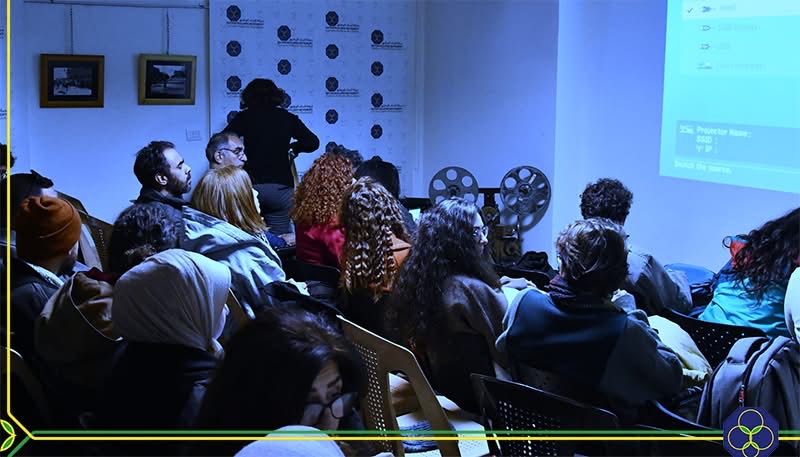
At the Cinema Club in Jaramana I encountered a diverse audience of all ages, gathered with great enthusiasm.
What I hadn't predicted during The Hangar (Eyas al-Mokdad, 2019) screening was that former detainees from the Hafez al-Assad era would link some of the scenes with real events they had experienced or witnessed. The movie deals with the subject of the executioner, the victim, and the victims of torture in the Syrian security branches. They had never seen their own experience portrayed in Syrian films before. That evening, I had an overwhelming emotional feeling when the audience expressed their appreciation towards a document showing something that some club members experienced directly.
It was a moment of freedom in every sense of the word.
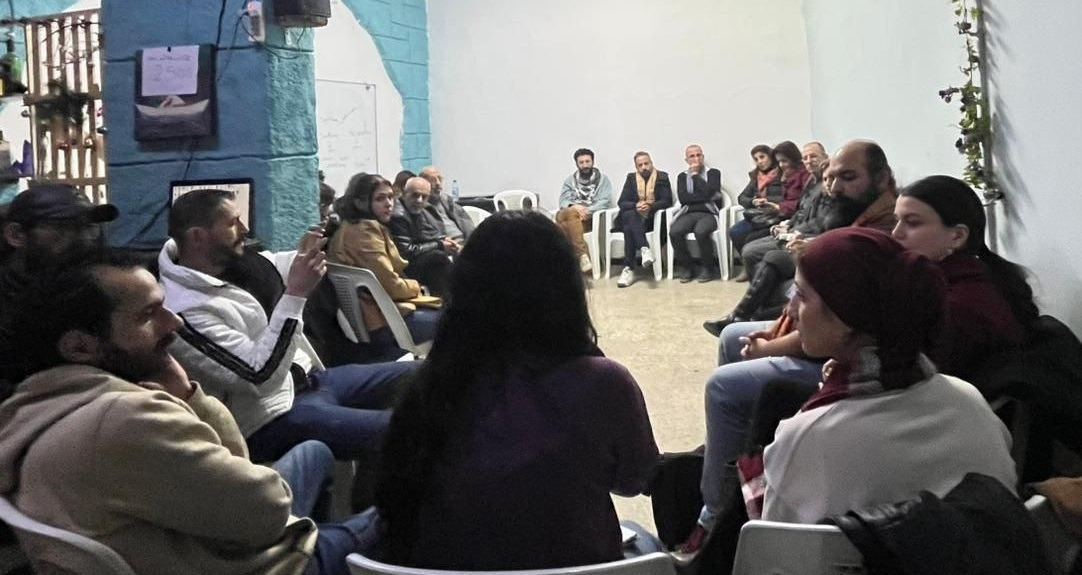
The opportunity to engage in discussions about the revolution, the war and the fall of the regime constituted a unique human and cultural experience. After the screening, the audience told me about their reading of my films. Some of them also began sharing precise details about the nature of film editing. Some filmmakers from the younger generation did not hesitate to criticize some of my artistic choices. The quality of the dialogue established the club as a distinguished space for knowledge, driven by the open-mindedness of its director Nasser Munther.
Something extremely needed in the new Syria.
By the time I returned
A limited number of connections are enough to reach any individual in the world. This concept elaborated by Stanley Milgram in his small-world theory was reflected in my experience as my close circle of friends in Damascus led me to a network of cultural connections. Thanks to actress Hanan Shakir, I met Nasser Munther, founder of the Jaramana Cinema Club. The same happened with journalist Baraa Salibi who helped me to get in touch with Dr Ahmad Hassan and its Abu Roummaneh Cinema Club. At the same time, news of the screenings in Damascus reached Aleppo, where Natalie Bahadi, director of the Karasi collective, contacted me to present some of my films in the city.
By the time I returned, the state had disappeared, and cultural ministries and other official institutions had evaporated. In this vacuum, independent initiatives emerged, with film clubs taking on a compensatory role for the absence of government cultural activity.
In my formative years, the special film screenings I attended in Damascus during the Bashar al-Assad era had a profound impact on my relationship with cinema. I recall the invitations we received from Dr. Hassan Abbas to watch and discuss certain films at the French Centre for Near Eastern Studies (IFPO) in Damascus. One evening in 2004, coinciding with the end of the Damascus Spring political movement, Dr. Hassan showed us the film Flood in the Land of the Baath by Ömer Amiralay.
The documentary was banned in Syria and Dr. Abbas used it as a means of raising awareness among a young generation grown up under the Ba’ath regime. One can imagine the potential impact of such screenings on the outbreak of the Syrian uprising in 2011.
One can imagine the potential impact of such screenings on the outbreak of the Syrian uprising in 2011.
Cinema cannot be a catalyst for a revolution, but by boycotting the Artists syndicate at the time I was a student I expressed my political positioning toward an institution subjected to the regime's authority. And even if cinema cannot be a sole prompt, revolutions don’t come out of the blue.
Behind the powerful role that cinema had during and after the revolution, and to understand that feeling of unique freedom in Jaramana in 2025, it must be said that the history of cineclubs in Syria is older than the Assad’s family. Here it is.
A Syrian history of cineclubs
France is the homeplace of cinema. It was in Paris in the 1930s that film clubs began to be established as a reaction to the control of film art by producers, distributors and cinema owners. After the Second World War, these spaces led to the emergence of the French Nouvelle Vague. Film clubs in France were part of experimental cinema, and they gained legal status in 1957, when the Minister of Culture and renowned writer André Malraux issued a decree to regulate and promote them.
A few years before in Damascus, Najib Haddad and a group of other intellectuals made their first attempt to establish a film club in Syria. It was May 1952 and the club's activities were limited to collecting a film library of books and brochures about films.
"Our goal is to help young people to appreciate the art of cinema and to judge films”, Haddad had said in his speech at the opening ceremony. With a weekly newsletter distributed to local newspapers, the club focused on alternative films and provided in-depth analysis of those shown in Damascus cinemas. But soon the club was unable to find a place for ‘meaningful’ cinema, with all that this required in terms of financial and moral support.

The Syrian public and its cinema: A tale of estrangement - Part I
28 November 2019
The home of Najib Haddad, a professor of French literature, became the club's headquarters. Despite all the tentative deals, they failed to convince film distributors and cinema owners to rent one of their cinemas. Instead, Haddad’s house became a pioneering experience in Syrian cinema, with screenings and meetings taking place there.
In the meantime, in 1963, the General Organisation for Cinema was established to produce films in line with the political and social objectives of the supposed Ba'athist revolution, with its ideologies centred on Arab unity and the liberation of Palestine, the ‘causes of the nation’.
Najib Haddad presented the film club to the Organization, and indeed began managing this project for a few years. With the return of a group of young Syrian filmmakers who had studied abroad, including Mohammad Malas, Omar Amiralay, Haitham Hakki, Qais Al-Zubaidi, and Nabil Al-Maleh, the film club became remarkably influential.
Director Omar Amiralay said in an interview that a group of young filmmakers collaborated with the General Organisation for Cinema to manage the club after elections were held in June 1971 and formed a new board of directors with young filmmakers enthusiasts of alternative cinema.
The support of the General Organisation and the Ministry of Culture for the film club project facilitated the adoption of the Ministry of Culture-owned Al-Kindi Cinema. That year, the club had 770 active members and weekly film screenings. They invited a number of internationally renowned directors, including Pier Paolo Pasolini, Agnès Varda and André Vaida. “The film club became a space for free thinking and a platform for expressing political and social concerns”, Omar Amiralay said.
The 1973 war with Israel was used by the Hafez al-Assad regime to consolidate its authority over Syria and end any opposition to his unilateral rule. This also had consequences on the club’s activities as they were brought under the control of the General Organisation for Cinema.. Someone was dismissed and the club was expulsed from the Al-Kindi Cinema.
From that moment the cinema club began holding its screenings in a ground floor apartment in the Taliani neighbourhood of Damascus. With his experience and knowledge of cinema technology, the electrician-trained Nazih Shahbandar was able to set up the cinema projector in the kitchen and then direct its lens towards a mirror fixed behind the audience, so that it reflected the image onto the screen. One of the founding pioneers of Syrian cinema and one of the most important cinematic craftsmen in Syria, Shahbandar, with his innovative technical solution, enabled club members to screen films despite the logistical limitations.
The club's insistence on its independence prevented its members from using the archives of the General Organisation or any other government source.
The club's insistence on its independence prevented its members from using the archives of the General Organisation or any other government source. Director Nidal Al-Dibs' testimony stands out as a living document of the pioneering role played by the Damascus Film Club in the 1970s. The club opened up to the world through the partnership with Cahiers du Cinéma magazine, and they obtained a collection of rare international films.
At the same time, the club served as a hub for other film clubs that sprang up in other Syrian cities such as Aleppo, Homs and Latakia. This network established cinema as part of public life and opened the door for a wider audience to discover alternative cinema.
It was in this context that a third-generation of filmmakers was born: the same Nidal Al-Dibs, who later studied cinema in the Soviet Union on a scholarship; Hala Al-Abdallah, a member of the club's audience, later became assistant director on many pioneering film projects produced in Syria during the 1980s and 1990s.
The Assad regime used every possible means to restrict the club's activities after it became almost the only independent organisation in Syria. The repressive military rule used censorship to stifle intellectual activity, until it finally shut down the club's activities in Damascus in 1988 with a phone call from a government agency.
And so the regime continued to operate. Until the revolution.
“Security was present at our screenings”
The political and intellectual vacuum that spread across the country after the outbreak of the revolution and the start of military operations made a cinema lover like Ahmed Hassan sad. The only solution, he thought back in 2014, was to start showing films to his friends at his home. A film club in the Abu Roummaneh neighbourhood of Damascus was born.
Like his cinema lover predecessor Najib Haddad, Ahmed sought to share alternative cinema with his friends on a weekly basis, while enjoying some refreshments. This was before the house was turned into a coordination meeting place for Damascus and its countryside, and the regime came to arrest activists.
The Abu Roummaneh neighborhood is located in the heart of the capital Damascus, in one of the most prestigious residential areas, which includes the residences of the President of the Republic, senior officials, and high-ranking officers, as well as foreign embassies. The area has always enjoyed intense security protection. After the Syrian revolution and the outbreak of violence in the country, this neighborhood became the center of activity for political movements operating in Syria under the umbrella of the regime.
Ahmed owned a café in Zamalka. During the siege of Ghouta he lost his job. It was early 2013. He began looking for any meaningful activity. Politician Louai al-Hussein suggested that he could organise cultural activities with the Building the Syrian State Movement, belonging to the national opposition (i.e. the opposition that agreed to negotiate with the Syrian regime and operated within its controlled areas).
The first idea coming to his mind was on Syrian visual memory. “As a photographer, I have always been interested in the Syrian visual archive and passionate about preserving it”. Ahmed was tasked with programming film screenings and decided to show films that addressed intellectual and political oppression, such as Iranian director Jafar Panahi's This Is Not a Film (2011).
Only four people attended the first screening.
At first, attendance was limited due to the nature of the film. However, as soon as the audience felt more confident, the screenings began to attract a reasonable number of viewers. The artistic debate created a new intellectual atmosphere. In 2013, director Mohamed Malas agreed to screen his films at an evening event, becoming a regular presence at the club's events.
Ahmed refers to the screening of Palestinian films and those by Mohammad Rasoulof, such as The White Meadows (2009): the poster featured Rasoulof with symbols supporting the Iranian revolution against the rule of the mullahs. The club also screened Chinese films such as Coming Home (2014), the story of a Chinese political prisoner during the Cultural Revolution and how he returned home after arrest to find that his beloved wife was unable to recognise him.
“Security was present at our controversial screenings” says Ahmed, explaining how their personnel would infiltrate the audience to watch the film and attend the discussion. “They became permanent members of the club over time”, he added, telling how amusing their obvious interest in the film was.
Suddenly, Louai al-Hussein fled Syria and the Building the Syrian State Movement came to an end. In 2016, Ahmed's friend Anas Jouda, a member of the defunct movement, founded a new political movement called the National Building Movement, and the screenings continued.
At this stage, the club shifted its focus. Among the club's guests was actor Bassam Kousa, who attended a screening of Nabil Malih's filmThe Extras (1993). Another friend of the club was director Mohammad Qarsli, who held a workshop on reading films, and how to derive meaning from a work of art.
The club later focused on cinematic movements and waves that responded to political and social changes, such as the Czech New Wave, which emerged after the Prague Spring; the German New Wave; and Latin American cinema, which dealt with themes of dictatorial rule and state suppression of freedoms.
It screened and discussed films despite constant censorship by the security services.
When the regime fell, Dr. Ahmed was interested in screening films by Syrian directors in exile, and my film, The Final Scene (2021), was one of them. I met an audience eager for works produced outside Syria. The Final Scene brings us back to the first year of the Syrian revolution through the story of the activist Orwa AlMokdad. As I consider myself as part of the revolution against the Assad regime, I wanted to investigate the political background of the Abu Roummaneh cineclub.

My relationship with the Jaramana Film Club was simple: I was an educated man who wanted to use art to change the city I lived in. The Jaramana Film Club had set up its headquarters in a modest basement with no ventilation or heating, whereas the conditions at the Abu Roummaneh Film Club were different.
The apartment near the well-known Al-Jahiz Park in the Abu Roummaneh neighbourhood suggested greater financial possibilities. I noticed that the club was located in the apartment used by the National Building Movement. I did not want to get involved with a problematic organisation accused of whitewashing the image of the former regime.
Dr. Ahmed emphasised that since he began his filmmaking activities, he had been keen to separate the club's activities from any political leanings of the umbrella organisation under which it operates.
They were merely guests, he precises.
On the road to Karasi art collective
I boarded the bus and headed north from Damascus to the city of Aleppo. The highway to the north stretches for 400 km through a diverse and breathtaking scenery. What caught my eye on that trip was the extent of the destruction along the road, turning the captivating face of nature into a harsh face marked by the effects of war.
After the journey, my sight was comforted by the cultural activists that welcomed me. Among all the grassroots initiatives of film clubs in Syria during and after the previous regime, the Karasi art collective in Aleppo, an inspiring space founded by Natalie Bahadi with a group of artists in 2022, stands out.
“We were born as a safe space for dialogue and creativity”, Natalie told me. “It was a pivotal moment when Aleppo, like the rest of Syria, was looking for ways to reimagine its future after years of conflict”.
Over the past few years, the club has been busy presenting art exhibitions and musical evenings, as well as film screenings, until the radical changes that took place in Syria at the end of 2024.
A change that also needs healing.
“Art is the tool for healing and transformation” she said, while at the same time emphasising the will “to open the door for a new generation of creators to enter the cultural field”.
Art is the tool for healing and transformation.
My film was screened at a café. The overwhelming majority of the audience were young men and women with fascinating energy and enthusiasm. The discussion moderated by Natalie focused on the idea of political conflict and revolution.
The public shared with me their stories during the war: a generation that has seen nothing in life but war and its direct impact on life.
One of the attendees, over 50 years old, argued with me about the legitimacy of the opposition's war against the Assad regime. I tried to respond in a way that kept the dialogue open. I was surprised by a young woman in her twenties who responded decisively, defending the film's message and the legitimacy of the struggle against tyranny.
That discussion lasted more than the hour-and-a-half-long film screening. It instilled hope in the soul, especially after the public asked me to return to Aleppo to give workshops.
The necessity of film clubs in contemporary cultural life emerges from the cultural act itself. Watching films in traditional cinemas does not provide the intimacy and openness that film clubs provide. The films in cinema clubs often respond to the intellectual and cognitive needs of the audience in certain political and social circumstances. This was proven by the experience of film clubs during the Assad regime's rule, from 1970 until the fall in December 2024: the political change that came after will undoubtedly be accompanied by cultural change. That’s why I made a promise to myself and to this new generation: we must extend our hands to build a real future for Syria.
Following the massacres in the Coast and Sweida, the Jaramana club's members and volunteers have been preoccupied with the urgent humanitarian needs, amid a tense political atmosphere dominated by sectarian and regional mobilisation.
Nevertheless, Nasser Munther's passion and belief in the power of art to reshape political consciousness remain there. Nasser's future plans include organising film screenings in other provinces: opening doors between Syrians and promoting a culture of dialogue and difference is what preoccupied him the most.
The Abu Roummaneh cineclub, unfortunately, closed due to financial difficulties.
The text has been translated and edited for clarity and flow by the Untold Editorial Team.