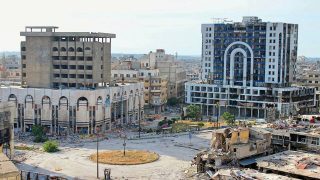


International sanctions are almost exclusively blamed for the collapse of the Syrian economy. With the same simplification, many Syrians built hopes for economic relief with the fall of the regime, which was the officially stated goal and justification for the sanctions.
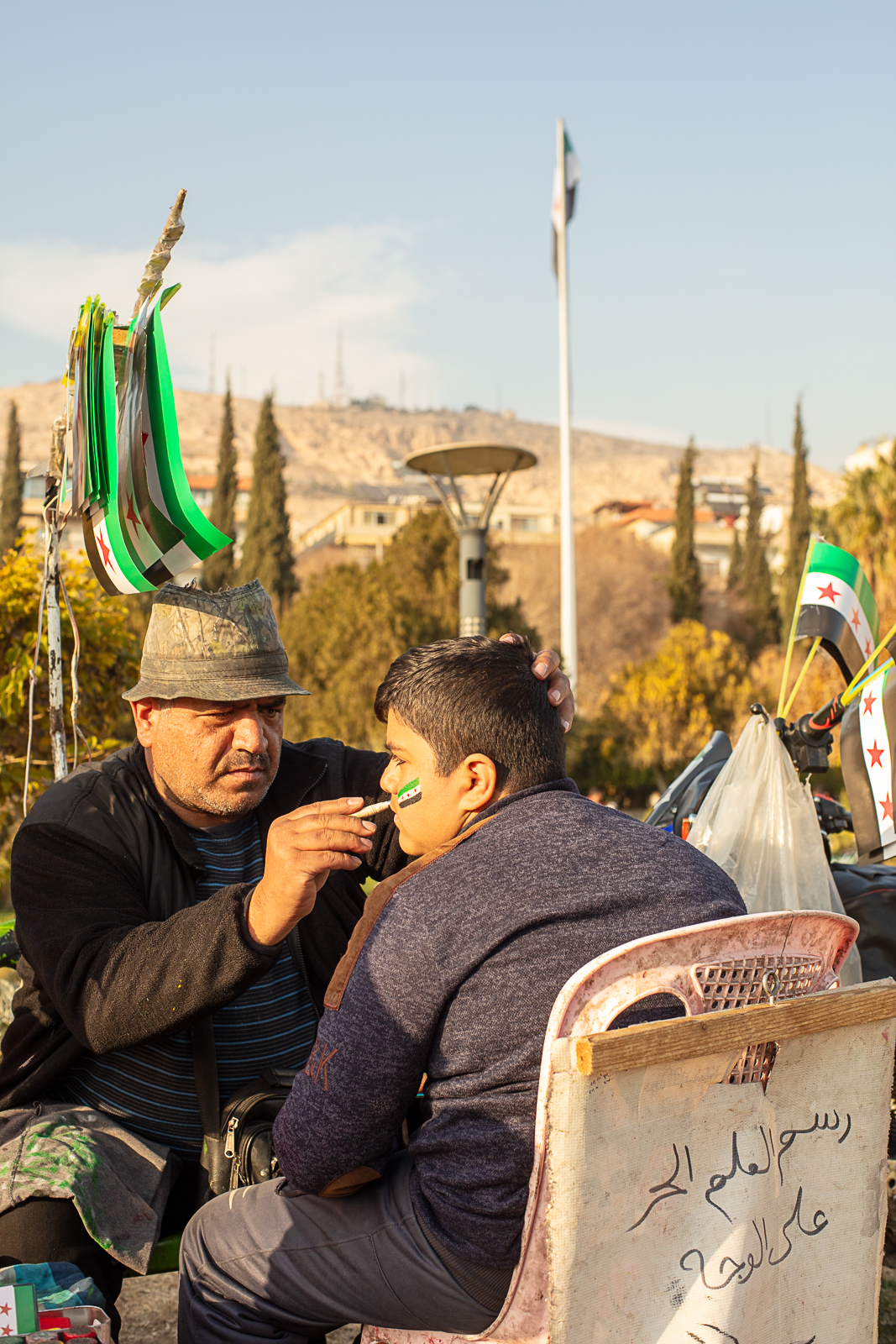
Citizens took to the streets in celebration as soon as the dictator fled, and the country was filled with joy reminiscent of children's stories and legends. Amidst the crowds and celebrations, young hustlers, accustomed to adapting and moving quickly, rushed to capitalise on this joy. New flags were printed in the blink of an eye on cups, clothes and souvenirs, and the celebration squares were filled with stalls selling items associated with the new joy.
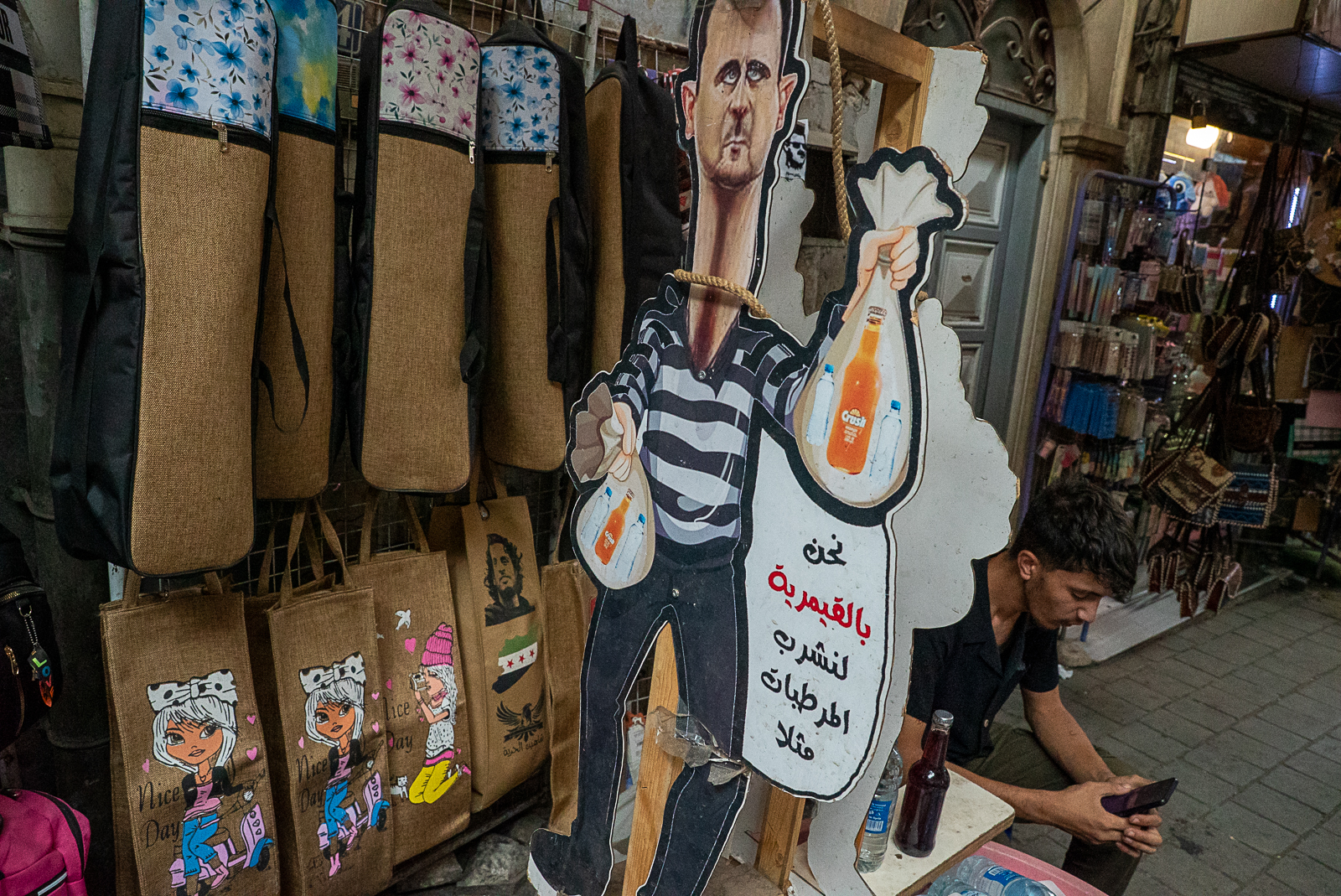
Manufacturers and sellers resort to humour to compete for customers' attention, and expatriates and exiles who come to visit carry these souvenirs as gifts of reassurance that the impossible has been broken.
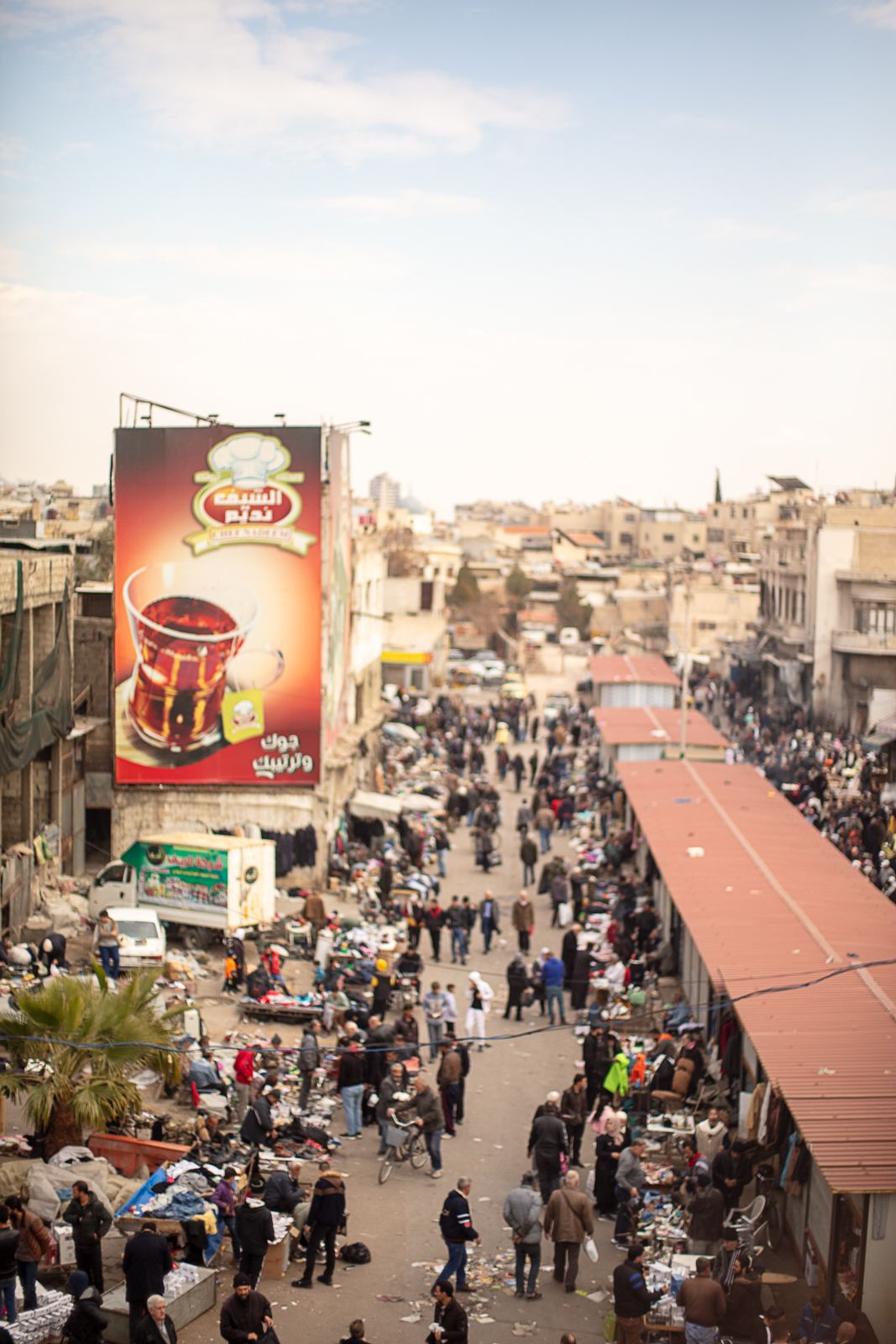
But what were Syrians buying before the regime fell?
With the collapse of the exchange rate, purchasing power declined to the point where obtaining basic necessities became a challenge for more than 90 per cent of the population, who found themselves below the poverty line.
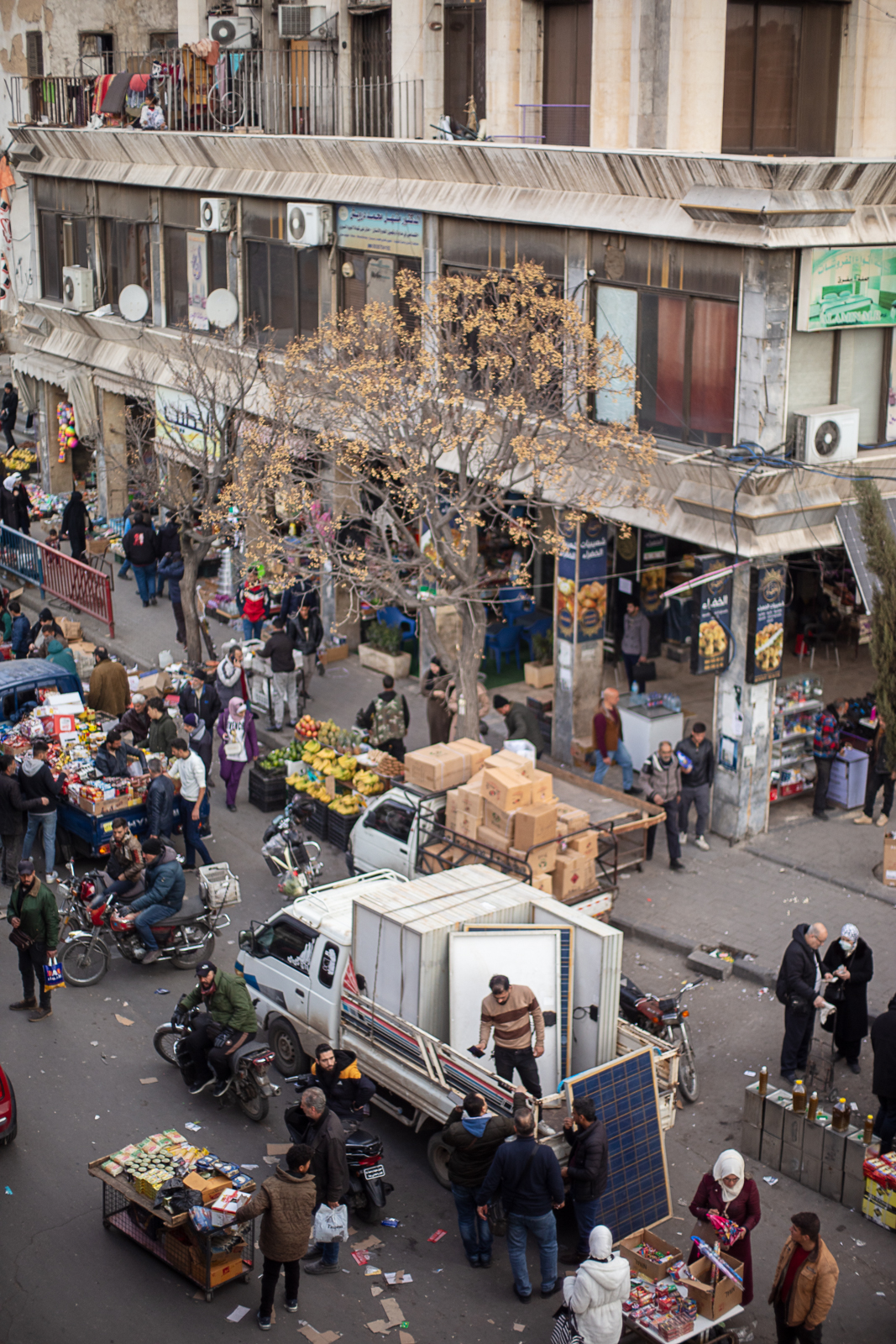
What was considered a luxury before the collapse of infrastructure, such as solar panels, has become a necessity for living and saving money.
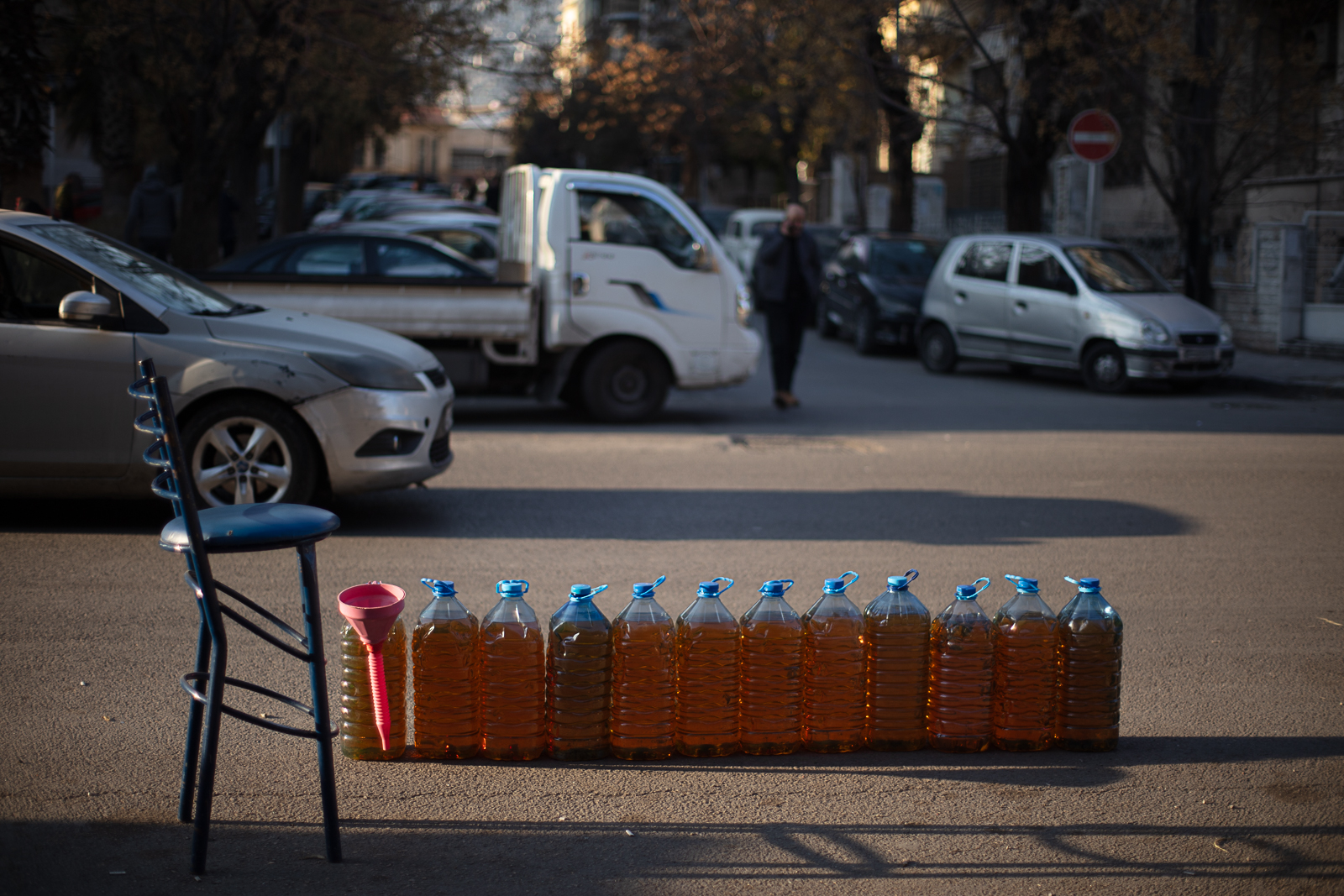
There is no longer an official price and a black market price for essentials such as heating fuel and transport, after subsidies were almost completely withdrawn.
This has resulted in an abundance of goods in the markets, but their high prices have made them unaffordable for many.

This affects the transport sector and people's ability to move around, especially in large cities. Attempts to set the minibus fare in Damascus at 2,000 pounds have failed, after drivers intensified their protests. Employees spend a large part of their salaries on public transport to get to work, making work unprofitable.
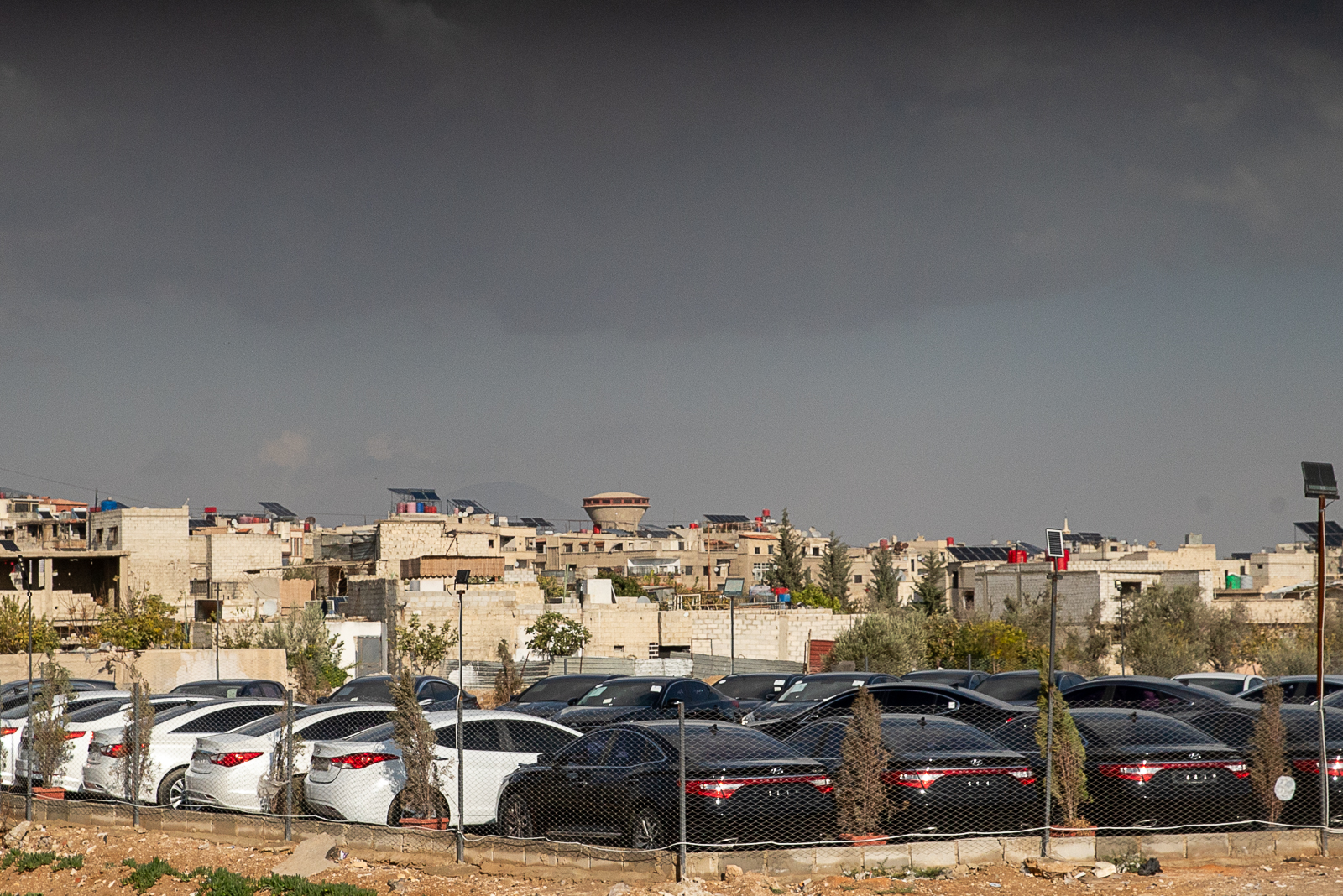
Others rejoiced at the abolition of customs duties on imported cars, which had doubled or tripled the cost of vehicles. Car dealerships were filled with used cars, the safety of which many questioned.
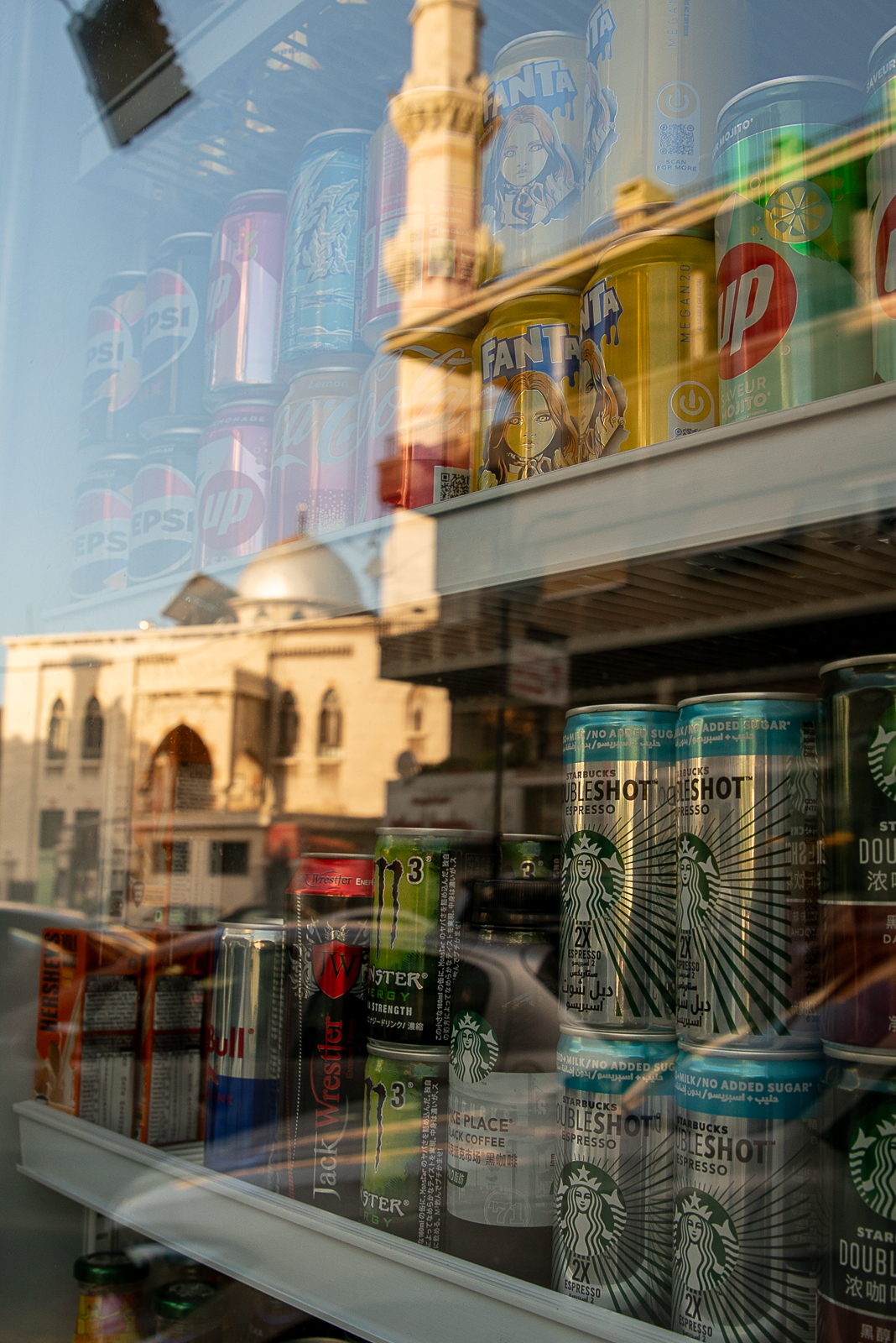
The absence of official foreign agencies from the Syrian market has another dimension, one with political and consumerist implications. While boycotts of products from companies supporting the war in Gaza are escalating after two years of extermination, Syrians today justify their purchase of these products, which were previously scarce in Syria, by saying that they are ‘fed up’ with poor-quality local products, or that their purchasing power does not affect the profits of these giant companies, or that: "When we have an official agency for these companies, we will boycott them! Everything we have is fake".

As for the market for household electrical appliances and communication devices, Chinese goods and lesser-known brands continue to dominate. However, last year saw the arrival of ‘stock’ goods with manufacturing defects or returned from European or Gulf markets, sold in bulk to the Syrian market.
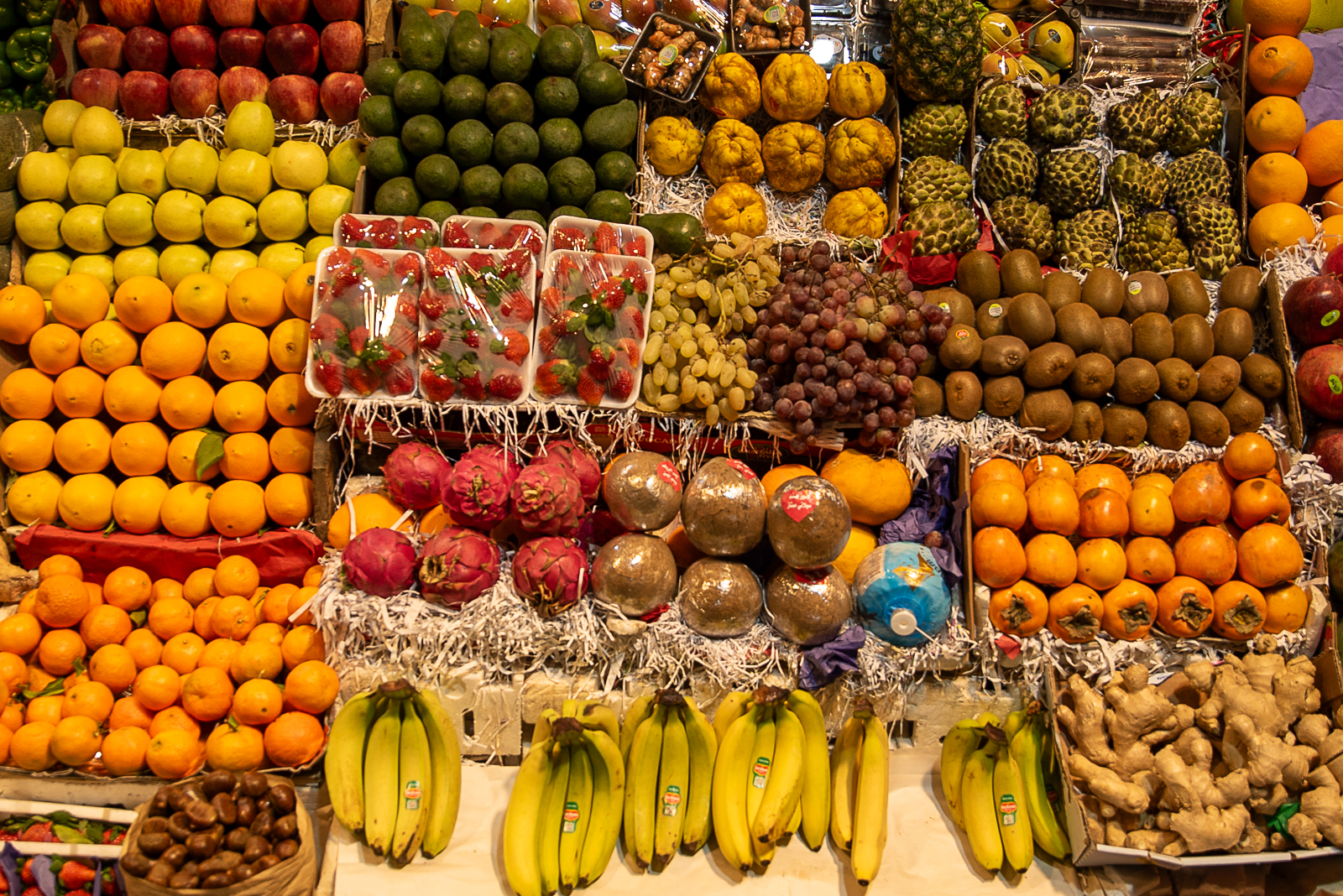

After subsidies on flour and wheat cultivation were almost completely lifted, wheat became scarce and expensive. Others are delighted with the new varieties of imported fruit, previously not available on the Syrian market. Despite their high prices, demand for these fruits reflects the reality of the huge disparity in living standards, with no official attempts yet to bridge this widening gap.
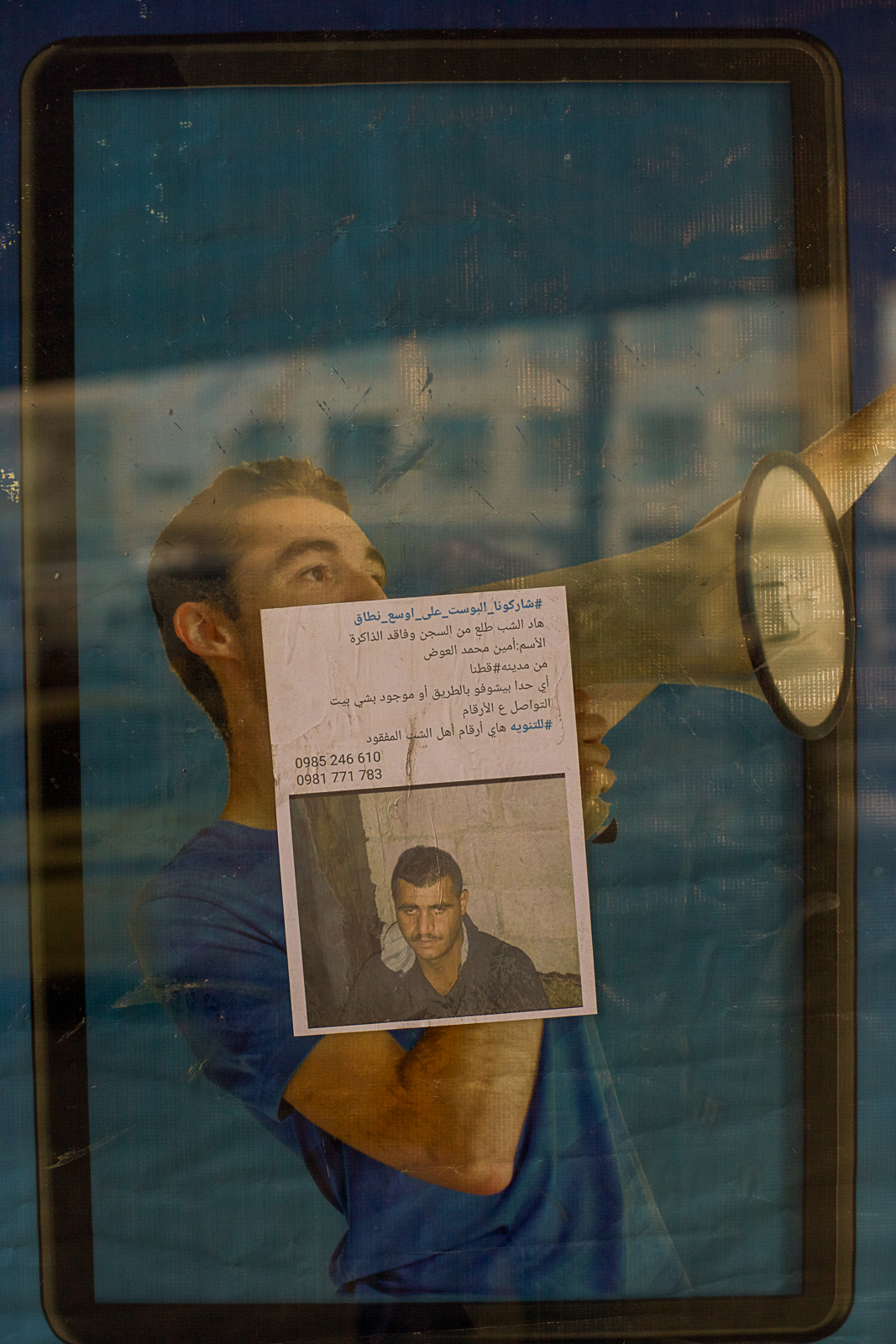

Between a lack of demand and needs that are not being met by the markets, many are searching for a glimmer of hope or signs of joy to convince themselves that relief is imminent.
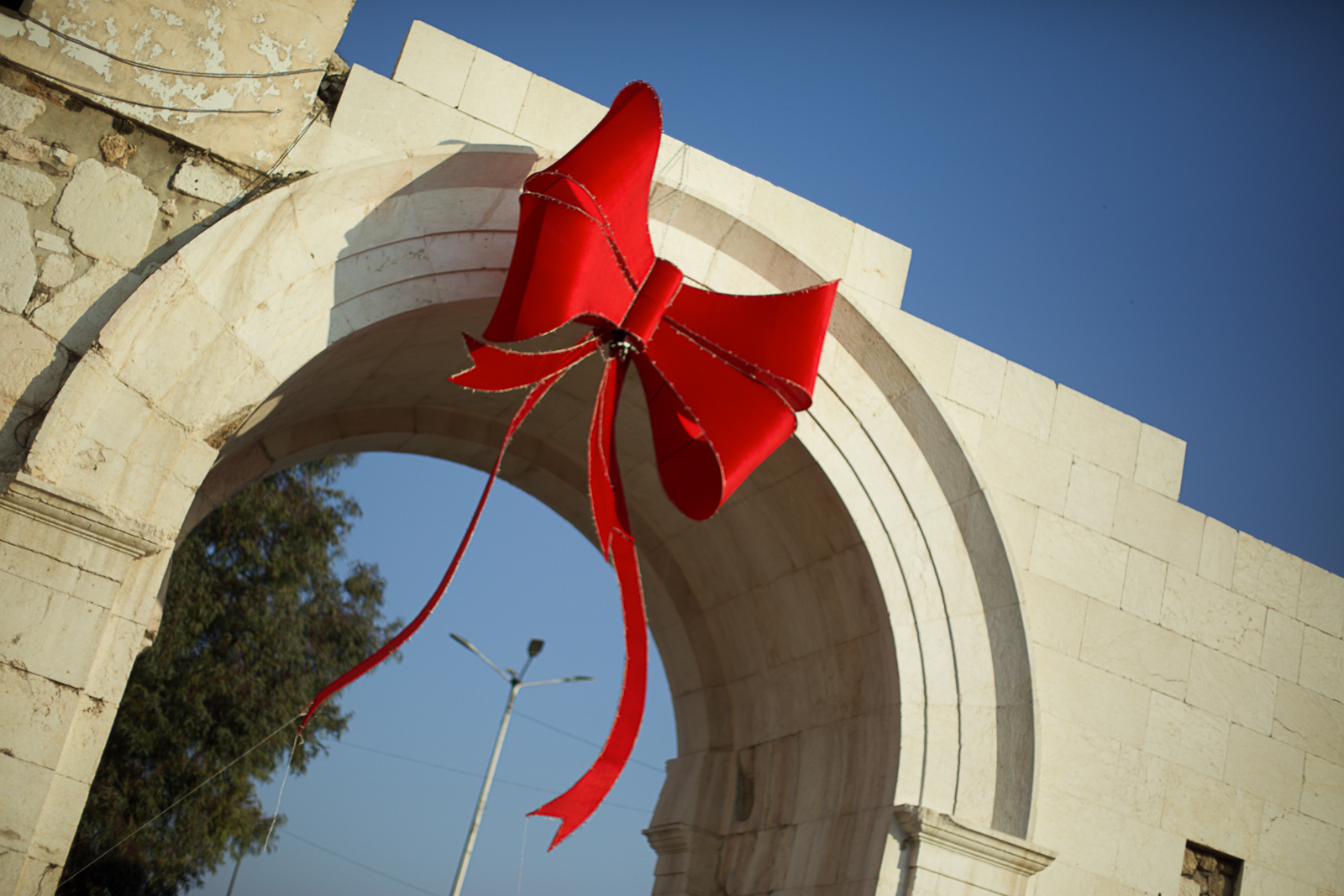
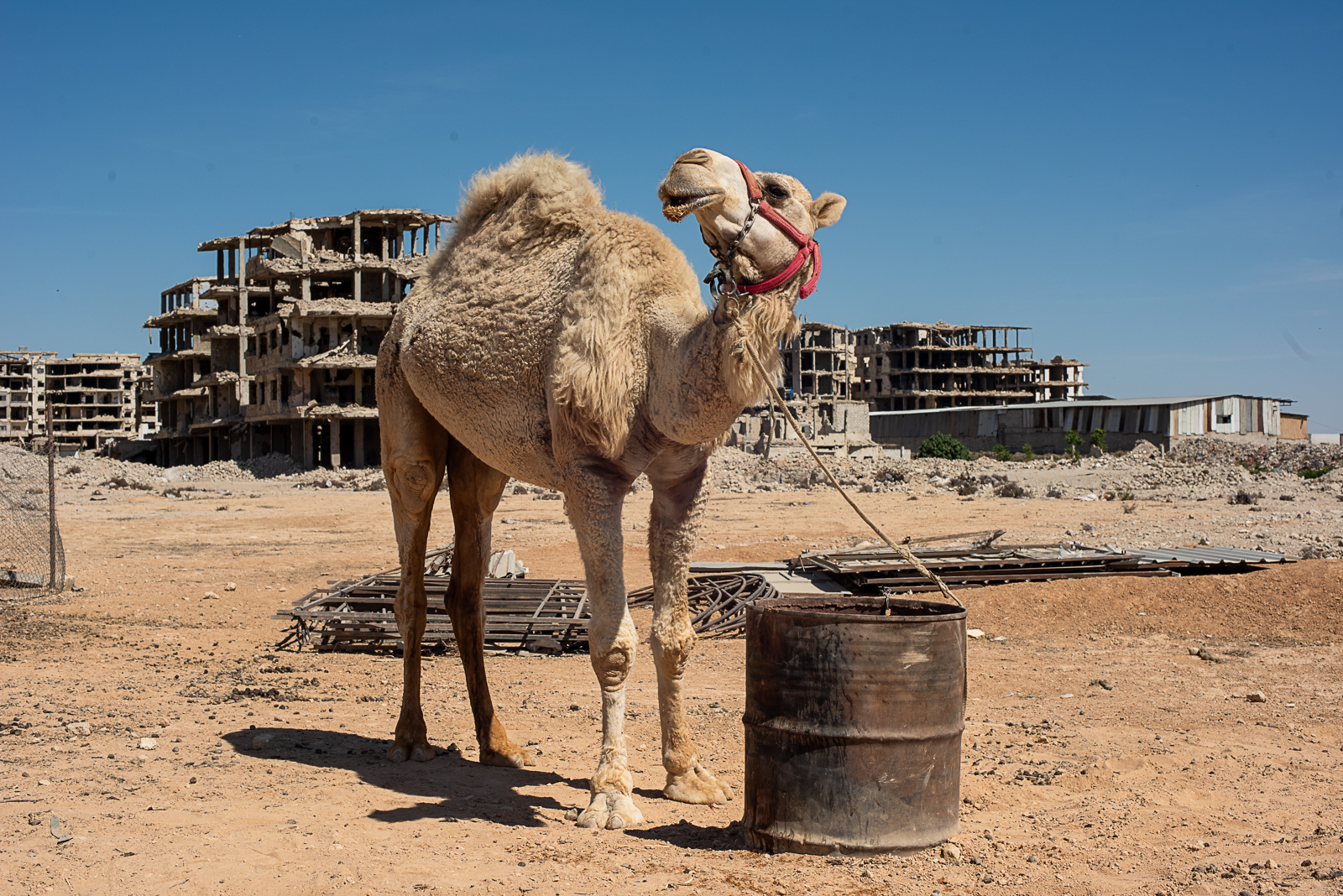
In these circumstances, ambitious economic narratives are promoted, promising people unprecedented prosperity in various sectors, with the ‘plot’ centred on the inflow of foreign capital and how incoming capitalism is the solution. Under this guise, long-term investment contracts for public property and strategic locations are justified, awarded without public tender to unknown foreign investors and implemented by unknown local contractors, according to unknown plans and timetables. It goes even further than that, because there is enthusiastic speculation about the ‘anticipation’ of monopolistic privatisation contracts for key sectors of the country's infrastructure, in which the state relinquishes its ability to make sovereign decisions about the basics of its citizens' lives for decades to come.
So far, most of these ‘investments’ have remained ink on paper in memoranda of understanding, serving more to reassure the public than to benefit the central bank's coffers. Until the right to access information from official sources and transparency in the management of state resources and budgets are taken seriously, these hopes remain, for many, a mirage that they have no energy to pursue.