
★★★☆☆
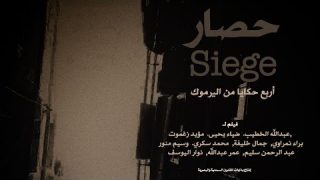
Following his first documentary, Little Palestine: Diary of a Siege, and his short fiction film, Sokrania 59, the Palestinian-Syrian director Abdallah Al-Khatib premiered his debut feature-length fiction film, Chronicles of a Siege, at the 76th edition of the Berlinale (Berlin International Film Festival) in mid-February.
Al-Khatib revisits the siege as the central theme of an episodic film, drawing from personal experiences shared with his friends during the Syrian regime’s blockade of the Yarmouk camp in Damascus. Each episode functions as a standalone short film, utilizing a visual language that borders on the documentary. Through this approach, he evokes the activists’ urgent sense of duty to document, while simultaneously questioning the ethical boundaries of filming human suffering.
Al-Khatib and his crew strive for stylistic consistency, yet the heart of the film beats with a fragmented rhythm. It shifts from an agonizingly slow opening—showing Arafat, a film studio owner, scavenging for his last scraps of food—to a breathless, frantic scene around a bread distribution truck. This is followed by a lingering, contemplative sequence where a group of friends wanders through Arafat’s now-abandoned studio (he having been arrested in the interim) to salvage whatever remains. In this space, Al-Khatib allows his characters a moment of reflection on their lives under siege and the loved ones they have lost. The film then jolts into a hyper-fast scene featuring Al-Khatib himself as an actor, attempting to buy a single "puff" of a cigarette from a greedy smuggler. It transitions again to an intimate encounter between a fighter and his beloved, before culminating in a final, chaotic, and high-speed scene in a field hospital. Here, the characters we have met throughout the episodes converge, though not necessarily linked by a clear or traditional dramatic thread.
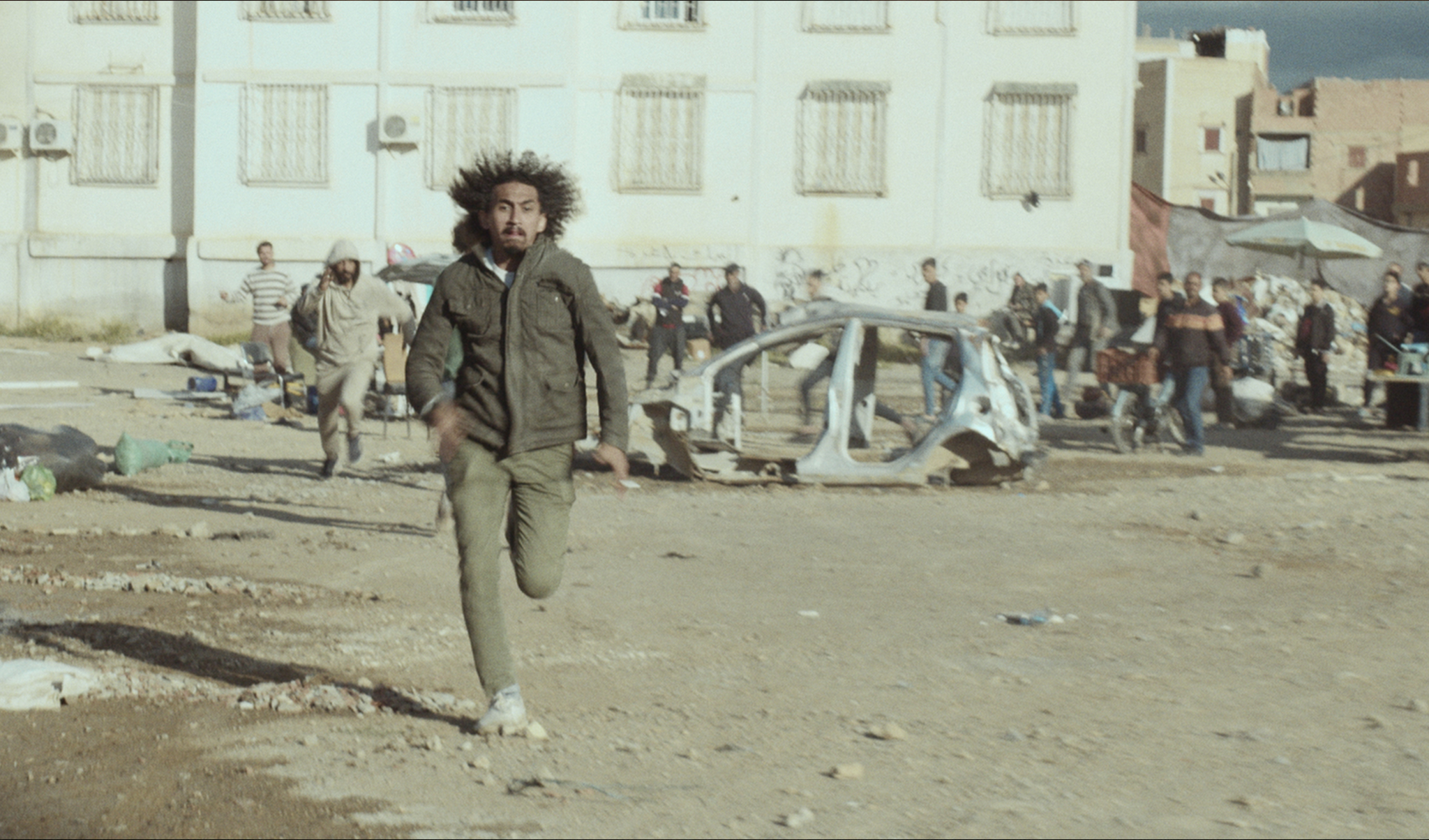
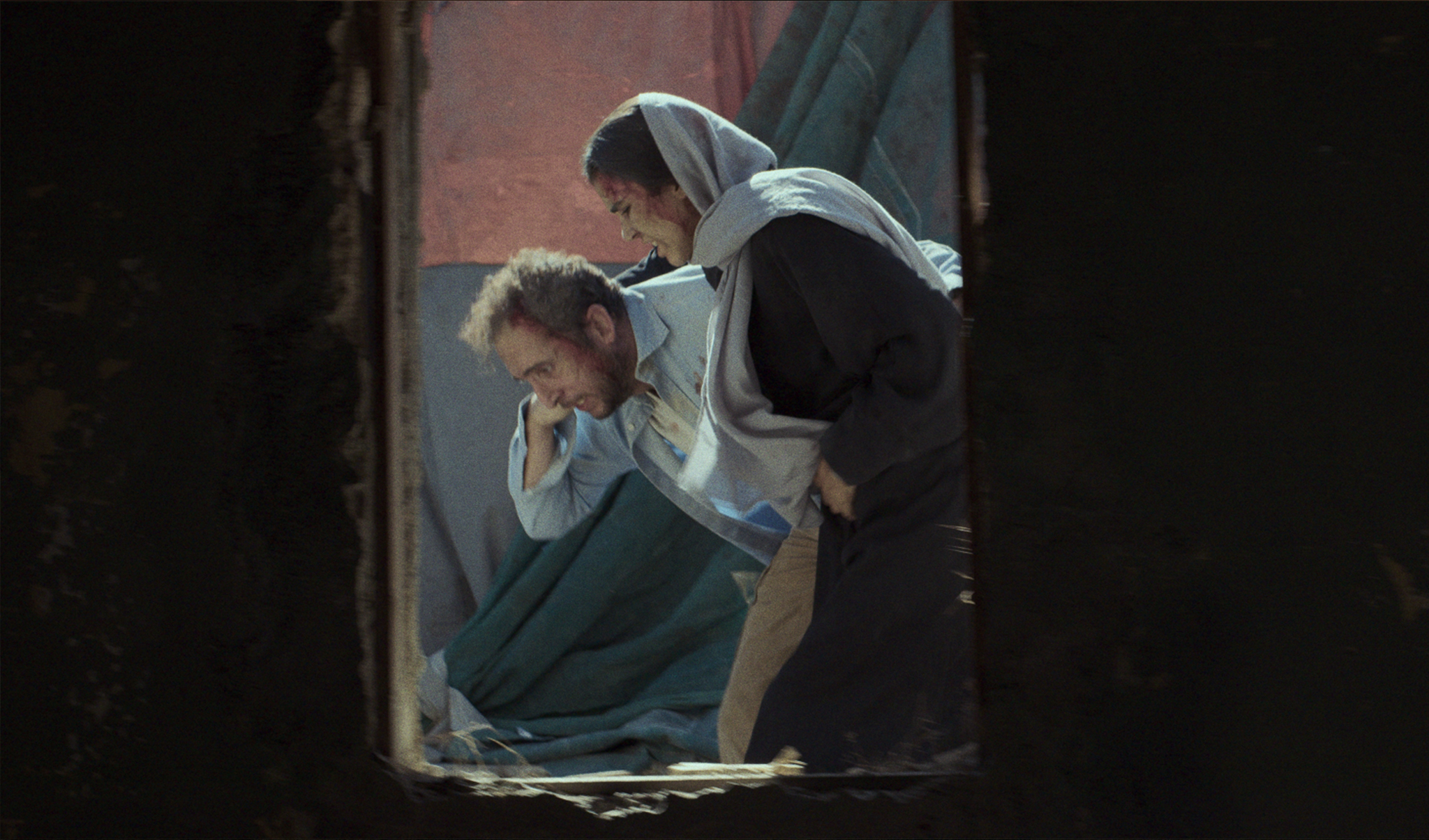
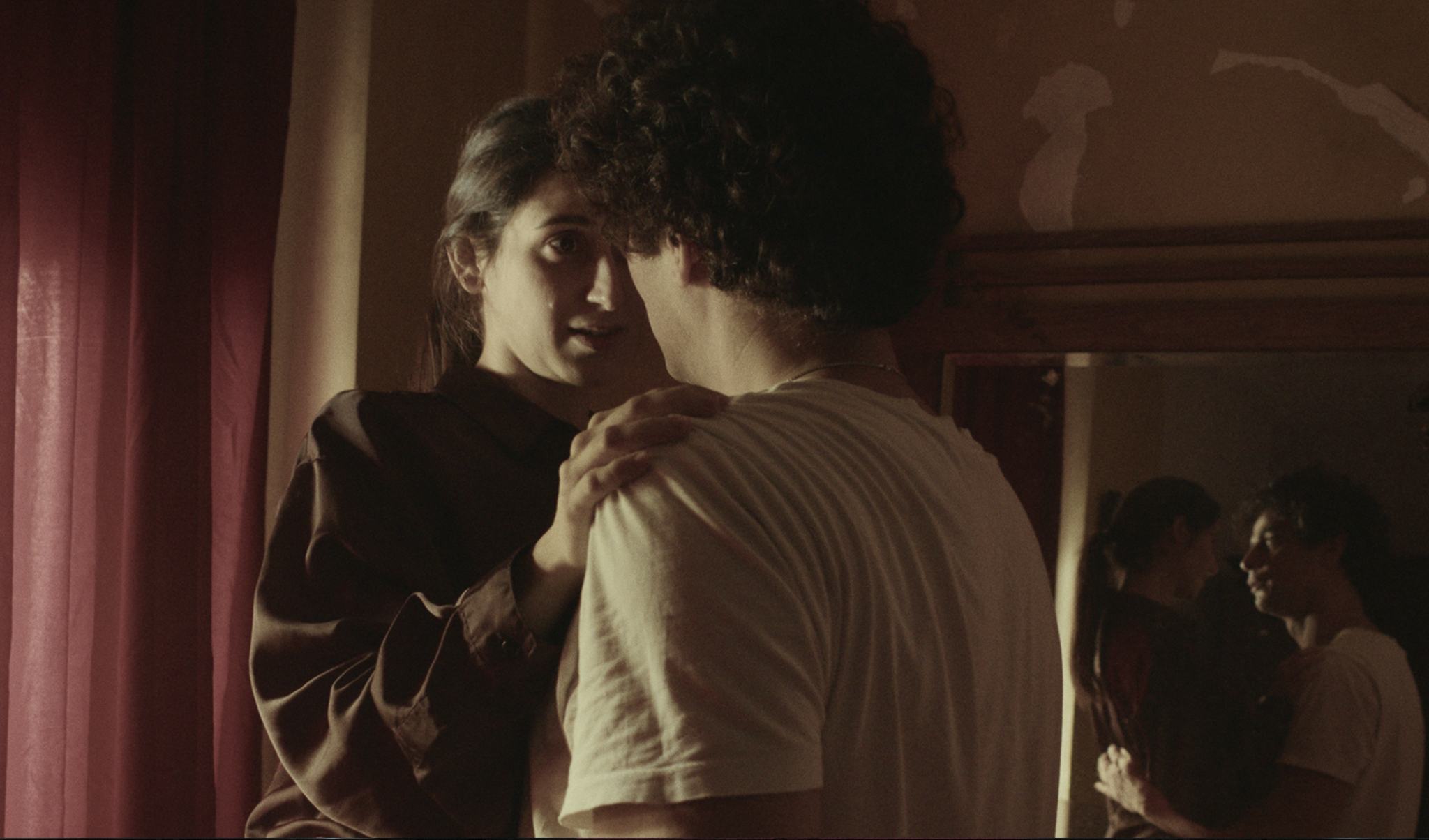
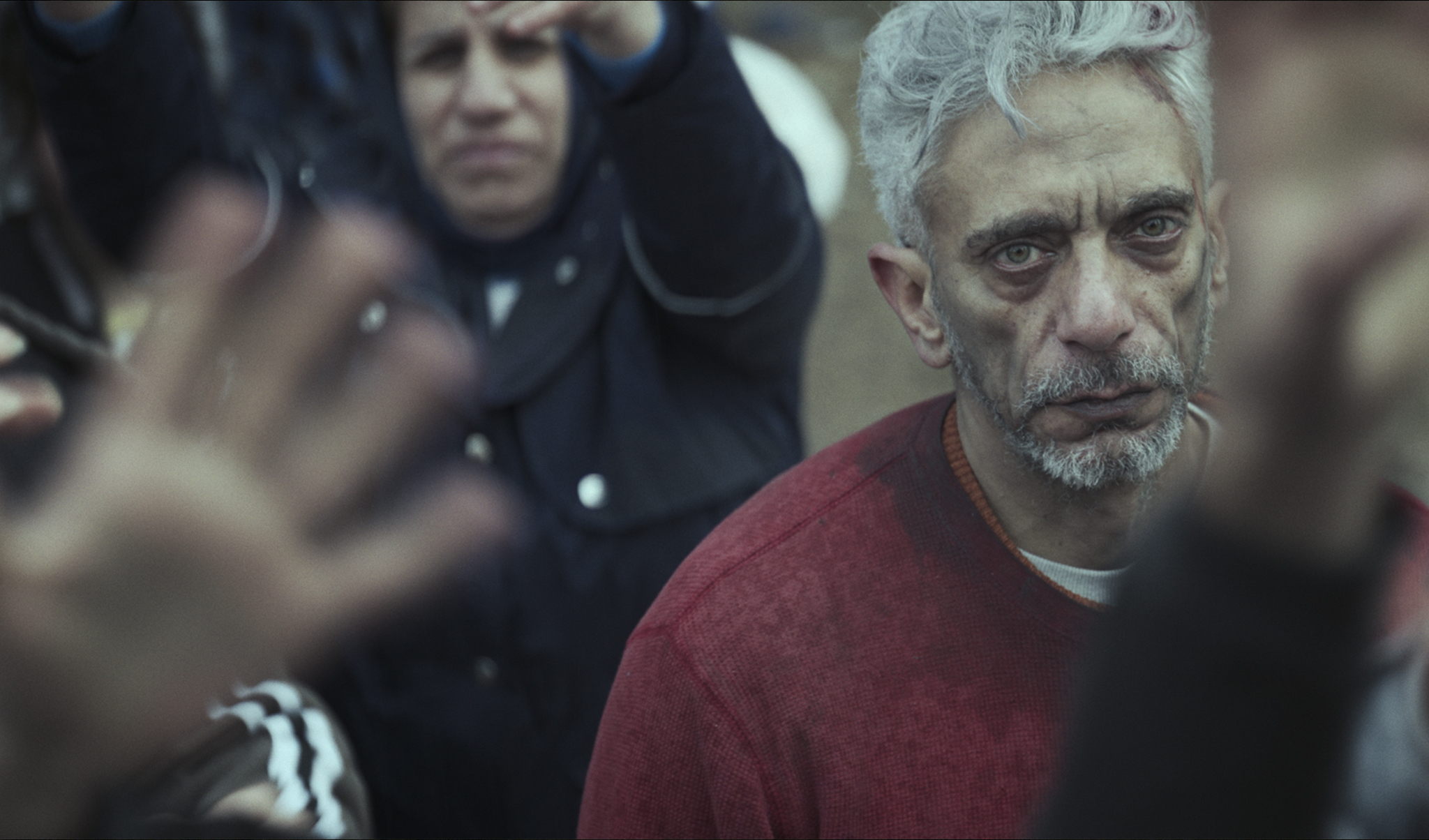
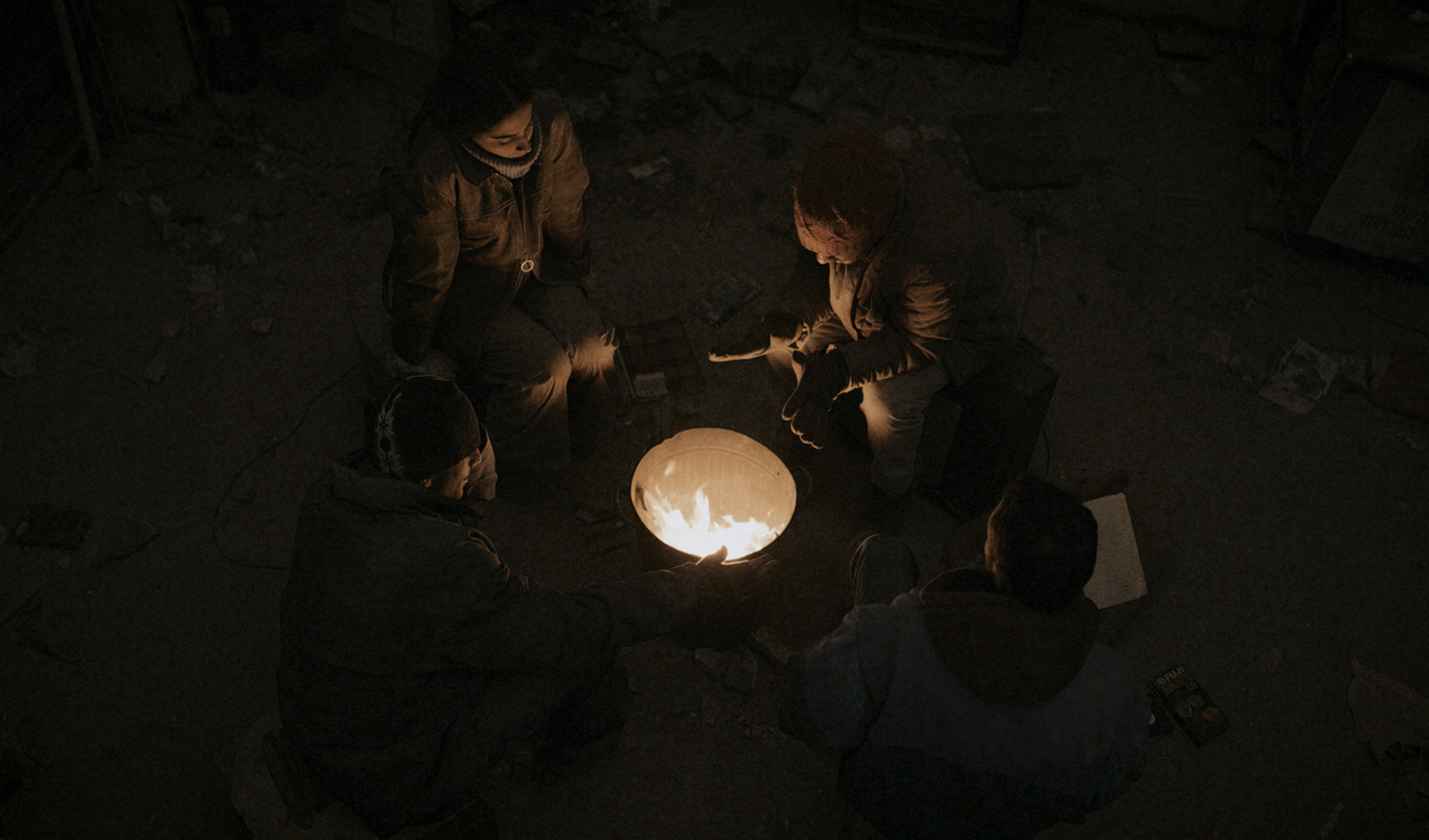
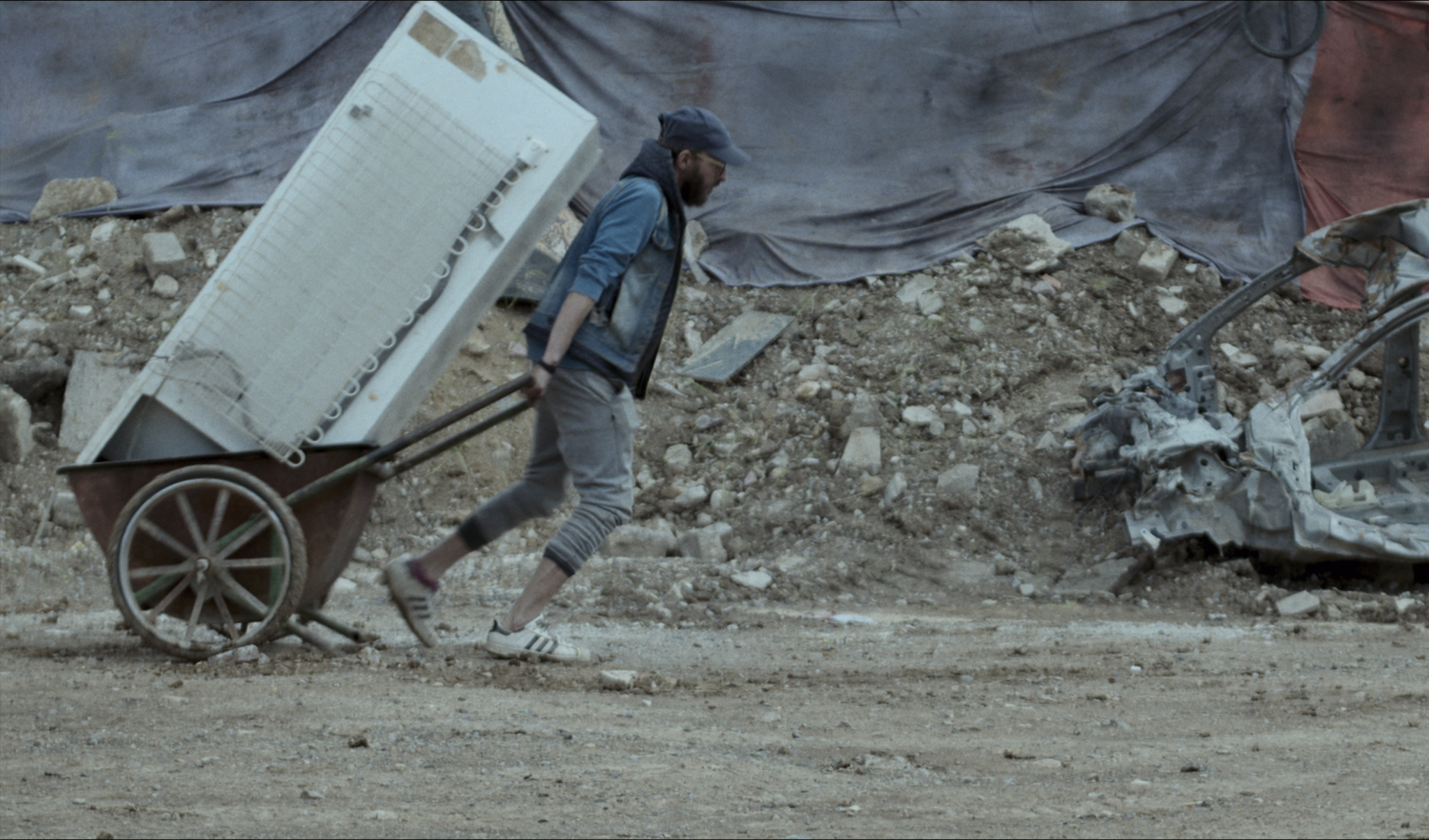
Rather than an epic, Al-Khatib delivers a social commentary wrapped in humor. The dialogue is free of slogans, and the film refuses to be a mere "tear-jerker" or a platform for moral indictments. Even with a brief reference to Yarmouk, the identity of the trapped is kept broad. Al-Khatib’s goal is to craft a narrative that embodies a collective experience of blockade, one that speaks to the shared reality of Palestinians everywhere.
Amid the recurring blockades of Palestinians, notably in Gaza over the last three years, Al-Khatib offers a significant work that serves as a poignant reminder of their plight. His film focuses on the "backyard" of the siege rather than the battlefield, highlighting the mundane details of daily survival. By focusing on these small acts of resistance, the film shows how those under siege attempt to momentarily shatter their isolation and assert their right to the same dignity enjoyed by those living in freedom.
How these characters interact with mundane details challenges the audience to question their own daily assumptions. We are invited into a world where time is suspended; here, an old piece of chocolate is a treasure, a bicycle outweighs a car in importance, and an intimate moment between lovers carries the weight of a final farewell.
Al-Khatib, alongside cinematographer Talal Khoury and sound designer Rana Eid, shared with the audience and Berlinale Talents the grueling production conditions of filming across Algeria, Jordan, and France. They discussed how the film was produced outside the "market system" up until the post-production phase. Ultimately, however, these hardships remain invisible and irrelevant to the audience seated before the big screen. The final product reveals a film of limited means, featuring one-dimensional characters with restricted screen time, whom we only encounter within the context of the siege—mostly in lighthearted, comedic moments addressing basic human needs. Ultimately, the episodes lack cohesion as an integrated narrative unit and fail to develop character arcs, which limits the film’s emotional impact and diminishes the lasting presence of its characters in the viewer's memory.
Despite the narrative gaps, the film is rescued by its brilliant cinematography and sound design. Talal Khoury’s dynamic handheld camera work pulls the audience into the action with immersive long takes. Rana Eid’s soundscape is equally vital, conjuring the constant, lurking threat of the siege. Without this sonic depth, the film would have struggled to resonate, particularly as the drama is largely confined to indoor settings. The siege is felt rather than seen; there are no checkpoints on screen, and the violence of the shelling is limited to a single archival shot and one minor explosion.
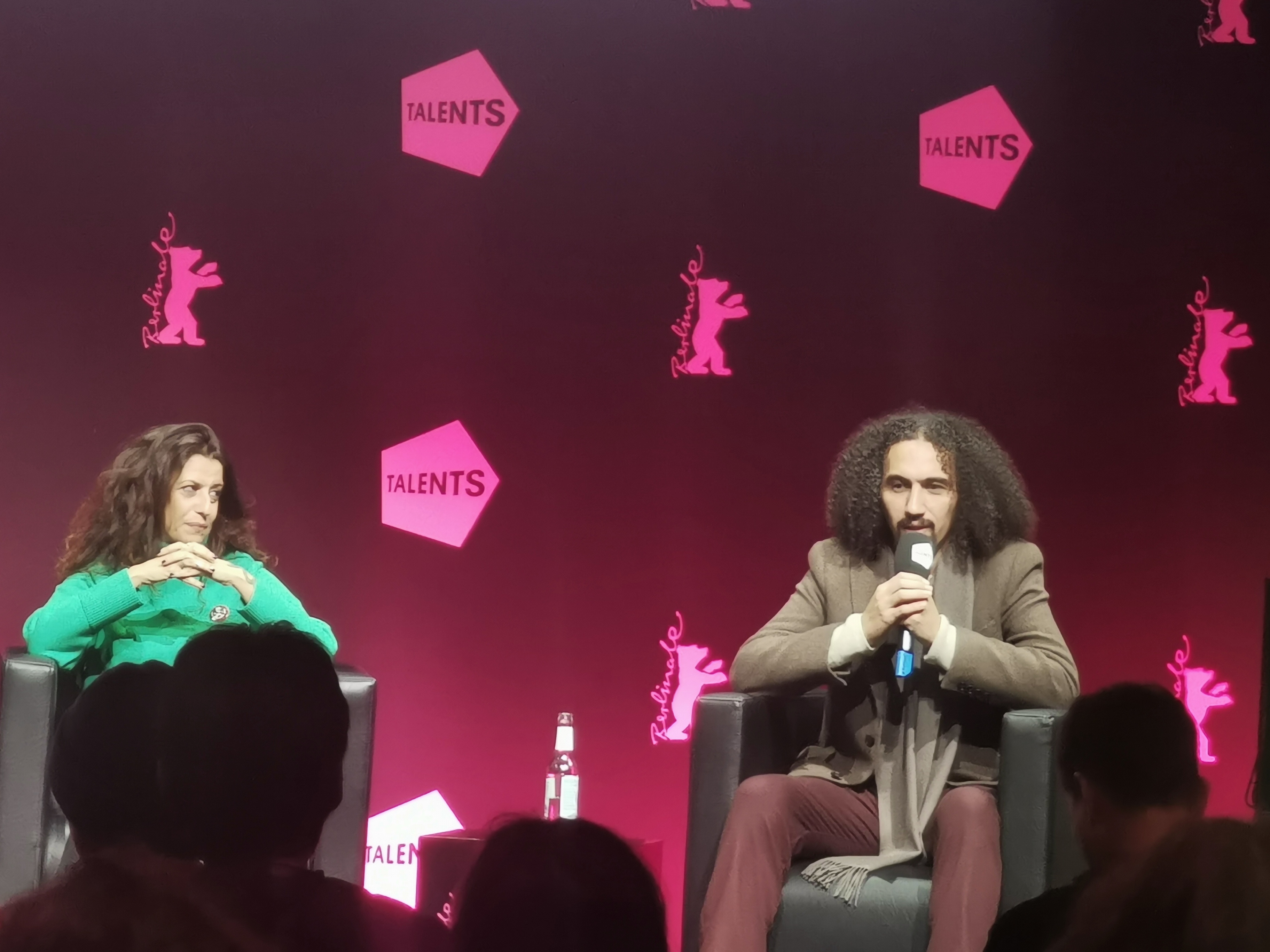
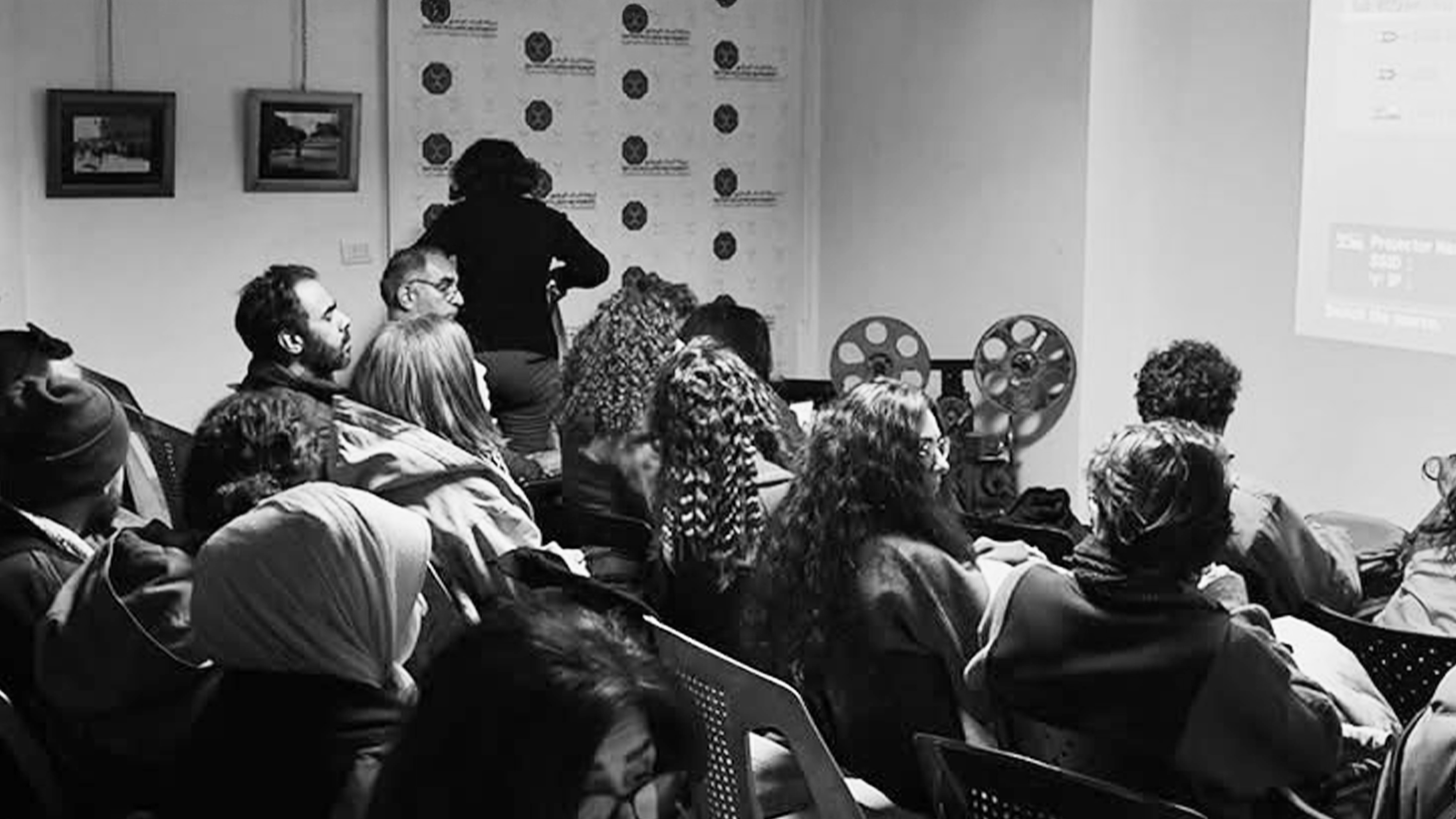
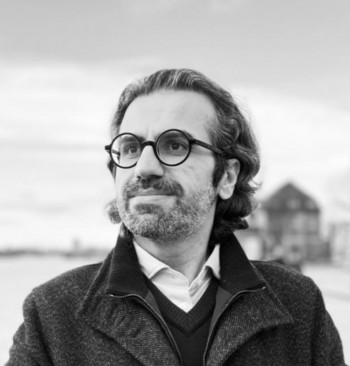
From a panel discussion titled "Filming Under Siege" at Berlinale Talents, featuring director Abdallah Al-Khatib, sound designer Rana Eid, and cinematographer Talal Khoury. The session was moderated by Rabih El-Khoury, the Berlinale advisor for Arab cinema. Photography by Sulaiman Abdullah.
Among the cast selected by Al-Khatib and casting director Lara Abu Al-Feilat, two actresses deliver particularly standout performances: Saja Kilani—recently seen in Kaouther Ben Hania's The Voice of Hind bint Rajab—and Maria Zreik, known for her roles in Cherien Dabis’s All That’s Left of You and Said Zagha’s Endangered.
The film Chronicles of a Siege was awarded Best Film in the Encounters section, a category dedicated to innovative filmmakers at the Berlinale. The jury featured Moroccan director Sofia Alaoui, Dorota Lech (a programmer for the Toronto International Film Festival and a member of the Palestine Film Institute’s General Assembly), and German director and screenwriter Frederik Hambalek.
Interview with Abdallah Al-Khatib
Syria Untold: After your first documentary, you made a short fiction film, and now you return with this feature-length fiction project. You’ve previously mentioned that your first documentary was made without any prior planning. Have you closed the door on documentary filmmaking since leaving the camp?
Abdallah Al-Khatib: No, I haven't closed that door. In fact, I have already filmed a large portion of a new documentary, and I intend to work in both genres. However, after my first documentary, Little Palestine, it became difficult for me to create another unless it was of an exceptionally high standard. That film placed me in a position that I must respect; therefore, I am taking my time with this new project to ensure I am satisfied with it and that it feels both appropriate and of high quality.
As for fiction, just as I started making documentaries by chance, the same was true for fiction—I discovered that I could develop my skills and create narrative films. After making Chronicles of a Siege, I feel capable of continuing in this genre. I learned through making this film under unbelievable conditions, with an extremely low budget and immense difficulties. I learned that it is possible to work by taking 500 euros from one person and 1,000 from another, filming scenes in a friend’s house, and having the entire crew sleep in a single room.
We are proud of the result; proud that people loved the film and saw something authentic in it. This is what I strive for in my work—I focus on making cinema that is "real," as I dislike exaggeration in any form. I have no heroes, and I have no victims; only ordinary people whom you might like or find endearing. I don’t aim to dazzle the audience; rather, I want people to laugh and cry within a certain limit, maintaining a sense of balance in all these details.
After this experience, I will continue making fiction; I have several projects on paper, and I plan to pursue both paths—I might even experiment with animation. Since I never dreamed of becoming a filmmaker and never studied cinema, I am free from the burden of the film industry and the pressure of competition and achievement. I take the space to experiment and see what results I come up with. No one has the right to demand anything of me, and this is a privilege I try to exercise. I want expectations for my work to remain modest; I don’t want people to expect me to make "world-shattering" masterpieces, but rather something acceptable that they can enjoy—something with specific scenes and stories that stick with them.
Syria Untold: We heard you mention earlier that this film serves as a sequel or a continuation of Little Palestine, suggesting that the fiction format granted you the freedom to depict things that were extremely difficult to capture in the first film. Could you elaborate on that?
Abdallah Al-Khatib: Exactly, as you said. Cinema began as a documentary, not as fiction—take the Lumière brothers' documentary film, for instance. Later, it became difficult to be present everywhere, which led to the rise of fiction, followed by new styles that emerged to keep pace with general developments. When I started working on Little Palestine, I initially thought about making a film that tells everything, but I soon discovered that I couldn't. So, I focused on specific elements. In this film, I tried to complete what I had originally wanted to address.
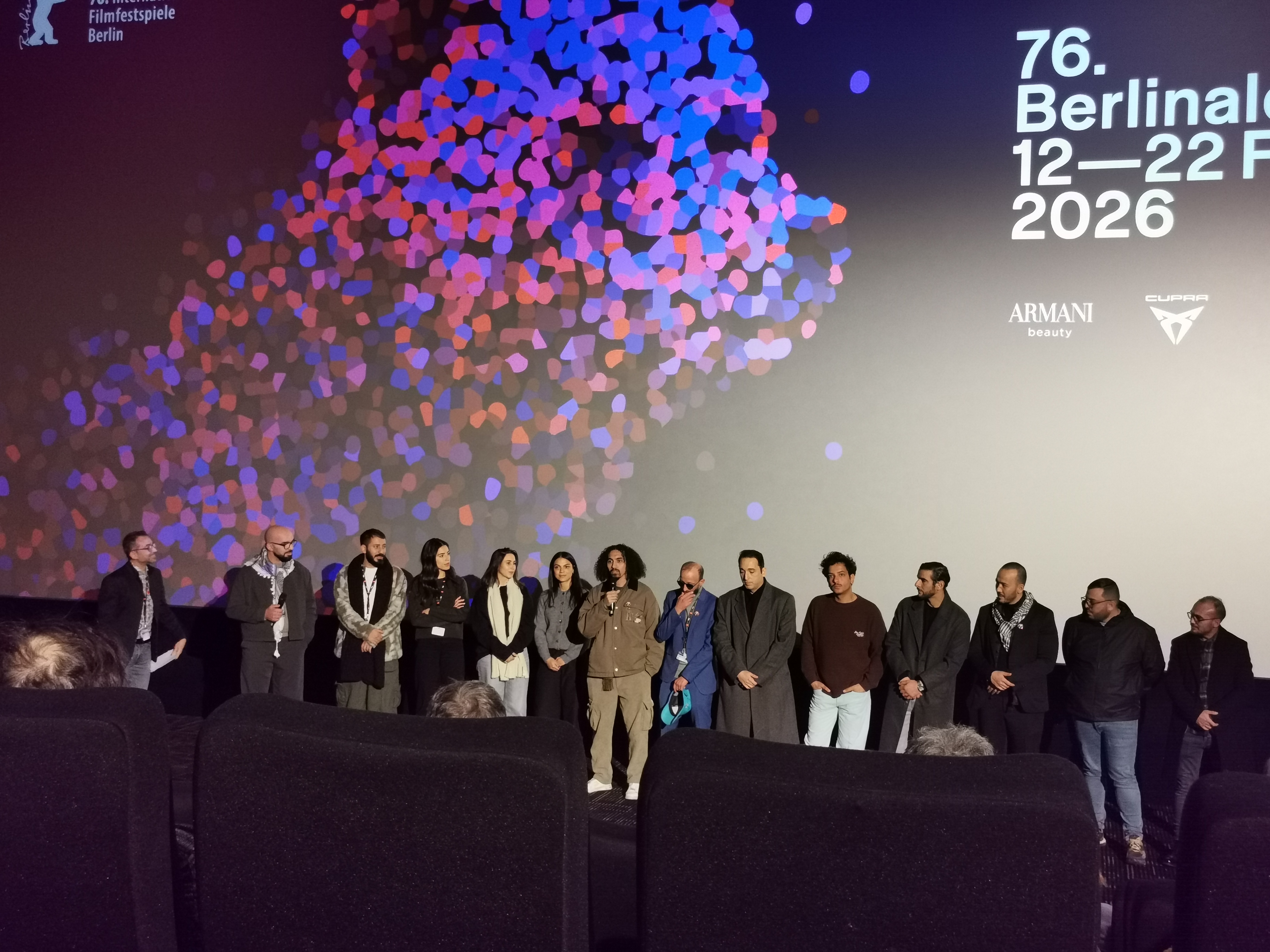
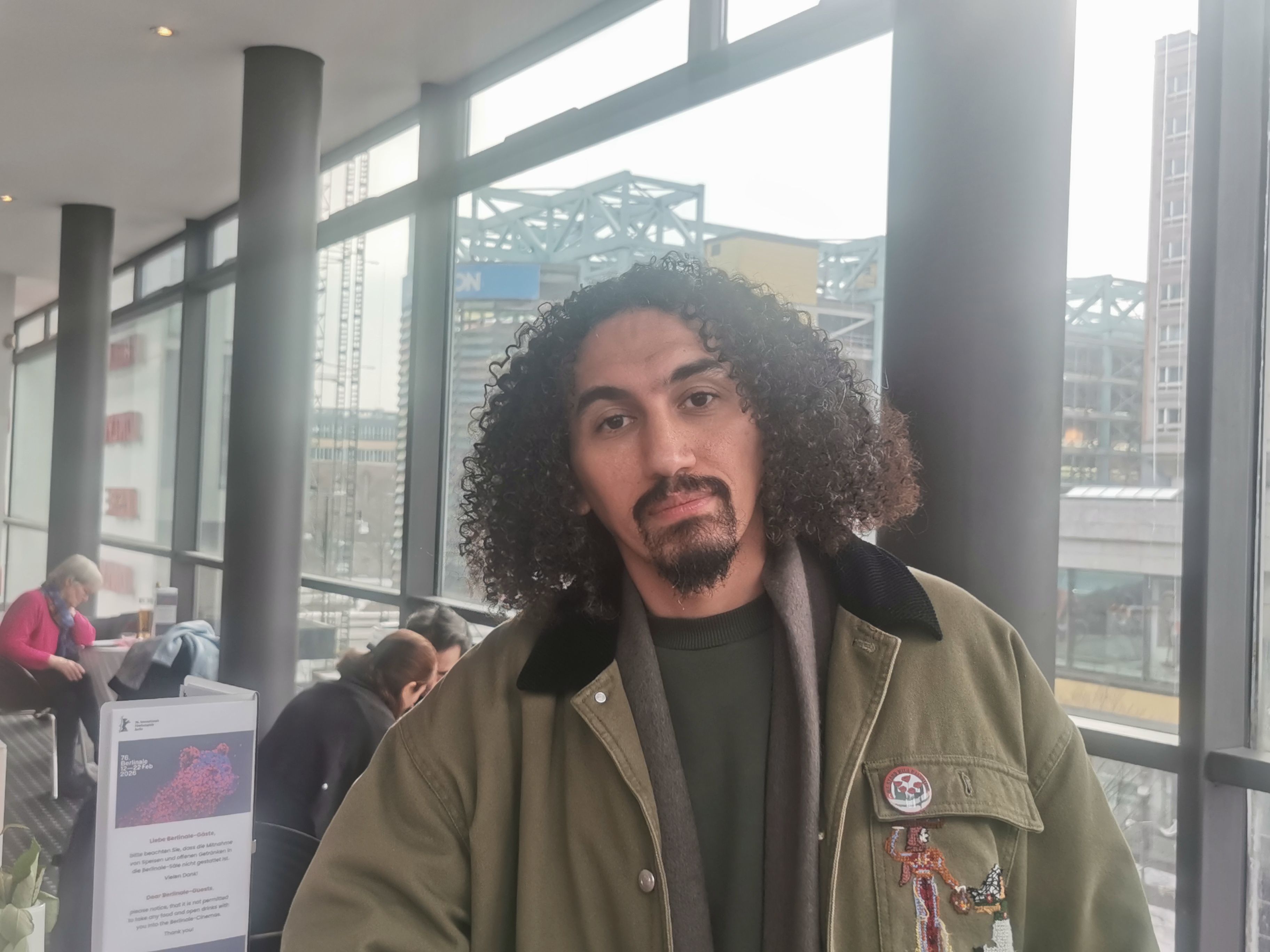
Syria Untold: You have spoken at length about making this film entirely independently and the difficulties of producing it through conventional methods, which can often take four years or more. However, anyone watching the film’s credits will notice that governmental bodies provided support for its production...
Abdallah Al-Khatib: Four years is the best-case scenario; usually, it takes between seven and ten years. We only received support starting from the post-production phase, not before. Once the film was completed, we sent it to the Marrakech International Film Festival to finalize the sound design, color grading, etc.—things that enhance the narrative rather than change it. We only applied for Arab funding, receiving support from Qatar, Tunisia, Algeria, and Morocco, and we did not seek any foreign funding. The film was self-financed in two ways: from the producer personally, and through the people who worked for minimum wages, those who offered their apartments, and those who provided us with equipment.
To be honest, the writing itself played a major role. I mean, I knew I had no money while I was writing. When I wrote a scene involving an explosion, I knew I couldn't execute it on a grand scale in a main street, with shells falling and people flying. So, I was always looking for ways to produce high-quality work that wouldn't look like an amateur film, while simultaneously respecting the fact that I simply didn't have the budget for such things.
Syria Untold: The Palestinian director Mahdi Fleifel has made films about characters from Palestinian camps in Lebanon, and this is your second film about the camps in Syria. Although you indicate at the end of the film that this camp could be anywhere—in Gaza, for instance—the dialogue specifically points to the Yarmouk camp in Damascus. Is there a certain specificity that distinguishes Yarmouk from other refugee camps in neighboring countries?
Abdallah Al-Khatib: I wouldn't use the word "distinguishes," but rather that it is a different environment, depending on economic, cultural, and geographical conditions. Yarmouk camp is situated within the capital, Damascus; it is practically inside the city, not outside of it. We are only about one kilometer away from the Al-Midan neighborhood in the heart of Damascus.
I truly admire Mahdi Fleifel’s work; he has his own distinct style, and as I mentioned, he shines a light on the camps in Lebanon while I focus on those in Syria. In this film, I tried as much as possible to broaden the scope—to say that this experience resembles the Siege of Beirut, the Siege of Tel al-Zaatar, the Siege of Gaza, and the Siege of Jenin. It mirrors the blockades of so many areas... the Siege of the Damascus Ghouta, Douma, Daraya, and Homs. Looking back now, I feel I missed explicitly mentioning that it resembles what happened in Homs. This Palestinian-Syrian link must be established, and I will go back to the [film's] version to add it.
There is a shared essence in this experience, not only in Syria and Palestine but also in Sudan and Sarajevo. While writing this film, I revisited and read the memoirs of many people who lived through sieges to identify the common threads. I found that many spoke about the exorbitant price of a single cigarette, and the subject of love. I identified themes that touch every human being on the planet—I made a list of five or six such topics. You won’t find anyone who says the cold doesn't matter to them. I find it beautiful that we are screening the film in this cold weather, as it allows people to feel it more deeply. The same applies to smoking, or sex—which everyone desires, but which might not be accessible. One partner might crave it while the other is unable to respond due to the exceptional circumstances, making the matter incredibly complex and difficult.
Syria Untold: In this film, you more or less avoided using "iconic" images of the siege of the Yarmouk camp in Damascus—such as the famous shots of people waiting for aid distribution.
Abdallah Al-Khatib: To me, those are not "iconic" images; they are catastrophic ones, and I fight against them. I only included them in Little Palestine within a very specific context—to show that such an image is a result, not the starting point. It means we reached that stage because of something that had been happening for a long time. It deeply disturbs me that this is the image that pops up when I search for "Yarmouk Camp" online. It shows only misery and suffering; it shows us at our worst, looking "dirty." We are not like that; that look is merely the consequence of what preceded it.
Therefore, I stay away from those images. I have a major issue with the concepts of sympathy, pity, and crying. There is nothing easier in cinema than making people cry or evoking feelings of pity. But there is nothing harder than making them feel anger, shame, and solidarity. It is not easy to make people laugh in such dire circumstances... but that laughter is what makes you see me as a normal human being again. I remember how my friends and I, in the worst moments of the siege, would exchange jokes about what we would post about each other if one of us died before the other. Humor is a part of survival.