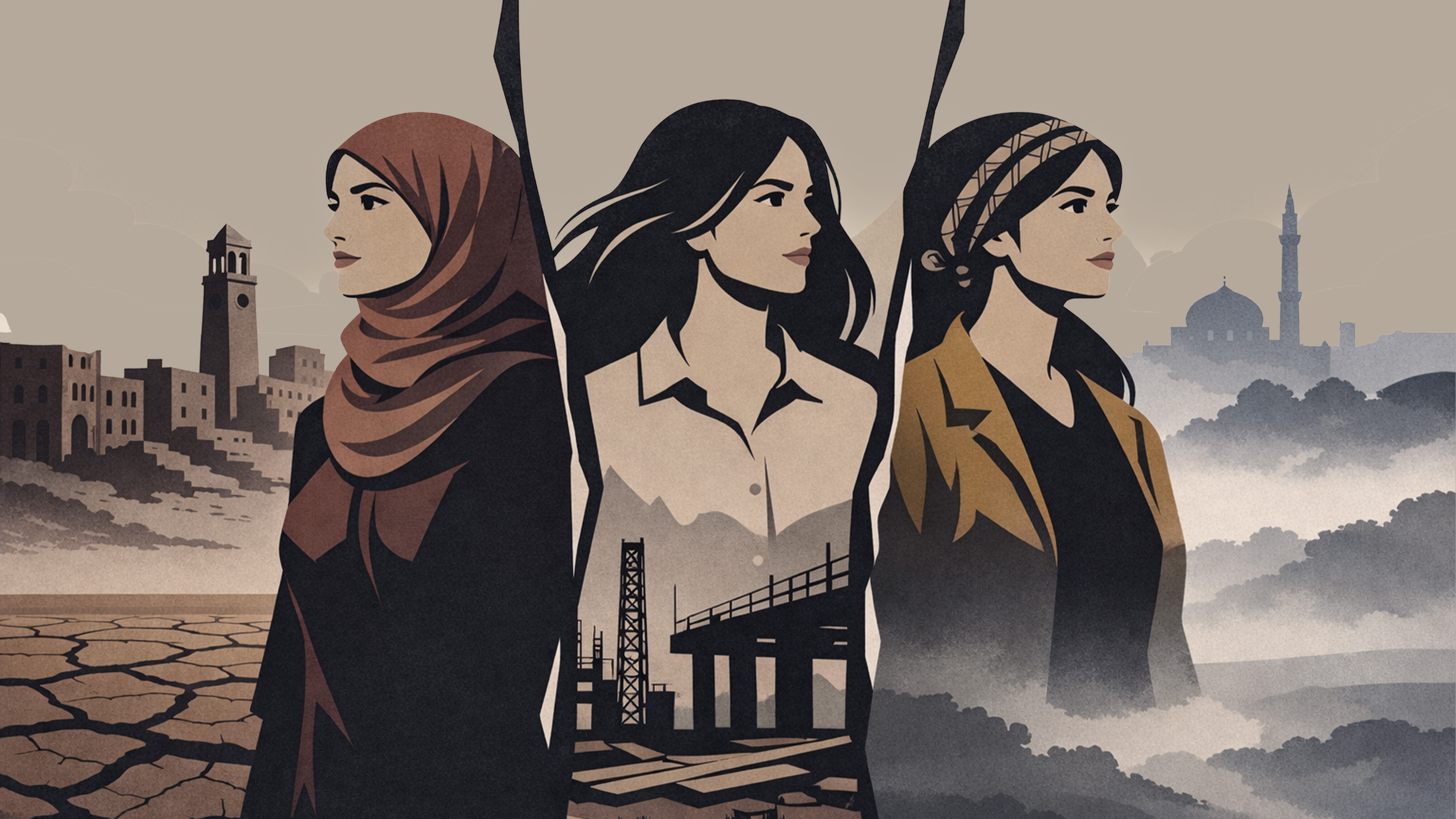

Gender and Corruption is a dossier monitoring the relationship between gender and various forms of corruption within the government and humanitarian sectors. Spanning the conflict years through the post-regime era, it chronicles the stories of women as victims, resistors, and at times, accomplices in corruption.
Nawar al-Meer noticed a state of tension among the women at the Al-Duwayr center in the Damascus countryside back in 2019. At the time, she was volunteering with the Syrian Arab Red Crescent, which helped her get to know the displaced women and children at the center and gain, to some extent, their 'trust'. Through subtle hints, Nawar— originally an independent journalist—understood that some women were being subjected to sexual abuse by those in charge of the center, in exchange for protection and food. She managed to obtain testimonies from women subjected to this exploitation.
"Initially, I tried to file complaints through the Red Crescent administration itself, but the employees' fear of the center’s manager was immense. He was linked to the former regime’s intelligence services, so I decided to pursue the case through other means and turned to the media", Nawar explained.
"Sex for Food in Shelters in Damascus and its Countryside" is the title of the investigative report she produced, in which she highlighted the sexual corruption practiced by security personnel in charge of these centers. This was not the first report on the issue. A study published by the United Nations Population Fund (UNFPA) titled “Voices from Syria 2018” confirmed that trading sex for humanitarian aid is a practice followed across various Syrian governorates, particularly in the south.
According to Nawar, her work succeeded in forcing center officials to change the mechanism for distributing aid, following investigations conducted by the United Nations High Commissioner for Refugees (UNHCR) and the International Committee of the Red Cross (ICRC). However, the investigation was not surprising in a country ravaged by corruption; Syria is ranked among the ten most corrupt countries in the world, according to the 2024 Corruption Perceptions Index issued by Transparency International. Its association with sexual exploitation drew attention to the fragile reality of Syrian women within sectors dedicated to providing them with support.
Corruption in the administration sector and gender intersect in Syria across multiple levels. Systematic discrimination hinders women from reaching resources or leadership roles, leaving them more exposed to extortion. Meanwhile, those who stand up to corruption are often silenced through threats or marginalization. Because corruption feeds on inequality, women are hit twice as hard; they must navigate a corrupt landscape from a position of vulnerability in a post-conflict society. Ultimately, this pressure forces many into compliance or involvement just to keep their jobs or access the basic services they are entitled to.
Nepotism, manipulation and exclusion
"They asked me to forge data and manipulate numbers, and when I refused, I was subjected to marginalization and harassment". With these words, Hayat summarizes her experience with several large Syrian organizations that are supposedly working to support vulnerable groups. Hayat, an English literature graduate, began her work in Turkey in 2013 before returning to Syria in 2015, unaware that she would face the mission of confronting corruption. Her field of work in Monitoring and Evaluation (M&E) enabled her to identify corruption hotspots.
"I started working with a religious charitable foundation, and the first violations I noticed were nepotism in hiring on a sectarian basis, as well as the manager’s clear bias toward members of his own sect. I also observed data manipulation; the number of people recorded in reports was double the actual figures". Hayat continues: "I was asked to write that we provided services to 4,000 children, even though in reality we only served 200. I refused, just as I refused to alter the numbers sent to the donor". Due to her persistent refusal, Hayat faced mistreatment from management, manifested in an increasing refusal to cooperate or communicate with her, which eventually led her to resign.
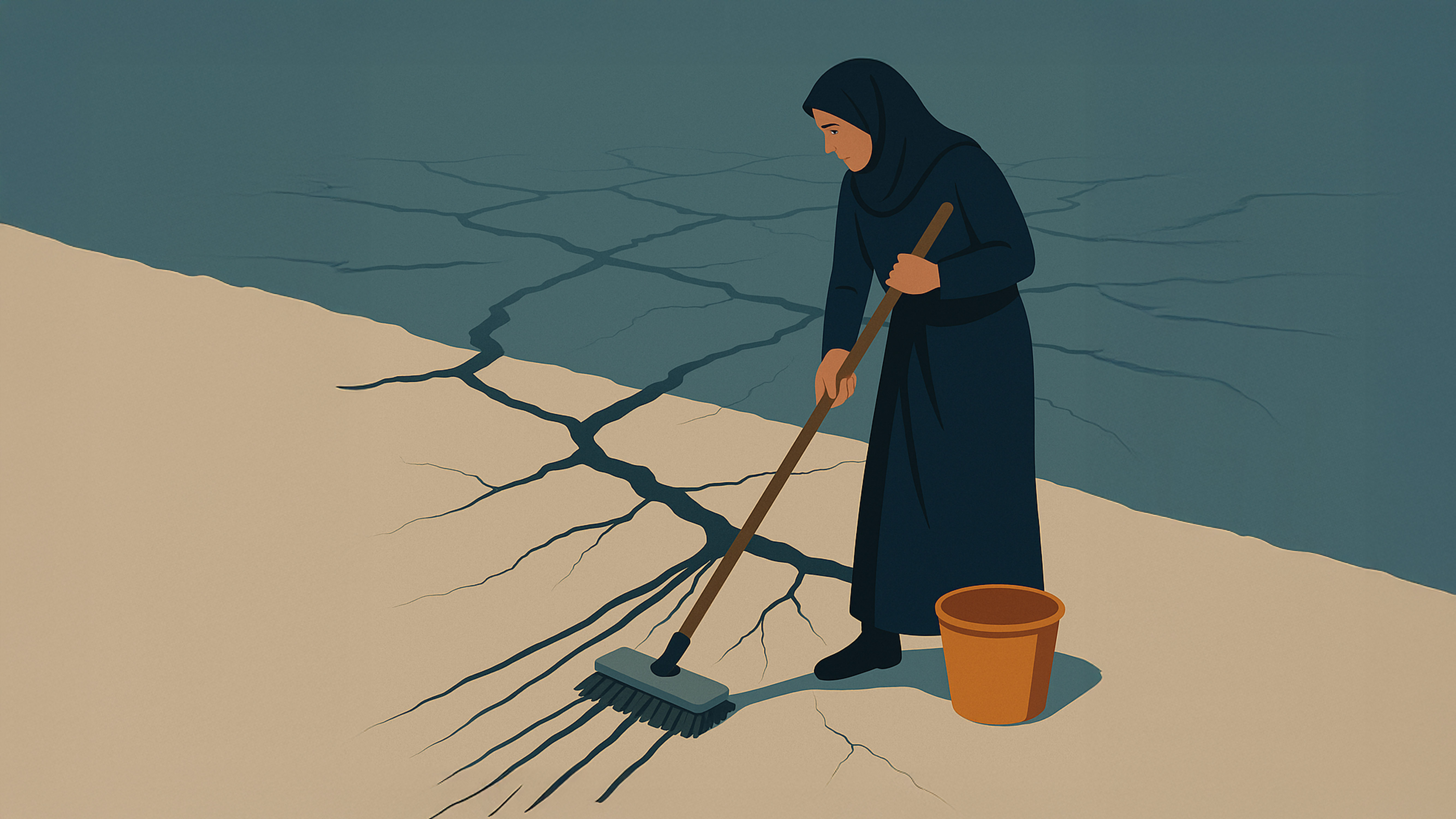
A domestic worker in Tartous
15 October 2025
After this experience, she moved to a larger and more prominent organization, where problems began to emerge in the food basket distribution process. “Baskets would arrive from international organizations but weren't distributed as they should have been—for instance, they would take 2,000 baskets and only distribute 20”. Hayat was unable to file complaints to initiate serious investigations due to lack of evidence and the collusion among those responsible for distribution.
About four years later, she moved to an organization focused on Syrian refugees and was shocked once again to learn that the supervisor of a women's livelihood project was stealing money from the beneficiaries, under the pretext of 'saving' the money for them. She disclosed the matter to her manager, who initially feigned interest in fighting the issue but later began downplaying her observations. Even when Hayat spotted severe violence among students in a school supervised by the organization, the manager dismissed it as mere “child’s play”. Hayat concluded that her manager was complicit in the corruption; she interpreted the manager's initial enthusiasm as a performance, especially after he submitted a report refusing to renew Hayat's contract following her probationary period.
Hayat left the job, but for her, the face of corruption remained unchanged - both before and after the fall of the former regime. “Corruption still exists, even if it seems otherwise. The reason is that those in charge of these associations are currently seeking to build relationships and trust with the new administration, simply to identify the loopholes that will allow them to engage in corrupt practices all over again".
Exploitation and dilemmas
Beside the direct, illegal ways of corruption implying theft of funds, aid, and manipulation of numbers, with the consequent mistreatment of women and their tentative to denounce the heinous mechanisms, another layer of the corrupted system within the organizations or the corrupted managers weighs heavily on them.
While working in organizations, women employees often face a dilemma: these entities fail to respect the 'Duty of Care' regarding the domestic and caregiving responsibilities placed upon women, despite the existence of Syrian and international laws protecting those rights. Hayat considers this a form of exploitation; women are frequently required to work during holidays, and if they object, they are accused of negligence and incompetence.
Dima, a 36-year-old woman responsible for her eight-year-old child and her mother, emphasizes her desperate need to work for an organization in Dana, north of Idlib. However, she suffers from immense pressure. Since the fall of the former regime, the organization's operations have expanded across several governorates without providing additional financial compensation, all at the expense of her relationship with her child and his upbringing.
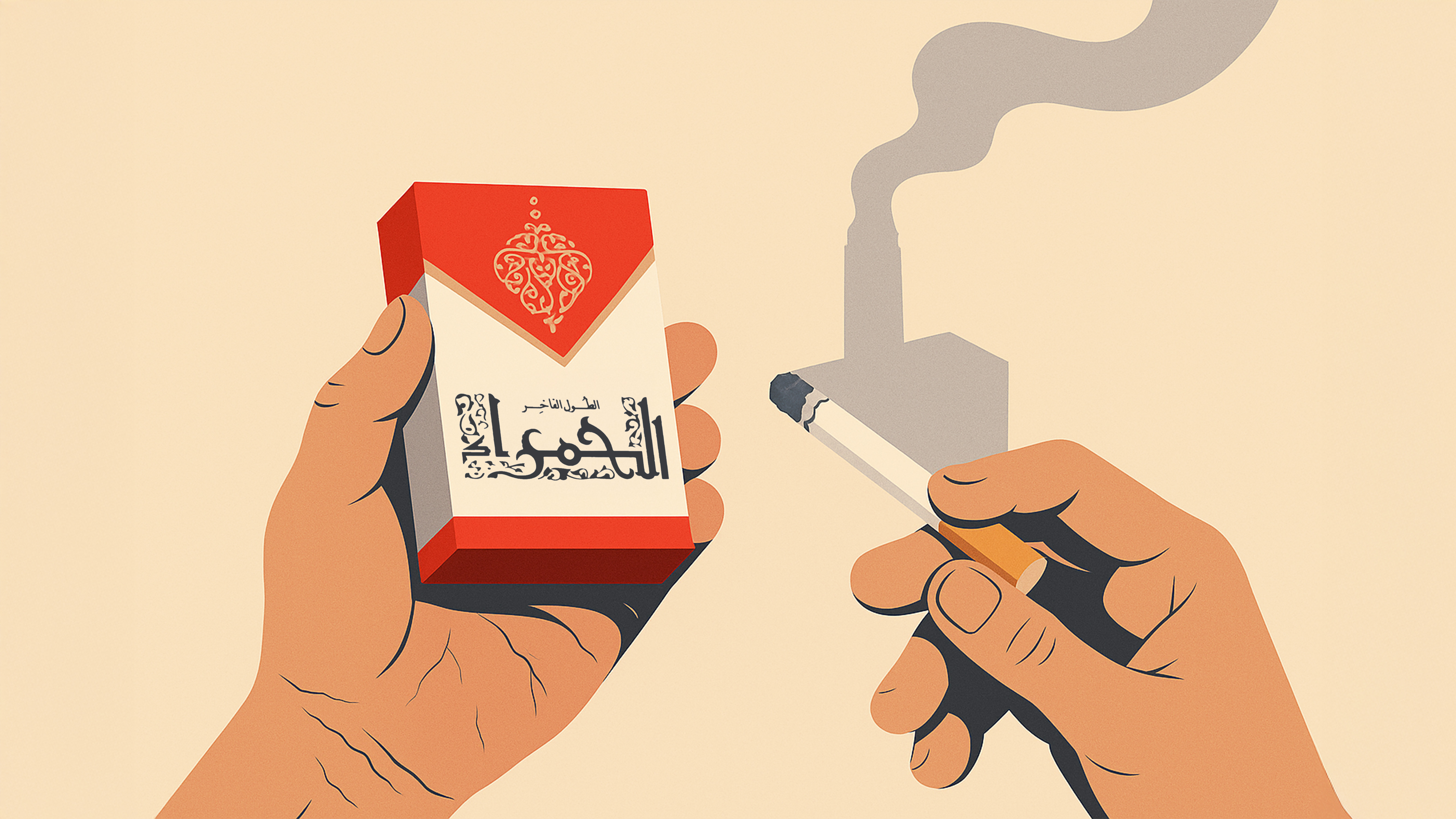
The misery of tobacco’s female workers
29 December 2025
Rania, who has lived in Idlib for eight years, shares a similar experience. She describes her work as uncomfortable due to the absence of a structured system for leave or job descriptions; she is often asked to work overtime or perform tasks unrelated to the organization, either for free or for meager pay. “Most organizations exploit women’s need for work, whether for financial reasons, self-fulfillment, or the lack of professional alternatives. Society accepts women working in NGOs or well-known government jobs but rejects their employment in the private sector”.
For women, job opportunities and support narrow due to gender, a situation exacerbated by any additional stigma. Rawaa al-Abassi, from Raqqa, who organizes economic support projects for women leaving the Al-Hol camp, notes a form of social discrimination against them. They are often denied aid because they are wives of fighters or because they lived in ISIS-controlled areas. Rawaa does not exclude herself: “Initially, I was afraid of them, but after starting to work and communicate with them, I realized that these women would excel in their work—and that is exactly what happened”.
This marginalization is accompanied by a reduction in professional development opportunities. Salma, from Idlib, pointed out that women are forced into roles beneath their potential: “They are often secretaries or media assistants instead of being in management or decision-making positions”. The recent liberation [of the region] adds a new difficulty for girls in Idlib; the relocation of the Faculty of Journalism to Damascus will decrease the percentage of women studying there due to the distance and the high cost of living. Since the liberation, competition has increased, and opportunities at the regional level have dwindled".
“The patriarchal mentality is a form of corruption”
Women’s opinions on corruption are often met with indifference, as if they are less capable of criticism. Meanwhile, they are rebuked more harshly than their male peers, often through attacks targeting their bodies and private lives. Salma says: “If a woman speaks on public affairs or corruption, she is met with responses entirely irrelevant to the topic—ranging from insults and slurs to being told that a woman’s place is in the kitchen, not to mention threats from anonymous accounts”. For this reason, despite having the means to expose corruption through her work as a journalist, Salma fears for her safety in the absence of clear protection standards for male and female journalists.
Journalist Maria Hanna faced similar fears while working on issues related to the Syriac community and their right to remain on their land. Maria covered several corruption cases involving the seizure of Assyrian homes left behind by those who fled their villages in the Khabur region following ISIS attacks and Turkish offensives on border areas. She pursued the matter with passion, despite the lack of responsiveness from the Autonomous Administration of North-East Syria in resolving the issue.
Similarly, Rania proposed to her organization's management a clear mechanism for holidays leave, departmental organization, and defined job descriptions. She also discussed setting recruitment standards, but received no serious response. “The management almost completely ignored my suggestions, as if any proposal was a personal insult to them. Conversely, my colleagues’ reactions were positive, but their encouragement remained secret and never went public. Perhaps if we had stood together, we would have found a solution—but we all fear losing our jobs".
Kawthar Maayouf, the Monitoring and Evaluation (M&E) officer at the Four Seasons Organization in Raqqa, speaks of their previous attempts to file community complaints or exert pressure through a coalition of several women’s associations, all to no avail. “Women are restricted in our society; we are told not to interfere and to stick to vocational training. In my opinion, the patriarchal mentality is a form of corruption in itself”. Kawthar recalls negative experiences during a public session where men tried to exclude her and other women. “We were invited to the launch of an association, and the topic of political engagement was raised”, she says. “A programs manager from one of the organizations commented that women should leave politics alone and focus on simple women's affairs. Unfortunately, most women supported his idea, while others insisted that women’s associations should specialize only in women's issues and stay away from politics”.
Kawthar refused this pigeonholing and marginalization of women, continuing her work in Raqqa in the fields of women's rights and citizenship. She believes she has succeeded in softening society's stance toward women's participation and, alongside her female colleagues, has managed to leave a modest impact on their community.
The role of women in corrupt systems fluctuates between victimhood and participation. Yet, women bear the brunt of corruption’s damage; as they are generally excluded from power and denied resources, they are more easily exploited and silenced. While some women do become agents of administrative corruption, their options are far more restricted than they seem, especially in post-conflict settings. They operate within a suffocating network of constraints, where every choice is shaped by the immense pressure of their environment.
Kawthar strives to continue her work in confronting both societal corruption in general and corruption directed against society: “I feel a sense of responsibility, but our capacity is limited. As a human being, I am satisfied even if my impact in confronting corruption is small; this feeling stems from my belief that women’s participation and fighting corruption are two inseparable causes".