
The stories of Syria’s unregistered span decades - an open wound for a vast population that refuses to heal through makeshift 'solutions'. These remedies are often convoluted and fundamentally at odds with human rights and dignity. Their suffering, which begins at birth and carves daily hardships into their existence, remains invisible to the world outside Northeast Syria: muted, much like the heavy burden they endure with such quiet toil.
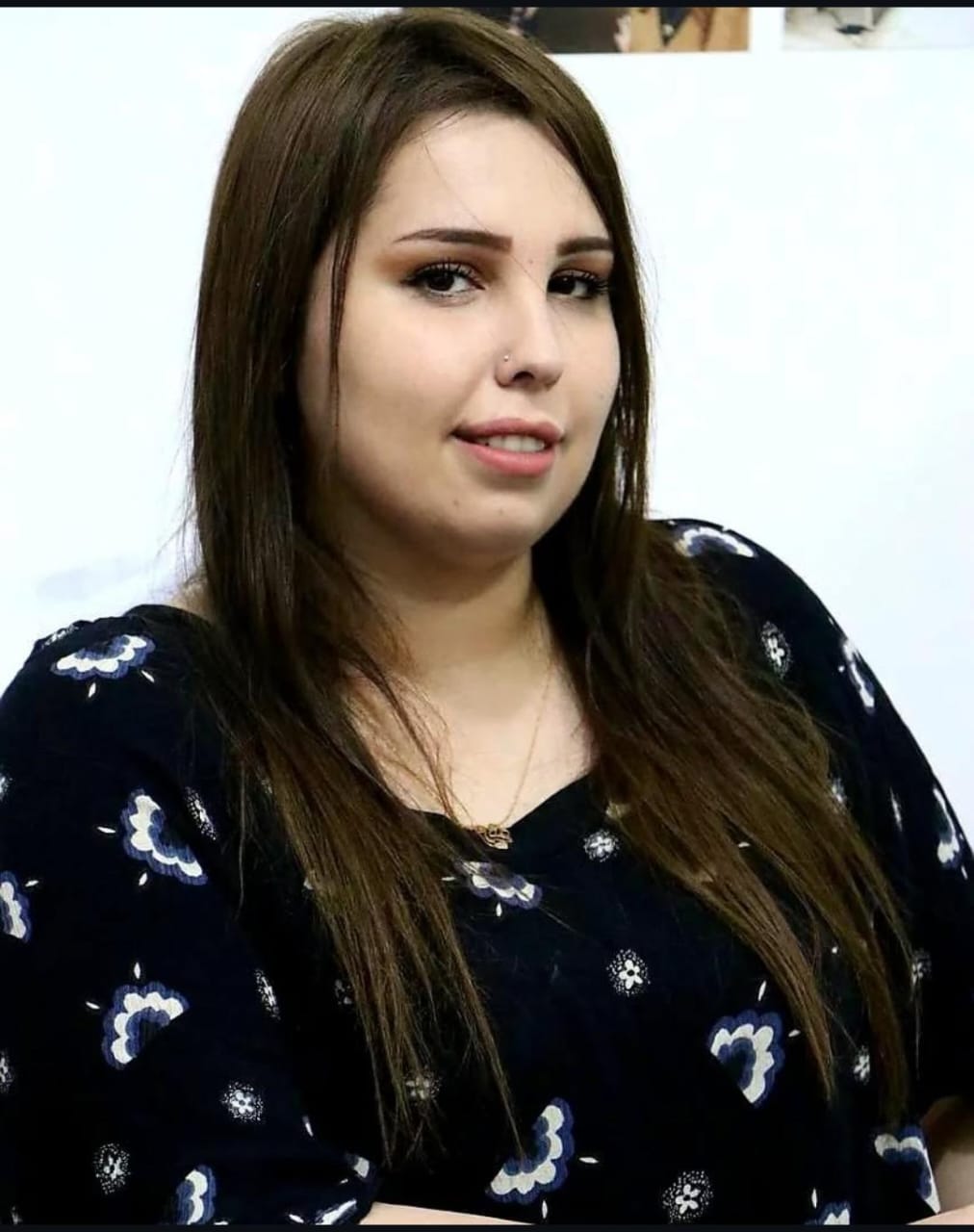
In the city of Qamishli, Helbest Mohammed, a 28-year-old Kurdish woman, was born "unregistered" to an unregistered father. Today, she is a graduate of the Faculty of Medicine at Damascus University; yet, she does not hold Syrian citizenship nor possesses any formal identification. This status strips her of the most basic civil rights that other Syrian citizens take for granted.
When it was time for her to start school, she was too young to grasp the hardships her family had to overcome, or the repeated, frantic attempts they made to obtain a "neighborhood mukhtar’s identification certificate" for her. The features of the crisis became starkly clear during her middle school years; despite passing her exams, she was denied her graduation certificate. The same scenario repeated itself when she achieved a high score on her high school finals - a grade that qualified her for medical school - only to face the same institutional wall.

What do women fear in the 10 March agreement?
15 January 2026
The tragedy of hundreds of thousands of Syrian Kurds was born in 1962, when the Secessionist Government issued a decree to conduct a rushed census in the Al-Hasakah governorate alone, completed in just a single day. In 2018, the organization Syrians for Truth and Justice cited official sources within the Civil Registry Directorate of Al-Hasakah, stating that the number of Kurds stripped of or denied citizenship between 1962 and 2011 reached over 517,000. Following the 2011 uprising, the Assad regime issued Legislative Decree No. 49, granting Syrian Arab citizenship to those registered as "Aliens of Al-Hasakah" (Ajanib al-Hasakah), while continuing to exclude the "unregistered" (Maktoum al-Qayd).
“Being 'unregistered' was a daily conversation in our home”, Helbest Mohammed told SyriaUntold. “When the 2011 decree to naturalize the 'Aliens of Al-Hasakah' was issued, it excluded the Maktoum al-Qayd category. While those classified as 'Aliens' held a red-colored civil status record, we only possessed an identification certificate from the neighborhood mukhtar to prove our residency. At that time, we actually wished to become 'Aliens', hoping it might one day lead to citizenship. However, the security services’ pursuit of my father prevented that. We never took a single step to change our legal status”.
According to the organization Syrians for Truth and Justice, the number of "unregistered" individuals in Al-Hasakah reached over 171,300 by 2011. By 2018, approximately 50,400 of them had obtained citizenship after their legal status was transitioned from "unregistered" to "aliens", and finally to "Syrian citizens." Nonetheless, nearly 41,000 individuals were unable to change their status due to technical issues encountered by the Civil Registry Directorate while migrating their files into the "Aliens of Al-Hasakah" records. Furthermore, 5,000 individuals did not report to the directorate to rectify their legal standing. By 2018, the vast majority of those classified as "Aliens of Al-Hasakah" - 326,489 out of 346,242 people - had successfully obtained citizenship, according to the same source.
“Since I was a child, I had a fierce ambition to complete my education and earn the highest degrees”, Helbest continued. “My family supported me with everything they had, and our status as 'unregistered' never discouraged me from pursuing my academic journey; even my teachers saw me as a highly driven girl. In 2016, I traveled to Damascus without a graduation certificate. I defied reality and went to the Faculty of Medicine to enroll, despite having no proof of the high grades that qualified me for medical school”. She was told to consult the Ministry of Education for a transcript, but that wasn't enough to complete her university registration. “So, I submitted a request to the Ministry of Higher Education, and that is where my true suffering began - shuttling between two ministries in a city I didn't know, far from my family, facing an uncertain fate. In the end, I managed to achieve my dream through a conditional enrollment, provided that I would not be granted a graduation certificate upon completing my studies".
Helbest was fully aware that she would not receive a graduation certificate, yet she insisted on completing her studies. She faced constant harassment at military checkpoints and at the airport during her travels to Damascus. Despite holding certain exemptions as a university student, she was frequently forced to provide exhaustive explanations of her legal status to every official she encountered. She had to rely on a friend to collect the monthly allowance sent by her family via wire transfer. Moreover, she was forced to register her mobile phone line under the name of a Syrian ID holder; registering it in her own name would have stripped her of most student communication privileges available to Syrian citizens.
“I was fully aware of my academic fate, yet I clung to the hope that our lived reality would change - a reality where we avoided any proximity to security branches or government institutions due to my father’s security status. When I graduated in late 2021, I received no documentation to prove my degree. A profound sense of pain overwhelmed me, as it did my family, seeing years of toil seemingly go to waste. I was unable to pursue a medical specialization after graduation. We worked tirelessly to find a solution, and my family eventually decided to hire a lawyer to extract papers for us, one way or another, despite my father’s situation”.

Will the cotton season return?
13 February 2026
When Helbest’s family of five decided to move forward with their civil registration in 2022, they were shocked by the financial costs required to rectify their status through a lawyer. The fees approached $4,000, at a time when everyone was struggling with dire living conditions. “Despite that”, Helbest shares, “we decided to bear this cost for my sake - so I could finally obtain a certificate that would allow me to complete my medical specialization”.
“I was supposed to be in my third year of medical residency by now, but the procedures were agonizingly slow, causing me to miss the opportunity to begin my specialization. I finally obtained approval from the Political Security branch shortly before the regime's fall, after a long and grueling wait. However, the government institutions in our region shuttered their doors following the collapse, and the specific digital network for the 'unregistered' remains closed. I have lost all hope of moving forward with the process”.
Following the fall of the Assad regime, Helbest decided to travel to Damascus, carrying her documents and the recently obtained approval. The response she received was disappointing: “There has been no specific decree regarding the 'unregistered' (Maktoum al-Qayd) as of yet; therefore, the digital network cannot be activated to process their files”.
“I hope we are granted justice and compensated for the opportunities we have lost throughout our lives… we have spent an entire lifetime in suffering” says Helbest. On 16 January 2026, the Transitional President, Ahmed al-Sharaa, issued Decree No. 13 concerning Syrian Kurds. Article 4 of the decree stipulated: “All exceptional laws and measures resulting from the 1962 census in Al-Hasakah Governorate are hereby repealed. Syrian citizenship shall be granted to all citizens of Kurdish origin residing on Syrian territory, including the 'unregistered' (Maktoum al-Qayd), ensuring their full equality in rights and duties”.
Just before the publication of this text, Helbest confirmed that she has recently obtained her citizenship.