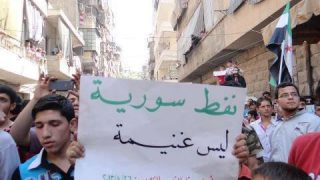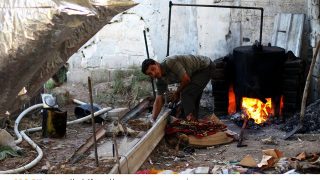


Since the war started in Syria, the narrative of oil has become increasingly complex, transitioning from a source of wealth to fuel for conflict. For a decade and a half, oil has been controlled by every regime that ruled the region. It is considered necessary for the consolidation of power. Those living in fuel-rich areas have been neglected, however, living with dense, polluted smoke, and an elevation of fuel prices.
Before the war, Syria produced oil at a rate of 400 000 barrels a day. The large fields in the east of the country, especially in Deir Ez-Zor, were sources of major national wealth. As central control broke down following the uprising, oil shifted from being a source of state revenue to a source of conflict. The oil and its means of production fell under the control of successive factions, and the infrastructure was subjected to destruction and neglect, with primitive refining and smuggling flourishing.
The exploiters of the oil fields in Raqqa and Deir ez-Zor changed, moving from the Ba’athist government to local opposition factions, then to ISIS and the SDF, and finally to the Syrian Transitional Government, who have held it since early 2026. All of them monopolised the wealth whilst marginalising the inhabitants of the surrounding areas in different ways and to varying degrees over the years.
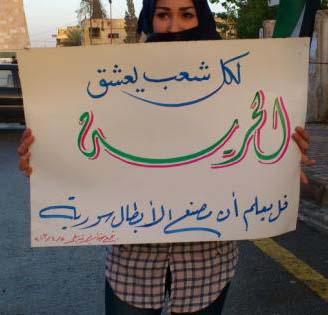
"Before 2011, and even after the revolution and the collapse of state institutions here, the main objective of the forces that controlled the region remained the exploitation and extraction of oil by any means possible. This had a negative impact on health and the environment, bearing in mind that the benefits of oil were limited and not as previously portrayed, due to low production”, says Jalal al-Hamad, a researcher in human rights and transitional justice and director of the Justice for Life organisation.
A few years after the discovery of crude oil in Syria, the sector was almost entirely nationalised and its management was handed over to the Syrian Petroleum Company, which was responsible for the exploration, production, refining, distribution, and marketing of oil and gas. Several Western companies worked on oil exploration and extraction in Syria through the company, and oil revenues accounted for around 18% of GDP. But benefits did not reach those “developing regions”, according to the Assad regime’s classification. Maya al-Rahbi, a feminist constitutional researcher, recalls her first visit to al-Mayadin, where her family comes from, at the start of the 2000s: “Young relatives who had graduated from university lamented the difficulty of finding employment in the surrounding exploration companies, or in any other job”.
After 2011, most foreign companies ceased operations, leaving behind open wells. Human rights activist Saleh al-Naif, who never left Deir ez-Zor throughout all the successive upheavals, says that after the former Syrian regime withdrew from Raqqa and Deir ez-Zor, local armed groups took control of the oil wells there, without having any management plan. “Each group took the well closest to them to fund themselves, as though the wells were a family inheritance being distributed among those close to them”.
With the emergence of ISIS, the situation changed radically, as Saleh explains. They established the ‘Al-Rakaz Office’ and managed the fields in an organised manner, drawing on experts from Iraq and Syria, with oil becoming a key pillar of the group’s economy. Saleh says: “The office used complex smuggling networks to sell oil to various parties, with the aim of financing its military operations and purchasing ammunition and weapons”.
After the Syrian Democratic Forces took control of the two cities and all the fields following ISIS’ expulsion, oil became the subject of a narrow partisan monopoly, according to Saleh, with licences granted to local investors to operate rudimentary oil burners in exchange for handing over a large share of production to the Autonomous Administration of North and East Syria.
Complex oil ties in Raqqa and Deir ez-Zor
Production for the larger fields is not what it once was; the Al-Omar field, which once produced around 50,000 barrels a day, has, according to some recent estimates, fallen to just a few thousand. This is due to lack of investment and ageing equipment, demonstrating that exports have not declined solely as a result of a change in the balance of power, but also because of a decline in domestic extraction capacity – a factor with long-term implications that may outweigh the repercussions of conflict.
In Raqqa, the oil wells are located in the heart of the desert. They are on public land, owned by the state. Prior to the discovery of oil the land had not been used for any purpose other than grazing, with no tension between locals and the government over the area. The wells are located in the Shamiya desert south of the Euphrates River, in al-Rusafa, al-Tabqa, and the southern desert near Jabal al-Bashri, according to Ahmed (a man from Raqqa who preferred not to reveal his real name for his own safety).
Deir ez-Zor: portrait of a forgotten province
28 November 2025
As for Deir ez-Zor, Ahmed says that the largest, most numerous, and most widely distributed wells are located between the south and north of the Euphrates River. He explains that local armed factions turned into oil traders during the period they were in control, to the extent that the wells south of the river were named after them. These wells have the lowest output and are owned by local residents.
To the north of the river, the situation is completely different.
"North of the river, there are large oil wells such as Al-Aziziyah and the Al-Omar field, which cause the bulk of the problem” Ahmed continues, “they are close to the local residents’ land (public property), with part of them running through the villages of Abu Hamam, Granij, and Dhiban. At first, no one went near them, but later the factions issued religious edicts permitting the use of oil, particularly in the Al-Shahil area”. Ahmed adds that oil was the biggest problem and the main source of disputes among the locals during the period of ISIS rule.
The role of locals was limited; according to Saleh, they shifted from acting as ‘protectors of the people’ to serving as ‘intermediaries of influence with the ruling authority’. He explains that loyalty was exchanged for personal gains, such as turning a blind eye to private trade. Ahmed points out that the former Syrian regime employed some of the sons of sheikhs and local notables in the oil sector to appease them.
In recent years, certain names and commercial networks have emerged, managing to deal with all parties simultaneously and transporting oil between areas controlled by different factions. The result was the amassing of vast fortunes from this trade, with no regard for which of the ruling factions was winning or losing on the ground.
The local community: the most notable absence from the oil dossier
Human rights researcher Jalal al-Hamad believes that none of the resources generated through oil extraction, whether before or after the revolution, have ever been reflected in the reality of resident’s lives, nor has it improved them. The transitional government’s vision has, ‘unfortunately’, not differed from that of the former regime, which held a limited view of the region as a source of wealth that must be returned to the control of state institutions. He believes that this return is natural, but that it has not fulfilled the hopes of the region’s people.
“Extracting oil from Deir ez-Zor will take time due to the damage caused by the war, but the view of Deir ez-Zor has not changed: the local people, the infrastructure and living conditions are completely disregarded; the only consideration is the scale of the financial gains that could flow into the state coffers”, says Jalal.
With the Syrian Interim Government now in control of Raqqa and Deir ez-Zor, uncertainty continues to surround the oil sector, as they shut down the flaring facilities for the announced intention of protecting the environment, according to Saleh. He notes that the government claims to be seeking to sign contracts with international companies, but the actual figures in production and revenue remain shrouded in secrecy, as was the case under the previous authorities, whilst legal issues relating to previous contracts with Western exploration companies remain unresolved.
“For many years, the people of Raqqa and Deir ez-Zor have suffered the consequences of having oil on their land. The locals feel a glimmer of hope whenever a new authority takes over, only for things to revert to the way they were before: the wealth of these two cities goes to others, whilst their people live on crumbs”, says Saleh. Jalal al-Hamad points out that at least 75% of Deir ez-Zor has been destroyed, either completely or partially, and that displaced people are returning to the city amid difficult living conditions. He believes that these people feel doubly wronged, and that failing to do justice to this city by compensating residents for the damage suffered and working towards development may upset many.
Before the transitional government arrived, the locals’ demands were simple: an oil refinery on their land, job opportunities for young people, a hospital, a university, electricity and an airport to facilitate travel, as Saleh put it, adding, “They wanted the benefits of their country to come back to them, not just smoke and high prices”. After the interim government took control, and with the closure of the oil-burning kilns, prices rose and many lost their livelihoods. According to Saleh, the current demands of the people of Raqqa and Deir ez-Zor now include real job opportunities for young people, affordable fuel prices, a hospital specialising in treating pollution-related illnesses, transparency regarding oil production and revenue figures, as well as development projects in the fields of electricity, water, roads and education.
Constitutional expert Maya Al-Rahbi, for her part, believes that it is not possible to discriminate against residents of resource-rich areas under a centralised system of government, and that it is difficult to transition to decentralisation at a time when the country is suffering from fragility and weakness, as this would lead to de facto division. “It is not possible to grant privileges to one region over others at the present time. The solution lies in the fair distribution of wealth, which I hope will come to pass”, she reflects.