
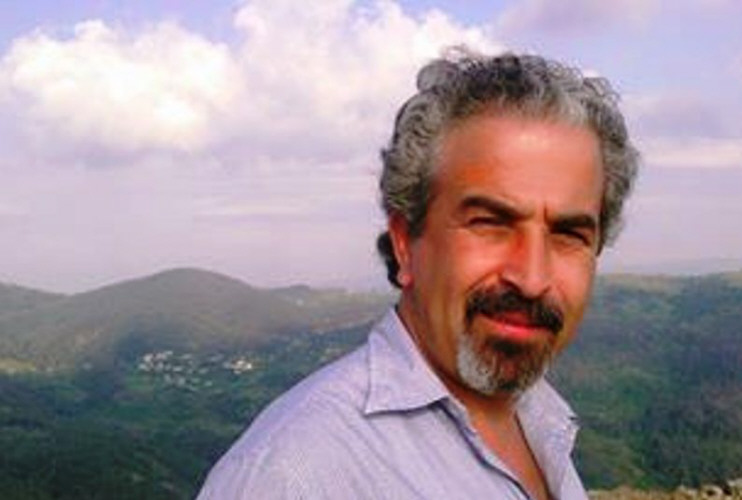
(Latakia), “Long ago, as a mere six-year-old child, I lost my way in the chaotic, carnivalesque swarm of the 'Fourth of April' festival atop the Al-Sakhaba Bridge. On that day, panic consumed my mother’s heart; she was convinced that the Gypsies had stolen me away - instinctively conjuring the haunting warning of Fairouz’s famous song. That day, I had run away with the neighborhood children without telling her. She started shouting among the crowd, and after an hour, they found me eating chewing tobacco at our neighbor’s stall. Because of my mother’s panic, I got a beating”. Ghaytha, who has lived in Greece for 20 years, longs for those days and wonders, “Why were these beautiful celebrations halted, only for our lives to be overrun by such intense ugliness?”
Ghaytha Al-Jardi wasn’t the only one who used to run away. Ramez Ahmed, a 60-year-old retired teacher from the village of Bustan Al-Hamam in the Tartous countryside, says, “Many of us used to run away from the tobacco fields to attend the Fourth of April festival”. The holiday coincides with the planting of tobacco seedlings in the mountains of the Syrian coast, a ritual and gathering of family members and neighbors.
The Fourth Festival or Spring Festival is an annual holiday celebrated by the people of the coast on 4 April, according to the Eastern calendar, which is 13 days behind the current calendar. It celebrates the arrival of spring. Thus, while the festival is called "the Fourth", the celebrations actually take place on 17 April as Ghaytha explains, based on what her grandmother told her. As a child, Ghaytha believed that the Fourth Festival was the same as Evacuation Day, before the previous authorities banned it.
The festival has had different names and local dates across various cultures, but they are all similar and fall in April. While this occasion was known as the Fourth Festival and the Flower Festival on the Syrian coast, in southern Syria, among the Druze, it was called the Feast of the Prophet Shu'ayb and was celebrated on 25 April. Among the Kurds in the east, the holiday was known as Nowruz. The connection between the two holidays was documented by the great Alawite poet Muntajab al-Din al-Ani from the tenth century AD, who said about Nowruz in verse: "And its companion is a time of joy and new beginnings / On the auspicious fourth of April" (His Diwan, edited by Hashim Othman, Al-Nour Foundation, Beirut, Lebanon, p. 101, 2002). He means here that the fourth is the companion of Nowruz because it comes after it in the calendar sequence.
Nostalgia for bygone rituals
“I’m entering my seventies and I long for those days”, Ghaytha told SyriaUntold via Facebook. “They were days of joy, happiness, despite the poverty and hardship”. The daughter of Al-Boudi village in the Jableh countryside adds: “My mother remained a hardworking woman on the land alongside my father until her last breath. Opportunities for joy were limited, like in all environments where there is nothing but work and little money for most of the year. As for us children, our parents had the last thing on their minds, so the Fourth-day celebration was an opportunity for them to rejoice and throw off life’s burdens in the simplest ways: dancing the dabke and singing, while eating whatever was available. For us children, happiness was embodied in the celebration squares, swings, and laughter”.
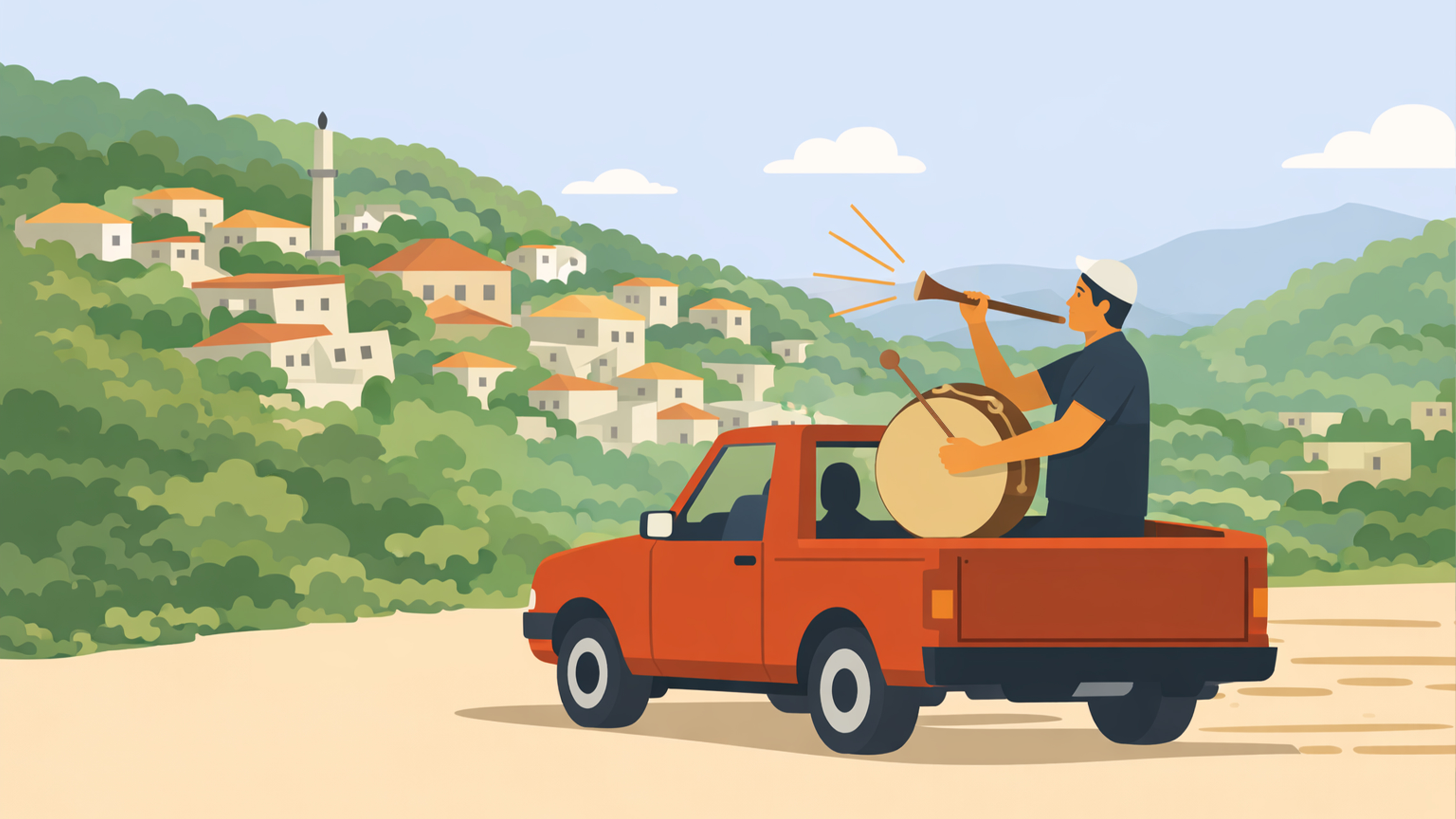
People used to anticipate the holiday weeks in advance, waiting for the most prominent sign of its arrival. The drums and flutes were either heard from nearby locations or from the appearance of a pickup truck with two people in the back, one playing the drums and the other the flutes. Hajj Ahmad Shiha, 70, from Banias, recounts, "The car I remember was a red Peugeot. The drummer would drive around the villages in the Peugeot announcing the approaching Fourth Day celebration. These drummers were Gypsies who came to the area precisely at that time".
On the day the drummers pass through the villages, the women and girls prepare for the festival with special rituals, some linked to flowers. In fact, the festival is called "al-Zuhriyeh" in some areas, such as Shat'ha in the Ghab Plain.
Ghaitha recounts how her grandmother used to gather various types of flowers, soak them in water, and then bathe in the water on the morning of the festival. Ghaitha herself experienced this ritual: "The hot water with the flower infusion creates an unparalleled refreshment and also creates a connection with nature that never fades, neither on the skin nor the soul. This tradition disappeared completely, but it remains unforgettable in my memory".
Ghaitha also remembers the bread baked in the tandoor oven, the boiled free-range eggs, the oil, the olives, and the halva, which cost a few piasters per kilo and was brought by itinerant vendors from "Mahrousa" in Latakia, a shop that has been producing it for almost a hundred years.
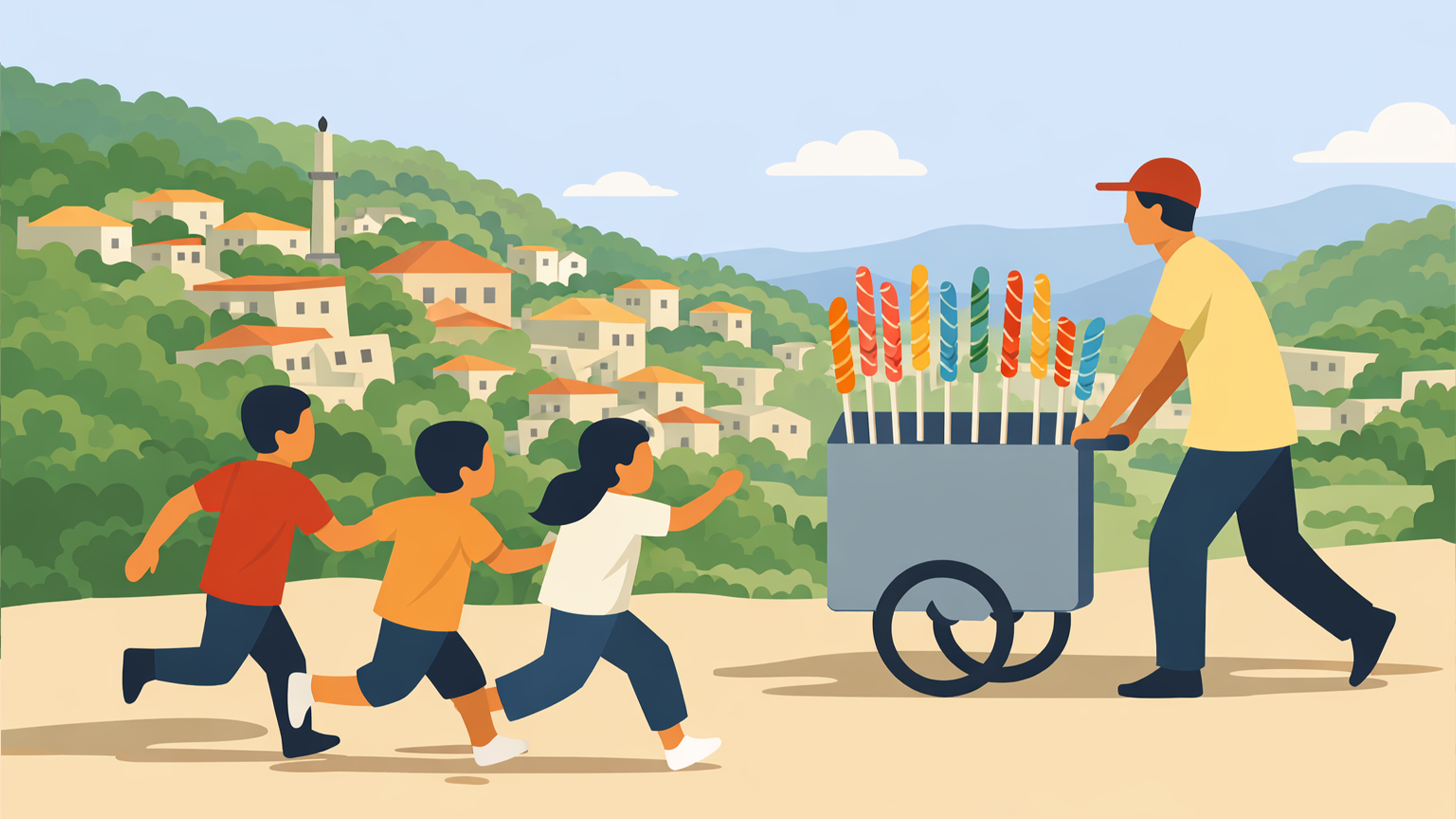
In her testimony, Ms. Malak Hussein, 50 years old, from Salhab says that she used to take pastries, karabij (a type of flatbread), and ma'amoul (a type of filled cookie) to the Fourth Square in Salhab itself, and she would also take a ball to play with during the celebration. Children were the greatest source of joy in those rituals, gathering around vendors selling ma'alak (sugar mixed with natural colors) or in front of projectors using a primitive handheld projector in a time before cinemas or television.
These projectors came from the city in the 1970s. The holiday wasn't exclusive to the people of the upper countryside. City dwellers also participated in these celebrations, which were more like a simple market, both economically and socially. Vendors selling women's accessories would gather alongside vendors of sweets not produced in the countryside (such as sha'abiyat), along with swings and seesaws, the domain of city dwellers. The holiday was never, under any circumstances, confined to the rural population.

The Dabke dance: a prominent feature of the Fourth Festival
The Dabke dance, accompanied by the drum and flute, was the central feature of the Fourth Day Festival. The drummer would stand in the center of the square, with the flute player beside. He would begin by striking his drum with a large stick on one side and rhythmic beats with a smaller stick on the other. Then, young men and women would move towards the square, holding hands, signaling the start of the Dabke. The young men and women would then compete, showcasing their skills, particularly among the unmarried young men.
Several names excelled in the art of Dabke and achieved considerable fame. Ahmed Al-Aji was the most prominent. His son, Muhammad, recounted in a phone interview that his father, Al-Aji (whose real name was Hassan Shahin and who passed away years ago), was in his twenties and a master Dabke dancer. He would leap into the air and land on one foot, waving his small prayer beads, while dozens of young men and women chased after him. Mohammed, now in his sixties, continues: "With the arrival of the fourth day, the drummers would search for my father and invite him to the festival celebration in the neighboring village of Babluta or in more distant locations like Al-Sakhaba in the countryside of Jableh". The people watching the "Dabke stage" (as the local villagers call it) would follow with fascination this battle led by a short man, adept at jumping and moving inside and outside the stage, for hours without tiring, accompanied by a drummer who understood the Dabke performers through eye contact.
Darwish Hammoud was one of the most prominent drummers on the Syrian coast. He passed away several years ago, and no one knows his whereabouts. While the young men and women begin the first round with an agreed-upon rhythm, such as Dal'ouna, Lala, Shoubiya, or others, the dabke round is led by one of the young men or women, alternating between them. The dabke styles here are shared with other Syrian regions, such as the Triangle dabke, the Arab dabke, and the Raqqa daraja, but the difference here is that everyone danced and participated in this ritual.
The dabke was not merely a series of athletic movements circling the square for hours; it embodied the spirit and voice of the mountains and their connection to place and time. The young men and women would start the round, and whoever tired would pass to the person next to them. These rounds were always accompanied by glances between the young men and women, hinting at admiration, and perhaps later, love and marriage. Songs like Dal'ouna, Skaba, Mijana, and songs of love and passion were sung by everyone. It was rare to find a singer or performer before the age of loudspeakers.
The collective cadence of the Dal’ouna songs was often punctuated by the booming voice of the shobash. "The shobash worked in tandem with the drummer", recalls Mohammed Ibn Hassan Shaheen. "His role was to closely monitor the dabke circle. When a new dancer stepped onto the stage, the shobash would discreetly receive a cash tip slipped into his hand. In return, he would shout out a booming public dedication to honor someone else in the crowd".
The shobash would then relay the patron's name to the drummer, who would belt out the formal greeting over the beat: "A shobash from Hassan to Mohammed Abu Ali from the village of Al-Anaza- a brother and lifelong friend!" According to Mohammed, these public dedications carried subtle social diplomacy; for instance, a young man might use the shobash to send a respectful greeting to the father of a woman he "had his eye on", publicly signaling that his intentions were honorable.
Although the cessation of the Fourth of April festival has caused most of these ancient rituals to wither away, certain vestiges of our heritage refuse to vanish. In the village of Jabrioun, nestled in the Latakia countryside, a distinct yet kindred ritual tied to nature and flora continues to breathe, unfolding precisely one day before the traditional spring holiday.
In this village, Mrs. Hanan Ali, a woman in her fifties, fiercely preserves this sacred legacy. "For us, this is the most cherished day of celebration", she reflects. "Our custom dictates that women descend to the village spring under the cover of darkness, from midnight until the first light of dawn. There, before the sun breaks, we wash our hands, faces, and feet, drink from the blessed waters, and carry some back home. On our trek back up, we visit the local shrines, plucking a flowering bay branch and an olive branch from their sacred grounds. Once home, we place these branches above the doorway. This tradition still breathes in our village today - perhaps on a smaller scale—but God willing, we will never let it die. We will pass it down to our children".
Akitu, the Babylonian; Nowruz, the Kurdish; Easter, the Alawite; the Druze; Prophet Shu'ayb...
Researchers into the origins of the festival reveal that it is not merely a local celebration, but rather that the roots of this tradition extend back to the oldest civilizations in the region. In Mesopotamia, the Babylonians held the festival of Akitu to mark the spring equinox, and its essence is similar to the festival of the Fourth Day on the Syrian coast. Researcher Firas Sawwah explains that "this Babylonian festival combined two ancient rituals: the harvest festival in July, during which rituals were performed to mourn the slain Tammuz (the spirit of wheat), and the spring festival, which celebrated the return of that spirit to life" (The Enigma of Ishtar, 5th ed., 1993, pp. 298-299, Dar Nicosia).
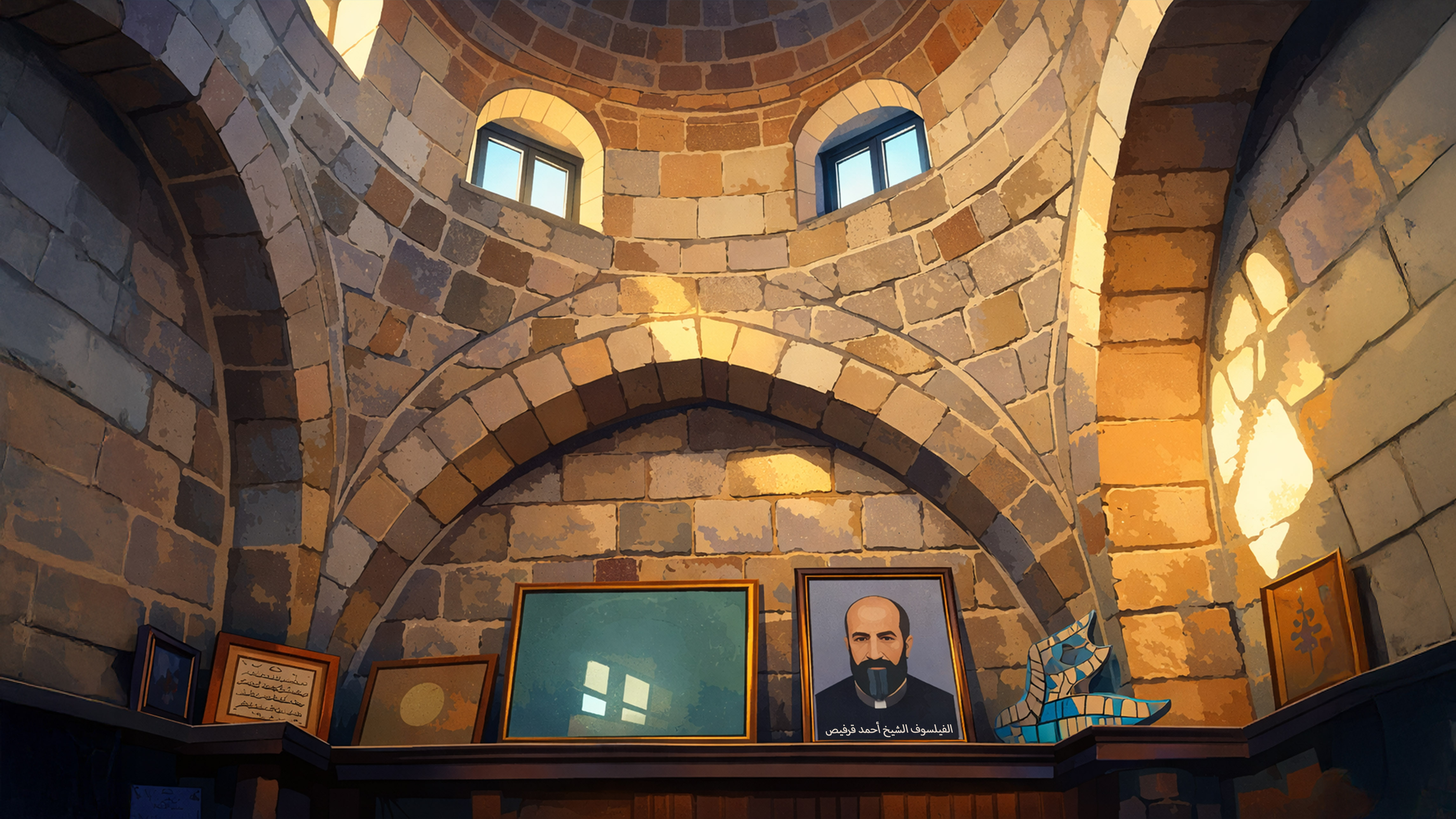
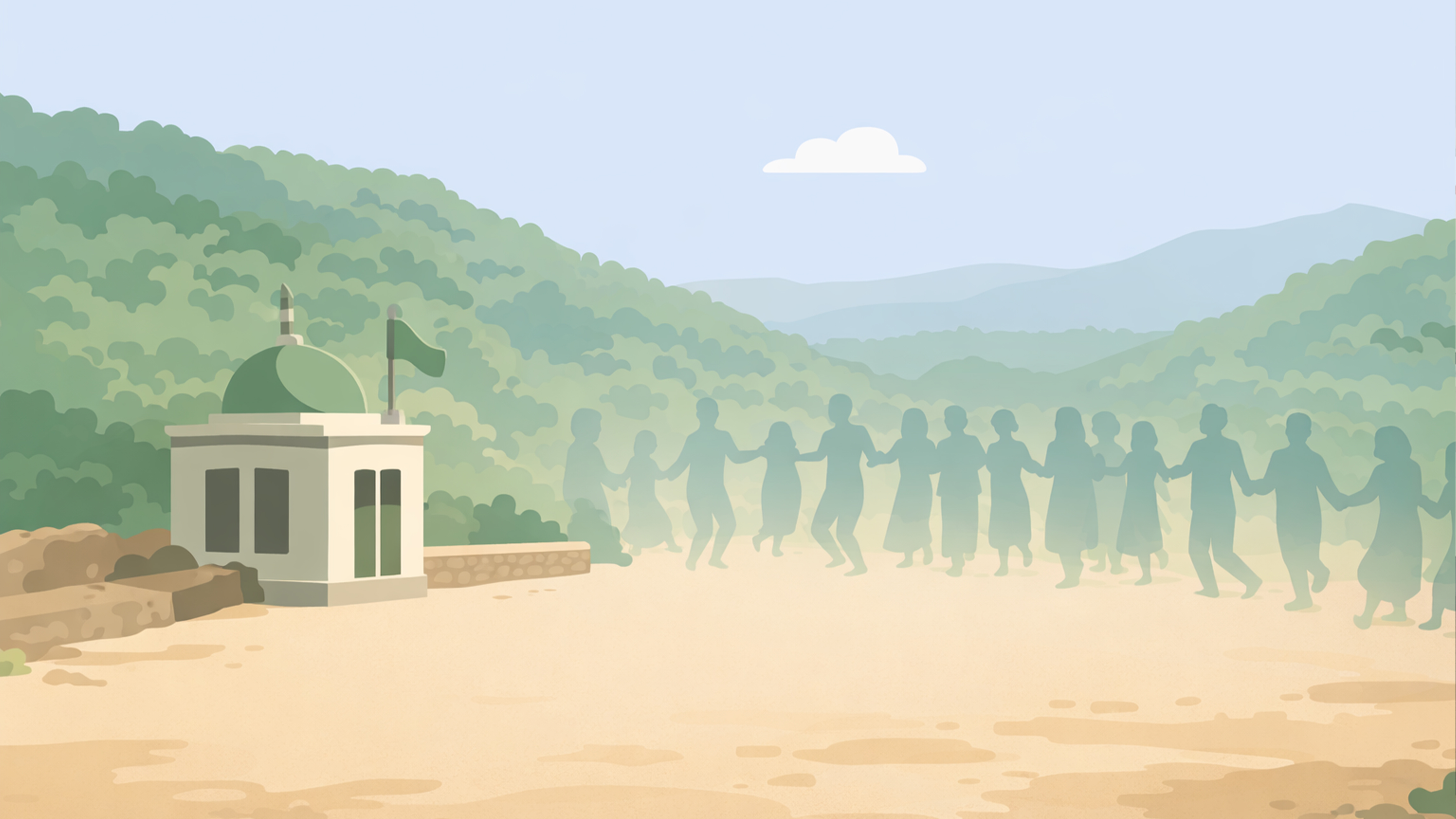
Nowruz in March complements Nowruz in April, and in between, celebrations of the arrival of spring continue, along with all the other religious and ritualistic traditions: the festival of Prophet Shu'ayb for the Druze and Easter for the Christians, where the Fourth Day festival previously included the ritual of boiled eggs. Some explain this by the geographical coexistence of the two sides, noting that religious symbols were present even on the Fourth day, as the squares were not the only destination. On the way back from the celebration and to prepare for the return journey the following day, families would visit the shrines of saints scattered throughout the coastal villages and mountains. Each village had its own shrine or shrines: the shrine of Sheikh Ahmad Qarfis (in the village of the same name in the Banias countryside), the shrine of al-Khidr in al-Anaza, the shrine of Sheikh Abdullah in al-Daliya, and others. The visitors would recite the Fatiha (the opening chapter of the Quran), and whatever they could of the Quran, then take "khal'at" - green pieces of cloth with which they would seek blessings, believing they carried the blessings of the place and its saint. These visits were not rituals separate from the festival, but rather a natural extension of it, combining the spiritual and the social, and serving as a reminder that this land was not devoid of saints and blessings.
Besides the fact that many of these celebrations were held in squares near religious shrines, or sometimes even within them, as well as in village squares, which people would reach on foot.
Ghaithaa notes that she walked from her village of Al-Boudi to Al-Sakhabah, a few kilometers away, without feeling tired. "We wake up early, pack the bundle (a cloth bag) in which my mother keeps tandoor bread, boiled free-range eggs, oil, olives, and dried figs, and then walk about five or six kilometers to Al-Sakhabah square, where its courtyard awaits us", she says.
Al-Sakhabah square, like other squares in the villages of the Syrian coast and its mountains, is usually located, depending on the geography, in the center or on the outskirts of the village, and it is in and around it that the rituals of this festival were performed. In Tartous, there were many squares for the fourth meeting, including Al-Khader Square in Al-Anaza, Sheikh Ahmed Square in Bustan Al-Hamam, Sanoubar Jableh, Al-Khatib Square in Al-Duraikish, Shattha Square in Al-Ghab, Abu Qubays Square in Hama, Safita, and others.
What sometimes distinguishes these squares is the presence of a shrine to a religious figure or a shrine to al-Khidr, the construction of which remains unknown. Ghaitha says that the fourth day of Ramadan in the square of the town of al-Daliyah, located on the edge of the village, was held next to the shrine of Sheikh Abdullah al-Daliyah until recently (the early to mid-1990s). The sounds of drums could be heard from neighboring villages, announcing the start of the festival, before this custom disappeared from the mountains and villages of the Syrian coast.
Evacuation day, a security decision
The confusion between the Fourth of April celebration and the anniversary of the French withdrawal from Syria was common and continues to this day. Ghaitha says that she noticed from childhood the coincidence of the Fourth of April celebration with the anniversary of Evacuation Day, which led her to believe that the holiday was the national occasion, before her grandmother explained the matter.
According to Ghaitha's memory, this celebration stopped "around the mid-1990s in our area for reasons I don't know". Between her childhood in the 1970s and the cessation of the celebration in the 1990s, there is a gap about which Ghaitha's memory holds little. Other testimonies we obtained from Hama indicate that the residents of the Ghab Plain (Shattha and Masyaf) were deprived of celebrations since 1994 due to security decisions made by the previous regime. This is confirmed by a former secretary of a Ba'ath Party branch from the town of Al-Anaza, who noted that "the last Fourth of April celebration I attended was in 1993 in my village, and that the ban came by a verbal security decision; when the security forces speak, we all fall silent". Other testimonies from other regions almost unanimously agreed that the Fourth Day celebrations ceased in that era, in the mid-nineties or slightly before.
In searching for the reason behind the ban, a woman from Daliyat al-Karmel told SyriaUntold that one explanation given to her by a State Security officer at the time (1994) was that "dabke dancing near shrines is forbidden". This explanation cannot be accepted, as the celebrations of this holiday continued until that year without any security intervention. Whether this explanation stemmed from genuine religious conviction or was merely a security justification for suppressing a popular gathering, it reflects a shift in the way the authorities dealt with public spaces in the country. This shift would also be reflected in other areas, where celebrations became limited to official religious and national holidays (as they were called).
The disappearance of the Fourth of April celebration by security decree in the mid-1990s was not so much due to the aforementioned reasons as it was an embodiment of a new phase in the relationship between society and the ruling authority in the country during the 1980s and 1990s, and the subsequent developments in the relationship between rural Alawite communities, in particular, and the cities and the country as a whole. In contrast, novelist Sawsan Jamil Al-Hassan believes that the decline of the holiday was not merely due to the issuance of a security decision, but had deeper reasons: “The migration to the city, which was facilitated by the openness between the countryside and the city on the one hand, and was later increased by the neglect of the countryside, which led to the formation of poverty belts around major cities and preoccupation with the race for a living and forgetting the heritage and memory”, while others have other points of view.
Whether the Fourth Day celebration was halted under the pretext that it was a "celebration near shrines" or an "unlicensed public gathering", due to socio-economic or political shifts that imposed themselves, especially after the events of the 1980s, the celebration of Independence Day continued, but was given an official character that effectively erased the Fourth of July celebration from memory. Students and their families would line up in schools in haphazard groups, waving flags, pictures of the eternal leader, party slogans and banners, and listening to dry official speeches glorifying the leader and the regime. While the dabke dance was performed under the supervision of teachers and in the presence of security personnel, those who did not participate were subject to punishment and perhaps arrest, and those who participated "incorrectly" had their names added to a blacklist. A dark joke circulating on the coast tells of a party branch secretary who filed a report with a security agency about a "comrade" who participated in an official dabke dance on one of the political holidays, but did not "stomp"— - hat is, he did not stamp his foot on the ground while bent over, as the true dabke leader does. The absence of the "nakha" (a traditional dance) was a sign that the dancing here was not genuine, but merely a performance under supervision.
On the Fourth of Ramadan, everyone danced because they danced willingly, not because they were forced, as was the case in celebrations imposed by the power or will of the authorities. In those celebrations, joy was organized and confined to narrow spaces that did not allow for spontaneity, as was the case in festivals like the "Festival of Love" in the sports city of Latakia, the "Desert Festival" in Palmyra, and the "Forgotten Cities Festival" in Idlib - festivals on which the authorities spent billions of dollars to reshape society according to their needs. This perhaps answers Ghaytha's question: "Why were these beautiful celebrations halted, only for our lives to be overrun by such intense ugliness?"