
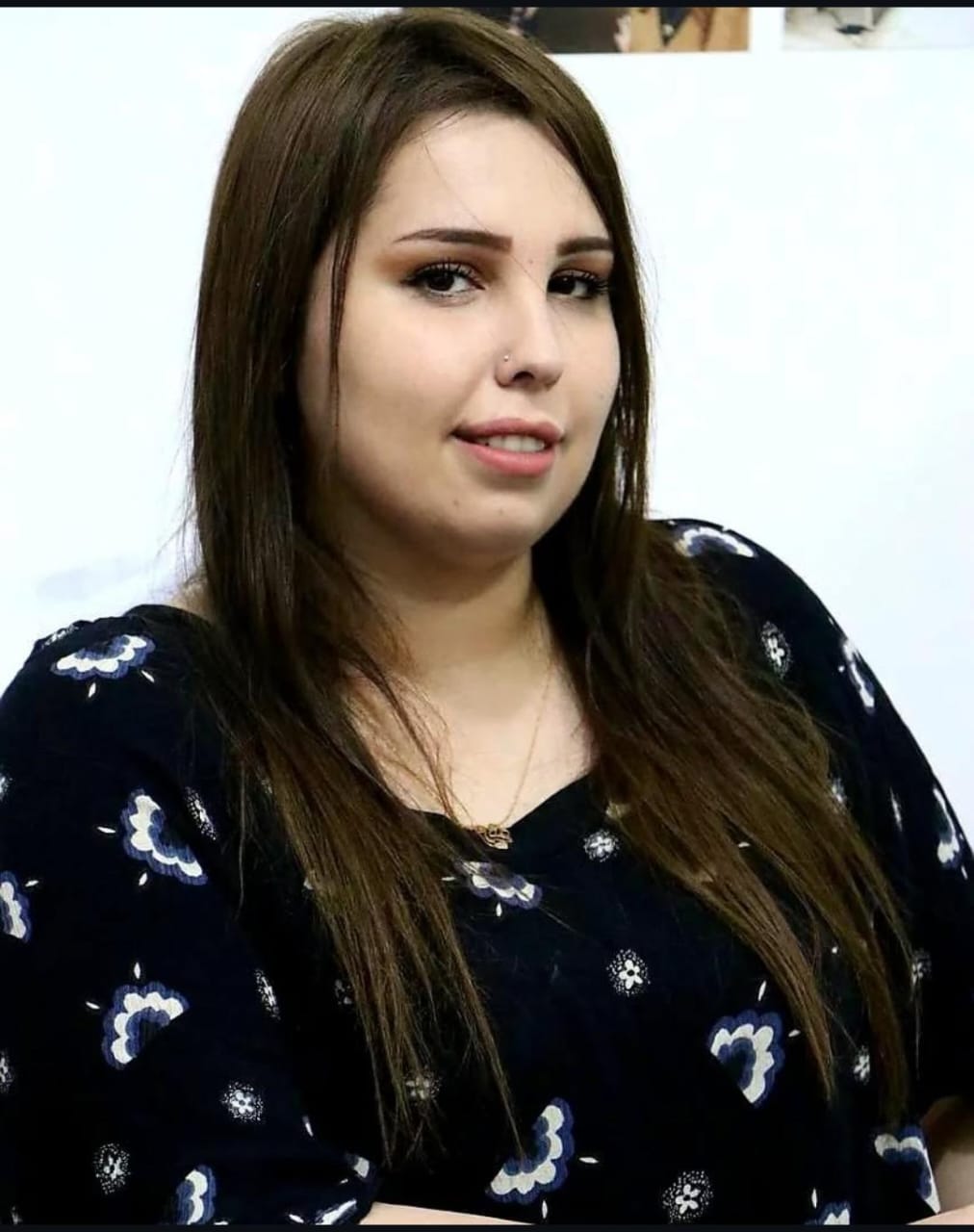
Maria Hanna, head of the Suroyo Media Foundation, remembers one particular interaction well. “We were a group of young men and women from northeast Syria, speaking Syriac, when a young man from Aleppo interrupted us. ‘Haven’t you gone extinct yet?’”, she recounted. For her, the incident is representative of the marginalisation of the Syriac language, born thousands of years ago, yet its existence today remains outside public consciousness, as if it belonged to the past and not the present.
Bashir Saadi, deputy head of the Assyrian Democratic Organisation, defines Syriac as not merely an ancient language but “a living continuation of the languages of Mesopotamia and the Levant”, and an extension of Aramaic and Akkadian within the Semitic language family. According to historical sources, it was the language of the region for many centuries, until the 13th century AD, when its use began to decline gradually alongside political upheavals in the region. Nevertheless, it did not disappear, but remained interspersed in the details of daily life, such as the names of villages, the vocabulary of dialects, and in people’s memories.
The Syriac language was not confined by local geography; rather, throughout history, it served as a widely used language of communication between societies. According to a research paper by Dr Abdul-Masih Saadi, Syriac spread from Western Europe to East Asia and contributed to the production of a diverse literary, scientific and religious heritage, making it one of the most influential languages in its cultural sphere. It was not a language of isolation, but one of exchange; it carried ideas between civilisations and contributed to the transmission of knowledge from Greek and Persian into Arabic, becoming part of the scientific renaissance of the Abbasid era.
A living language not officially recognised
Now the once widely spoken language has become confined to narrow spheres within society. Maria says that its use has been restricted to homes and churches, where it is treated as a “liturgical language”, even though, as she emphasises, it is “the language of a people, a culture and an identity”, and not merely a religious tool. She notes that the reduction was not accidental, but rather the result of long-standing policies that diminished its presence in education and the media, pushing it to the margins. Bashir adds that this marginalisation was accompanied by the fact that it was not recognised as a national language in Syria, and that the 1928 Constitution permitted its teaching only within private institutions. Thus, the language remained socially present but institutionally absent, which denied a systemic learning of the language for entire generations.
In the home, Syriac has remained the mother tongue, passed down by mothers to their children, keeping it alive outside formal settings. Maria experienced this personally, having grown up in an environment where Syriac was spoken daily. She considers it part of her psychological and cultural makeup. Maria recalls the incident at the University of Aleppo, when she was with a group of young men and women from the Syriac community in the Jazira region. “If two Syriac people meet, they simply must speak Syriac”, she says.

When the young man from Aleppo interrupted her to ask what language she was speaking, Maria attempted to explain that Aleppo itself is home to a large Syriac population, and that there are two Aleppine neighbourhoods named ‘Al-Suryan’. However still the young man suggested that the Syriac people had ceased to exist with the fall of their last empire. This incident, in Maria’s view, reflected a profound gap in knowledge regarding the existence of the Syriac community. For her, his question was not merely a sign of ignorance, but an indication of the absence of Syriac culture from the public sphere and from national narratives.
Every four years, a symposium is held in a global capital city, attended by experts in Syriac-Assyrian heritage, as well as international participants. Bashir attended two conferences, the most recent of which was held in the Kurdistan Region and hosted by the Syriac Cultural Department in Erbil. “The whole world is interested in the Syriac language, except for the people of the countries that should consider it their national language. Since the founding of the Syrian state, national assimilation has been applied to the Syriac people and all the ethnic groups considered Arab”, says Bashir, adding that these ethnic groups have been marginalized and ignored in the media and school curricula.
With the establishment of the Autonomous Administration in 2014 and the promulgation of the social contract, the Syriac language gained official recognition, which, as Bashir emphasises, marked a qualitative leap that restored hope in the possibility of consolidating cultural and linguistic rights. However, this progress has not been without setbacks. He points out that the recent integration process, as agreed between the Syrian government and the Syrian Democratic Forces, was accompanied by an ‘injustice’ towards the Syriac language, where it was removed from the first government sign hung at the Directorate of Education in the city of Al-Hasakah. This was viewed as a retreat from the gains achieved after years of campaigning.
Nevertheless, Bashir emphasises that the Syriac community is continuing its struggle on the basis of Article 7 of the Constitutional Declaration, which guarantees the cultural and linguistic rights of all Syrian communities. He points out that Syriac political forces welcomed Decree No. 13, which enshrines the rights of the Kurds, whilst calling for its application to all other minority communities without exception.
Neighbouring countries approaches to Syriac
In a regional comparison, Bashir highlights Iraq’s early focus on the cultural rights of Syriac speakers, dating back to a decree issued in 1972. The degree, enshrined in the constitution in 2005, recognised Syriac as as a national language and guaranteed administrative and cultural rights for the various communities within society. In practice, this has been reflected in the continued teaching of Syriac-language curricula in schools in Dohuk and Erbil up to a secondary level, with their qualifications recognised by universities.
In contrast, Syriac in Turkey remains outside any legal framework, despite the provisions of the Treaty of Lausanne regarding the rights of minorities to be educated in their own languages. The implementation of these provisions has remained limited to churches so far. In Lebanon, there is no law regulating the status of the Syriac language, although it is taught.
In contrast, many European countries provide clear frameworks for supporting mother tongues, through educational policies that allow for the allocation of teachers to preserve the languages of different peoples.
The media: last line of defense
Amid the incompatible government policies, the media has emerged as an alternative space for preserving the language. Despite having other opportunities, Maria chose to work in Syriac media, driven by the conviction that the survival of the language is linked to its presence in everyday life and in public discourse. She has faced difficulties even in finding staff who are proficient in the language, but she sees this effort as a necessity rather than a choice.
Maria feels a mixture of pride and sadness when presenting her media content in Syriac. Her pride stems from her commitment to the language of her ancestors, and sadness at its limited presence, and a fear that it will remain confined in society. “I don’t want us to remain the only outlet”, she says, referring to the need to expand the presence of the language beyond the media.
Bashir calls on Syriac-Assyrian institutions and parties to adopt a unified discourse based on a vision for a new Syria, founded on democratic and secular principles, with a constitution grounded in the principles of human rights and equal citizenship. He emphasises the need for constitutional recognition of the legitimate national rights and equality of all Syrian communities, including the recognition of their languages and cultures as an integral part of the national identity. He thinks the country’s name needs to change to the ‘Syriac Republic’.