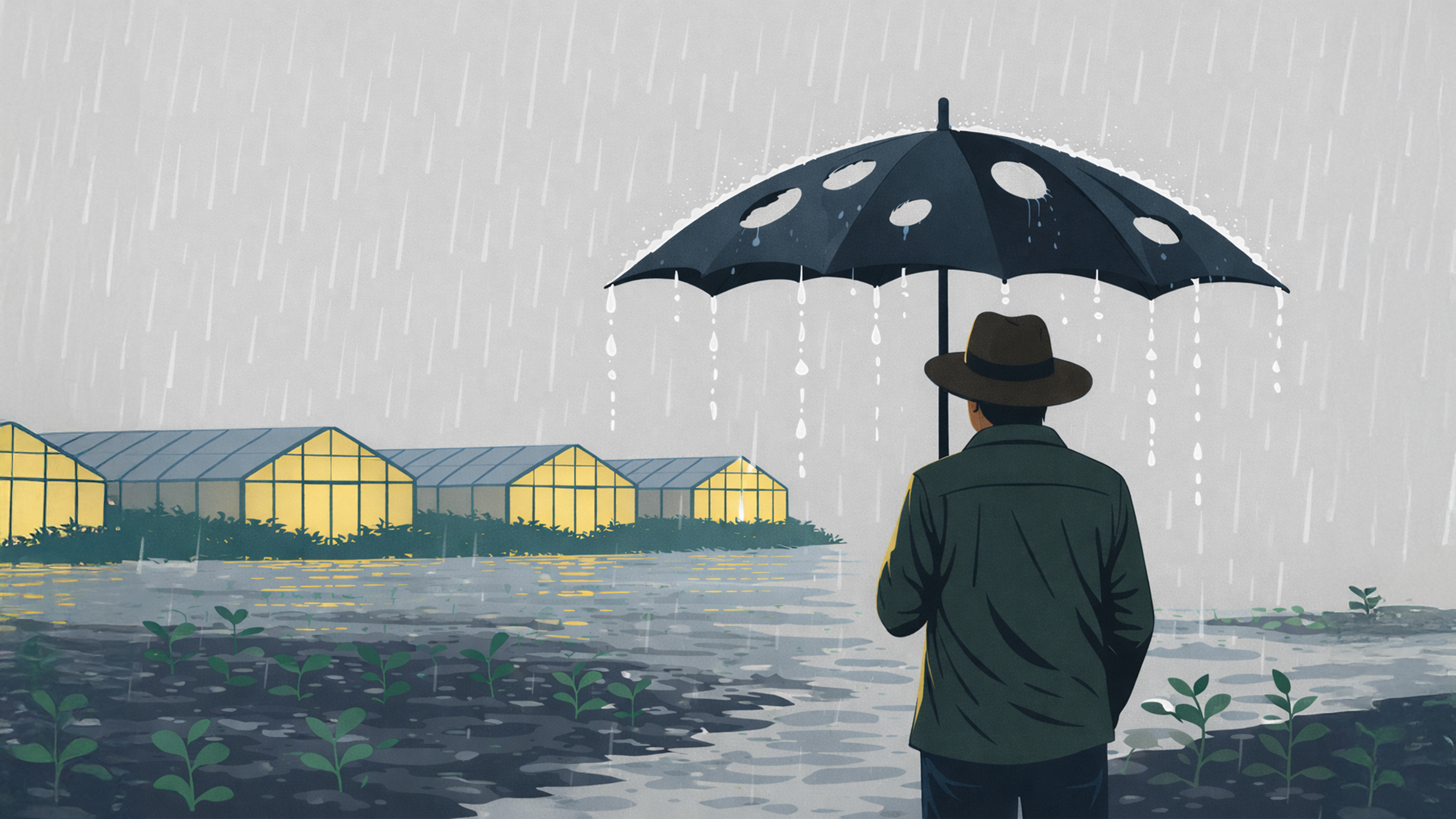

On 21 March, heavy rain lashed the Syrian coastal mountains. Winds and rain raged in Ain al-Bayda and Mashqita, near the Tishrin Dam lake, intensifying as a low-pressure system approached the region. Umm Rammah, 70, was unable to leave her small home south of the village of al-Turba (near Mashqita) to gather the available wild herbs growing nearby. The first day of Spring is also Mother's Day, and her daughter, Suad, will be visiting her from Mashqita with her two young grandchildren, as soon as the rain stops.
The rainy weather throughout the month has reduced Umm Rammah's trips to the Afamia market in Latakia to sell her harvested herbs. The rain and mud have also diminished her opportunities to hike into the wilderness surrounding her village. Umm Rammah "cooks" a generous quantity of various types of grasses that grow in the areas and gardens of "Al-Maghariq", "Al-Darwiyat", "Mrisha Al-Tuta" and "Al-Hamira", all of which are local names for places in the region where types of grasses that humans have eaten for thousands of years grow.
Umm Rammah knows that "the word 'tasliq' comes from 'tasliq' (boiling) grasses, because most of them are boiled in water and a few of them are not boiled (like the squid)". This is confirmed by the late researcher Yassin Abdul Rahim, author of the Encyclopedia of Syrian Colloquial Arabic, who stated: "The verb 'sallaq' (to boil) is derived from wild plants that are eaten raw or cooked, and perhaps its original meaning is 'cooked,' i.e., boiled". Herbs, which today are sold for several thousand Syrian pounds in the Levant, have long been part of the cuisine of its people, such as mushrooms, truffles, garlic, thyme, sumac, watercress, and mint... all of which were known to humankind before they were cultivated, as studies indicate - including Kacey Kaufman's book "Cooking in Ancient Civilizations", in the section on Mesopotamia.
In past times, Umm Rammah would sing "Dal'ouna, Sakaba, and Mijana" in a low voice while working in the fields and wilderness during her solitary journeys into nature. The ritual of "tasliq" (boiling) was often accompanied by singing and folk songs, and perhaps the echoes of these songs could be heard on the banks of the Shabeeb River near Ugarit and the meadows of Damsarkho, where the great northern river flows. Alongside wild chicory, this winter, mallow, borage, sorrel, nettle, cattail, wild asparagus, and other plants covered hundreds of meters of land around Lake Mashqita, the Darouqiyat area, and Ain al-Majawiya spring. Umm Ramah knows a spot north of Mashqita where wild thyme grows abundantly, and she is the only one who harvests it there. She is reluctant to mention the location to protect it from destruction, hoping that no one will be able to reach it before the weeds mature and produce seeds for the next season.
It is best to harvest the plants early in the day, before the sun's rays become too intense, when they are still dewy, at their peak of bloom, and firm. This process is carried out according to the two women's instructions: "Depending on the type of plant, dandelion is cut to a depth of several fingers, leaving some of the roots; the same goes for nettle; sorrel is cut without the roots; wild thyme is left with the mother plant; cattail can be pulled up by the roots because it is a widespread plant, and so on".

These herbs and grasses have many benefits known to people long before doctors. Some even called the plant "borage" (also known as "bal ghusun") "the oil of the earth", a name that likely originated with the Canaanites, the inhabitants of the Levant. Nettle is eaten raw with wine or fish, while rocket is renowned for its strength-giving properties, as reflected in the Syrian proverb, "If women knew the value of rocket, they would plant it under their beds". Most of these herbs are chopped, boiled, and sautéed with olive oil, garlic, onions, and spices such as cumin.
During periods of heavy rain, as was the case this season, Umm Rammah stopped harvesting wild chicory for several days and cooked it at home with olive oil, which she described as "very scarce this year". She added: "This rain is a blessing for the women in the city who harvest wild chicory in areas near the market, as it allows them to monopolize the market. Nevertheless, our produce is still tastier because it's natural and clean". Umm Rammah points out that there are places near the city where women harvest wild chicory even during light rain. Sometimes, women from various parts of the city harvest wild chicory in small green spaces between public roads, such as the Al-Thawra Highway in Latakia, where the weeds can grow easily.
The closest and largest grass-growing area to the city is the sports complex north of Latakia. With the rain subsiding, throngs of women and men from the area flock to the parks and green spaces to forage. Nawal Ahmed, 60, from Damsarkho (near the city), told SyriaUntold: "I walk from my house every morning to the sports complex with women from the area. There are vast areas full of edible grasses, both raw and cooked. This year, because of the heavy rains, there are huge quantities of everything".
Nawal is one of the women who retired from her government job as a school employee in the area. She has a husband, two sons, with their wives, and grandchildren, who need additional financial support, especially since her daughter-in-law was dismissed from her job at the Health Directorate a few weeks ago. Nawal didn't hesitate to enter the world of grass-growing with the help of her experienced neighbor, knowing that most rural women have some basic experience in this craft.
“When we arrive at the sports complex, we voluntarily divide the spaces amongst ourselves without any problems”, Nawal recounts. “Our livelihood comes from God. We cooperate so that no woman returns disappointed from her search in these spaces. For example, someone who gathers a small amount of sorrel gives it to a woman who has gathered a larger amount of sorrel. In this way, each one returns with one or two types of herbs in an abundant quantity that she can sell. If she does not wish to do so, another woman can sell it and give her the price later in the day”.
Nawal agrees with Umm Rammah that "the problem with these plants is that they wilt quickly and cannot be preserved, as customers prefer to buy them fresh, green, and tender. Most of them also cannot be dried, so they are either consumed the same day or left in the ground where someone else waits to pick them".
Umm Rammah distinguishes between "experts in plant propagation" and "those newcomers to the profession, who are numerous. Propagation requires preserving the plant so that it will regrow next season, otherwise it will disappear from the area". She continues: "For example, when harvesting hyssop, the mother plant must be left untouched, along with some of its stems, so that it can regrow again next year. This applies to sedges, whose young must be left in the wild to reach the stage of seed formation and dispersal. Unfortunately, many newcomers to plant propagation uproot the plants".
The majority of those she calls "newcomers" to the profession are recently unemployed, such as former government employees or young men who were previously in the police or security forces. According to Umm Rammah, "They don't know their head from their tails. They've left no bay tree untouched by their destructive practices. They won't spare a single plant, not even hyssop or thyme", She adds angrily that the worst part is "They don't listen to you if you warn them or try to teach them".
She tries to pass on her knowledge to the younger generations. Her neighbor's son acknowledges that Umm Rammah is an expert on weeds and their cultivation methods, but he justifies the unethical practices by saying, "Hunger has driven people to sell everything they can to protect themselves and their children". There are thousands of families who have nothing to eat but the weeds they gather from the fields and valleys.
Ahmed, a 25-year-old neighbor, began accompanying his aunt, Umm Rammah, on her hiking trips after the fall of the Assad regime and his expulsion from the military academy, where he had spent three years as a volunteer officer. Ahmed admits that, a year and a half after the regime's collapse, he hasn't found a job and lacks experience in any field.
"After several people were killed while collecting bay leaves in Jableh last year, we became afraid to go out into the countryside and use public roads. There's no guarantee you'll come back alive; it's all down to luck". The crime occurred north of Jableh. The victims were two young men collecting bay leaves to sell when they were deliberately shot. The perpetrators remain unidentified. Similar incidents have occurred in various parts of the Latakia countryside, leading herb gatherers to avoid open areas and public roads.
Like many others, Ahmed sends his harvest of wild herbs with his aunt. "Even today, I don't have a national ID card to travel with, so I try to avoid problems. I haven't been to Latakia in a year and a half", he says.
In other parts of Syria, the risks escalate to massacres, as happened last year near Hama. However, the danger remains greatest on the coast, with the possibility of being shot by unknown assailants, in addition to the competition.

When conflict is reproduced in the name of reform
01 June 2026
The high unemployment rate in the mountains, especially among young people, has driven many of them to harvest wild herbs this season, hoping to earn at least some income to help them eat and drink. "There are employees who have found the land to be a wide field for making some money from wild herbs”, Ahmed says, “and therefore there are large quantities of wild herbs being offered for sale, which may cause prices to drop".
Umm Rumah does not care about prices, believing that this provision is from God, but she believes that what “this generation is doing may lead to a scarcity of grass in the future”. In the rural areas of Baniyas, many inexperienced people uproot the orchid plant (of wild origin), from which natural orchids are made, causing the scarcity of the spread of this already endangered plant. The price of a kilo of this type reached more than 50.000 liras (five dollars).
According to Umm Rammah, the grass is usually collected and “twisted”, that is, tied together in the form of bunches, each of which is sold in a specific size in the market: “Mallow and borage are sold by the kilo, while sarafan, asparagus, watercress, salpin, and sorrel are sold by the bunch”.
Customers buy large quantities of these herbs to make "vegetable pies", a staple of Syrian cuisine known for its variety, richness, and distinctive flavor. Restaurants sometimes buy them, especially at the beginning of spring when they become more popular. Malak, who owns a pies shop in the Ras Shamra area near Latakia, tells us that one of her most requested pies these days is "Labis al-Qatta" (cat's pie). The herbs are chopped, boiled, and mixed with onions, peppers, oil, salt, and sometimes nigella seeds. The mixture is then spread on dough, baked in a tandoor oven for five minutes, and served hot. “It’s delicious”, she says, noting that the lifespan of this type is short, not exceeding two months before it flowers and becomes inedible, so “we grow chard and chicory and add the same previous flavorings, but the sour taste of catnip remains the most requested by customers”.
There are several locations for selling weed in Latakia, the most famous of which are Apamea Market, Vegetable Market, Qannis Market, Al-Mashahir, Al-Jumhuriya Street, and Al-Hammam Square, in addition to stalls on Yemen Roundabout or in popular neighborhoods. These markets specialize in selling vegetables, fruits, and fish on carts and stalls, in addition to herbs brought from the mountains or plains surrounding the city to the north and south. Throughout Syria, there are multiple markets for these plants, the types of which vary from one region to another. In Latakia, for example, neither women nor weed pickers pick and cook loofah (a poisonous plant), while it is sold in the markets of Baniyas and Tartous. In the Badia regions, people collect truffles, and in the south there is wild watercress.
Nawal and Umm Rammah, along with about 20 to 30 other women, and a few men and young people, choose a spot on the sidewalk of a short street - less than 200 meters long - in the Afamia market to sell the herbs they gather during their natural seasons. Umm Rammah has been working here for at least twenty years and has built a loyal clientele of "customers who prioritize quality above all else".
Time is a crucial factor in the economic cycle of these plants. Umm Rammah explains that she usually organizes the harvest in the morning and immediately transports it to the market in the city, either herself or through other women entrusted with this valuable commodity. She elaborates further: "The earlier we get the herbs to the market, the better the prices we get".
There is no fixed pricing standard. No official or unofficial body sets prices. Nawal says that a bunch of sorrel costs between 2,000 and 3,000 Syrian pounds (a quarter of a dollar), and four bunches, for example, usually sell for 10,000 (one dollar). Price competition is rare; women usually rely on the older women in the market for pricing. In the afternoon, when the market is quieter and buying slows, prices drop. "None of us leaves with unsold goods unless we can take them back to the market the next day". Five years ago, a kilo of mallow cost no more than 500 Syrian pounds (5 US cents). Today, after the currency collapse and prices multiplying several times over, its price is still modest compared to other vegetables, but it has risen enough to attract hundreds of unemployed people to the season.
Prices have seen a noticeable change this year, trending downwards due to increased supply and production, and even a rise in the number of workers. However, "the market absorbed these increases in the price of herbs because their price is only slightly higher compared to the rising prices of vegetables and meat", says a veteran vegetable vendor in the Afamia market. The vendor, who preferred to remain anonymous, adds: "Two years ago, I used to buy herbs from three or four women known for their expertise. Today, dozens of young men and women come to me, most of whom I don't know. Some of them don't even know how to sort herbs, but the price is cheaper. I buy from them and sell wholesale, but the quality has declined".
As the sun set on Mother's Day, the rain continued in the Mashqita area and its surroundings. Umm Rammah went out to her doorstep several times, watching the weather, hoping for a break, but to no avail. Her daughter and grandchildren arrived, and they all shared a lunch of chicory, chard, and roasted vegetables, which they had prepared and baked together on a griddle near the small, sheltered garden. Suad asked her mother about the thyme plants in their secret place. Umm Ramah smiled: "They're still there. But I'm afraid someone will discover them before they're old enough". The mother gave her daughter a bag of extra herbs: "Mallow and wild mustard, don't leave them for more than two days". Then she added in a low voice: "If the weather is clear tomorrow, I'll go early. I don't know how many more years this season will last".