
Every morning before heading to work, Engineer Nizar would stand for about two minutes in the kitchen, drinking his coffee and gazing out the window at the sea. These gestures always reminded him that the port of Latakia, where he worked as a crane maintenance engineer, was nearby and waiting for him. Back then, he would finish his coffee and hurry out. Things changed one day in March 2026; he drank his coffee slowly, standing with a brown envelope in his hand, containing resignation papers he had been waiting to complete since submitting the first one in early January 2026.
In the months leading up to that day, he had often uttered a phrase that his three children and his wife had memorized: "I can't take it anymore". At home, the stories he used to tell his family, especially his children, about the port had gradually diminished.
SyriaUntold rode with him in the car until reaching the Latin Church near the main entrance of the port's administration building. Three bearded young men stood by the door, Kalashnikov rifles slung over their shoulders. We stopped near them. Nizar got out of the car and walked over to them. The 50-year-old engineer didn't know any of them (as he later explained). As soon as he approached, one of them asked politely, in an accent that suggested he was from Idlib province, "Please, how can I help you?" Nizar briefly explained what he wanted. They took his ID, recorded his name in a register, took his picture with a mobile phone, and gave him a stamped slip of paper with the name of the person he was looking for, politely asking him to return it when he left.
Inside, the building appears clean, as Nizar told SyriaUntold: "The doors are new or freshly painted, as are some of the offices, and 'No Smoking' signs are prominently displayed alongside a list of various instructions". Nizar added, "There are fewer visitors compared to the days of the old regime. You feel like you're in a private company".
After the fall of the regime, the port was transformed from a public sector company into one affiliated with the Land and Sea Crossings Authority, which in turn reports to the new presidency. This decision reflects a series of changes that have affected this long-established pillar of the Syrian economy. Its founding decree (No. 38) was signed by Syrian Prime Minister Khaled al-Azm on 12 February 1950, under the name "Latakia Port Construction and Investment Company". It was inaugurated almost a decade later by the presidents of the United Arab Republic, Gamal Abdel Nasser, and Yugoslavia, Josip Broz Tito, amidst a large public gathering.
At that time, goods arriving in Beirut had to pay taxes to the newly formed Lebanese state before reaching Damascus and Aleppo. Al-Azm wanted Syria to have its own port directly connected to the world without intermediaries. From that day forward, work at the Latakia port accelerated dramatically, and today it spans an area of approximately 2.8 million square meters between land and sea. This is the port Nizar is leaving today after working there for nearly a quarter of a century.
Nizar clearly notices that the faces of the employees in the administration building have changed rapidly in just a year and a half since the regime change. He barely recognizes any of the staff except for a very few.
There is an unmistakable weariness in Nizar's eyes and body, born of the many details and scenes that led him to the moment he submitted his resignation: he witnessed his colleagues being dismissed or "transferred" one after another. He says, gesturing with his hands as if drawing a map on an invisible table, "The authority continued its work by transferring employees to remote work locations and replacing them with substitutes everywhere in the port at record speed".
This is confirmed by Hammam Asaad (a pseudonym) in a conversation with SyriaUntold via WhatsApp. A man in his fifties from a village in the Latakia countryside, holding a geography degree from Latakia University, worked for 20 years at the port before being transferred in November 2025 to the Al-Bukamal border crossing in Deir ez-Zor province, 700 kilometers away from his home, family, and children, who were still attending school. He wasn't alone; many others were with him. Hammam says, his voice rising slightly: "I was as outspoken as I am today, to no avail. They transferred me from the port to the Al-Bukamal crossing. I am a son of Latakia. I didn't go to that post. The goal was clear: to force us to resign, but I didn't resign, so they dismissed me under the pretext of absenteeism".
In November 2025, transfer orders affected 72 employees from the Latakia port, 120 from the Tartus port, and dozens of employees from other institutions, such as the port authority. These individuals were transferred to land crossings far from their homes, such as the Al-Bukamal crossing in Deir ez-Zor with Iraq, and the Jarabulus, Hammam, and Al-Rai crossings with Turkey in Aleppo. The available lists of names and protests on social media led many of those dismissed, who belonged to the Alawite community, to view the move as sectarian revenge, while others considered it an administrative procedure. While Tamam Ahmad, one of the dismissed Alawite port employees, sees the decision as clearly sectarian, Hassan Joukhdar, another dismissed employee, views it as "an administrative decision aimed at organizing work and dismissing those employed by the former regime in this sensitive institution without the appropriate experience, as a reward for their long years of military service".
Nizar says, "Only a few of the port's long-serving employees remain". This, among many other reasons, prompted him to submit his resignation, which they immediately accepted: "They're in a hurry to get rid of me because I'm Sunni, and I refuse to be dismissed in this way by the new administration. I have no way to stand up to them", he told SyriaUntold.
The transfers didn't only affect administrative staff; they also extended to the workers who unload containers on their backs before the cranes load them.
Haidar works at the container terminal and is a father of three. He lives in the town of Sinjwan on the northeastern outskirts of Latakia and knows the terminal and port "by heart", as he told SyriaUntold. But one morning last February was an unforgettable day for him.
“I went down to the port as usual, as I had for the past 15 years. We reached Gate Four. The guards told us: ‘You can’t enter because you’ve been dismissed’. And they closed the gate”, this was just one of a series of decisions and actions that Engineer Nizar witnessed and heard about day after day.
He saw them arriving at the port every day: new faces, new accents… They would sit in the offices of their old colleagues, quickly opening drawers that still held remnants of their predecessors’ papers, as if someone wanted to finish the job before anyone noticed. “Only a few of the old port employees remain”, Nizar says. This, among many other reasons, prompted him to submit his resignation, which they accepted immediately: “They’re in a hurry to get rid of me because I’m Sunni, and I refuse to be dismissed in this way by the new administration. I have no way to stand up to them”, he told SyriaUntold.
“There’s a paper I need to sign from someone inside the port”. The employee he was seeing there for the first time told him. He walked past his office, his glasses shifting over his ear, which had grown deaf from years of noise. He didn't enter the office. He watched the cranes moving rapidly amidst the port's renewed bustle, years after its forced closure following 2011. The cranes worked quickly, containers were raised and lowered, and workers in uniforms from a private company ran about. He didn't know them, while ships docked, unloaded their cargo, and departed. Everything was moving except Nizar. A few months ago, he could have named the 60 cranes at the port's 23 docks and listed the problems with each one: the old ones had been installed half a century ago and then forgotten, and the latest ones were only a few years old, but their non-original conveyor belts always seemed to malfunction. "It's not my problem", Nizar whispered to himself, then continued toward the desk of the person responsible for signing his paper.
He explained how he made his way out of the administration building and into the port where he had worked for many years. He passed near the entrance to the right of the administration building, where a large portrait of the former regime's leader, which had adorned a sloping green space towards the sea, had disappeared. In its place, rows of evergreen plants formed the words "Port of Latakia". Nizar found this change pleasant and ideal, giving him a feeling of satisfaction that quickly evaporated as he remembered he was leaving, against his will, this place that had witnessed many transformations throughout its history. In turn, it reflected the transformations of the Syrian economy since the decision to modernize it following the customs separation between Syria and Lebanon in 1950.
Since then, and throughout the 1970s, the port expanded, with the addition of numerous facilities, warehouses, and silos. The docks were also widened, and the number of cranes increased. Those were the years of growth, years in which the port expanded rapidly. The old photographs hanging in the administration corridors showed only a small dock and a few cranes.
When Nizar arrived here a quarter of a century ago, the port was almost complete. Since the late 1990s, little has changed; the 60 cranes that Nizar maintained remain the same as those he saw on his first day of work, as do the docks he walked on and knew by heart.
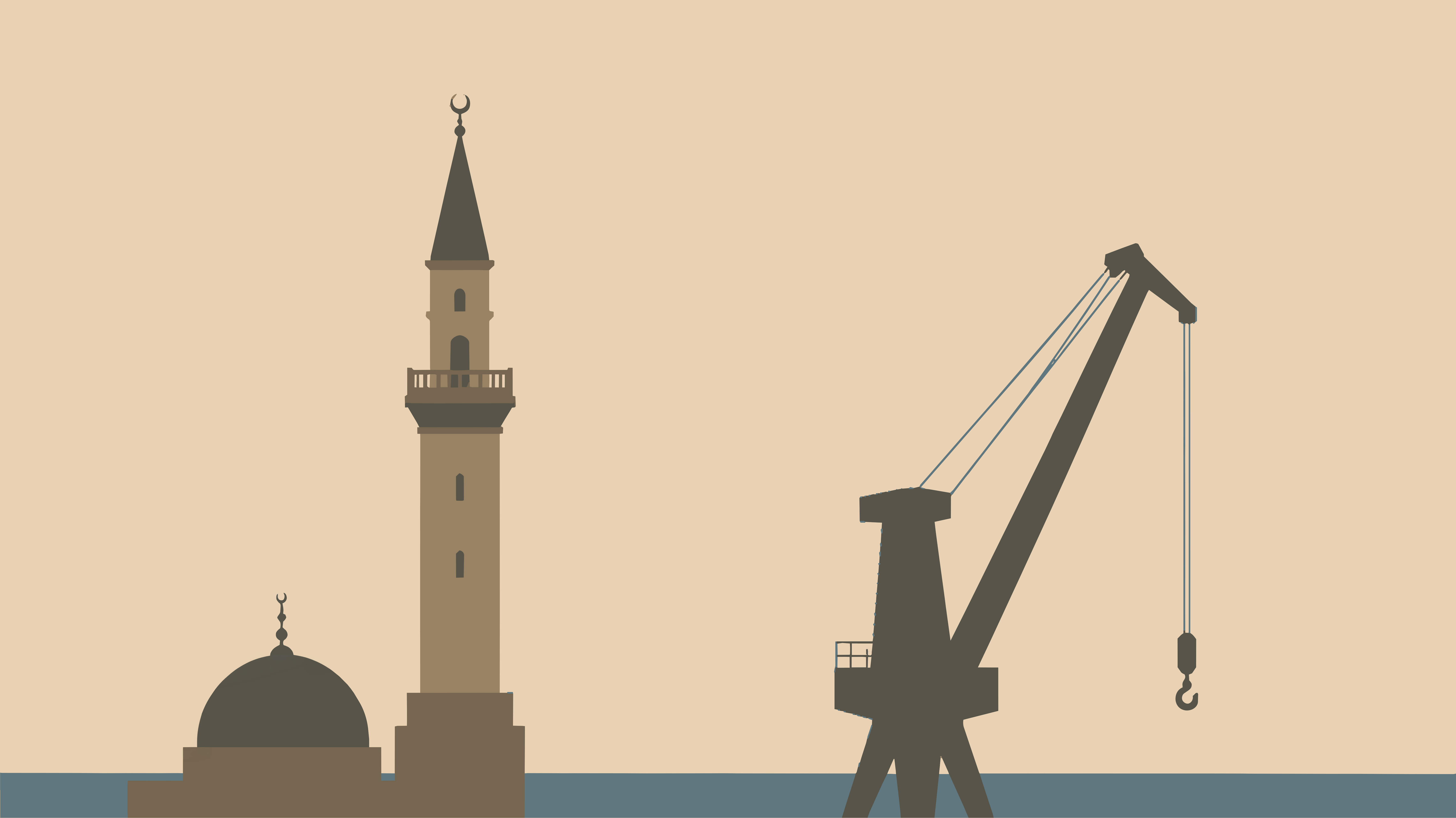
He raised his head slightly, taking in the old Mamluk-era Al-Shaarani Mosque and its minaret, looking the same, while everything around it had changed: the city expanding and contracting, the port evolving and transforming. The same minaret had witnessed Nizar, the young man, wearing a new suit and carrying a new dream, many years before. The mosque, with its lights, often served as a landmark to the port's main gate at night, during the city's power outages. The call to prayer still rises from the mosque, but with a new muezzin's voice.
Between 2011 and the end of 2024, Nizar worked as a crane maintenance engineer at the port. He and a group of engineers, technicians, and workers possessed valuable experience in finding compromises under extremely difficult circumstances. Recalling those days, he says, "Securing spare parts was a difficult process, starting with submitting requests that were often met with great difficulty. Often, we had to use spare parts nearing the end of their lifespan, yet accidents involving the cranes were rare". He explained how he would stand in front of the crane, holding the used part in his hand, gazing at it for a long time, and then assembling it. This wasn't recklessness, he believed, but rather expertise, as he knew exactly how many more hours of work that part could provide before it gave out. But there was one incident he couldn't forget: the conveyor belt of one of the cranes snapped, and a container fell, killing a worker. On that day, lost in history, Nizar returned home without eating or speaking. His wife sat silently beside him. She knew from the smell of his clothes, from the way he walked, that something serious had happened. He didn't sleep that night. He kept staring at the ceiling, replaying the incident in his mind again and again: Could he have done anything to prevent the disaster?
After the fall of the regime
When the Assad regime fell on the morning of 8 December 2024, Nizar was on his way to work. He couldn't believe it at first. Someone ran towards him at the entrance: "They're gone! Assad has fallen! The regime has fallen!" He didn't immediately grasp those sudden pronouncements. Then he saw the guards scrambling, throwing down their rifles and fleeing. He saw smoke rising from the nearby customs building in the city. And he heard sounds unlike those of the port. Nizar recalls: "Within 72 hours of the collapse and the state's absence, a great deal of material was stolen. The guards fled in fear, and the employees didn't dare to work due to the precarious security situation". The port, where Nizar had spent years maintaining its machinery, had its gates flung open, its goods, materials, and furniture looted right before his eyes. Containers were opened, and countless items vanished. Nizar stood at the entrance to Gate Four, watching everything, helpless.
In the tense atmosphere gripping the country and its homes, his wife would ask him every evening, "What happened at the port?" He would simply shake his head, unable to answer.
Later, everyone returned to work: Nizar to his cranes, the workers to their docks, and the guards to their gates. Everything seemed to be in its place, but surprises awaited them. Nizar thought the worst was over and that the port would return to its former state after the chaos, but what happened next was not a return, but the beginning of something entirely different.
Less than a month after the fall of the previous regime, the customs authority was dissolved and the "General Authority for Land and Sea Ports" was established. Nizar says, "None of the customs officers remained at the port except for one employee who was let go because he was an expert".
Then things moved quickly. A year later, interim President Ahmed al-Sharaa issued a decree establishing the "General Authority for Ports and Customs", directly under the presidency, after it had previously been under the Ministry of Transport. He appointed Qutaiba Badawi as director of the Latakia port for a short period before transferring him to Damascus to head the same crossing authority. Today, the Latakia port is managed by Abdul Hamid al-Wahab, the CEO of a financial auditing firm. Previously, the port was managed by technocrats with expertise in port management, economics, and logistics, such as Dr. Izzat Traboulsi, who holds a doctorate in economics from France, and Tawfiq al-Hayani.
Months after his dismissal, Hammam said, "I'm not bothered that they replaced me; after all, they just brought in Syrians to replace Syrians. But I am bothered because this system will lead to successive losses as a result of driving away experienced professionals".
Hammam says, his voice rising slightly, "My tongue was as long as it is today, to no avail. They transferred me from the port to the Al-Bukamal crossing. I'm from Latakia. I didn't go to that center, 700 kilometers from my home. The goal was clear: to force us to resign, but I didn't, so they fired me for absenteeism".
The kind of experience Hammam speaks of began to dwindle in all four sections of the port, and most noticeably at the container terminal where Hammam worked as an administrator, while Haidar worked as a container unloader for 15 years: "I was one of the people who witnessed and participated in the terminal workers' protest when they first prevented us from entering the port". He tells a story that hasn't been told, then pauses, as if reliving the scene: "Last 1 February, I went down to the port as usual, as I had for the past 15 years. We reached Gate Four. The guards at the gate told us: 'You're not allowed to enter because you've been fired' And they closed the gate."
Haidar says that no one had informed them of the decision, that they hadn't signed any papers, and that most of them didn't understand what had happened. "There were 30 of us. People protested, saying, 'You can't fire us; we have valid work permits'. The workers insisted on entering because they had permits and had the right to be there. People surged towards the gate, and between 11 and 12, shots were fired into the air at the port gate to disperse the crowd. People responded verbally, 'Are you confronting us with bullets?' The situation escalated as people began filming". These 30 people were from both the city of Latakia and its surrounding countryside.
Following these protests, the port's security director, known as "Abu Lu'ay" who, according to Haidar and others, is from Idlib province, came and explained to them the changes the container terminal had made, changes they had no part in. In his testimony, Haidar states: "The reason they were prevented from entering the port under the old system was indeed the terminal management's decision to lay off 600 loading and unloading workers in order to reduce their wages. However, the terminal only did so because it was under pressure from the new port management, which had two objectives", Haidar explains: "to replace the workers with new ones and to reduce the wages paid to the workers through customs brokers".
Then came the next blow, as Haidar explains: “They divided the remaining workers at the station, who were only 150, into groups. We receive our wages from the station, not from the brokers as has been the custom since the port’s establishment for the unloading workers. They put ten of us into one group that works one day and is off for three days, with a daily wage of 200.000 lira per worker, while the rest of the days there is no money. In the whole month the group works five days, meaning a monthly wage of around one million lira (80 dollars). This amount is what we have to live on for the whole month with our families, after we used to receive 600,000 a day (50 dollars) for a number of working days of approximately 20 days”.
The station management aimed to reduce the fees paid to customs brokers for clearing goods by linking wages to the station's payroll. Haidar recounts, "Abu Lu'ay told us, 'This is the new system. Take it or leave it'. This was said to men who had no choice but to quit. Where would they go? Who would hire a 50-year-old who only knows how to load and unload? We went to the governor, who reiterated the station's position that this system was better for us, and, more importantly, promised us jobs - just empty promises".
Then came the final blow. According to Haidar's testimony and social media posts, the station management "hired 90 new workers to replace those laid off, leaving only 17. The rest quit because the nature of the work (loading and unloading) didn't suit them". These new workers, Haidar says, are from the Al-Haffah area (Latakia countryside) and have no experience or expertise in the work. Although they were given monthly salaries exceeding 200 dollars, they abandoned and fled the station. "The port is unforgiving to those who don't know it", Haider continues.
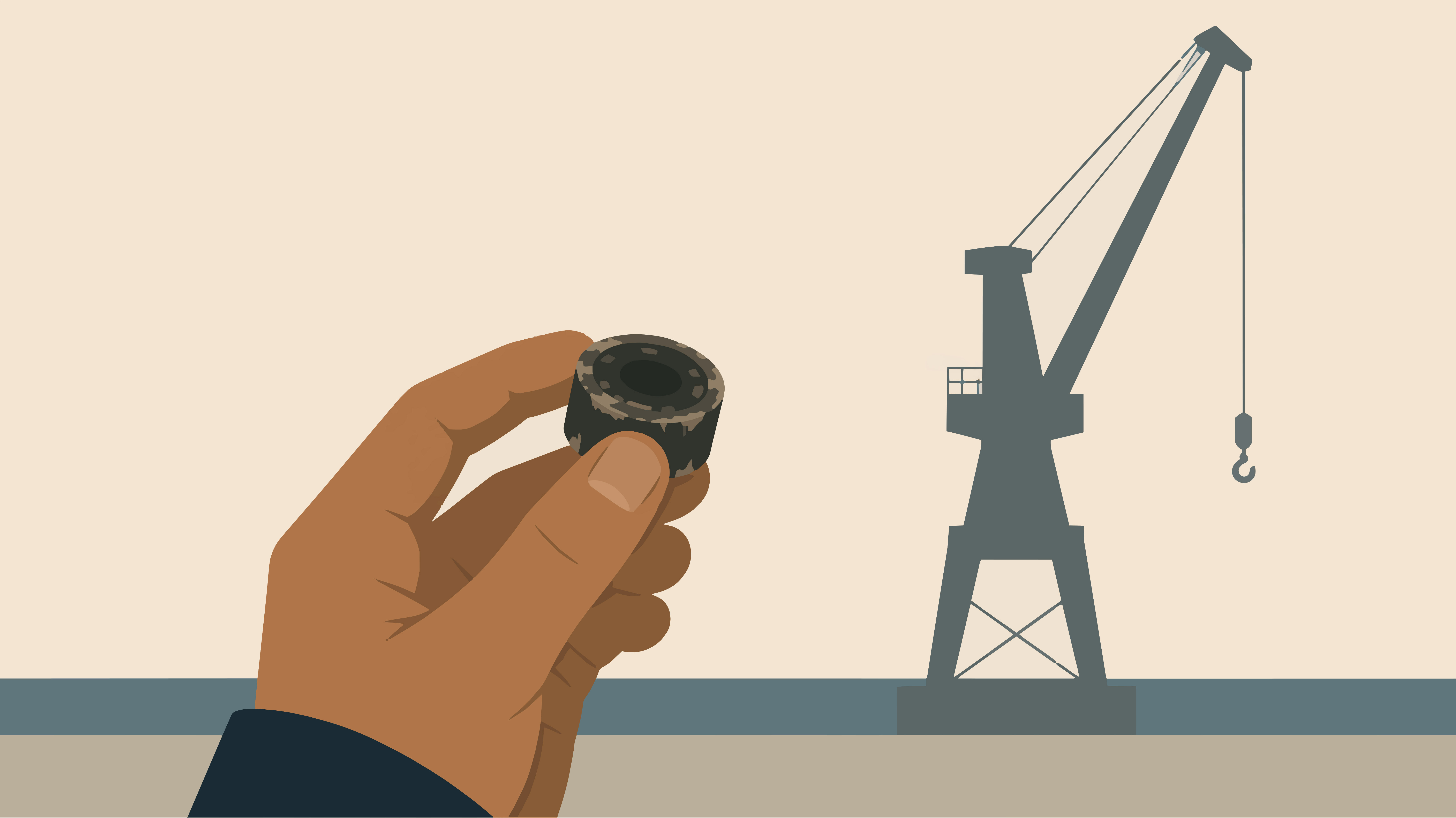
Haider still enters the port when the group allows him to. He works one day and waits for three. In the evening, he returns home to his three children, and before he even opens the door, he wonders what he will say to them when they grow up and ask, "Dad, why don't we have what we used to have?"
When March 2025 arrived, the authority granted a large number of employees mandatory paid leave. Nizar knew from his fellow workers and engineers that they wouldn't be returning, as this leave was "mandatory" and unprecedented. Some of his friends anticipated the coming wave of resignations, while others felt they had to wait. Despite the General Secretariat of the Presidency's decision to cancel these leaves, the administrations themselves refused their return or offered them a written pledge to resign or be dismissed without discussion. Annual contracts were also terminated.
At home, after months of watching his colleagues being dismissed and humiliated, and after a long discussion with his wife, who rejected his decision, Nizar wrote his resignation on a blank sheet of paper without offering any explanation, simply citing his health condition.
That morning last May, Nizar returned to his home in the northern Raml neighborhood, carrying the brown envelope, now lighter. His resignation papers were signed, the resignation was complete, and he was now among the retirees. A quarter of a century of work had ended in a single day. That evening, he sat with his wife, and for the first time, he didn't think about who would operate the cranes, but rather about his next day and his new job, which would be his for the rest of his life: his engineer friend had invited him to work in a shop selling and installing solar energy equipment. Nizar's new workplace doesn't overlook the sea, just as the city no longer overlooks the port. Nizar concludes, "The old guard lost their jobs, the newcomers lost the opportunity to learn, and the biggest loser is the port itself".