
Damascus and Derik (Al-Malikiyah) - In the village of Jamm Sharaf - located in the countryside of Derik (Al-Malikiyah) in the far northeast of Al-Hasakah Governorate, bordering Turkey to the north - nothing remains of the orchards and woodlands but uprooted remnants, withered branches, and scattered root fragments along the green strip lining the Tigris river. Hundreds of other trees await an imminent fate of indiscriminate felling, driven by the unregulated, haphazard operations of sand quarries and rock crushers.
Near the Tigris, a bulldozer and heavy machinery can be seen scraping the land with no regard for towering trees, flowing springs, or water sources; in doing so, they destroy the land’s greenery, the agricultural environment, and the echoes of a bygone era. Just meters away, a bulldozer dug a three-meter-deep pit near a tall pine tree in a futile search for gravel and sand; the excavation exposed the tree's roots and snapped some of its branches - a scene that plays out all too frequently in these areas.
The destruction of nature
Large swathes of vegetation in the villages of Ain Diwar, Jam Sharaf, and Zuhayri - situated along a 25-kilometer stretch of the Tigris River - have suffered massive encroachment. Thousands of pine and fruit trees have been uprooted in recent years due to the proliferation of sand quarrying operations, increased human activity along the riverbanks, and a rising demand for gravel - a material vital to the local construction sector. These activities have scarred the landscape and devastated agriculture.
These border villages were once renowned for their fruit trees - including grapevines, fig, pomegranate, olive, apple, peach, and walnut trees - as well as the native forest trees and riparian vegetation growing along the riverbed. They offered a picturesque retreat for visitors and a popular destination for domestic tourism among locals and expatriates alike, providing a lush escape amidst a landscape otherwise dominated by desert terrain, an arid climate, and high temperatures.
The villages of Ain Diwar and Jam Sharaf are significant tourist and historical destinations, home to an ancient Roman bridge and boasting charming views along the border - particularly in the spring. However, their aesthetic appeal has been marred, and visitors deterred, by the operations of crushers and quarries, as well as dust pollution caused by trucks.
According to local residents, influential figures have recently purchased large tracts of land along the banks of the Tigris River from their owners, intending to develop them into sand and gravel quarries. H., a native of Zuhairi village who requested anonymity, told SyriaUntold that he - like the majority of the village's residents - had sold his land, which spanned approximately ten dunams: "Yes, we sold our lands to quarry operators for substantial sums; drought and climate change have altered the region's landscape, and wheat and barley farming had been causing us heavy losses".
From a high vantage point in Zuhairi village overlooking the Tigris, dozens of quarries and crushers could be seen scattered across the riverbank, transforming the land into piles of gravel, mounds of earth, and pools of processing wastewater.
- and other landowners stated that the rental price for a single dunam (1,000 square meters) - agreed upon between the owner and the quarry operator - averages between 2,000 and 3,000 USD. The two-year contract authorizes the extraction of soil and the expansion of excavation operations - which can reach depths of five meters to access gravel and sand - for subsequent processing and sale in local markets. H. continued: "The contract requires the quarry operator to restore the land to its original state after operations conclude; they gather the soil along the edges of the plot after extracting the gravel and sand, then return it to its original position".
The Kurdish farmer notes that the agreement stipulates that trees must not be cut down or disturbed. "I have a single fig tree on my land; I asked the quarry operator to preserve it, and it remains standing. As for the riverbank vegetation, which has a short lifespan, we uprooted it, intending to replant it later once the land is reclaimed". This account, however, contradicts the reality on the ground, where hundreds of agricultural dunams have been transformed into barren land stripped of trees and vegetation.
These areas fell outside government oversight at the onset of the war in 2012. Until recently, they were controlled by the Syrian Democratic Forces (SDF) - prior to the recent integration of their civil institutions into the Syrian Army and state administrative bodies. Administratively, the region remains beyond the authority's control and is not subject to local laws that criminalize environmental encroachment and the felling of forest or fruit trees: a situation that has allowed quarry and crusher operators to expand their commercial activities.
Threats loom over Al-Baja’ trees
For decades, forests and vegetation across Syria have suffered from degradation and indiscriminate logging due to neglect and weak government oversight. Compounding this, the scarcity of energy sources and the high cost of fuel and electricity have driven many residents to rely on firewood as an alternative energy source. International data indicates a roughly 30% decline in Syria’s green cover over the past decade - a trend confirmed by satellite imagery - reflecting the scale of the environmental disaster facing the Syrian coast.
Many residents of Al-Baja’ village, part of the Al-Saboura municipality in the western countryside of Damascus, attribute the loss of tree cover to the combined impact of war, climate change, and economic collapse. These factors are further exacerbated by municipal notices issued to hundreds of farmers, ordering them to vacate their agricultural lands to make way for projects by the real estate company "Abyat Hills", developments that threaten the remaining trees, some of which are 400 years old.
A local resident, speaking on condition of anonymity, complains that quarry and crusher "mafias" continue their usual activities across several areas: "Machinery has been operating day and night for months, destroying trees and the environment, and expanding operations at the expense of local residents; indiscriminate clearing and haphazard work never cease. If this continues, these areas will soon turn into barren deserts", he said, highlighting the severity of the encroachment and the danger posed by the relentless logging in the region.
The land designated for the new urban development directly abuts fertile, productive agricultural orchards that have been owned and cultivated by the people of Al-Baja' for decades. Syria Untold reviewed the title deeds and real estate records for these lands, which contain thousands of ancient, fruit-bearing olive trees passed down through generations. These orchards are unique for their Dan, Qaisi, and Jalt olive varieties - trees known for their great height and abundant oil yield.
The village’s land, located northwest of the capital along the Beirut highway, covers an estimated 6,000 dunams (6 million square meters) and features fig and pomegranate trees alongside the olives; its annual produce supplies the nearby markets of Al-Saboura and Qudsaya, as well as meeting a portion of the capital's needs. Farmers utilize the shade of the trees to grow summer vegetables, and natural honey apiaries thrive by feeding on the blossoms of these trees and orchards. This arboreal wealth now faces the threat of encroaching concrete structures and residential projects. This follows the announcement of new urban development plans by the "Abyat Hills" company early last June: plans that threaten to unroot and remove thousands of fruit trees, which serve as the sole source of livelihood for hundreds of local families.
In protest against the eviction orders, residents from the villages and towns of Al-Baja, Al-Saboura, and Qudsaya staged a sit-in outside the People's Assembly on 28 August. They demanded a review of laws regarding property expropriation and old tenancy contracts, as well as the recent eviction notices, and called for justice for those affected by real estate legislation that impacts the property rights and lives of more than three thousand families.
According to Mohammad Nazir Al-Hourani, who has owned a farm spanning approximately 74 dunams since 1978, the Al-Saboura Municipality informed them that the notices were issued based on official directives from the Ministry of Housing. The Ministry confirmed that the file had been referred to the Rural Damascus Governorate; this designation dates back to the decision to expropriate the land for the General Establishment for Housing in the mid-1970s. Speaking to *Syria Ma Inhakkat*, Al-Hourani said: "My neighbors and I own nearly 150,000 ancient olive trees, 200,000 fig, peach, plum, and other fruit trees, as well as over 40 trees that are, on average, around 400 years old. All of this wealth is threatened by the recent expropriation decisions".
Meanwhile, Nada - a member of one of the families affected by the recent eviction orders- stated that the residents' demands during meetings with officials focused on reviewing certain laws enacted during the previous regime's era, "as they threaten the confiscation of our private property and land. Even the financial compensation offered to us is calculated based on estimates that bear no relation to current real estate prices. After our efforts with executive authorities failed, we appealed to members of parliament to reconsider the body of laws that violate the protection of private property rights".
Encroachments by the "Sham View" project
Similarly, work has commenced on the "Sham View" project - spanning 178 hectares - at a site featuring a roughly 50-year-old stand of trees situated between the Qudsaya suburb and the Dummar project, according to researcher and photographer Issam Al-Hajjar. Speaking to SyriaUntold, he noted that the site theoretically holds around 100,000 forest and fruit trees, based on the original afforestation plan. "However, the actual number on the ground is lower; yet, even assuming only a quarter of that figure remains, we are still dealing with a vast number of trees that should not be removed".
The researcher points out that green spaces and agricultural lands in the Qudsaya area and the western countryside are facing mounting pressure from encroaching real estate development projects. He highlights how land expropriation decisions and modern zoning plans - such as the "Abyat Hills" and "Sham View" projects - have led to the clearing of land and the bulldozing of soil designated for parks and agriculture. Al-Hajjar continued: "Some might say that the appearance of this woodland site does not reflect such a large number of trees; this is because the afforestation was carried out in stages. For instance, the planting of pine and cypress trees at the site ceased in 2008, and species more resilient to drought - primarily olive, almond, and carob - were adopted instead. At the time, it was the government's duty to restore the woodland, as it served as the only natural 'green lung' for the vast surrounding residential areas. Nevertheless, the General Housing Establishment ultimately decided to completely remove the site and convert it into an elite residential project". He pointed out that while the marketing promises made by "Athar Real Estate Development and Investment Company" claim that vegetation will cover 70% of the project land, "we have no idea where the water to fulfill these promises will come from. Even assuming, for the sake of argument, that this were to happen, these green areas would remain the exclusive domain of a select few - namely, the investors and property owners".
Regarding the relocation of the woodland trees to another site, researcher Al-Hajjar emphasized that we are facing a final opportunity to salvage what remains of this woodland area. He stated: "It is a matter of relocating the trees rather than destroying them! We recently witnessed, during the construction of the 'Sham View' project, how the existing trees were crushed by bulldozers". The idea of transplanting the trees to another afforestation site, he explained, it is feasible and has a high probability of success, particularly for olive trees and younger saplings.
Deterioration of the road network
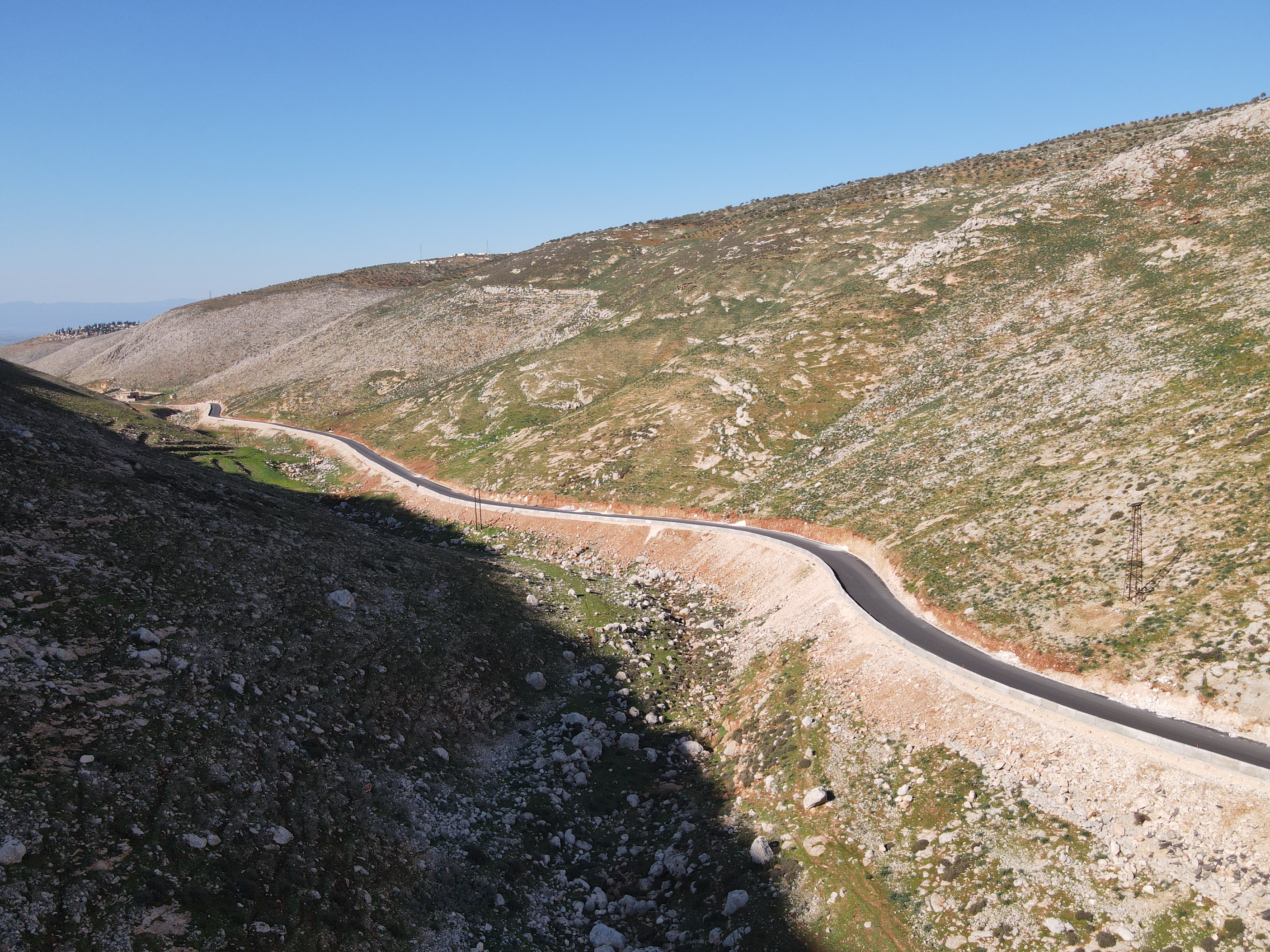
Residents of the villages of Jam Sharaf and Zuhayri, in the countryside of Derik (Al-Malikiyah), report ceaseless daily traffic involving hundreds of trucks and heavy haulers. These vehicles transport tons of sand and gravel day and night, causing severe deterioration and near-total destruction of vital routes - such as the Derik–Ain Diwar and Derik–Zuhayri roads - while the Jam Sharaf road has become virtually unusable due to its poor condition. Locals complain that this situation persists without any regulatory oversight or load-limit enforcement.
Jomard Abu Miqdad (65), a resident of Jam Sharaf, recounts to SyriaUntold how security personnel and intelligence agents from the former regime first began destroying fruit trees in the late 1990s to sell the timber in local markets. The elderly Kurdish man notes that his village was once renowned for its fig, almond, walnut, and apple trees; today, however, after the trees were uprooted, "they remain only a memory. We now tell stories about how we used to eat their fruit and sit in their shade. Sadly, we have lost our history and our past".
A local resident, speaking on condition of anonymity, complains that quarry and rock-crusher "mafias" continue their usual activities across several areas: "Machinery has been operating day and night for months, destroying trees and the environment while expanding operations at the expense of local residents; indiscriminate logging and haphazard work continue unabated. If this persists, these areas will soon turn into barren deserts", he said, highlighting the severity of the encroachment and the danger posed by constant tree-felling in the region.
Syrian laws and regulations impose strict penalties - including imprisonment and fines - on anyone who cuts down or uproots forest or fruit trees. Various decrees and parliamentary acts have been issued to protect trees and green spaces, mandating the confiscation of timber and machinery used in unauthorized logging or transport.
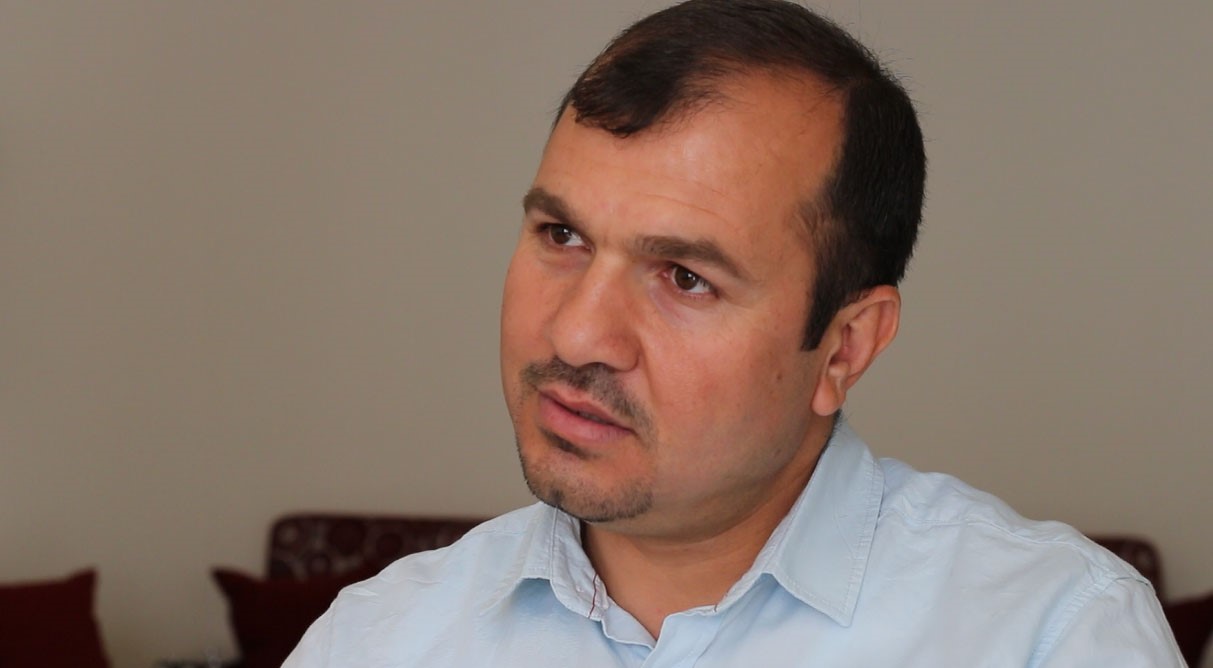
Speaking to SyriaUntold, agricultural engineer Dilshad Fattah warns against becoming desensitized to the phenomenon of tree-felling. He emphasizes that "the proliferation of quarries and the destruction of vegetation cover are justified by the need to supply raw materials to the local market". He calls for the enactment of deterrent laws and regulations focused on prevention and oversight, urging authorities to stop "treating the environment as an issue that can be deferred to a later date. Felling ancient trees is a grave crime; trees are an irreplaceable asset, and replacing them with new saplings in the future cannot compensate for their age or their environmental and aesthetic value".
As an environmental specialist, he emphasized that we are facing a new disaster if quarrying and crushing operations continue at an escalating pace. "This situation must be addressed as quickly as possible by enacting immediate laws to halt indiscriminate excavation, regulate quarry operations, protect roadways, and avoid jeopardizing the comfort and safety of the public", he stated.