
On 22 October in Montpellier, the meeting of Syrian filmmakers in exile and from inside Syria seemed like a dream come true. The conference, organised by the French National Centre for Cinema (CNC) and the Mediterranean Film Festival (CinéMed) in Montpellier, in collaboration with the platform Ayoun, saw the participation of a mix of around 25 filmmakers from different generations, breaking the isolation of recent years.
Holding the conference in France freed from the constraints of location, from being sponsored by the Syrian Ministry of Culture or its public film institution, or from setting the general lines of the meeting. Syrian filmmakers and the organising partner, Ayoun, along with colleagues from cultural institutions in the region such as Afac and Aflamna, moderated the dialogue. Whether Syrian filmmakers should deal with this interim government and its film institution, and how, was a topic of discussion at many points during the conference.
The director of the institutional General Organisation for Cinema, Jihad Abdo, was not able to attend and sent, on his behalf, the critic Lama Tayara, who has been working as his unofficial advisor for months, and Rasha Barakat, the organisation's festival director. The official presence of the two women and their interaction with others made everyone wonder who they were representing: the official side or the filmmakers? They insisted on presenting themselves as supporters of the filmmakers, doing what they could under this government, which quite a few filmmakers view critically.
When introducing the first day's events, Christophe Kantchev, the journalist assigned by the Cinemed festival to open up the meeting, pointed out that the political situation in the country was not ideal, citing ‘elections’ that had failed to bring any Jews or Christians to the ‘People's Assembly’. This was perhaps an attempt to emphasise their lack of identification with the transitional government in Syria.
After a dry theoretical lecture by French researcher Cécile Bouix on the emergence of auteur cinema in Syria and its development from the 1970s to the present day, and its connection to the political context in the country, a group of ten young filmmakers took to the stage.
Diala Al-Hindawi and Sara Qantar from the Ayoun platform moderated a session that mixed the personal and the public, remembering the massacres in Sahel and Sweida (regions from where some of them hail), and the possibility of making cinema, in the need to redefine the role of the General Organisation for Cinema.
Other participants, including directors Rand Abu Al-Fakhr and Madona Adib, pointed to the vagueness of decisions to ban and permit work, the lack of guarantees for the safety of filmmakers, and the possibility of screening films related to topics such as queerness or areas in southern Syria (Sweida in particular) or those critical of the transitional authority. What they fear is not only the authority, but also individuals and unofficial entities loyal to it. In an indignant contribution, director Ziad Kalthoum questioned what prevented the institution from issuing a statement condemning the killings in the country in recent months, as filmmakers did shortly after the outbreak of the revolution. The official diplomatic delegation avoided responding.
In a double dialogue session in the afternoon, participants with extensive experience in the film and production industry presented an overview of the urgent priorities that must be addressed in order to establish a Syrian film industry. They also discussed options for dealing with the General Organization for Cinema and working on the Syrian film archive.
Documentary filmmaker Ali Atassi, founder of the ‘Beginnings’ project, expressed their right to return to Syria and film, with or without a permit, considering the General Organisation’s archive to belong to filmmakers. They reject the imposition of any restrictions or membership cards by the Organisation, which is in the hands of the current authorities. Ali Atassi believes that the new government should not control this space and impose its agenda. Collective action through gatherings and unions is required, according to him, to prevent it from becoming a propaganda institution under the new regime. He also emphasized that the General Organisation for Cinema should not be the sole, exclusive and legitimate representative of filmmakers, but rather one of many representatives.
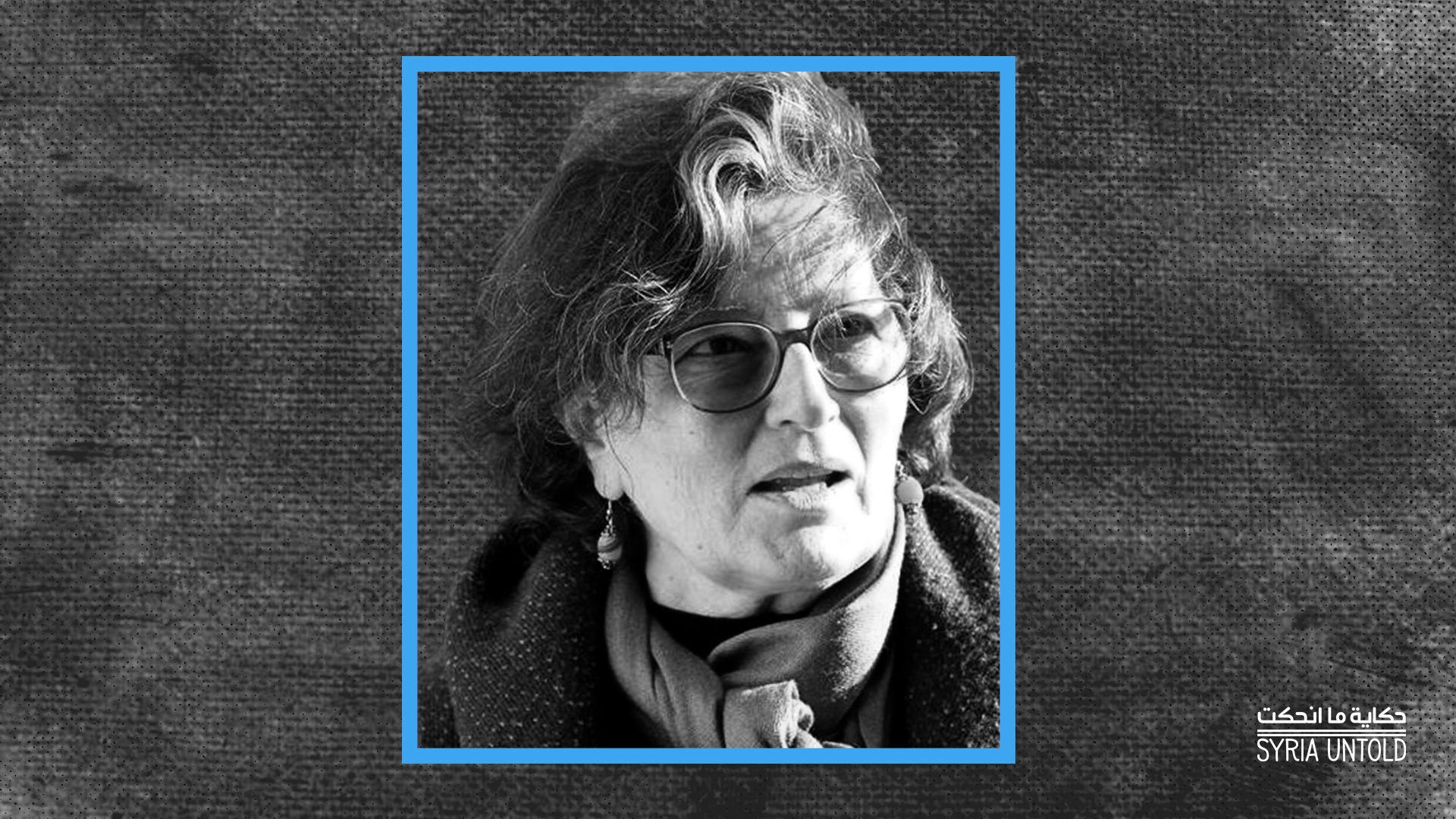
Hala Abdullah: 'I believe in cinema as a means of resistance’
11 June 2021
Director and producer Givara Nimer shared her experiences in production in Europe, where she lives, and considered limiting the relationship with cinema to the public sector, represented by the General Organisation, to be short-sighted: film production, she argued, is not one of their tasks. For this reason, there should be no battle with it. Reviewing production models in Germany and France, she thinks that it is not necessary to adopt a specific model in Syria, but rather to invent a new form and allow room for experimentation, in order to arrive at a formula capable of sustainability.
Director Hala Abdullah, who has extensive experience, particularly in Syrian-French co-productions, appeared pessimistic about production in Syria, urging people not to wait for the current authorities to grant the public cinema institution any freedom. She assumed that the transitional government would inevitably block their path and that even if it did allow filmmaking, she personally was not prepared to work within the margins they offered. Rather, she said that one must defend one's freedom with the tools at one's disposal, without making any concessions, and perhaps deal with the subsequent rejection of films.
Nevertheless, she believes there is hope in the people working in Syria in the small spaces they cling to: the price may not be high now, but it will become high after a while, and someone may be imprisoned, arrested or killed, “but the battle will certainly continue”. Al-Abdullah urged young filmmakers not to view the General Organization for Cinema as closed and refuse to deal with it, but rather to find a way to “occupy” it, because it is very rich, especially in terms of its technicians.
Sasha Ayoub, executive director of Stories Film Lab, pointed out that the price of paying for censorship under the Assad regime was known, but that is no longer the case today; they are just experimenting. “The regime has revealed many things that they do not agree with”, she said, but they still have room to expand their margins and areas of work.
The second day of the conference took place behind closed doors, in the presence of the French chargé d'affaires in Syria, Jean-Baptiste Faivre. According to the participants, the discussion was too short to produce in-depth conclusions and proposals to be presented to French entities willing to provide support.
A different agreement with Syria
The first day of the conference coincided with the signing of a memorandum of cooperation between the National Centre for Cinema (CNC) and Iraq, fuelling speculation about the imminent signing of a similar agreement with the General Organisation for Cinema in Syria. This coincidence raised questions about whether the French centre was in the process of fully normalising relations with the Organisation, something that many participants did not seem to mind. Others, however, considered it a cause for concern, a matter raised by Untold to the Director General of the CNC, Gaëtan Bruel.

Bruel emphasised that they maintain an equal distance from everyone, and that the centre was not rushing into cooperation with the General Organisation for Cinema in Syria, but rather offering the organisation conditional assistance. The CNC director added that it doesn’t consider it the only partner, rather one among a spectrum of organisations and filmmakers at home and abroad. Whether this will remain the case in the coming months and years remains to be seen.
Speaking to Untold about the nature of their agreement with Iraq, he underlined that it was the culmination of two years of joint work on the archive, and it was signed just before the Iraqi elections. France supported the restoration of the film of Said Effendi, screened at the last Cannes Film Festival, and Iraq's plans to establish a national cinema centre modelled on the CNC. He added that "it is clear that we are not in the same situation with Syria, and we are certainly not following the same approach. In Syria, the situation is completely different", explaining that the aim of the conference is to better understand the needs of Syrian filmmakers. For them, the needs are clear: lying primarily in supporting independent cinema, the people on the ground and local initiatives, but also those abroad who have relevant ideas.
Regarding concerns that CNC would take the General Organisation for Cinema in Syria as its sole partner and refuse to deal with independent filmmakers, especially those critical of the transitional government, Bruel emphasised that they would definitely stand by anyone who strongly believes in cinema: they had organised this conference not to lead it; rather, they want filmmakers inside and outside Syria to guide them on the way."The only issue we are discussing today with the General Organisation for Cinema in Syria is the film archive, and we are open to reaching an agreement on this single issue, provided that we can share the strategy with filmmakers, because we believe that they are stakeholders in this film archive. I would also like to mention another issue: Damascus today lacks a real cinema”.
It was widely known among the conference participants that the French side is discussing reopening the French Cultural Center to host film screenings. This followed the crisis triggered by the Ministry of Endowments in the transitional government, which had transformed Al-Kindi Cinema in Damascus into a cultural centre. Director of the General Organisation for Cinema, Jihad Abdo, had pledged to restore the cinema, claiming that he wanted to move Al-Kindi Cinema to a better location, or invite investors to build a modern cinema, suggesting a long-term plan, with no clear prospects of becoming a reality. The film club at the French Cultural Centre hosted screenings in the years prior to the revolution.
A vague organisation of the conference
The attendance of young filmmakers from inside Syria at the Montpellier conference was remarkable, despite the financial burden of 600€ for visa applications. The Cinemed festival and the Ayoun platform organised screenings of a selection of Syrian films. Among them is Fish Dance by Rama Abdi who takes us on a visual journey into the world of fish in Damascus. Like Syrian women, fish are stubborn and resistant to death. The fish remain in a plastic box for about two days, moving and resisting capture. Their meat is delicious, as the seller advertises, but they do not hesitate to eat each other as they struggle to survive.
The criteria used by the Ayoun platform, the festival management and the CNC to determine the list of invitees were not clear, nor was it clear why some names were omitted and others included. However, the conference and its organisers did not claim to represent or speak on behalf of Syrian filmmakers as a whole.
This short conference would have deserved a modest evaluation if it had been the first and only one, but it is only the beginning, as we understand it, with the Afac Foundation organising the next conference next year in Beirut, with the participation of the French CNC once again.
And why not? Perhaps the third edition will be organised in Damascus, if my predictions are wrong and the cinema situation in Syria will improve!