
In a whisper by Leyla Bouzid ★★★★☆
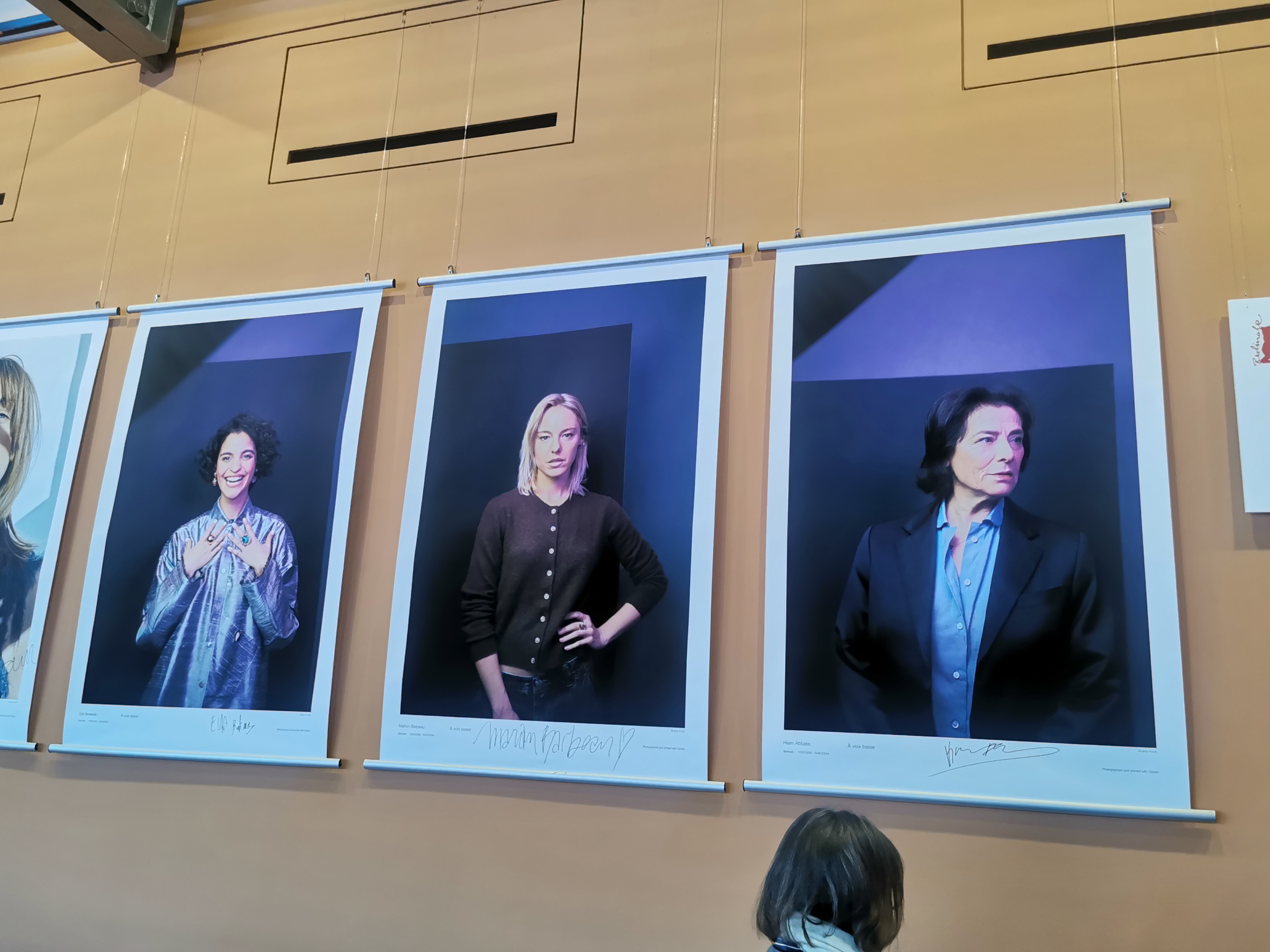
Following her debut, As I Open My Eyes, which captured the pulse of Tunisian youth during the Arab Spring, director Leyla Bouzid returns with a multi-generational queer narrative. The film In a Whisper transcends the typical tropes found in Arab cinema regarding gender identity and the rejection of conservative social norms or familial expectations. Instead, it explores deeper, more unsettling questions: Is family acceptance truly enough to guarantee a happy life for a queer individual? And if a family embraces queerness and withstands societal pressure, are they destined to endure the same bitterness as those they protect? Hiyam Abbass portrays a mother grappling with these questions in isolation, while the return of her daughter, Lilia (played by French actress Eya Bouteraa), from a 14-year exile, reveals a queer identity that had remained hidden.
Leyla Bouzid constructs the screenplay as a deeply personal journey of self-discovery, paralleling a police investigation into the circumstances of the protagonist's uncle’s death. As Leila (the character) visits his loved ones, the social and legal suffering of Tunisia’s queer community is laid bare. This revelation forces her to question whether her homeland remains a place she can truly call home, even as she returns alongside her close friend, Alice (played by French actress Marion Barbeau). Leila grapples with a haunting dilemma: even if she personally could survive as a lesbian woman in Tunisia, could she ever truly accept the systemic struggles faced by those around her?This homecoming also reveals a side of Leila that Alice had never seen, stirring tensions that threaten to fracture the relationship with her family—the once-solid foundation of her world.
In the film, embedded with a love for Tunisian society, Bouzid attempts to portray many intertwined storylines and characters who cross paths, and to put them into a film that seems, from our perspective as viewers, narrow. She jumps between the uncle's life story and the investigation into his death, the emotional return of the daughter with her lover and her renewed contact with her family, to the legal status of homosexuals. This prevents the viewer from dwelling on twists and the depths of the character’s relationships, somewhat weakening the film's emotional charge.
Only rebels win by Danielle Arbid ★★★☆☆
In this romantic comedy, filmed in Lebanon, Hiyam Abbass plays Suzanne, a 60-year-old Lebanese woman of Palestinian descent who is ‘bold’ in a society that divides love and relationships along class, sectarian, and ethnic lines. She falls in love with Othman, an immigrant from South Sudan whom she accidentally saves from being beaten up.
The director brings together two marginalized and emotionally alienated characters in a society that confines love and intimacy to specific age groups and normalises mistreatment and racism against immigrants. She sends them, and us, on a journey to explore this relationship. Is it a relationship of convenience for Othman? A win-win situation? A temporary stop for both parties? For every hug, every night in a bed that is not empty, is there a gain?
The answer is clear and blunt for her colleagues at work and her adult children, yet Suzanne continues her romantic relationship, further alienating herself from those around her. She consults Christian clergy about marrying a ‘Muslim, black, immigrant and undocumented’ man, providing light comedy on the situation. She and Othman then stumble upon the reality of the situation, after the magic of the early days has faded. What prospects are there for a satisfying relationship, embarrassing themselves in front of family and wider society? Othman, who has since become a security guard at a bar, finds himself questioning whether he should disregard his values and morals to end his suffering by entering into a forbidden relationship.
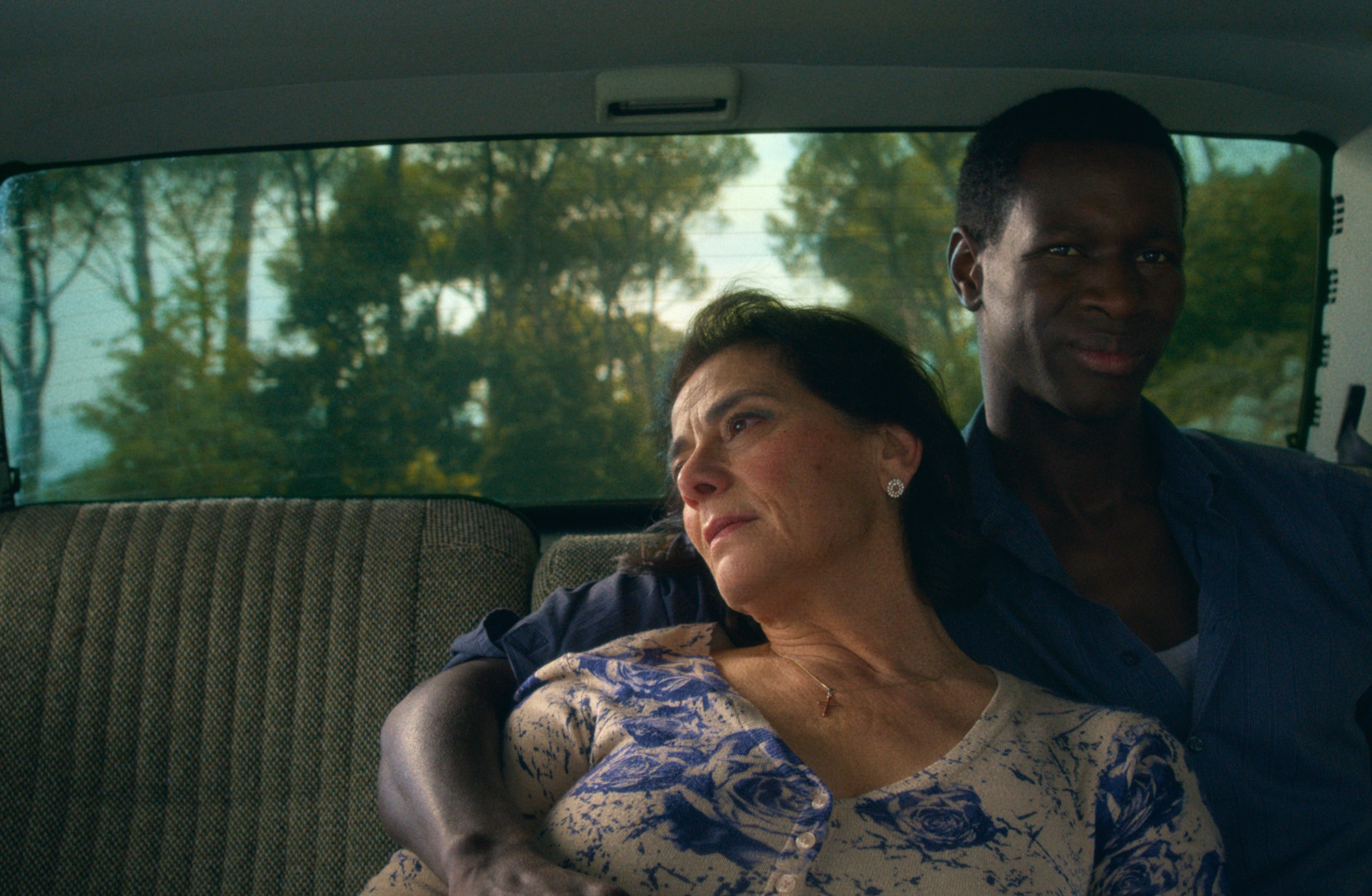
Arbid draws inspiration from other directors, perhaps most prominently the great German director Rainer Werner Fassbinder’s Fear Eats the Soul, which tells the story of a relationship between an elderly German woman and a young Moroccan immigrant, displaying the political circumstances and social reality in Lebanon, from the banking crisis and poor public services to an appetite for unrest. Although the film opens with a political message, stating that it was filmed outside Lebanon due to Israeli bombing, the absence of place robs the film of its environment, reducing it. The final chapter of the film struggles to convince us of the outcome of the supposed love affair, and seems emotionally hollow.
Actress Hiyam Abbass carries the film on her shoulders, embracing actor Amin Ben Rachid's performance to convince the viewer of the supposed harmony and compatibility between them. However, Ben Rachid's performance, his first time in front of the camera, leaves the audience wanting more.
“Acting is about listening”
At a press conference for the film In a whisper, SyriaUntold asked Hiyam Abbass about her trajectory between the past and the present, and whether she still seeks out the "maternal and rebellious" traits in her characters that she spoke of twenty years ago. Abbass noted that her perspective has shifted, explaining that an artist inevitably evolves through time and lived experience across different societies.
Today, she emphasized that the most vital element of any role is finding a reflection of herself within it, rooted in her conviction that everyone is now "obliged to be political". She no longer believes in "art for art’s sake," arguing that both Westerners and Arabs are living through exceptionally dangerous times, facing the rise of large-scale fascism. For Abbass, if artists do not use their work as a vessel for their responsibilities—to express their views on the state of the world and to raise thought-provoking, emotional questions that disrupt certainties about our values and livelihoods—then she is simply not interested in that type of art.
Abbass added that she has meticulously built her career to reflect her core beliefs—choosing projects she can defend and take pride in. This principled approach led her to portray Wahida in In a whisper and Suzanne in Only Rebels Win, two vastly different roles that nonetheless share a common thread of integrity.
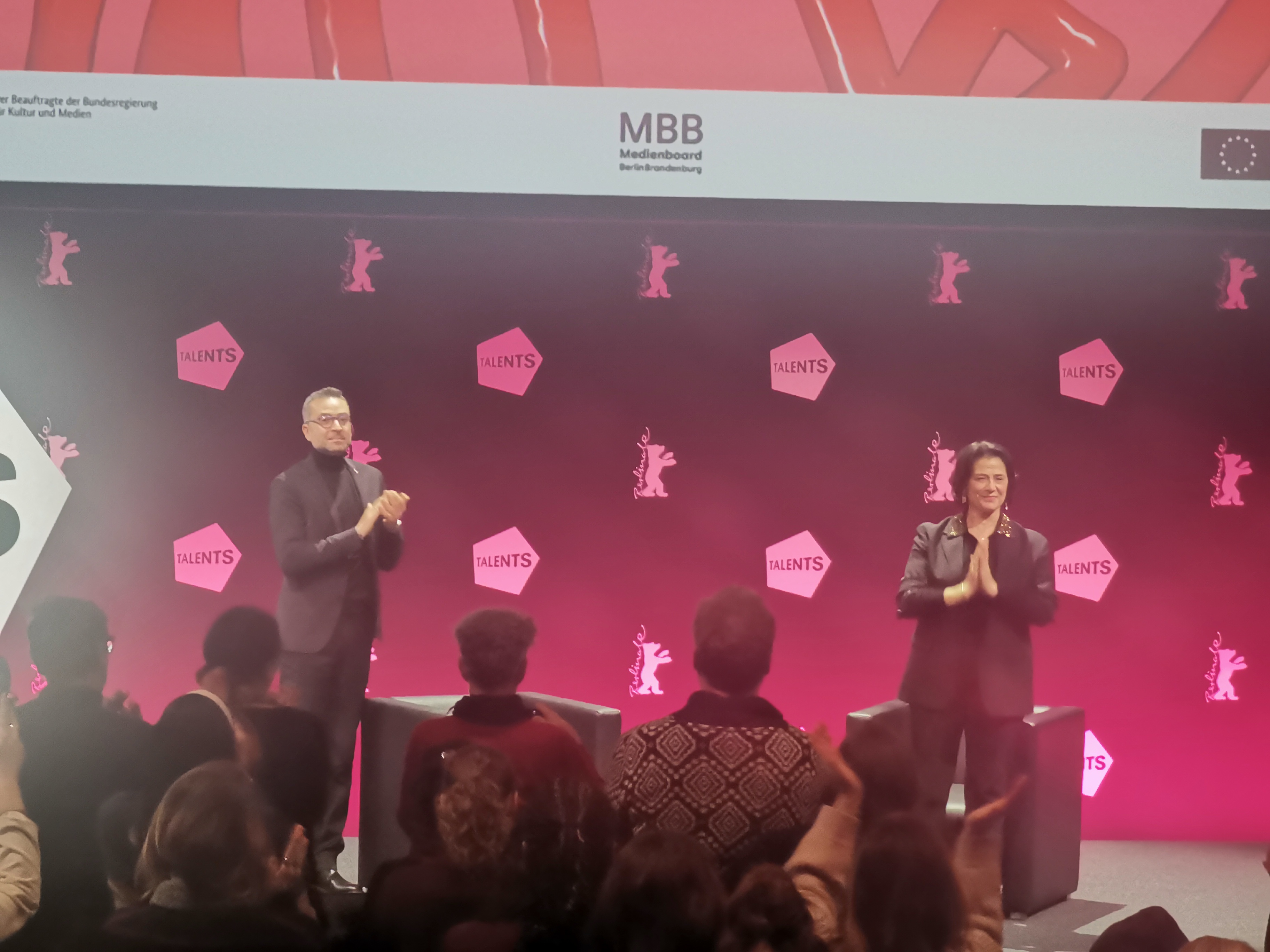
Speaking before a packed audience at Berlinale Talents, Abbass joined Rabih El-Khoury, the Berlinale’s Arab Cinema Advisor, for a rich and comprehensive dialogue reflecting on the milestones of her storied career. She revisited her beginnings in the theater, recalling the moment she first discovered its "magic": the profound ability to move an audience to tears by the end of a performance.
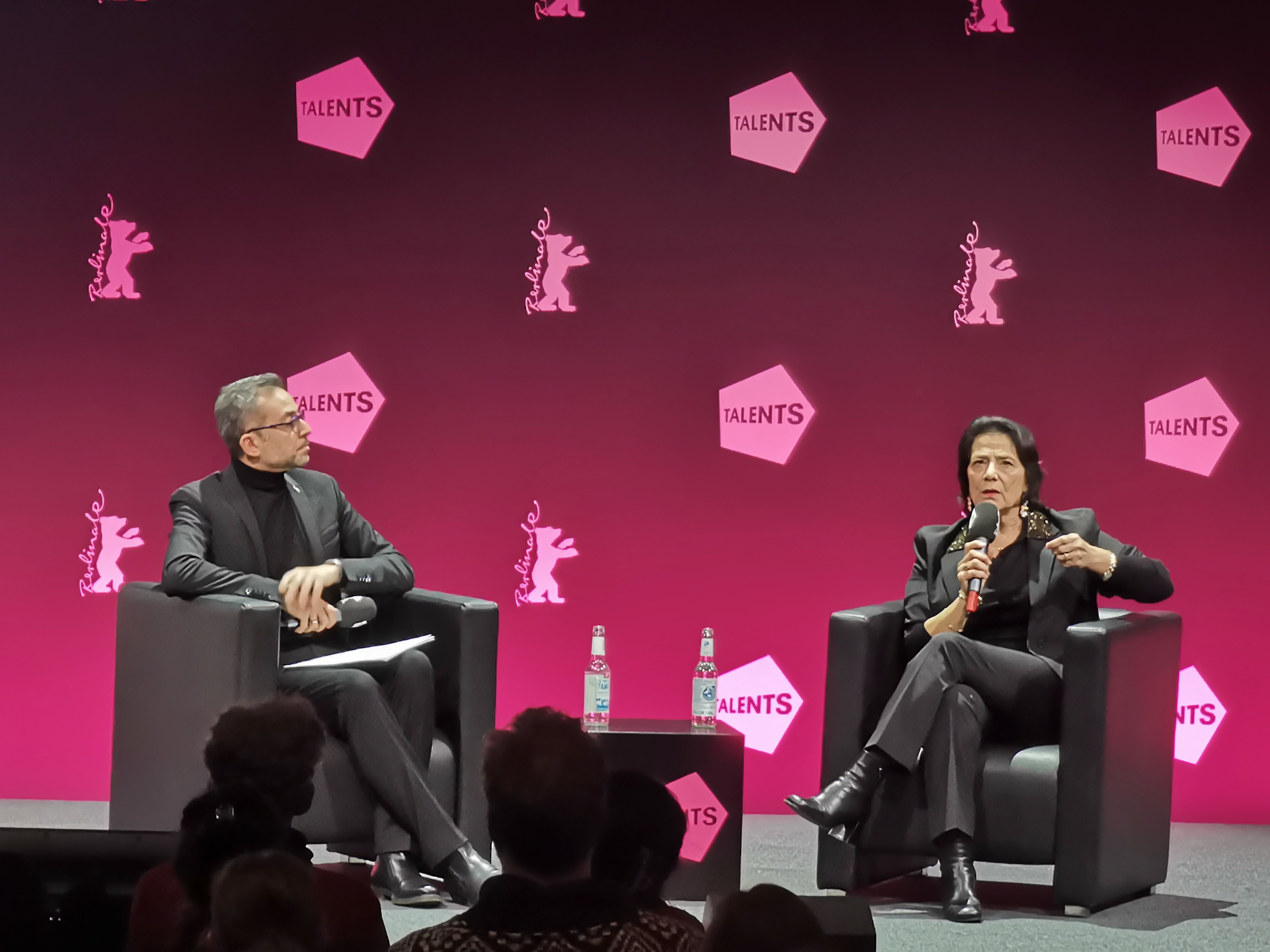
She also candidly shared how she turned to acting as a means of defying her parents’ wishes for her to become a doctor or a lawyer, a choice that sparked her first major familial conflict. This act of rebellion eventually led her back to professional theater, where she honed her craft with the renowned Al-Hakawati Theater group in Jerusalem.
When asked if she felt a sense of displacement after leaving Palestine, Abbass clarified that her "confusion" had actually predated her departure. She left to escape the suffocating daily pressures of the political situation and the restrictive expectations placed upon her as a woman. Her goal was simply to breathe—to shed her anger and find the space to be creative.
While her move to Europe initially added a new layer of complexity to her identity, it was the birth of her daughter, Lina - whom she describes as an extension of her soul - that necessitated a turning point. Motherhood forced Abbass to look back and find peace with her past. Through Lina, she was able to reconnect and reconcile with both her family and Palestine, eventually passing down to her daughter the cultural heritage and memories she had once felt distanced from during her early years in France.
Khoury touched on a number of her notable works, starting with Egyptian director Yousry Nasrallah's film Bab al-Shams (The Gate of the Sun), in which she played the role of Um Younis. Abbas said that when Yousry offered her the role, she did not realise how important it was in Palestinian history. When she first started working on the role, she did not have any personal reference for Um Younis, who was asked to quickly gather her belongings and leave, searching for her son only to find him sleeping among the chickens.
Hiyam recalled how she began talking to the chickens on set while filming the frantic move of Um Younis. When she finished performing that scene, she told director Yousry that this was akin to the story of her grandfather, who lost his mind after losing his home and land in the 1948 Nakba, separating his family. He died shortly after, and she began to cry. I thought then that even though she never met her grandfather, who died before she was born, she was now honouring him with part of her work, as part of the Palestinian history she inherited.
The acclaimed actress spoke about the enormous difficulties encountered in filming Palestine 36, by Anne Marie Jacir, which tells the story of Palestine during the general strike against British Mandate rule in the 1930s. The film was set to be shot in Palestine on 14 October 2023, but the events of 7 October took place, forcing Jacir to halt production and move the shoot to several locations, despite having completed the construction of an entire village for the film in the West Bank. She recalled how one of the producers expected the Israeli military campaign to end within a week, but they realised that it would not cease so soon, but rather “the extermination would continue further and further, deepening into Gaza and against its people, and in Palestinian history. The settlers became increasingly free to attack and do as they pleased”.
Abbass also recounted the grueling challenges of the production, noting that the team made repeated attempts to resume filming, only to be thwarted by escalating attacks near their location that placed the entire crew at risk. While parts of the film were captured in Palestine, the production was slated to move to Jordan; however, the regional volatility and the specter of the Israeli-Iranian conflict forced the schedule to be altered "hundreds of times."
Reaching the final filming location was felt as a hard-won victory. In that moment, Abbass and her colleagues felt a renewed commitment to the project, viewing every aspect of their professional responsibility as "a form of resistance." She expressed profound pride in the film—a work that confronts the systemic erasure of Palestinian history and identity. "Filmmakers are there," she emphasized, "to ensure their films become part of a permanent Palestinian archive that will remain forever".
She then moved on to talk about Hani Abu-Assad's film Paradise Now, shot in the West Bank under near impossible conditions. While filming, they witnessed the Israeli army arresting Palestinian youths. The filming location was surrounded by the Israeli army, forcing the crew to move to Nazareth and complete filming there. She believes that such Palestinian experiences in filmmaking could fill a book.
Abbass also reflected on Raja Amari’s film Red Silk (Satin Rouge), a pivotal moment in her career that forced a stark ultimatum. "Either I play this role and finally exercise my freedom to be the actress I wanted to be," she recalled thinking", or I withdraw from acting altogether". Accepting such an extraordinarily daring role required immense courage and sacrifice, as she knew it risked reigniting the deep-seated conflicts with her family, community, and village.
She admitted to entering the project with profound fear, yet the film proved to be her breakthrough, catapulting her to international fame and a wealth of new opportunities. Ultimately, the character took on a life of its own, remaining with her like a child. "I still love that woman", Abbass remarked. "When you refuse to judge a character, you allow her to exist; at some point, she becomes her own person and no longer belongs to you".
Abbass spoke warmly of her rapport with director Leyla Bouzid and the cast of In a Whisper, noting that their shared synergy made the work effortless. In contrast, for the film Only rebels win, she found herself collaborating with a cast of non-professional actors who had never stepped foot on a film set. She approaches such experiences with deep intentionality; for her, every film is a "new beginning", a process of starting from scratch that keeps her grounded in the memory of her own early days. She passionately defends the right of every newcomer to begin their career, often finding that she learns more from their raw authenticity than from seasoned veterans—a testament to her belief in continual learning and professional humility.
Addressing the importance of performing in various Arabic dialects to honor distinct regional identities, she delivered a powerful closing argument on the nature of art: “Let’s stop fooling ourselves by saying that cinema and art don't exist to serve a purpose, or that cinema shouldn’t be political. We have the right to be apolitical—there is nothing wrong with that. But when the time comes to take a stand and speak up, I’m sorry, but you must be political”.
Discussing her transition into international cinema, Abbass recalled her surprising experience with Steven Spielberg, who approached her for a role in Munich. At the time, she was working as an acting coach with Mexican director Alejandro González Iñárritu on his film Babel, and she initially met her agent’s news with skepticism. Steadfast in her principles, she refused to accept the role without reading the script first - a demand that was eventually met.
She was particularly intrigued to discover that Tony Kushner had penned the screenplay. Knowing Kushner for his masterpiece Angels in America, his advocacy for gay rights, and his identity as a left-wing, anti-Zionist Jewish intellectual, she felt more at ease. Upon reading it, she found the script to be remarkably fair, starkly contrasting Hollywood's typical portrayals of Arabs and Palestinians.
On set, Abbass found a receptive collaborator in Spielberg, who welcomed her insights regarding cultural inaccuracies. In a touching personal crossover, her young daughter even joined the cast to play her daughter on screen. For Abbass, this role was more than just a job; it was an opportunity to ensure a more nuanced Palestinian narrative reached a global audience.
Regarding her commitment to emerging talent, Abbass spoke of her deep-seated love for the new generation. “I won't be here tomorrow”, she stated plainly, “and I would like to believe that I have contributed to the formation of younger generations. I hope I have never rejected a request they have made of me”. She recalled the profound loneliness of her own early career, when she searched for the books, films, and mentors that might sustain her, only to find very few. Today, she seeks to be that missing link, noting that her acceptance of a project - no matter how difficult - is rooted in her shared belief in the filmmaker's vision and experience.
To the aspiring actors in the audience, she offered a grounded philosophy of craft: anxiety is normal, but one should resist the urge to immediately "perform" their experience. "The most important thing is to be a listener on the first day", she urged. "Listen so you can gauge the atmosphere and the rhythm of the set, rather than imposing yourself in a way that might be jarring to others. Acting is, fundamentally, about listening. If you are an actor, you must be a great listener". She concluded by encouraging the Talents to remain humble and, above all, to never appear as anyone other than who they truly are.