
The original Arabic version of this article was published on Sot Sury.
What are the limits of using heritage as a tool for peacebuilding? Is it a positive alternative when political agreements fail to produce genuine peace?
These questions are particularly relevant when considering the application of Balkan experiences to the Syrian context. That’s why they have been crowding my mind, while reading Kinda Shaheen’s piece, On the Mostar Bridge: Bosnia and Herzegovina’s Lessons for Civil Peace in Syria.
The efforts by peace activists in the post-Yugoslavia republics to use museums as a means of reducing ethnic tensions was undoubtedly significant. This path is, by its nature, political and negotiated, relying on the creation of spaces for dialogue and the reframing of conflicting narratives.
What I found problematic was the point regarding the restoration of the Stari Most (Old Bridge) in Mostar - orchestrated by UNESCO and supported by the World Bank and other international and national bodies - as a step toward peacebuilding. This occurs within a context of a fragile peace that lacks the social or political pillars needed to grant such a project credibility or a meaningful function.
Building a 'living heritage' - rooted in relationships of trust between people and institutions - is far more vital than reconstructing buildings. Donors might use it as backdrops for photographs, while true peace remains absent.
This leads to other fundamental questions: is it truly necessary to restore a site or rehabilitate a landmark to create peace, or merely to sustain an artificial sense of it? Moreover, can a process as profoundly complex as post-war reconciliation be reduced to a single symbolic solution?
In my view, the issue is not merely a lack of necessity, but the presence of tangible harm. This path creates a false sense of peace by erasing the genuine local connections to a landmark and replacing them with 'universal' values imposed from above. As seen in the case of the Stari Most, the result is an 'anxious calm' rather than true stability. Ultimately, these top-down symbols act as a ceiling, blocking more authentic, community-led peacebuilding efforts from taking root.
In this context, the ready-made, official solution overshadows younger generations: it diminishes their capacity of expressing the desire for a genuine peace - one that follows their own rhythm and unfolds in its own time. What is presented as a 'final achievement' effectively becomes a limit that cannot be surpassed.
From the Mostar bridge to the souks of Aleppo
Aleppo comes to mind here. Restoring one or two - or even ten - souks in the Old City will not be enough to restore Aleppo to its economic centrality and the vast network that once extended as far as the Syrian Al-Jazira region. Perhaps what is more vital is to support the networks of mutual aid and knowledge among the merchants themselves. Their ability to return, read the market, and understand its transformations must be bolstered by creating a safe climate and institutions they can trust. Only then might these merchants, even with fewer resources, be able to restore their own markets. Such an endeavor would be a 'living economic act' rather than a symbolic project isolated from reality.
Shaheen rightly states that 'peace does not begin with the signing of an agreement, but with the recognition of pain, and by granting each party the space to tell their story without fear or denial'. However, mapping the Balkan experience onto Syria is a delicate task. It requires a specific kind of participatory expertise - one that can facilitate deep dialogue and provide a reading of the context that saves us from the trap of a 'victim versus executioner' binary.
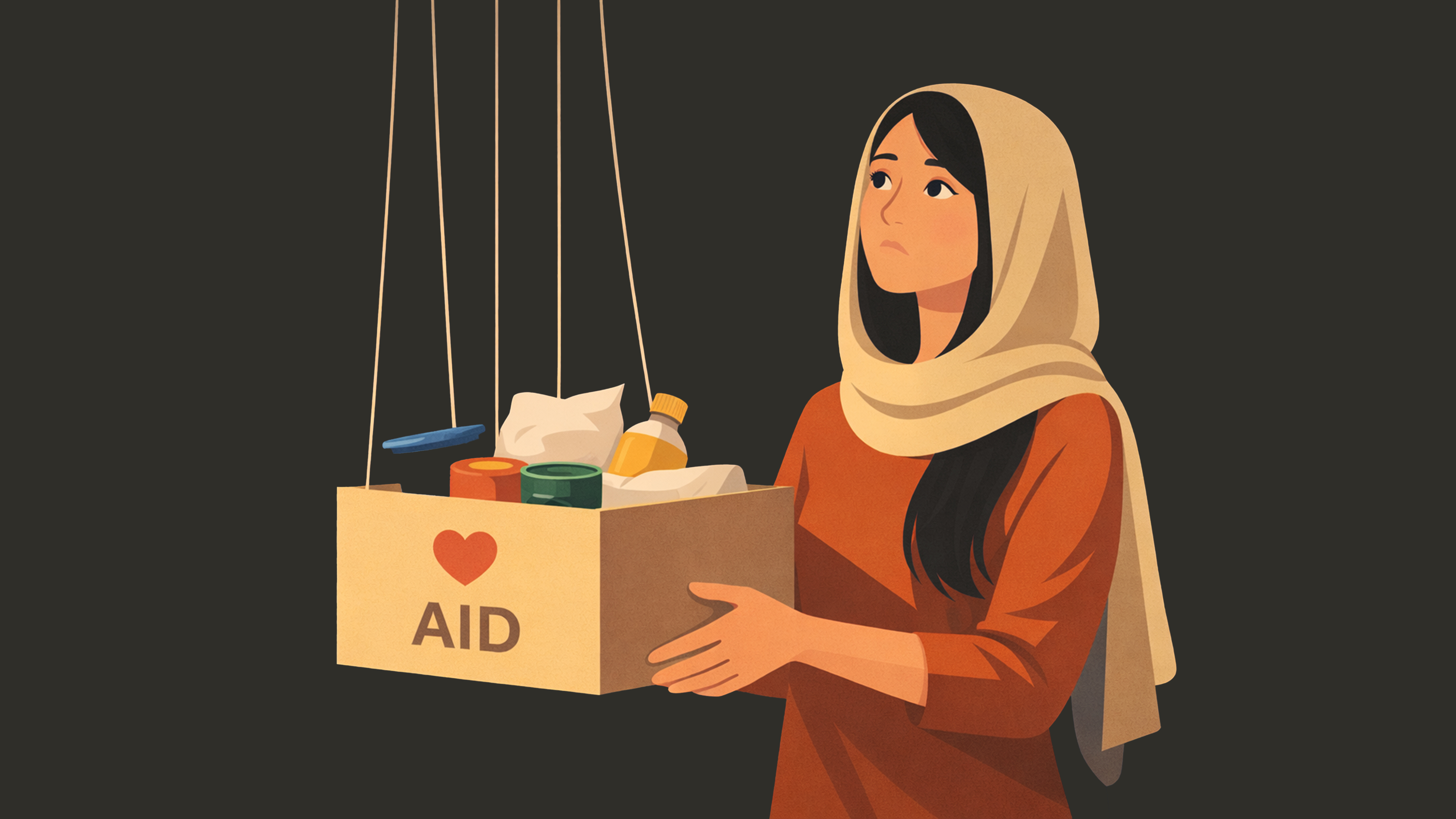
Syrian women struggle against corruption in NGOs
04 March 2026
The freedom to weep and the space to speak do not, in themselves, engender peace. They must be anchored within a process that restores humanity to the ‘other’ and constructs a shared vision for the future. This, in turn, necessitates a direct confrontation with the exclusive and exclusionary memories that top-down, non-participatory authorities so often seek to institutionalize.
Decades of structural oppression and hate speech have left Syria with an explosion of untreated trauma. If every group revives its own memory without collective management, we risk creating nothing more than a theater for revenge. This path is already visible in the blurred execution of transitional justice and the rise of tribalistic 'Faza’at'. These are not just isolated incidents; they are the living symptoms of a fragmented society turning its memories into weapons.
The dilemma of the definite article
One of the most vital lessons to be drawn from the Bosnian experience is that solidarity was not sufficiently genuine. The insistence on religious or ethnic identities as 'closed identities' - isolated from others and assuming they represent every member in the same way - is a false path to peace.
I am unsettled by the 'definite article' (The). The fundamental question remains: how can we generalize deep-seated phenomena or issue absolute positive or negative labels - born of a complex interaction between geography, ethnography, culture, religion, politics, and economics - to a single, reductive category? How can we say: 'The Sunnis in Syria want', 'The Alawites refuse', 'The Kurds are attempting', 'The Circassians are planning', or 'The Druze have agreed'?
How can concepts like 'Minority Protection' or 'Majority Protection' be built upon such essentialist reductionism? Ultimately, this path encourages each faction to retreat into its own grievance, celebrating a 'freedom of expression' that serves as a hollow facsimile of genuine dialogue. In the process, the public sphere erodes, and the foundations of the country collapse.
A Lesson from the Beirut Souks
It is essential to reflect on the consequences of replacing Yugoslavia’s socialist ideology - which was built on a shared working-class identity - with a neoliberal model that marginalized and weakened cross-ethnic labor voices. It was as if this collective voice was inherently flawed, simply because it belonged to an era internationally categorized as 'dark' and something to be discarded. It is no secret that this transition was fueled by European Union donors, who prioritized funding monuments and memorials that celebrate ethnic difference as the central, overriding value.
This reminds us of what happened to the souks of Beirut during its post-war reconstruction. A decision was made to preserve the mosques and churches while completing the demolition of buildings that the war itself had not yet destroyed. Those structures had constituted the living, interactive space for Beirut’s residents, regardless of their sectarian affiliations; yet, their disappearance was not viewed as a loss worth considering.
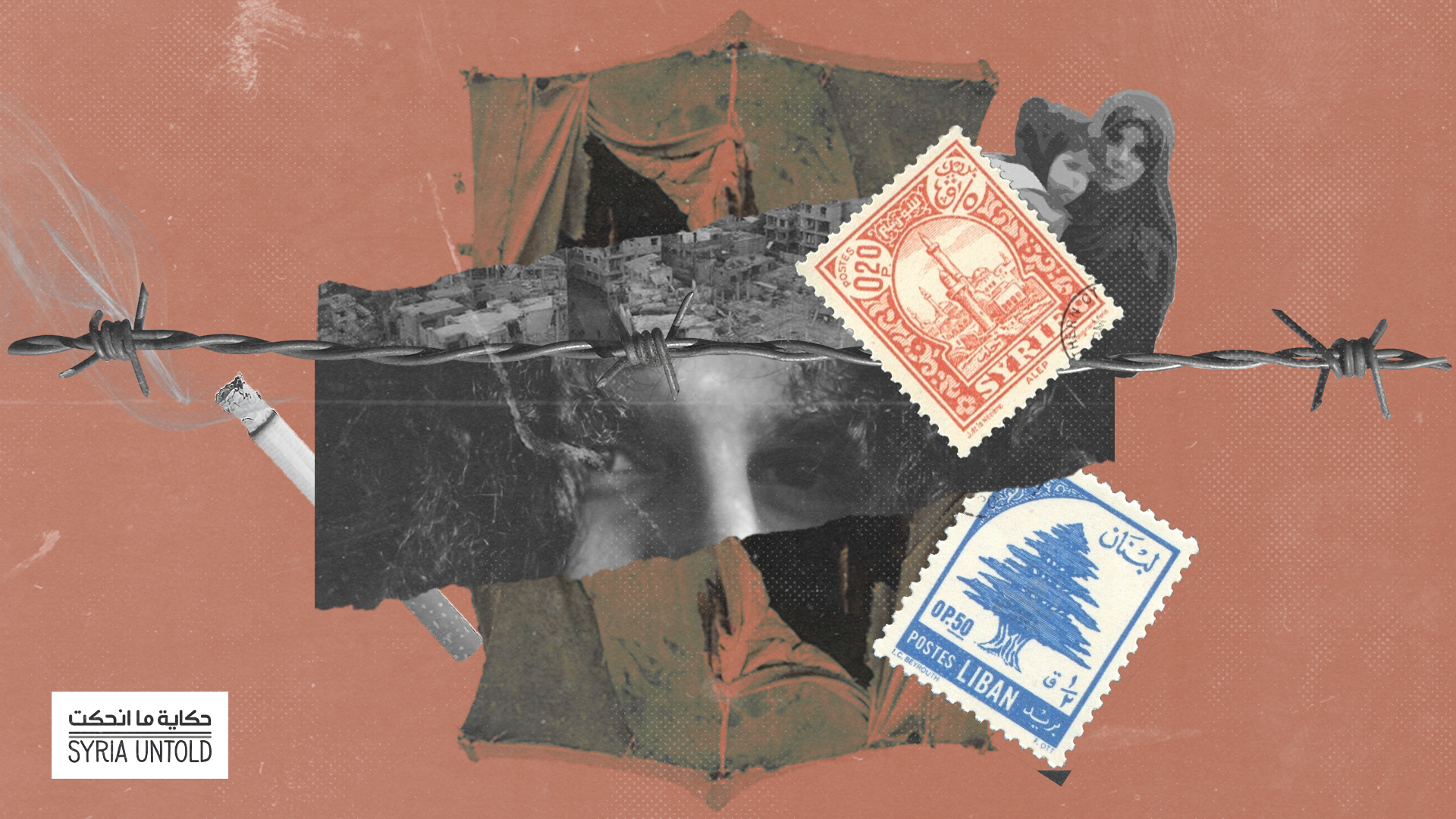
From Aleppo to Beirut, cities burning
26 February 2021
I do not believe this is the model we seek when we call for a state based on a citizenship that emerges from practical, local knowledge - rather than one imposed by normative, top-down rules. Let us consider, instead, the social, economic, and cultural bonds that unite Syrians far more than their religious and ethnic affiliations divide them: the mutual aid of farmers, the rituals of rain-invocations and the love for the land, the solidarity of market merchants, the dynamic relationship between the rural and the urban, and the chronicling of narratives that recognize those marginalized throughout history or erased from public memory by official discourses. It is only here that the concepts of 'majorities' and 'minorities' take on different forms - forms we may desperately need in the context of a fragmented and devastated country.
This is not a defense of oppressive regimes that erased these affiliations; rather, it is a call to remain vigilant regarding how they are politicized, the nature of prevailing trends, and the funding that accompanies them. We must not discard our entire collective heritage under the pretext that it is merely 'Assad’s legacy'.
From this perspective, searching for this type of 'living heritage' - and rethinking its formation through relationships of trust between people and institutions - becomes a task that is perhaps more vital and meaningful than reconstructing a building where donors and tourists stand to take photographs and exclaim 'How beautiful the Syrians are'.
In our hearts, the reality is far removed from this.