
The asphalt of the post-war highway does not merely connect cities; it serves as a conduit for a calculated, deeply intimate terror. Following the sudden collapse of the Assad regime on 8 December 2024, the mechanics of violence in Syria underwent a profound mutation. The roar of heavy artillery has largely faded, replaced by a quieter, more creeping warfare waged over the human body. Moving into the minutiae of daily life, the restructured state apparatus maintains an omnipresent gaze. For transwomen and queer individuals, public spaces have ceased to be arenas of existence; they have been weaponized into traps for social sorting, moral policing, and extortion, turning daily survival into an exhausting war of attrition.
The reality of a trans in Homs today is a life violently compressed. Her world has shrunk to the exact dimensions of a concrete apartment building. For "Memo", crossing the street to purchase basic necessities like milk or bread is no longer a mundane chore, but a high-stakes mission.
The situation in Homs now is worse than before, “Memo” recounts. "I go to the supermarkets shaking with terror. I can’t even go to the supermarket freely like before”.
This extreme confinement is a deliberate strategy, not post-war chaos. Public cruelty serves as a collective warning. The home becomes both a sanctuary and a prison. Outside, survival requires informal protection groups. Trans people do go out in pairs to evade persecution from society and security forces. These groups are human shields against a hostile public.
The architecture of the checkpoint
This domestic isolation is directly enforced by the concrete grid outside. From the shattered streets of Homs to the dense arterial entry points of Damascus, security checkpoints function as localized border crossings where routine ID inspections regularly escalate into targeted terror. While the threats in Homs trap individuals within their immediate quarters, traveling toward the capital amplifies this exact gauntlet.
Where informal social safety nets fail, the physical violence of the state takes over. In Damascus, Dima’s experience illustrates how gender identity is treated as an explicit crime. When General Security agents detain civilians based entirely on hair length or attire, the objective is public humiliation.
Living better, living hidden
05 February 2026
“The General Security stopped me more than once to ask if I was a boy or a girl while getting back to my place in Jaramana” , “Dima: recounts. “They confiscated my ID and started bullying me for my short hair, not believing I am a girl”.
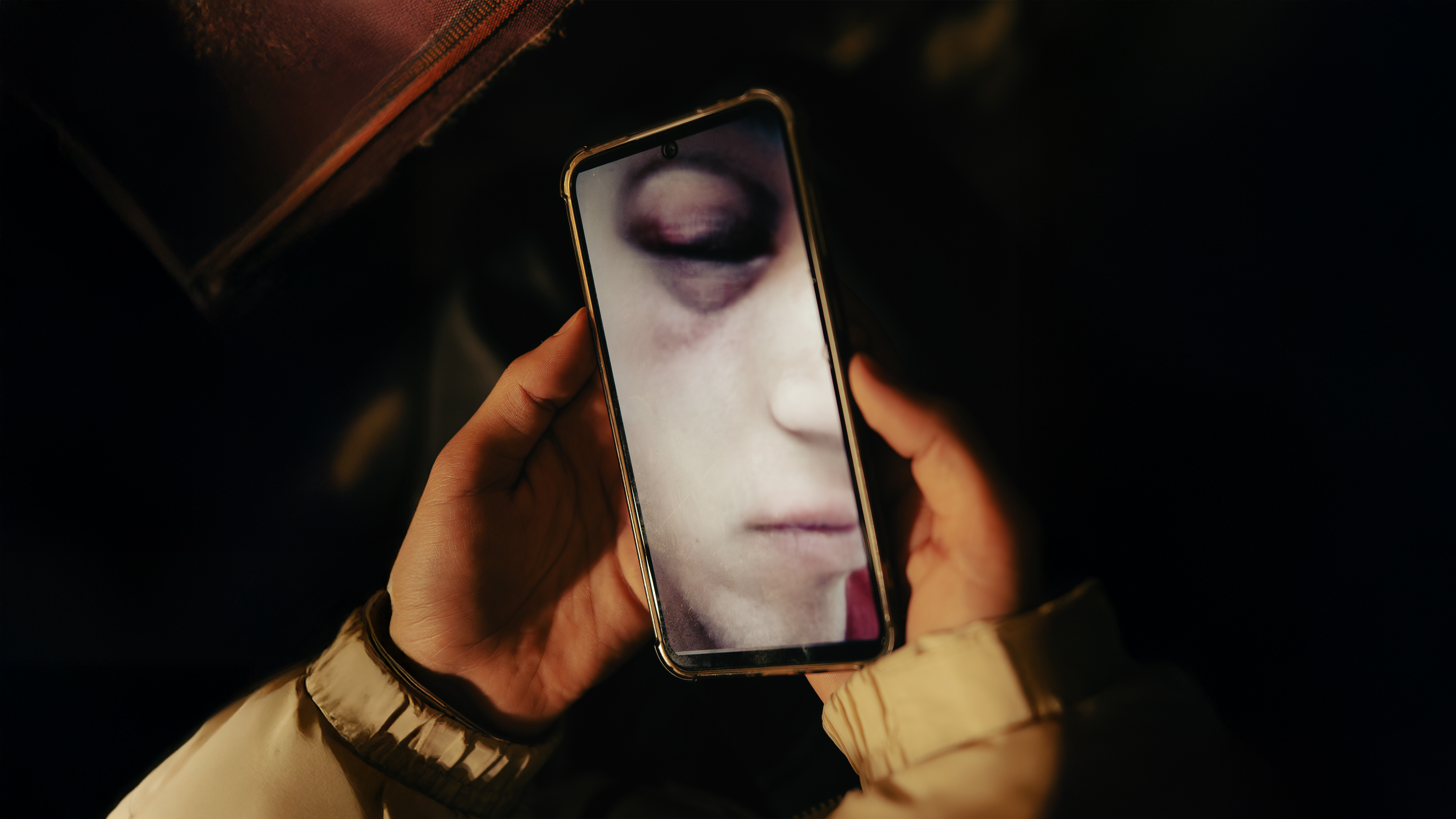
“Dima” is a 23 years old lesbian living in Jaramana, a dense Damascus suburb. For queer individuals like her, the checkpoints regulating the primary exit and enter routes in Jaramana operate as severe choke points in cases where LGBT+ individuals want to exit or enter the Jaramana. At these crossings, security forces routinely conduct invasive smartphone searches, utilizing perceived identity, digital data, and physical appearance as pretexts for extortion and arbitrary arrest under public morality codes.
In this environment, seizing an identification card is far more than a bureaucratic delay - it is a bureaucratic kidnapping of a person's existence. By forcing an individual to defend their physical reality on the spot, the officer criminalizes their very presence. A government document meant to verify citizenship is transformed into a tool for blackmail, broadcasting a clear message: Your body does not belong to you; it belongs to the authorities.
A cartography of vulnerability
For Mayada, a trans woman navigating these regional transit routes, the terror of the checkpoint manifested with brutal literalism.
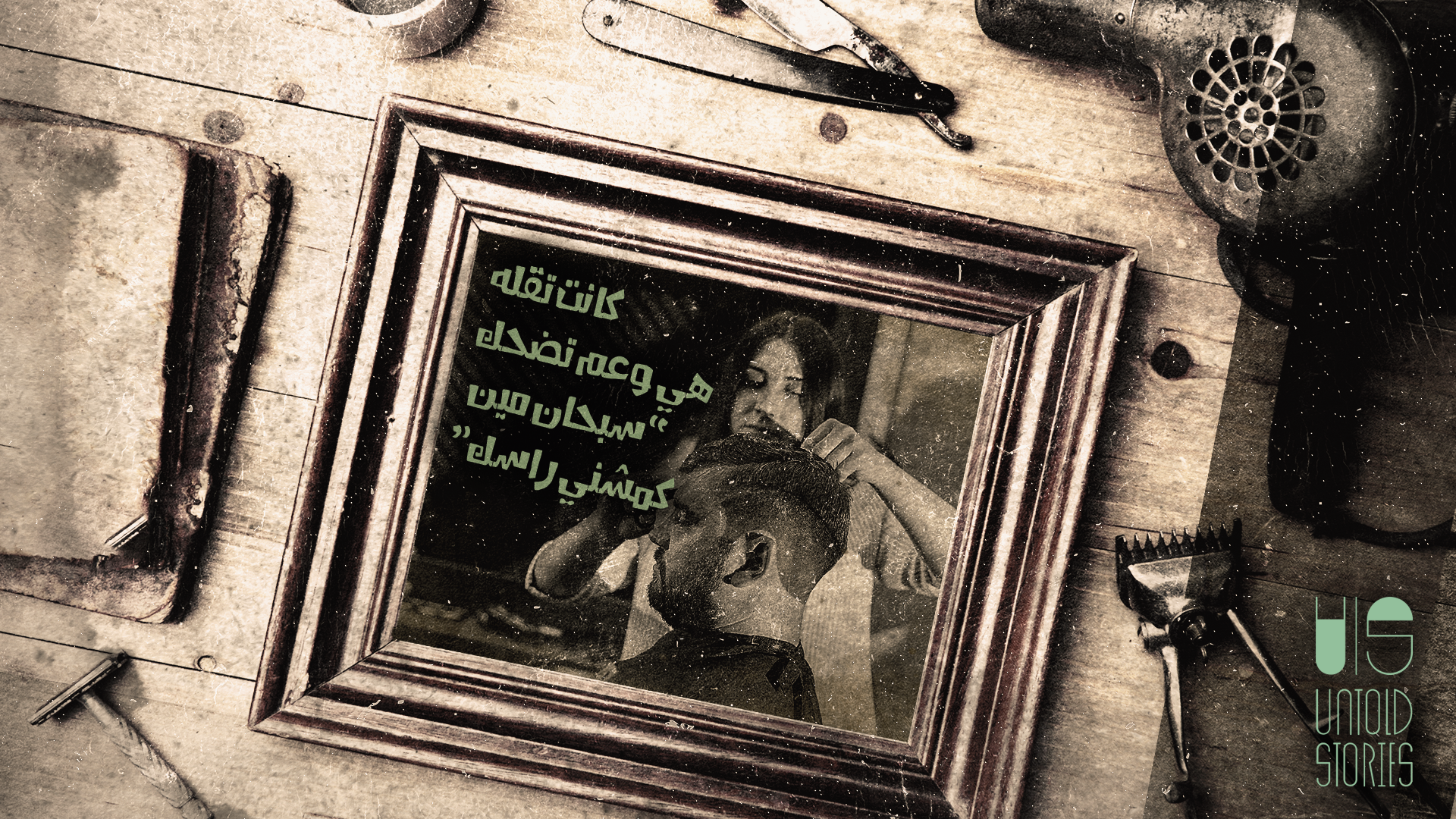
“We were returning from a party in a taxi, Mayada recalls. The soldier at the checkpoint, after realizing we were trans, started bullying us verbally. They cut our hair and presented us to a sheikh; we remained detained for an entire day”.
In the southern province of Sweida, Andrew, a trans man, highlights a deeper psychological shift. For years, even during the zenith of the armed conflict, small, subterranean spaces existed where marginalized individuals could find temporary safety. Today, those pockets of refuge have completely evaporated.
“Before, there was a vent for expression” , Andrew observes heavily. “Now, you have to close yourself off within a circle that resembles you to protect yourself”.
Andrew emphasizes the severe reality of checkpoint harassment, sharing that he had to wait for his hair to grow long again—an agonizing but necessary measure to adapt and avoid abuse while passing through security checkpoints on his commute to his university in Damascus.
At every checkpoint tracing the route from Sweida to Damascus, Andrew faces increasingly invasive, intimate interrogations regarding his identity -a psychological gauntlet triggered the moment he hands over his identification card. To survive the commute to his university in the capital, he has had to alter his physical appearance as a defensive strategy.
“I am forced to explain", Andrew shares. "Usually, when I go to Damascus, I let my hair grow to give myself a neutral look. My mental health simply can't support the consequences of keeping my hair short. One time, a security agent even demanded my registration number just to verify that it was actually me”.
Ultimately, the supreme success of this authoritarian system is that it forces individuals to police themselves. When a person must spend hours before leaving the house checking their clothing, altering their posture, rehearsing their speech, and mapping convoluted routes to avoid interaction, the state has successfully outsourced its enforcement. It no longer requires a guard at every door; it has occupied the citizen's psyche. The cognitive energy that should be channeled into political critique or community resistance is entirely drained by the daily, grinding anxiety of survival.
This weaponization of the body is a collective trauma echoed across the coastal provinces as well.
“Honestly, after the fall, when I saw the videos surfacing of trans girls being beaten, I locked myself at home for quite a while”, says Salma, a young trans woman from Latakia. “I stopped going out unless I was in a group. Thank God, I didn’t face any incidents myself”.
Since the dissolution of the old regime's formal repressive apparatus, human rights advocates just like Guardians Of Equality Movement, have documented numerous cases of detention, bullying, and assault perpetrated by both government-affiliated factions and civilian vigilantes, predominantly at security checkpoints. Several trans women have been arrested, subjected to deliberate humiliation, beaten, and had their hair forcibly shorn as a tool to "break" their femininity. In the most severe instances, they have been forcibly disappeared.
The dangers are equally acute for those attempting to flee the country. According to testimony from Memo, three trans women were recently apprehended while attempting to cross the border into Lebanon and have since vanished. This news, as she puts it, has “terrorized the community”. Local LGBTQ+ organizations have already documented a distinct wave of arrests and forced disappearances. For now, the fate of these missing individuals remains entirely unknown, leaving advocacy groups and loved ones completely in the dark.
As the network of control stretches far from Damascus, Homs, Sweida or Latakia moving toward the northeast, the enforcement of these moral codes and constitutional violence is strictly visible - a reality laid bare in the testimony of Samar, a 35-year-old trans woman in Deir ez-Zor. Her recent account captures the raw terror of this evolving system, where systemic exposure immediately translates into state-sanctioned violence. The profound weight of this reality is laid bare in her own words: “I am dead now”.
“Around three months ago a friend of my friend started working in the HTS military, and he had been visiting my friend’s place”, Samar recounts. “One time I was there, my friend trusted him and told him I am a trans woman. A few days later, there were knocks on my door. I answered; it was him. He said, ‘Get dressed and let’s go’. I looked through the door to the street - three masked men with a van. They beat me up; they drained the life out of me”.
“I was hauled off to an interrogation unit, where I was subjected to severe physical abuse. They attempted to force me to implicate others in the community, but I refused, enduring the violence throughout a detention that lasted a month and six days” she says with her strained voice.
“After this, I was brought to a sheikh because, yes - before there were police officers, now we have the sheikhs”, Samar explains. “He told me: ‘Next time, you’ll face retribution and it will be in Idlib. For now, we will visit you twice a week to make sure you have body hair and a beard growing”.
Interrogators made it clear that her survival was highly conditional; she was told repeatedly that she was not imprisoned for life or executed only because she had not been caught in the act of having a sexual relationship with a man, and because her family was known to them.
Yet, her survival remains entirely confined. Compounding the physical abuse, a video was recorded inside the interrogation department showing her being harassed, beaten, and humiliated. That video went viral on social media. This secondary, digital violation stripped away any remaining anonymity, weaponizing the public sphere against her. Trapped inside her own home, Samar emphasizes that she is now recognized by everyone the moment she steps outside, leaving her paralyzed by the dread of her own streets.
The political economy of safety
“Certainly, your freedom is linked to your financial status and how much money you have to pay for your luxury”, Andrew bitterly notes.
To analyze freedom in contemporary Syria without analyzing capital is to misunderstand how power actually operates. Safety has ceased to be a baseline right; it has been commodified into a luxury service tied entirely to financial capital. The post-war landscape features a rigid wealth divide where the level of physical vulnerability an individual experiences is dictated by their social class.
For the affluent, the pressures of moral policing are heavily mitigated. Inside the perimeters of luxury hotels, exclusive beach resorts, and high-end restaurants in Damascus, the state’s moral mandates effectively vanish. In these commercial sanctuaries, driven by a desire to project normalcy and court wealthy visitors, security personnel are instructed to look the other way.
In sharp contrast, residents of working-class neighborhoods and informal settlements bear the full, unmitigated weight of state surveillance and social judgment. In these peripheries, there are no financial shields to insulate a citizen from a conscript at a checkpoint. Lin, a queer activist based in Damascus, echoes this class analysis, noting the absolute segregation of physical liberty:
“If I want to dress how I like, I have to go to a five-star place”.
This economic barrier demonstrates that the state has abandoned the concept of equal protection. Rights are no longer legal guarantees; they are luxury goods sold to the rich, leaving the impoverished and the marginalized entirely exposed without a safety net.
The institutional legacy of the judiciary and the fight for the future
It is inevitable to talk about LGBT+ rights in post-Assad Syria without looking back at the history of the men who now occupy the judicial and military systems. Four months ago, the Seen organization - one of the leading Syrian queer organizations -published a report on the appointment of Shadi al-Waisi as the Vice President of the Court of Cassation, the region's highest judicial authority. Al-Waisi previously used the alias "Abu al-Abbas al-Suri" when he served in Jabhat al-Nusra in 2014, a group that later transformed into Hay'at Tahrir al-Sham (HTS).
The organization outlined in their report that, according to archival materials issued by Sharia courts and previous posts on his own social media page, al-Waisi is a graduate of the Faculty of Sharia who held judicial positions in areas under the control of jihadist factions. In 2015, judicial documents surfaced from Hreitan, in the Aleppo countryside, showing death sentences he carried out under classifications such as "sodomy". These rulings specified various execution methods, and the documents were personally signed by al-Waisi under his Abu al-Abbas al-Suri alias. The organization has documented executions of gay men by multiple factions since 2013, including Jaysh al-Islam during its control of Eastern Ghouta. Following the 2018 evacuations, those fighters integrated into the Syrian National Army’s (SNA) Third Legion, which currently operates in the Aleppo countryside.
Yet, even under this shadow of surveillance, historical atrocities, class division, and physical violence, a major shift is happening among Syrian activists. They completely refuse to be seen just as passive "victims". For years, international aid organizations have framed queer and female identity in Syria as a pure tragedy - treating them as collateral damage to be pitied. Today, activists are rejecting this, demanding to be the central architects of the country’s political and constitutional future.
They have realized a crucial truth: the targeting of their bodies is not a side issue that can wait until the economy or politics are fixed. It is the very foundation of the authoritarian state. The government needs an internal enemy to justify its violent existence. Therefore, the fight for bodily autonomy is not a niche issue; it is the main frontline of any real struggle for democracy.
As Syria undergoes a foundational shift with the drafting of a new constitution and social contract, queer activists are seizing the moment to challenge the country’s deeply repressive legal framework. Central to their struggle is the fight to abolish Article 520 of the Syrian Penal Code, which criminalizes “sexual relations against nature”. For decades, this vague provision has served - and continues to serve - as the state's primary legal tool to justify the systemic harassment, targeting, and arbitrary arrest of LGBTQ+ individuals.
Alma, a lawyer and queer activist in her twenties, argues incisively that “the status of queer and women’s rights is the truest metric of how democratic any future Syrian state will actually be. The traditional political opposition has long attempted to marginalize these conversations, labeling them as divisive or secondary”. Alma and her peers reject this hierarchy of rights. They are not soliciting mere social "tolerance"; they are organizing for ironclad constitutional guarantees that protect an individual's total sovereignty over their own body as a fundamental right of citizenship.
“No right should be compromised”, Alma asserts. “The most prominent guarantees include protection from discrimination based on sexual orientation or gender identity, the abolition of article 520 of the Syrian penal code and all related criminal penalties, also the fight against marginalization”.
For Maryam, a 31-year-old LGBTQ+ rights activist, these guarantees must translate into concrete institutional access.
"Having equal opportunities in employment, education, services, and protection by law enforcement agencies for queer people is a must", Maryam notes. "Just like any other citizen who is considered socially gender-conforming while applying to the stereotype in society. The decriminalization of all relevant provisions is required, in addition to ensuring legal protection and criminalizing hate speech, homophobia, and transphobia - this is what we aim for in the new constitution”.
Ultimately, understanding the interconnected nature of these systems of oppression offers the only viable exit from Syrian authoritarianism. As Lin emphasizes, the mistake of past political movements lay in the belief that state power could be democratized while leaving deep patriarchal and social hierarchies intact.
“True freedom cannot happen if a citizen is still ruled by the moral whims of their family, their neighbors, or a soldier at a checkpoint", Lin insists. "Dismantling this patriarchal system is an urgent, non-negotiable political necessity”.