
Can a country destroy its own economy without firing a single shot? The answer is yes - and one of the fastest ways is through misleading economic liberalization and the naïve belief that a "free market economy" is the right model for development and growth in war-torn and fragmented countries, like Syria.
Advocates of economic liberalism argue that free trade promotes competition, efficiency, and growth. However, this argument often ignores a basic reality: countries do not compete under equal conditions. Producers operate with vastly different levels of infrastructure, access to finance, technology, energy costs, institutional efficiency, and government support. What may appear as free competition is often competition between unequal economies.
A country cannot claim to support domestic production while simultaneously exposing its producers to unrestricted competition from foreign goods produced under far more favorable conditions. Nor can a nation build a strong economy if it cannot produce essential goods, lacks the resources to import them, and has little to export. Sustainable reconstruction requires productive capacity, not merely access to foreign markets.
History shows that no major economic power developed through a completely liberalized economy. Successful economies, whether in Europe, the US or China, relied on active state involvement, public investment in infrastructure, strategic support for industry and agriculture, and policies designed to strengthen domestic production. Even today, Western countries continue to subsidize agriculture, regulate strategic sectors, and intervene in markets when national interests are at stake. Trump's protectionist trade policies, as well as European regulation of energy prices and subsidies to farmers, demonstrate that the ideal of a completely free market exists in mainstream books on economy only, but in reality.
Supporters of rapid market liberalization often present free competition as an unquestionable economic principle. Yet competition we observe in reality is always shaped by policy, regulation, and state intervention. The idea of a perfectly free market is not more realistic than the idea of a completely state-controlled economy. Both exist as theoretical models, but neither exists in pure form in the real world.
Syria's economic liberalization trap
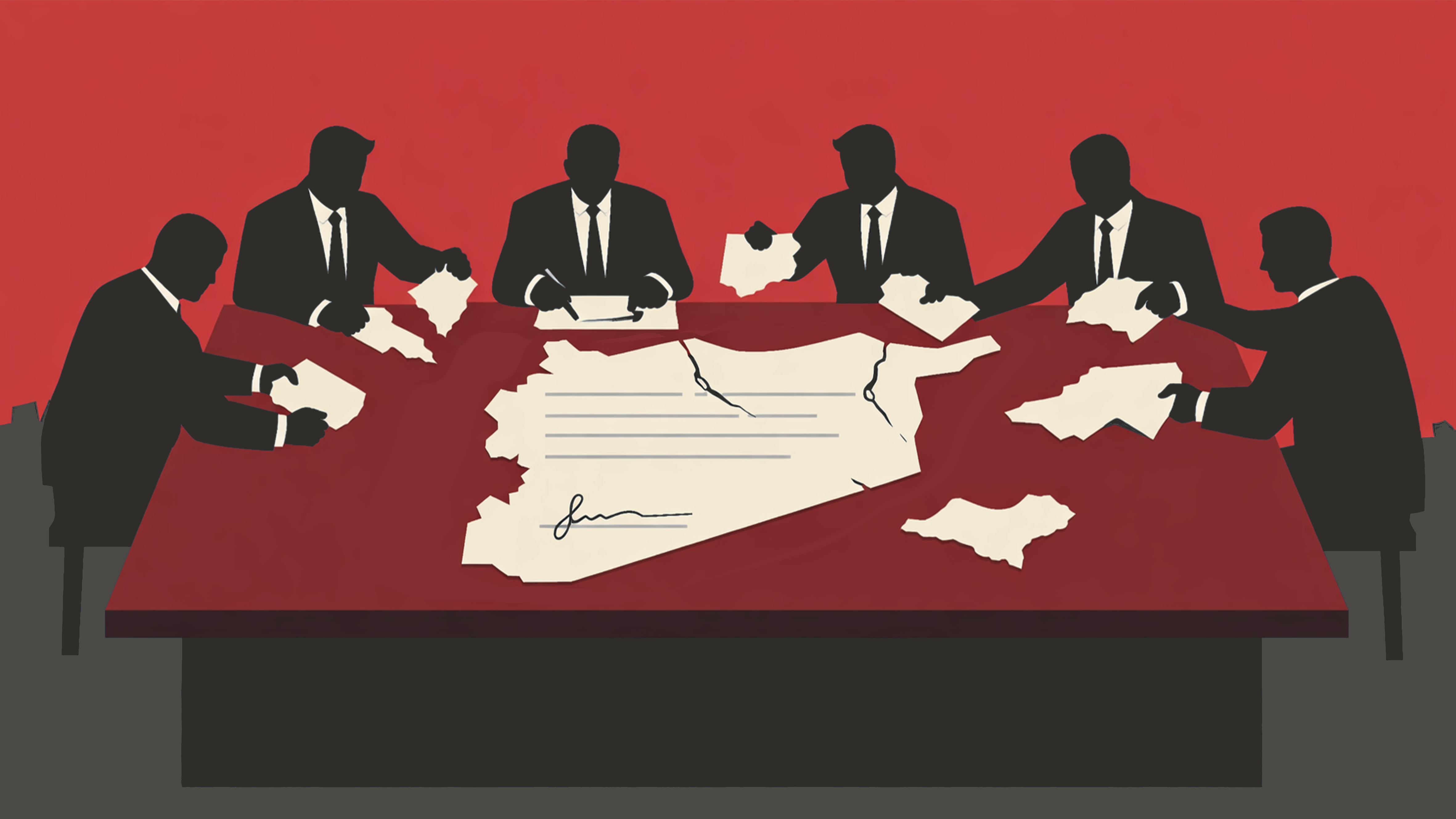
Since its takeover of power in Damascus, the leadership in Syria, led by HTS, has embraced the free market economy as the primary model for reconstructing the country after more than 13 years of war. In practice, this agenda has involved a rapid downsizing of the state through the dismissal of hundreds of thousands of public-sector employees and workers, the privatization of state-owned enterprises, the merger of government ministries, and the transformation of the state's legal structure into a state holding company with extensive financial and administrative powers. These reforms have been implemented despite the absence of an independent monetary authority, functional elected parliament and effective mechanisms for transparency and public oversight. At the same time, the government has removed subsidies on energy products and bread, while dismantling support programs for domestic industries and agricultural producers.
The free market model adopted by HTS assumes that Syria can be reconstructed primarily through large-scale foreign investment and mega-projects. Its underlying logic is that attracting foreign capital through generous incentives, regulatory exemptions, and access to land will generate economic growth and accelerate reconstruction. However, this assumption overlooks the reality that investment in a war-torn country such as Syria is likely to be driven primarily by the pursuit of high returns or geopolitical interests, rather than by a commitment to national reconstruction. In either case, Syria risks losing both its resources and land as well as its economic sovereignty to foreign investors and private capital.
Foreign investors are unlikely to prioritize rebuilding public services, providing affordable housing for the more than five million internally displaced people (IDPs), or addressing the needs of the majority of Syrians who struggle to pay even a single electricity bill. Nor can they be expected to take responsibility for the country's long-term socioeconomic development. These are inherently public responsibilities that require strategic state planning, public investment, and accountable institutions.
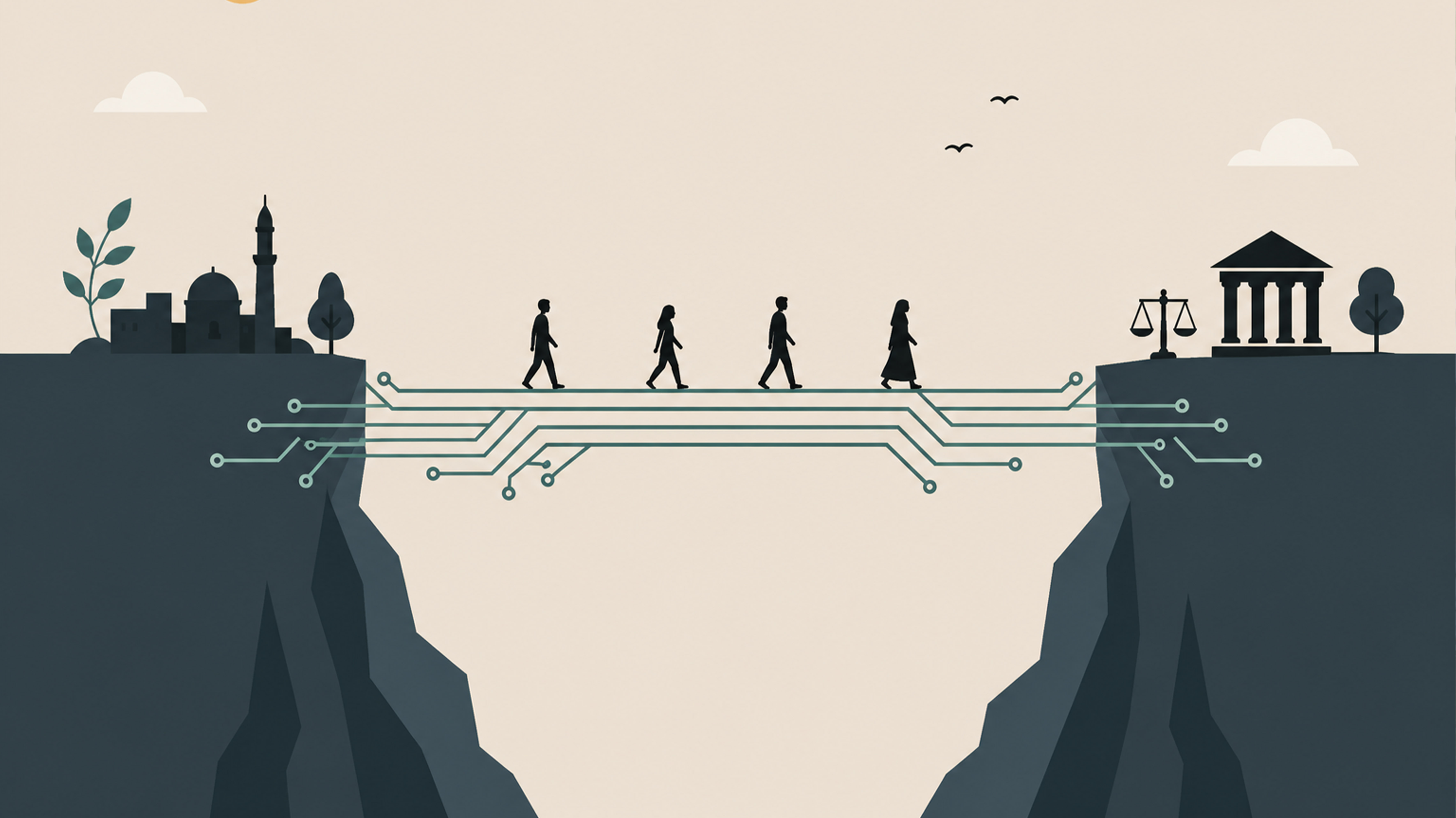
Beyond their devastating social and institutional consequences, these policies also undermine the country's prospects for economic recovery. According to the United Nations, around 90% of Syria's population lives below the poverty line, while millions of children remain in urgent need of access to public education. A significant share of the population lives with disabilities or requires long-term care, and persistent inflation continues to erode the real wages. Under these conditions, policies that reduce the state's economic and social role risk deepening poverty, weakening domestic production, and further fragmenting an already fragile economy. Rather than laying the foundations for sustainable reconstruction, they threaten to undermine any realistic prospect of economic recovery in the short, medium, or long term.
In addition, trade liberalization and market opening undertaken over the last months means that local farmers and manufacturers must compete with producers from countries that have not suffered years of war, destruction, sanctions, fragmentation and economic collapse. Competitors from Turkey, China, and other countries benefit from functioning infrastructure, lower transaction costs, stable institutions, skilled labor, and, in many cases, direct or indirect government support. Under such circumstances, the notion of "fair competition" becomes largely theoretical.
Iraq's experience after 2003 provides a useful warning. Despite years of sanctions and economic hardship before the war, Iraq maintained significant agricultural and manufacturing sectors that supplied a large share of the population's basic needs. Yet more than two decades later, the country becomes heavily dependent on imports and continues to suffer from a large non-oil trade deficit.
Much of the foreign investment that entered Iraq was concentrated in the highly profitable oil and gas sector. While this sector generates substantial revenues for investors and the state budget, it creates relatively few jobs and does little to reduce dependence on imports of food, manufactured goods, machinery, and other essential products. The sectors that produce these goods are typically far more labor-intensive and generate stronger linkages to the domestic economy. As a result, Iraq’s oil wealth is redistributed unequally in favor of an elite, while has not translated into inclusive economic development.
For Syria, the consequences of premature liberalization could be severe. When local businesses are unable to compete and productive sectors decline, unemployment and poverty tend to rise. As economic opportunities disappear, more people become dependent on humanitarian assistance, remittances, or informal economic activities. In the worst cases, some may turn to illicit or criminal activities simply to survive.
In the absence of a genuine social contract, accountable governance, and independent trade unions, Syrian workers and those most severely affected by these policies have little recourse other than protest and strike action - a pattern that has become increasingly visible over the past five months. The danger is that the government may increasingly rely on coercion and repression to suppress dissent, allowing unpopular economic policies to persist despite widespread social hardship.
What does Syria really need?
The important question for Syria today is not only under what conditions markets should open, but also what role the state can play in ensuring that such an opening contributes to domestic economic development and recovery. Economic liberalization can be a tool for development when domestic producers are strong enough to export and compete, and when the state is able to ensure stable infrastructure and fair-trading conditions, particularly in key economic relationships such as with Turkey.
Syria has already experienced elements of this approach before the conflict, particularly during the 2000s. The impact on parts of the manufacturing sector, especially the textile and clothing industries in Aleppo and Damascus, was devastating. Many factories were forced to close, leading to widespread job losses. Combined with a severe drought that affected rural areas and missing state support, particularly in the northeast, this contributed to strong rural–urban migration and increased pressure on major cities such as Aleppo and Damascus. Notably, early social unrest in 2011 was especially strong in many of these rural regions.
At the same time, neoliberal reforms - particularly subsidy reductions and elements of privatization - increased pressure on local producers and the middle class (private sector and state employees). Taken together, these developments showed that unilateral trade liberalization can have severe social and economic consequences.
Against this background, repeating similar policies in today’s fragile post-conflict economy could lead to even more severe outcomes, including deindustrialization, dependency, and long-term economic weakness rather than recovery and growth.

Books in Syria after the fall of the regime
23 June 2026
What Syria needs today is a development strategy that prioritizes social just reconstruction, productive investment, and the revival of local industry and agriculture. Before exposing domestic producers to unfair competition, the state must invest in infrastructure, ensure affordable energy supplies, improve access to finance, and create conditions that allow Syrian businesses to recover and grow.
Syria’s economy has historically been based on small and medium-sized enterprises, which remain the backbone of employment and local production. Large-scale projects and foreign mega-investments alone are not sufficient to drive inclusive recovery. In many successful reconstruction experiences, including parts of post-war Europe, e.g. Germany, small and medium enterprises played a central role in rebuilding productive capacity, strengthening value chains, and creating local economic linkages.
Foreign investment experiences in many developing countries also show that outcomes depend heavily on state capacity. Where governments actively negotiate investment terms, enforce transparent regulations, and protect labor rights while safeguarding national economic interests, foreign investment is more likely to contribute to local employment and development.
Only under such conditions can trade liberalization become a tool for sustainable development rather than a driver of economic decline.
Looking ahead
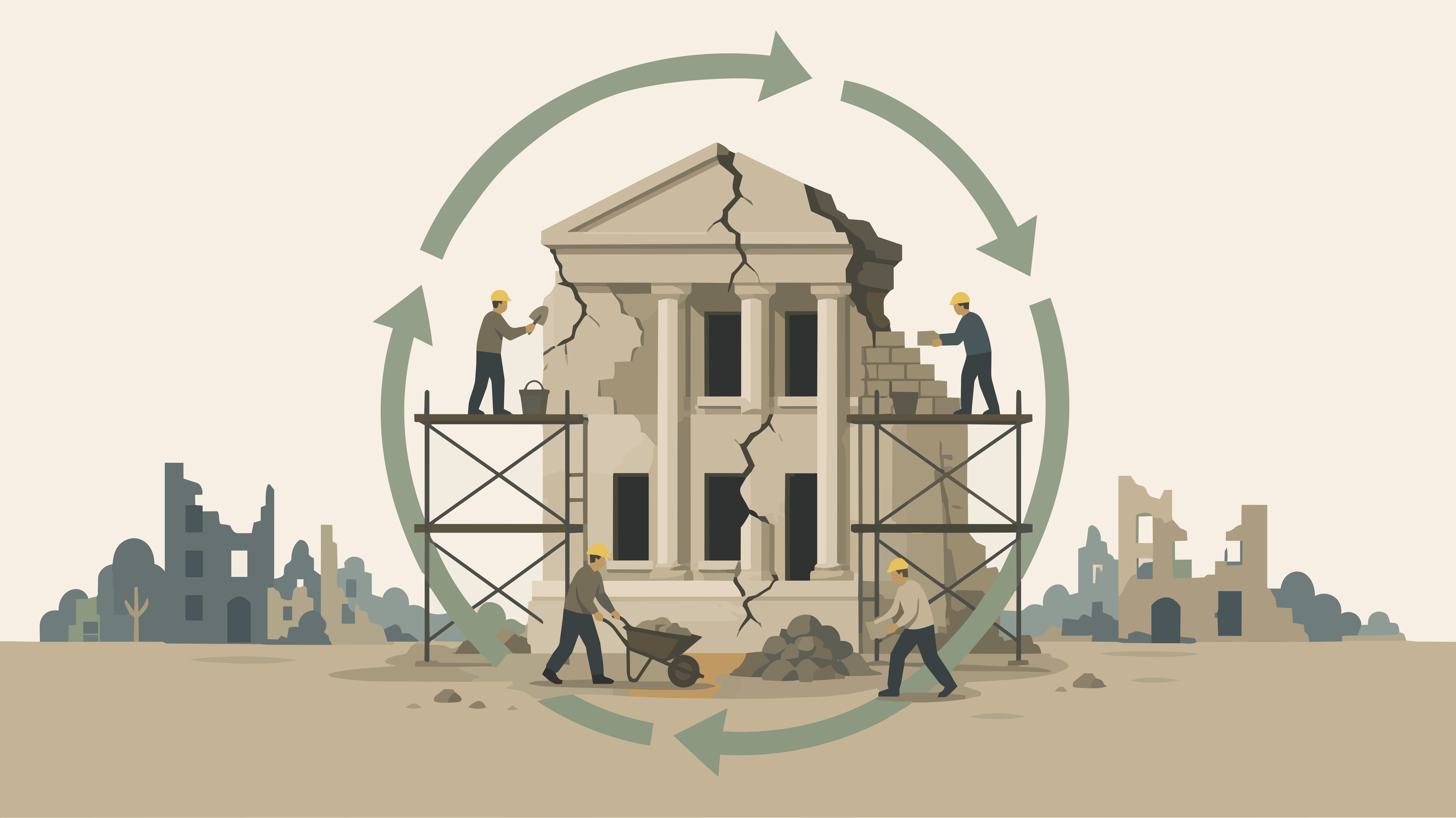
Challenges for Syria’s recovery after years of war and sanctions are complex. Nonetheless, a narrow but real window of opportunity still exists to correct current economic policy directions before they become structurally entrenched. The central objective at this stage cannot be rapid liberalization or the marketization of public services, but the rebuilding of a functioning productive base that addresses deep socioeconomic imbalances and serves the needs of the population, with the state playing a central role.
Economic policy must first and foremost prioritize livelihoods, employment, social justice and basic economic security. Trade policy should therefore be treated not as an ideological commitment to openness, but as an instrument of reconstruction. This requires a sequenced approach: protecting essential domestic industries and agriculture in their recovery phase through targeted tariffs on finished goods, while lowering barriers on machinery, equipment, and raw materials needed for rebuilding the production sector.
The state's role is crucial for providing functional infrastructure, stabilizing energy prices, and restoring the basic conditions under which markets can function. Without this foundation, no meaningful recovery is possible. In this sense, public education and health care are not merely supplementary; they are fundamental preconditions for development. Investment policy must also be guided, not left entirely to market forces. Otherwise, capital will concentrate in short-term or extractive sectors rather than rebuilding domestic value chains. Small and medium-sized enterprises, which remain the backbone of employment, must be placed at the center of recovery.
At the institutional level, economic reconstruction depends on more than policy design. It requires an independent judiciary, transparent governance, and an end to corruption and patronage networks that link political influence to private gain. Public employment must also move away from loyalty-based recruitment toward merit-based systems if the state is to regain credibility and capacity.
Ultimately, Syria’s challenge is not whether to integrate into the global economy, but how to do so without destroying its remaining productive base and losing sovereignty. Unconditional liberalization risks deepening dependency, deindustrialization, and loss of sovereignty over essential economic functions. The state's withdrawal from its social and developmental functions would not only weaken its legitimacy and diminish public trust, but would also perpetuate the structural inequalities and social fragmentation that have historically shaped Syrian society.
The slogans of recent protests in Syria should be seen as warning signs of the shortcomings of current economic policies and taken seriously. Some of them are identical to those raised in 2011. They reflect a deeper demand: to live in dignity under the rule of law, and to have a real voice in shaping the country’s economic direction.
At their core, these demands point to the need for a more inclusive approach to economic governance - one in which Syrians are not merely subjects of policy, but participants in defining it. They also express a call for integrity in leadership, where national economic decisions prioritize the interests of the population as a whole rather than narrow or external interest.
Ultimately, economic policies in Syria cannot be separated from legitimacy, participation, and trust between the state and society.