
(Deir ez-zor): At the beginning of last June, a graphic video spread on social media of an assasination. The video shows two armed men dismounting from a motorcycle and shooting Ratib Al-Hashem Al-Atiwi, from the Syrian Ministry of Defense. They fatally wounded him, before fleeing on bike in the direction of the Baghuz desert and its rocky hills that run along the border of Iraq and eastern Syria.
This was just one of the assassinations carried out by members of an ISIS cell in Baghouz, in broad daylight. The act was quickly claimed by the group's online accounts, signaling a recent escalation in their operations. Less than a month later, on 2 July, Baghouz witnessed two similar assassinations, claiming the lives of two residents.
The first targeted a person in the municipal stadium, who was shot during a friendly football match between two local teams. After fleeing, the assailants opened fire indiscriminately on shops in the market, killing another civilian and seriously wounding others, including a doctor. Additionally, the Syrian Ministry of Defense and security positions were attacked with machine guns in Baghouz, Al-Susah, and Mayadin last month.
These developments on the ground foreshadow a new phase of ISIS activity. The local guide who accompanied SyriaUntold did not hide his apprehension and fear of them. He is from one of the towns neighboring Baghouz, and said reporting with a camera as a foreigner, talking to the locals and listening to their testimonies, is extremely dangerous.
Civilians confronted with ISIS
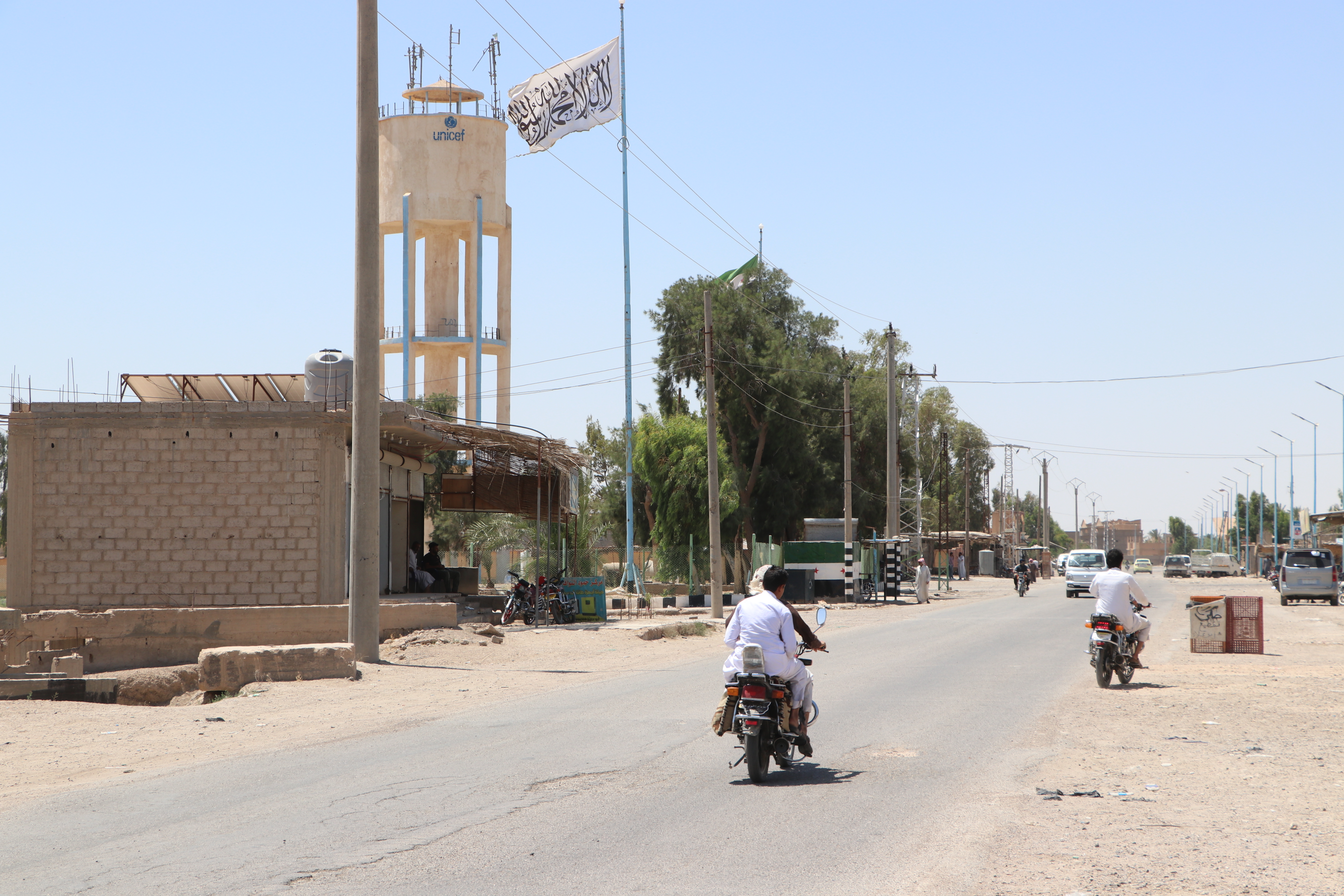
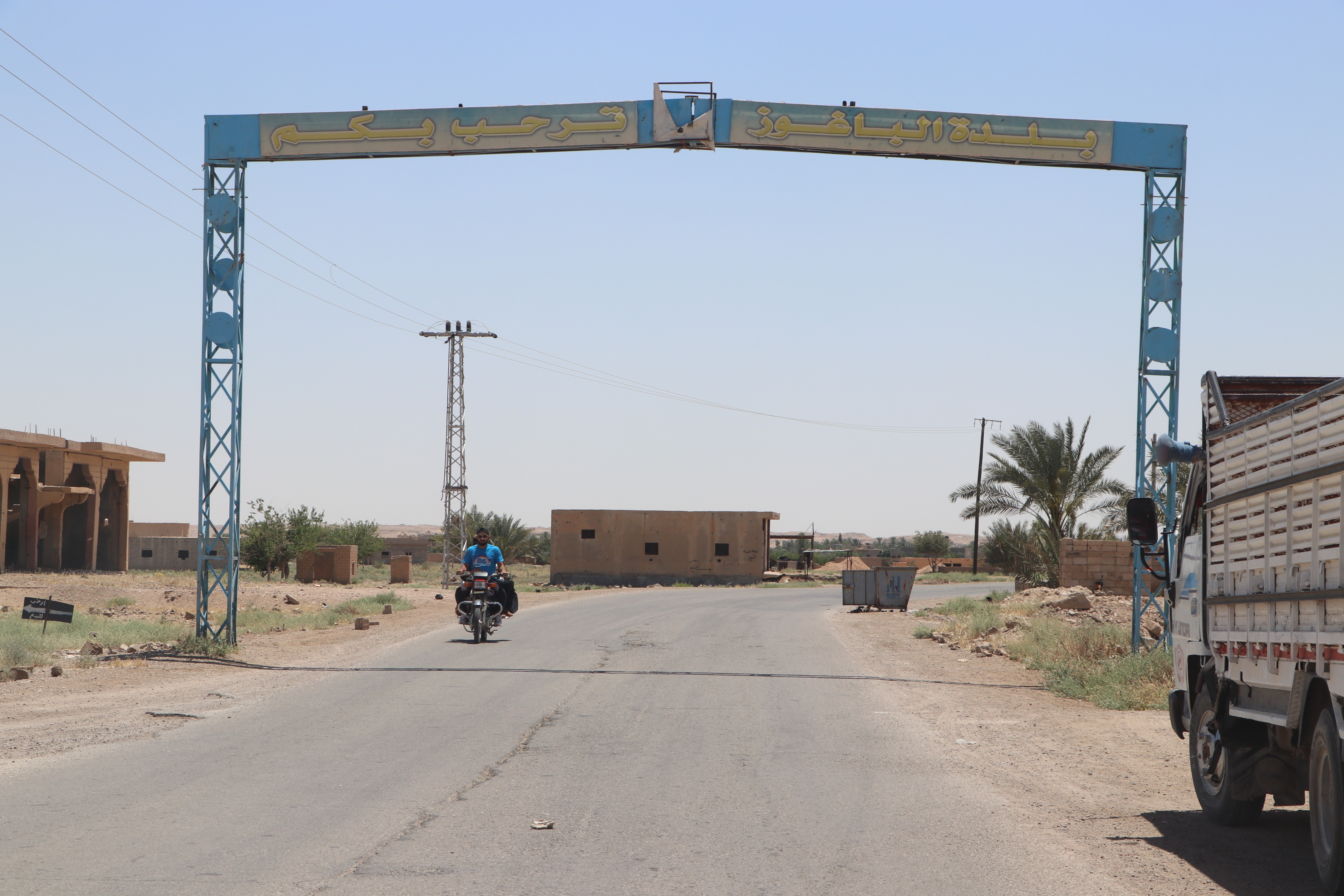
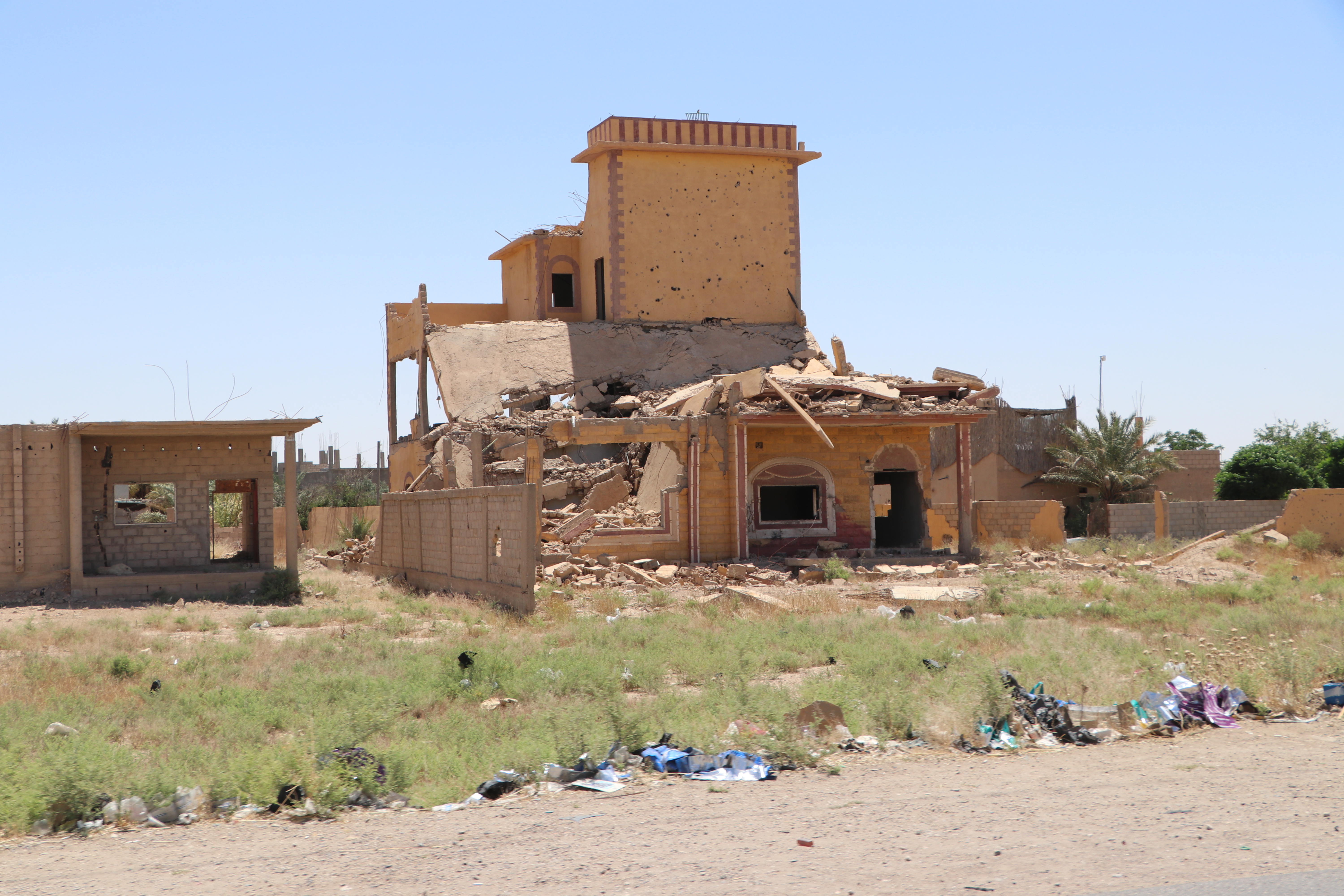
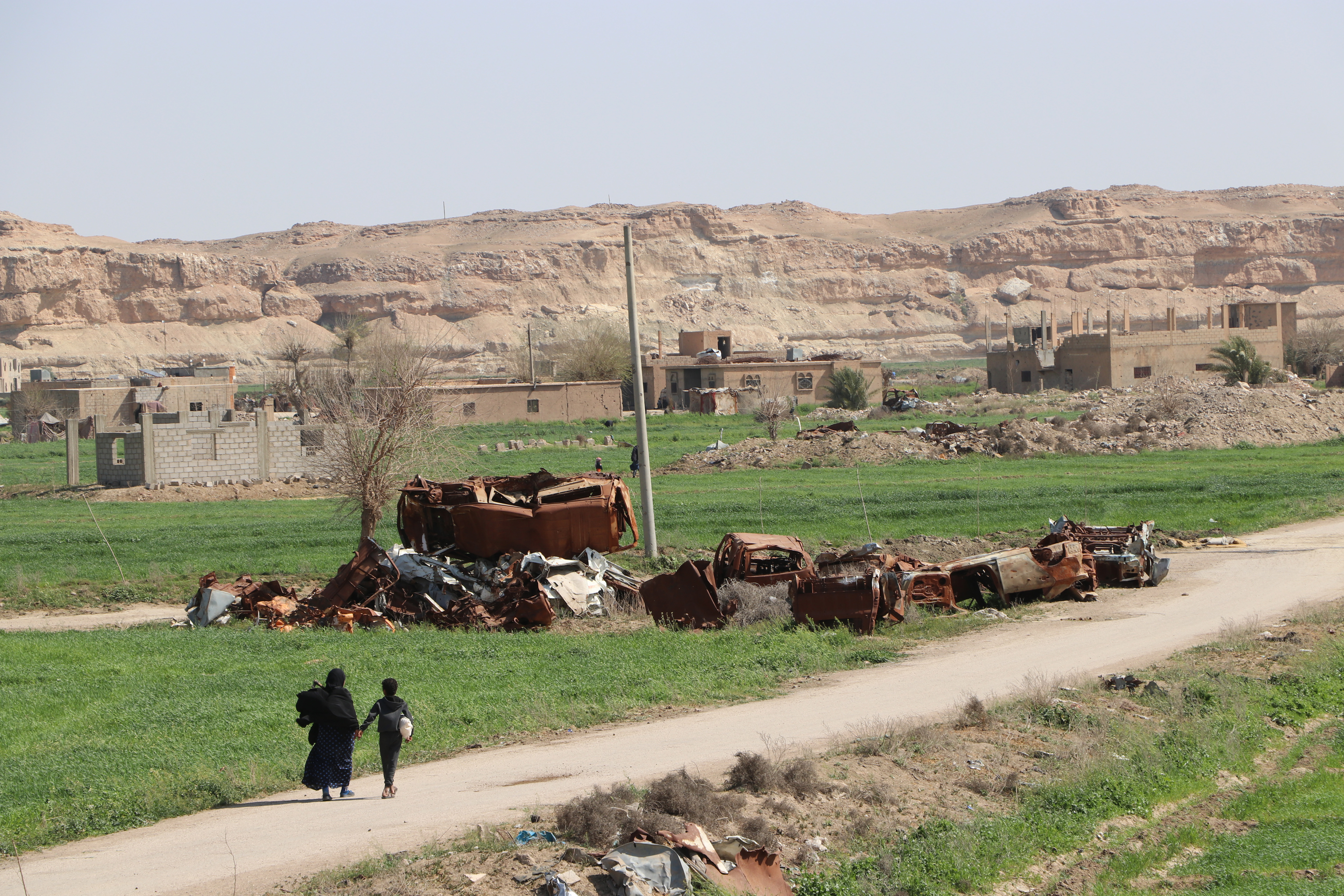
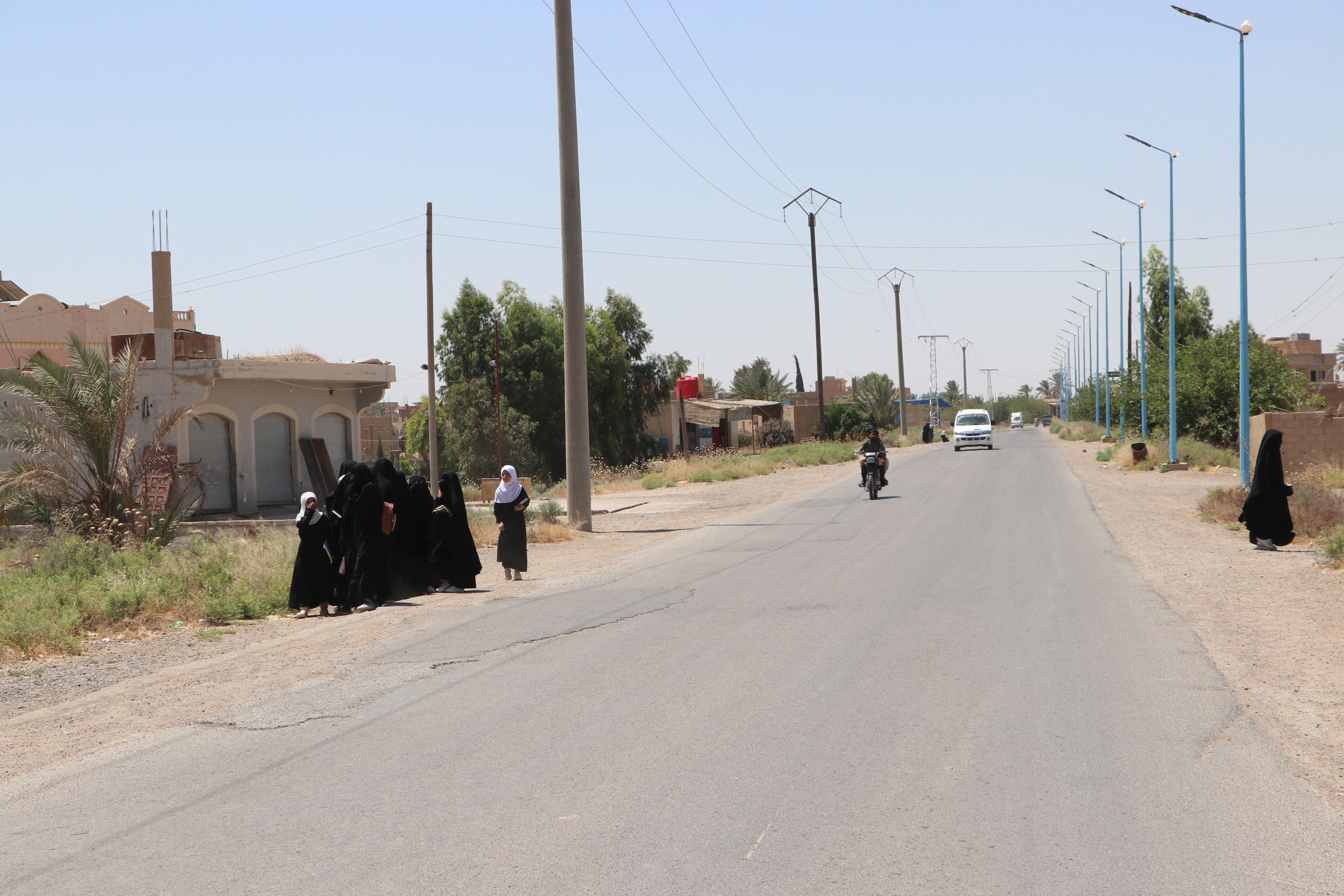
After arriving in Baghouz, passing through the towns of Al-Shaafah, Al-Susah, Albu Badran, Hajin, and dozens of other villages, the damaged streets, destroyed infrastructure, and collapsed multi-story roofs were highly visible. Many houses and shops were reduced to rubble. Those that survived the shelling and shrapnel had their doors, windows, and walls crumbled by the force of explosions during the battles between ISIS fighters, the international coalition, and the Syrian Democratic Forces (SDF) in March 2019. The battles ultimately led to the elimination of ISIS' territorial and military control. In January of this year, the new government forces regained control of the area.
We were gripped by a mixture of fear and anxiety with every approaching motorcycle or speeding car, each one a potential ambush by ISIS operatives targeting us, or a swift patrol by their sleeper cells. Slogans like "ISIS is here to stay and expand" and "A caliphate based on the prophetic model" were still painted in black on many crumbling walls. Despite its territorial and military defeat seven years ago, the organization still maintains sleeper cells that carry out terrorist attacks, exploiting the vast and rugged terrain of the desert.
The village of Baghuz is located in the far east of Deir ez-Zor Governorate, on the eastern bank of the Euphrates River. It administratively belongs to the city of Al-Bukamal, and is about 125 kilometers away from the center of Deir ez-Zor. It lies on the Iraqi-Syrian border, opposite the Iraqi village of Baghuz in Anbar.
In one of the houses we met Mishal, a 40-year-old who had remained in the town for years, living through ISIS rule and its strict security controls. Mishal was imprisoned and subjected to what was known as the "Sharia course" after a pack of cigarettes was confiscated from his pocket. He witnessed a summary execution and dozens of other incidents that remain etched in his memory. He was displaced from his hometown during the coalition offensive, only to return in early 2020 and witness the withdrawal of the SDF forces and the return of the regime forces.
Upon entering the living room, we saw his machine gun on the table, and he began to speak about the rapidly changing situation in the area, as well as the security vacuum. He emphasised that, like the majority of the town's residents, he lives in a state of constant fear. "We are afraid for our lives and ourselves from the ISIS cells that roam freely without any security oversight. This chaos is only paid for by ordinary civilians".
He pointed to the fact that the assassination of Ratib Al-Hashem Al-Atiwi last month was followed by the assassination of two other people from his city, prompting him and his neighbors to form night watch committees. “Every few days we face such a situation and hear about it, the passage of a threatening ISIS foot patrol, and a case of extortion of merchants and pursuit of security personnel, all of these have become almost daily incidents”, he said, adding, “We will not wait until we are killed in cold blood like in the incidents that have increased recently”.
The al-Baghouz market was slow, with only a few residents shopping for food and agricultural supplies. According to Amash, a 32-year-old civil engineer, the limited public presence is directly correlated to the deteriorating security situation. Amash witnessed it firsthand, when unknown assailants opened fire on shop owners, killing one of his relatives earlier this month. Speaking to SyriaUntold, he stated that the residents of al-Baghouz, al-Shaafa, and al-Susah, in particular, "are living in a state of increasing fear and anxiety due to the repeated assassinations. These shocking incidents have sparked panic among the population because of the lack of security".
Amash sought refuge in Turkey, refusing to live under ISIS rule. He then decided to return to Turkey at the beginning of February after the Transitional Authority forces took control. He attributes the repeated assassinations to security and economic factors, "most notably the absence of security and the lack of deployment from the Ministries of Interior and Defense, in addition to the deterioration of living conditions and the decline in the purchasing power of the population, as a result of the scarcity of jobs, weak services, and deteriorating infrastructure".
According to Amash, this reality has driven some young men and weak-willed individuals to, "seek alternative job opportunities and sources of income, including working with ISIS cells that provided them with money, exploiting the social and economic vacuum as a fertile breeding ground for extremism and violence".
A burdened memory
Afaf, originally from Baghouz, remembers the women in the region who lived through the years of ISIS rule, deprived of public and personal freedoms, and some subjected to violence and physical enslavement. Now in her fifties, she volunteers in field surveys with a civil society organization focused on "empowerment and community leadership", where she hears daily testimonies from women in the area about their fears of escalating violence.
Like many others, she fears a return to the years of strict societal oppression. "During my field work, every woman and girl I meet expresses her terror at the increase in attacks by ISIS. Just thinking about their return, the idea itself terrifies and frustrates you. Everyone who lived under their rule knows the bitterness of those years".
Afaf's account aligns with numerous testimonies from residents of the area, who warned of the danger posed by ISIS cells regaining their strength and regrouping, reflecting a deep sense of apprehension regarding the group's tactics. ISIS cells have not only resorted to surprise attacks and direct threats to terrorize the local population, but have also resumed their policy of extortion, demanding money from merchants and businessmen, and threatening prominent figures to finance their activities. ISIS cells refer to the money demanded from civilians under duress as "Zakat" (mandatory Islamic charity donation) while residents call it "Al-Itaweya" (tax).
Thamer (pseudonym) is a merchant from the city of al-Susah, north of Baghouz. He says ISIS cells have demanded at least ten merchants and wealthy individuals pay protection money in the past month, noting how the extortion policy varies according to the nature of the target. “Some are asked to pay 200 USD, others about 5,000, while in other cases, double these amounts are demanded”.
Anyone who refuses to pay is subjected to direct attacks. There has been a rise in the number of shootings over the past three months, targeting shops and homes. Improvised explosive devices and stun grenades have also been planted in front of the homes of those who refuse to pay, in an attempt to intimidate them. According to residents, the cells typically move around on motorcycles or in ordinary cars, taking advantage of the darkness at night to scout their targets, given the lack of streetlights in the villages and towns.
Some of those interviewed by SyriaUntold mentioned seeing ISIS patrols on the Badia al-Jazira road or the Baghouz hills at various times of the day, and most of the area’s residents are afraid to move around and travel at night for fear of encountering their checkpoints.
A meeting with ISIS
Mohammed Hassan, an associate fellow at the Middle East Institute who is from Deir ez-Zor, and whose research focuses on the study of ISIS and jihadist groups, believes that “the organization has continuously developed plans for its survival during the years following its collapse until the fall of Assad and his escape in December 2024, changing its structure and military plans, the locations of its activity, and methods of communicating with local communities, ensuring tools for mobilisation and recruitment, and taking advantage of the internal crises of its adversaries”.
At the beginning of this year, Mohammed Hassan met face-to-face with one of ISIS' leaders in the desert, who identified himself as Abu Maqdad al-Iraqi. During a meeting facilitated by mediators from Palmyra, in a Bedouin family's tent 35 kilometers west of the ancient city, Abu Maqdad began the conversation by stating that previous killings of civilians in the desert, especially truffle hunters, were not carried out by the ISIS fighters. He instead accused Iranian-backed militias of perpetrating them.
Regarding ISIS’ position on the transitional authorities, he claimed that there were informal arrangements that prevented a direct clash in the desert between ISIS, Hayat Tahrir al-Sham, and other factions which deterred aggression during the battle to overthrow the Assad regime and the consolidation of power that followed. He also stated that there was an internal split after the fall of the Assad regime, between a faction that preferred to reach an understanding with the new government and stop operations and another faction that insisted on continuing fighting in Syria. It appears that the latter faction persevered, with confrontation between the government and ISIS recently resuming, with repeated targeting of government headquarters and personnel.
Today, ISIS cells are hiding in the Syrian desert, spanning an estimated area of 4,000 square kilometers, stretching from the southern countryside of al-Bukamal to the countryside of al-Sukhnah in the west, passing through the countryside of Palmyra, the southern Palmyrene mountains, and the outskirts of al-Qaryatayn and Mahin in the eastern Qalamoun region, reaching the countryside of al-Dumayr, and extending eastward to the borders of al-Safa. The region's difficult geography helps ISIS cells to conceal themselves among the hills and rugged mountain forests, which contain a large number of caves. This previously prevented Russian forces, the former regime, Iranian militias, and their allies from launching a large-scale military operation to eliminate ISIS in the area.
Researcher Mohammed Hassan says many believed that ISIS' activity had ended in Syria, "with the rise of conservative Sunnis to power and ISIS losing the most important pillars of its mobilisation. But by following the recent activity of the cells, their adaptation and their insistence on being present in Syria, in light of the hostility between them and the Syrian revolutionary factions, and the gaps that the new government suffers from, it becomes clear that the battle of ISIS has not ended yet, as they see an opportunity to be reborn in Syria, exploiting the anger of the local population against the ruling authorities, in order to re-recruit and increase the pace of terrorist activities".
ISIS relies on three main sources to support its cells’ activities with money, weapons, and ammunition. The first is the weapons caches it left behind during its control of northern and eastern Syria between 2015 and 2016. Muhammad Hassan says, “Among them are the Ayash warehouses west of Deir ez-Zor Governorate, the largest strategic weapons depots in the east of the country, and the weapons depots in Palmyra, east of Homs Governorate. The organization had quantities of weapons that exceeded its needs with the stagnation of its fighting fronts, so it stored them in underground places in the Syrian desert, far from the air strikes of the coalition aircraft”.
The second source of funding is the extortion and spoils obtained following attacks on the SDF forces, the former regime and its allies. “The third source comes from purchasing weapons from the black market through intermediaries cooperating with the organization’s cells, most notably corrupt officers in the former regime’s army and leaders of Iranian and Iraqi militias in deals, estimated at large sums of money”.
Alarming figures
Saeed, a pseudonym, is a media activist from al-Shaafa, near Baghouz. He monitors ISIS attacks and operations. He believes that ISIS cells have succeeded, albeit relatively, in restoring media propaganda on social media platforms and pages, where they are trying to exploit popular anger over the settlement operations carried out by the transitional authorities in Raqqa and the Deir ez-Zor countryside, “which granted safety to many leaders and members of groups and militias that killed Syrians and were either affiliated with the former regime or with Iranian militias”.
Saeed said in his interview with SyriaUntold, "From this gateway, ISIS is re-recruiting new members who are angry with the government's policies. The real danger lies in their success in convincing more loyalists to join, in order to expand its networks, by exploiting other security, economic, and social loopholes to persuade people and implement its intimidating policies”.
Statistics and security reports issued by monitoring centers such as the Syrian Observatory and the Syria Monitor platform, the latter of which specializes in monitoring and documenting the movements of ISIS, indicate that ISIS attacks witnessed fluctuations between 2025 and 2026. These fluctuations aligned with political and military changes in Syria and the operations of the international coalition.
A 2025 graph showed an average of 29 ISIS attacks per month, which caused the death of approximately 15 people. The third and last quarters of 2025 recorded a gradual increase in operations, escalating to 9 attacks per week, coinciding with ISIS’ exploitation of agricultural seasons and security gaps.
While the first half of 2026 witnessed a decrease in terrorist operations, declining 17% in the first quarter and 67% in the second quarter, there was a significant increase in June and the beginning of July.
Journalist and researcher Sobhi Franjieh, who covers local changes and fluctuations in the Syrian domestic scene, told SyriaUntold that ISIS remained the biggest source of concern for civilians in Syria, and in the east of the country in particular. “Especially the ability of its cells and secret agents to carry out almost daily attacks against government forces, by targeting civilian dignitaries, religious figures and security personnel. Also, its danger is not only in armed attacks, but in the return of its cells to extorting money from people in the region”.
Although ISIS movements are concentrated in eastern Syria and the desert, this does not mean, of course, that ISIS is not active in other areas. For example, the Syrian government arrested an active cell in the al-Badrousiya area in the northern Latakia countryside last November, and detained other groups in Homs, the Damascus countryside, and other areas in southern Syria. Franjieh added, "This is a dangerous indicator for the government, suggesting ISIS’ intention to move into new areas and hide there to carry out attacks against civilians, with the aim of destabilising the region and undermining the government's security efforts".
Franjieh emphasises that confronting ISIS in the Syrian desert and in al-Safa requires a great effort that may exceed the capabilities of the current government. He attributes this to Israel's destruction of most of the Syrian military arsenal after the fall of the Assad regime, suggesting that the task of confronting ISIS in the region will not be the sole responsibility of the transitional authority. "It seems that we may witness new joint missions between the Syrian government and the international community".