
Every August, the residents of Eastern and Western Ghouta in the Damascus countryside commemorate an event that will forever be etched in the memory of all Syrians: the chemical massacre in which hundreds of unarmed civilians perished after inhaling and being poisoned by sarin gas. The massacre, perpetrated by the then-regime to suppress the armed and civilian opposition demanding its overthrow, was described as "unprecedented" in the history of the Syrian war. On the morning of 21 August 2013, missiles loaded with the deadly nerve agent sarin struck populated areas, particularly the towns of Zamalka and Ain Tarma in Eastern Ghouta, killing more than 1,400 Syrians.
Sarin gas causes paralysis of the nervous system and leads to rapid death due to respiratory failure. Acute symptoms of inhalation include suffocation, severe muscle spasms, temporary paralysis, and loss of consciousness, resulting in death without the shedding of a single drop of blood.
Where I left my comrades and memories
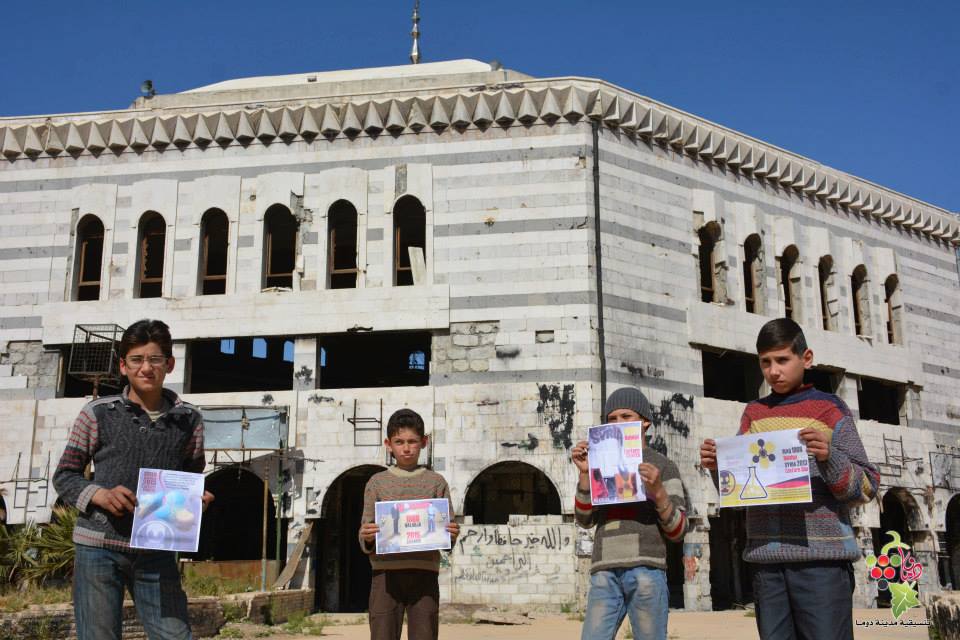
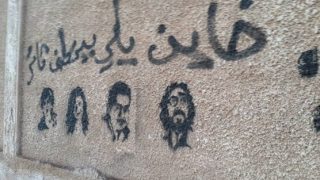
I returned to Douma on 17 August, after years of absence. The first place I went was the office of human rights activist Razan Zaitouneh and her colleagues: her husband Wael Hamada, a native of Douma, activist Samira Khalil, and poet Nazem Hamadi. My memory took me back to those horrific days and what I witnessed during my field mission two days after the massacre, when I managed to sneak into the area, despite a suffocating siege in which regime forces loyal to the former regime had closed all access points.
In those days, Razan's office, the "Violations Documentation Center in Syria", was a hive of activity. Everyone there was busy documenting the massacre. Part of the team was recording firsthand accounts from survivors, another part went to the mass graves to match names, details, and distinguishing marks, and a third part accompanied ambulances and field medical teams transporting the wounded to hospitals and medical points. Despite the limited number of medical facilities operating in the area at the time - no more than ten - they managed to save thousands injured by the rapid spread of the gas, far exceeding their capacity.
After Douma, she went to the neighboring town of Zamalka, where strange odors permeated every corner of this devastated city. The swiftness of death was the most prominent feature in every nook and cranny; animals perished from the attack, which occurred in the early morning hours, and most of the victims were in their nightclothes. The area was subjected to rocket fire accompanied by artillery shelling, which led many to believe that it was an attack like the other attacks that the area had been subjected to since the opposition forces took control of it at the end of 2012.
The regime forces, along with their Russian allies, were indiscriminately bombing Eastern Ghouta and opposition-held areas of rural Damascus with airstrikes in an attempt to seize them from armed opposition fighters. The destruction and devastation left most buildings in ruins, and even today it is difficult to find a single house or shop that doesn't bear the scars of war, if it hasn't been reduced to mere skeletons or piles of rubble.
That day, the bodies of the victims were laid out in the streets and in front of field hospital wards, without visible wounds, only a white, liquid substance coming from their mouths. The bodies of children were the most affected by the toxic gases, and according to the Violations Documentation Center, nearly 400 children perished that night.
I still remember to this day the wailing and screaming of a Syrian woman as she ran through the main street of the city. She had lost her entire family in the attack and was uttering incomprehensible words, repeating the names of her loved ones one by one, just like many other residents of Zamalka who lost their entire families in those attacks. I also remember the case of an elderly man, over sixty years old, whom I initially thought was hanged and dead, standing on his feet. But when I approached him, I found him alive. The neighbors told me then that he had lost his only son, his only grandson, and all the members of their family at once, and he had fallen into a state of delirium accompanied by paralysis.
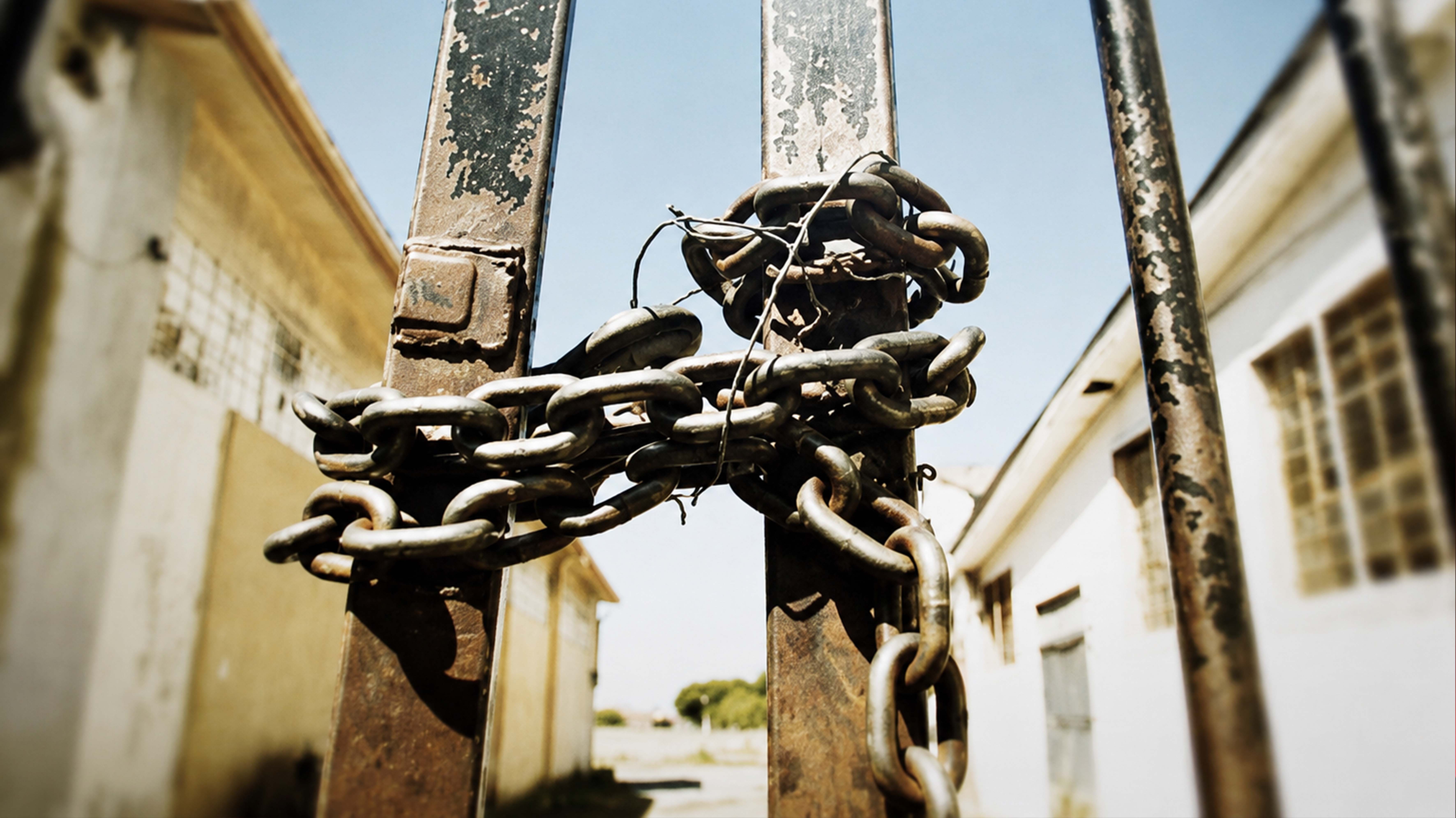
Field teams were trying to enter the houses, but the doors were tightly sealed, not only with locks and chains, but also because many had died behind them while desperately trying to open them and escape. The bodies of those who managed to get out were found in the hallways or in front of building entrances, while entire families suffocated in their beds, unaware of what had happened to them or how they had died.
Zamalka had gradually become a gathering point for civilians displaced from areas of clashes with regime forces, after Douma, Harasta, Jobar, and Ain Tarma became front lines at that time. Following the attack, according to documentation, it was confirmed that half of the victims who fell that night were from Zamalka itself, most of them women and children who had not taken the necessary precautions against this type of attack, despite warnings from local medical teams about the possibility of a chemical attack similar to the one that had occurred in the neighboring city of Harasta just days earlier.
The futility of the efforts
I remember how overcrowding was in one of the field hospitals, to the point of being described as Judgment Day, as there was not a single meter left that was not occupied by a patient or a bed on which a patient was lying complaining of nausea and loss of consciousness. Beds were even placed in the lobby, main corridors and entrances for patients to lie on. As for the medical staff of doctors, nurses and technicians, they were busy working in difficult conditions that exceeded their capacity, as health and medical care was almost non-existent due to the siege imposed by the forces loyal to the former regime.
The severe shortage of medical equipment, protective masks, and even medications presented a double challenge, leading to the deaths of many patients. One doctor told me that day, "We, as doctors, were helpless to watch hundreds of children and many women breathe their last in our arms. We stood by, unable to perform our medical duty or do anything. We experienced the same anguish when our teams reached the homes and found some of the victims still alive, only to see them die on the way to the hospitals due to the lack of ventilators and essential medical equipment in the ambulances."
The effects of the massacre didn't end in the initial hours after it occurred and the large number of victims fell. Many suffered the consequences of witnessing the horrific scenes of death and suffocation, experiencing fainting spells, severe panic, and later, post-traumatic stress disorder.
I recall one case documented by the Violations Documentation Center team in Zamalka. A man was delirious when they recorded his testimony, sometimes fearing a repeat of the chemical attack, and at other times asking in bewilderment about the rest of his family. He was unaware that his entire family had perished in the attack. He received medical attention in the final moments before succumbing to his injuries. This alone opened a new chapter of suffering that would haunt the medical teams as they informed the families of the dead and the survivors.
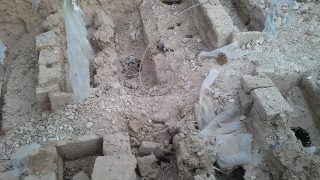
The victims' bodies were buried piled on top of each other in large mass graves, hastily dug due to the inability to dig individual graves for over 1,400 victims in such a short time. There was also a fear that the bodies would decompose or spread disease if burials were delayed, given the absence of traditional washing and shrouding for most of the victims due to their sudden deaths and the shortage of shrouds. The bodies were simply wrapped in plastic bags or white cloths.
Despite the former regime's denial of responsibility for launching the missiles and its forces' shelling of cities and towns in Ghouta, Human Rights Watch documented at least 85 chemical weapons attacks in Syria during the nearly 14-year war, with government forces loyal to the former regime accused of carrying out the majority of these attacks. Last June, the Organization for the Prohibition of Chemical Weapons (OPCW) and the United Nations announced the discovery of an undeclared chemical weapons cache in Syria, including missiles of the same type used in the Ghouta massacre.
The chemical massacre in Ghouta is perhaps the most painful memory in Syria, not only because of its horror and lasting effects, but also because it became a symbol of profound denial, deepening the wounds of its victims and intensifying their suffering. Even today, they continue to strive for recognition of what happened, accountability for the perpetrators, and prevention of its recurrence.