
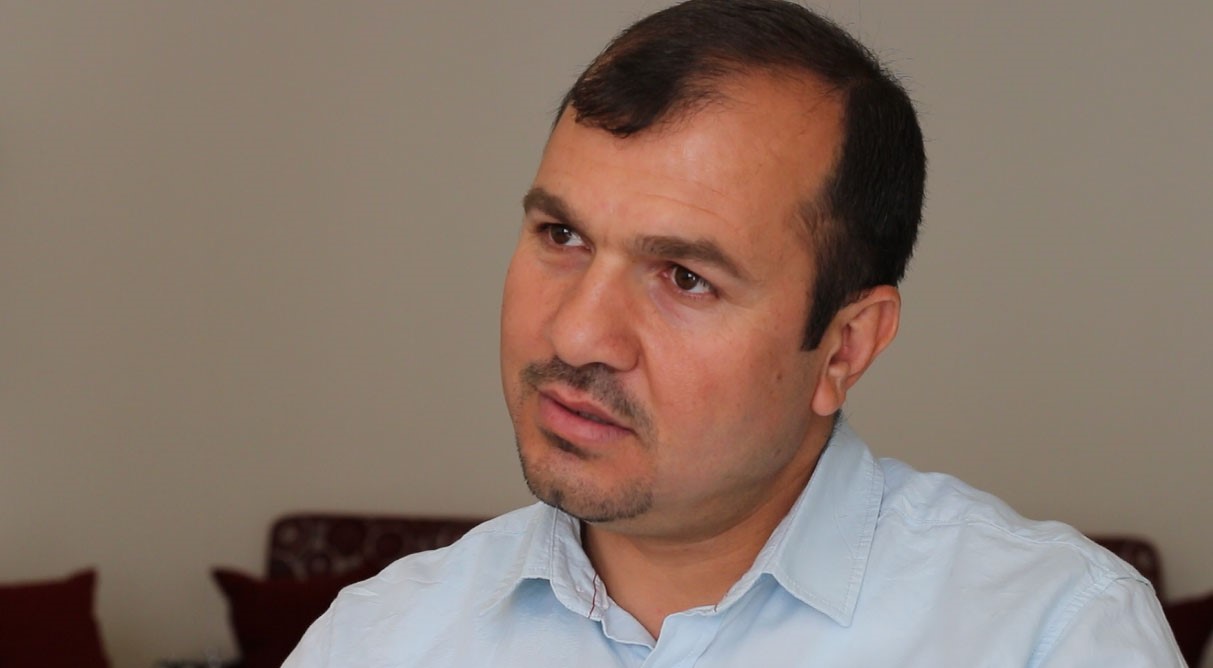
Deir ez-Zor (Al-Mayadeen) Between the banks of the Euphrates River, amidst the waves, ruins of destroyed bridges, river reeds, and the memories of travelers burdened by the tragedies of war and aerial bombardment, Hamidi Khader Al-Ali, a man in his fifties from the city of Al-Mayadeen in the Deir ez-Zor countryside, has been piloting his ferry every morning for the past nine years. He travels across a river channel from the town of Dhiban, north of the river, to his hometown on the southern bank of the Euphrates. Hamidi continues his work despite the dangers of makeshift means of transport, with frequent drownings and deaths. The use of ferries has increased due to the closure of most bridges over the river following the recent floods and the bombings during the years of war.
Deir ez-Zor, known by several names including "The Pearl of the Euphrates" and "The City of Bridges", boasted over 26 bridges across the Euphrates River. This included 14 suspension bridges and 12 railway crossings connecting the valleys to the nearby plains, all of which were destroyed by airstrikes. According to local residents, the attacks were carried out by the former regime's air force, Russian forces, and the international coalition when ISIS controlled the area between 2013 and 2019.
After the fall of the previous regime and the entry of the transitional government into the city at the end of 2024, a suspension bridge in Deir ez-Zor was restored, along with the Al-Ashaara bridge, and the installation of the military bridge in Al-Mayadeen was completed. However, the long distances and the increasing transportation costs between the cities and towns of the two deserts of Al-Jazira and Al-Shamiyah force the residents to use ferries. This is in addition to the already deteriorating services and living conditions in Deir ez-Zor.
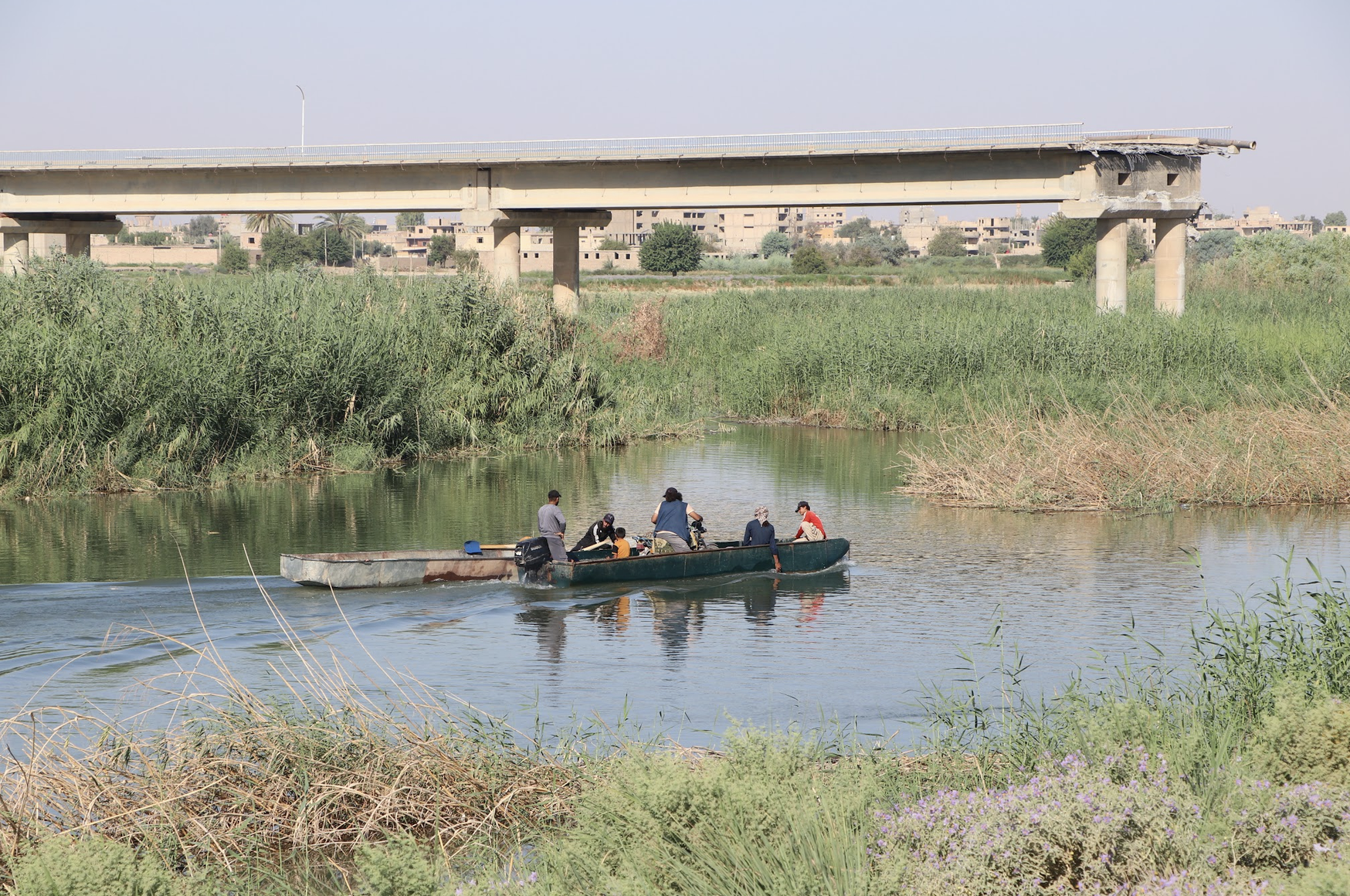
Tales of the Eurphrates banks
Hamidi begins his day at the first rays of sunlight by checking the ferry's engine, fuel, and mechanical condition to ensure the safety of his passengers. He then waits at the assembly point near the squares. He greets his first passengers with a familiar smile; they are a mix of workers, students, and patients heading to the city center, along with vegetable, cheese, and ghee vendors who sell their fresh produce at the Deir ez-Zor markets.
Over the years, his ferry has transformed from a means of transport and work to his second home, where he spends most of his time. His shifts can last for more than 12 hours, during which he exchanges conversations and memories with the passengers and travellers who come to him to cross the river. Hamidi knows most of his customers by name, and remembers details about their daily lives and the destination of each passenger. One is a student going to his university, one is a woman going to visit her sick husband, one is a man heading to the city in search of daily work, and another is a woman carrying cheese and ghee to sell in the crowded markets.
To frequent passengers, Hamidi is not just a means of transport; rather, he is the lifeline and pulse that connects them to the opposite side of their region, despite the dangers. The war divided the geography of Deir ez-Zor between several warring military factions, in addition to the destruction of bridges and long distances between remote areas.
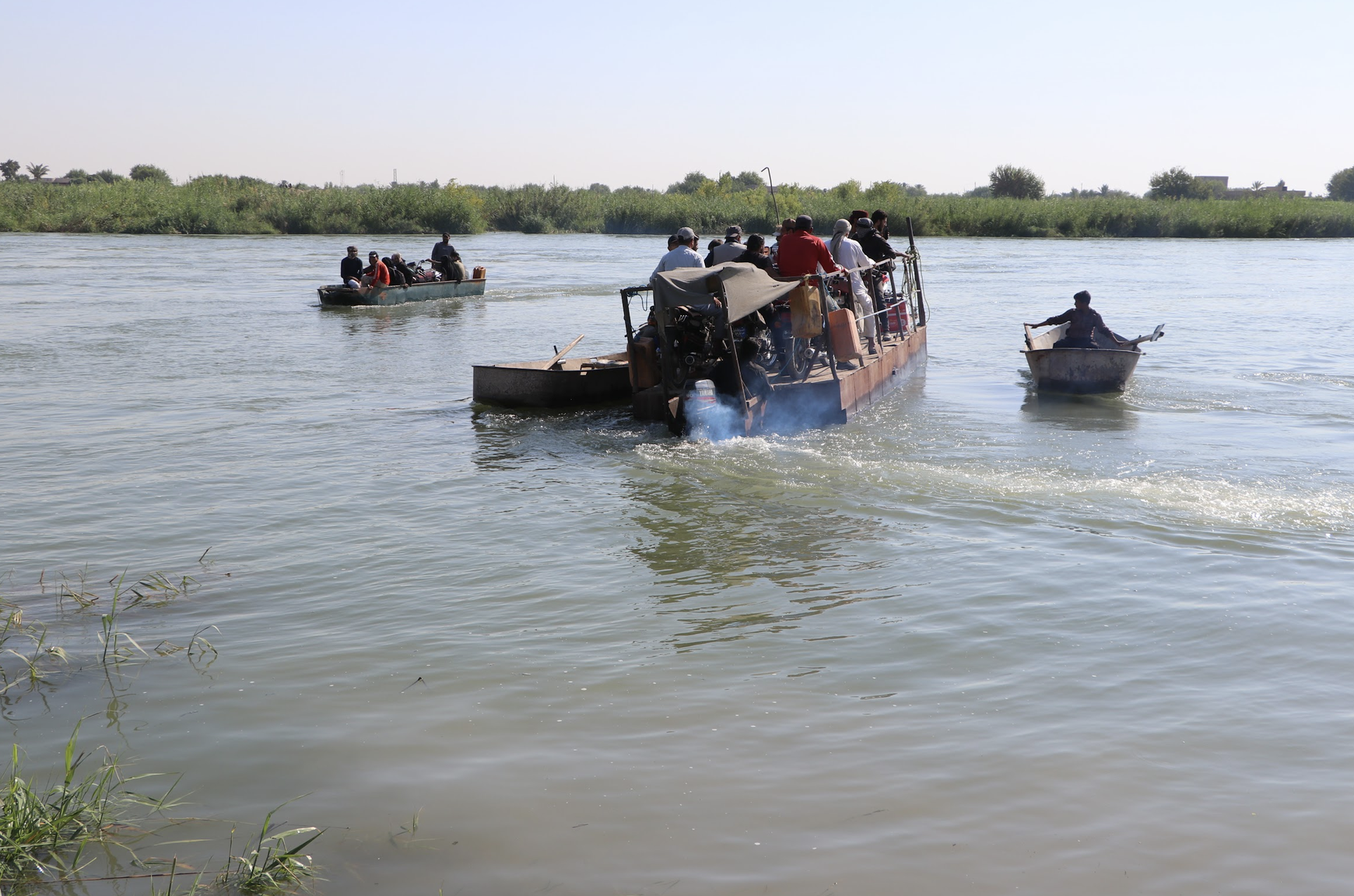
Hamidi begins his conversation with SyriaUntold by recounting how he began thinking about building a water ferry. It was after the destruction of the main Al-Siyasiya Bridge in Deir ez-Zor in late 2014. He credits an Iraqi industrialist who previously worked in the manufacture of water boats in Iraq, “He helped me manufacture a water ferry in 2016. It was 15 meters long and five meters wide, at a financial cost of nearly 5.000 US dollars. However, it was targeted by airstrikes and was destroyed the following year”. He then built a second ferry, smaller than the first, which still accompanies him to this day, with a capacity of 30 to 40 passengers.
Hamidi has Euphrates features, and wears an Arabian shemagh and a jalabiya, the traditional dress of the locals. He recalls the dark days and circumstances he went through during the years of war, when the planes of the former regime and the Russian forces bombed most of the bridges and water crossings, stating, “In late 2017, the bombing targeted all the crossings and water boats. At that time, we would stay all day without moving from our place, and we would have to travel at night”.
River ferries and waterways in Deir ez-Zor were targeted, with 20 crossings and waterways bombed, killing 241 civilians, including 28 children and 23 women. Today, after the repair of some bridges in Deir ez-Zor and the possibility of the ferries ceasing operation, Hamidi emphasises that his work is flexible to demand, where residents gather and are forced to travel quickly to shorten distances. "Over the years, our work locations have changed a lot, either because of the bombing of bridges or the rising river levels, and recently because of the new government, which prohibits residents from traveling by these ferries at certain points, so we have to go to another point and continue our work". Throughout his conversation with SyriaUntold, a gentle smile never left his face. "Our livelihood is in God's hands, and we hope that all the bridges will be repaired and life will return to normal, but this will take years and great efforts", he said.
The residents of Deir ez-Zor increasingly relied on river ferries as a means of transportation after the province was besieged while under the control of forces loyal to former President Bashar al-Assad, from early 2014 until the fall of Assad’s rule at the end of 2024. The city center was completely isolated from its countryside, separating towns and villages. However, dilapidated boats and traditional water rafts were not a suitable solution, as they are dangerous due to their lack of safety and security measures, seriously risking the lives and property of passengers.
A crowd waits to cross to the other bank
At the gathering point on the northern side of Dhiban, hundreds of residents wait in a long queue to cross to the opposite bank. Some take their motorcycles to travel to Deir ez-Zor or to work on them, and others bring children, either for family visits or to see a doctor or government office. Women carry travel bags, going to visit relatives on the opposite side. The common conversation among all the travellers on these ferries is the wish for a safe arrival, and a calm river level and speed. There is a fear of drowning and being hit by the waves.
Sakher Al-Awad, 45 years old, has been working for seven years transporting passengers on his motorcycle from the riverbank to the Al-Mayadeen garage and then to their destinations. Sakher confirms that the crossing point is not fixed, as it moves according to the river's water level and government decisions. "Our work is not fixed”, he tells SyriaUntold, “every time we move from one place to another, we move to a different gathering point. A person must pursue their work wherever it may be. Most of the passengers who come to this point daily come for the sake of speed, despite the danger".
Upon the ferry's arrival at the second point, dozens of motorcycles line up to transport passengers to their destinations. A chaotic scene of haggling ensues between the motorcyclists and passengers, amidst a cacophony of voices resembling a marketplace. Fares are limited due to the short distance between the riverbank and the service station, ranging from 15.000 (approximately one US dollar) to 25.000 (approximately two US dollars) in Syrian Lira. Al-Awad explained that his work is heavily dependent on ferry traffic, as is the case for the other motorcyclists who gather at this point, seeking financial gain.
Al-Awad reports that such work is, “very tiring, because we come here at dawn around five in the morning, and stay until sunset, spending all our time under the scorching sun. In truth, our work is a red death”, describing the fatigue and effort that drivers endure.
Omar al-Bakri, a 16 year-old from the city of al-Mayadeen, juggles working on a motorcycle taxi with completing his ninth-grade studies. A year ago, he started transporting passengers and deliveries due to his family's financial hardship, to meet the costs of living demands for his family amidst the challenges of the rough dirt road and changing government regulations. "Our work is weak and the financial return is low and dependent on the number of passengers”, he told SyriaUntold. “Some days there is demand and the traffic is good, and on other days traffic is weak. Most of the customers we transport are either school students, employees, or patients".
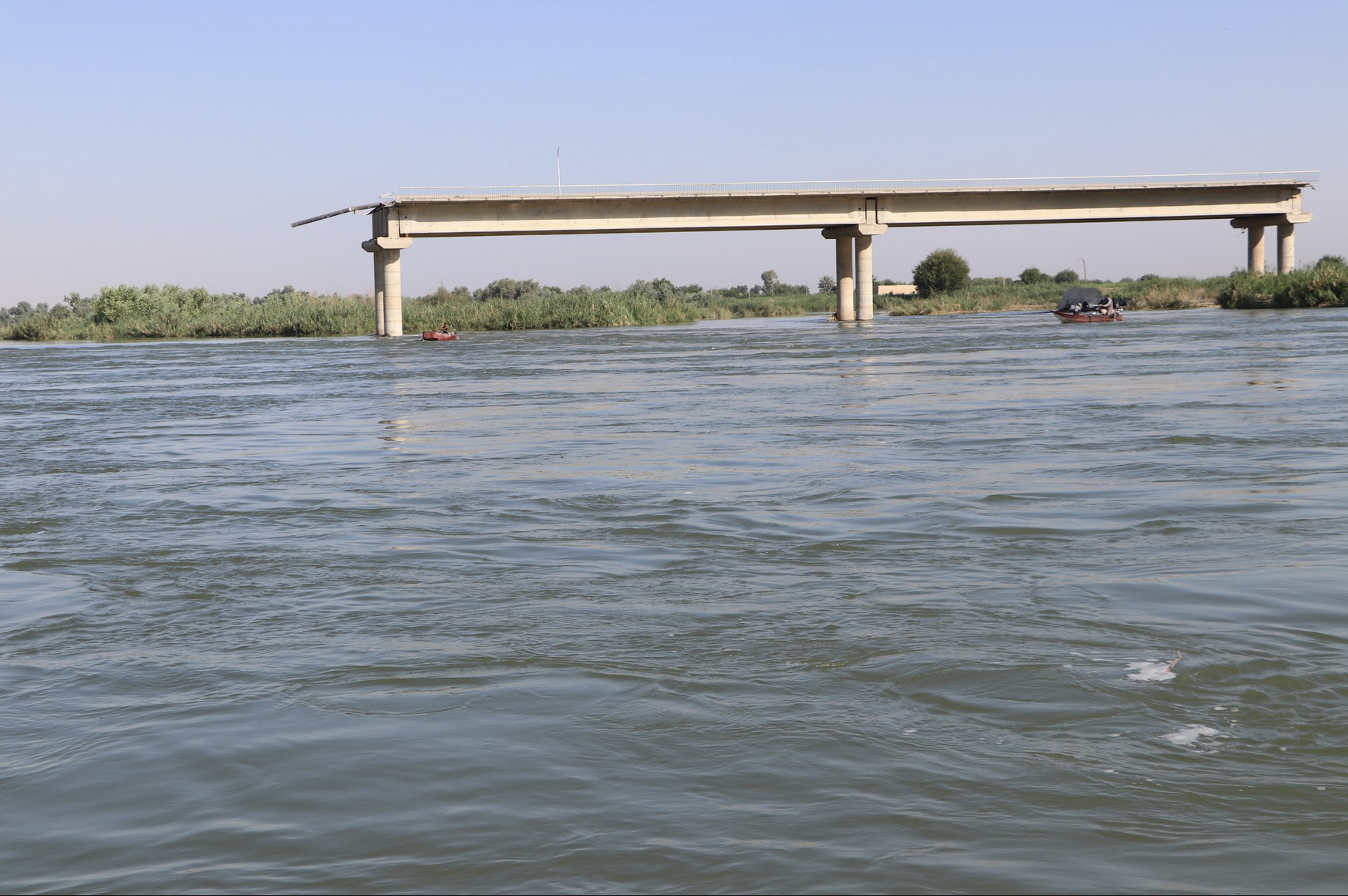
On 12 July, a river ferry capsized in Deir ez-Zor, resulting in the deaths of six civilians, including four children. According to local residents, the accident was due to the ferry running out of fuel and the swells in the river, causing the driver to lose control and collide the boat with a military bridge, leading to the drowning deaths and injuries to other passengers. The incident has created a climate of anxiety and fear among many travelers who rely on these rudimentary ferries, like Sakina al-Muhammad.
Coming from the village of Hawija al-Tayyiba in Al-Mayadeen, Sakina is 43 years old and goes to this spot every morning wearing her black Euphrates abaya. She carries in her hand bags of Deiri cheese and animal ghee that she prepared herself, with the aim of selling them in the markets of Dhiban, Gharanij, and Hajin on the opposite bank in al-Jazira. She will also visit her sister.
Sakina, like many others forced to travel on the ferry and live in constant fear throughout the short journey, is open about her anxiety. "If the ferry breaks down midway, it will be a disaster because the ferry's design and construction doesn't give us any sense of security". She recalls how the ferry once broke down, and all the passengers were terrified, fearing death and drowning. "We were afraid of the high river waves and the river's rapid current; we saw death with our own eyes".
Wiam, a 20-year-old student from the town of Dhiban, describes her almost daily crossing by ferry as dangerous and deadly. It is not just a means of transportation to reach her university on the other bank, but rather “it is an experience full of fear and tension. The feeling of terror never leaves us, especially when large numbers of people board the ferry, crammed on top of each other. With the presence of motorcycles, goods, and cargo, my fear increases, and I cannot believe that I will arrive safely". She thinks that the current means of transportation and water rafts, although they meet the needs of passengers and alleviate the burdens of travel, "remain frightening and dangerous because of the speed of the flow of the Euphrates River these days".
Divisions of the Euphrates River
The Euphrates River divides Deir ez-Zor, which had a pre-war population of approximately 1.5 million, into two main banks. The areas on the western bank are known as "al-Shamiyah", and the eastern bank as "al-Jazira." During the years of war, each bank fell under the control of warring military forces, transforming the Euphrates river into a dividing line between groups, both geographically and militarily. The river flows for 135 kilometers within the Deir ez-Zor Governorate, originating from its sources in Turkey to the north and the neighboring Raqqa Governorate, and continues until it reaches the border city of al-Bukamal, where it enters Iraqi territory to the east.
Deir ez-Zor witnessed an unprecedented wave of floods this year, and the level of the Euphrates River rose during the month of May and significantly again at the end of last August, as a result of increased water flows coming from the Turkish dams and the Euphrates Dam. This caused the removal and destruction of all the land connections and recently installed metal military bridges.
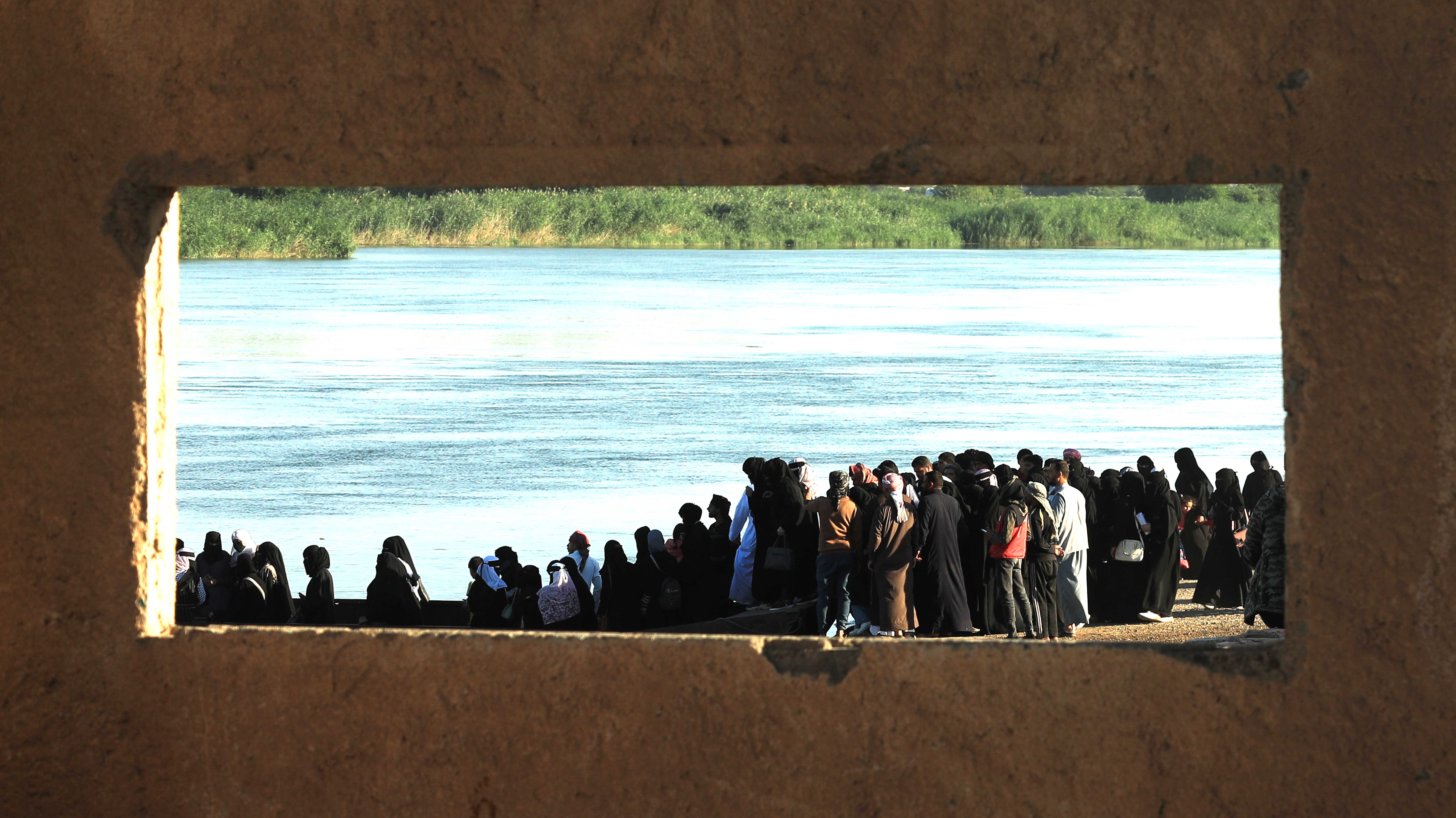
According to expert and social researcher Ali Al-Samhan from the town of Hajin, crossing the Euphrates River has become a daily challenge for thousands of civilians, after the destruction of bridges and the severing of rural connections that linked the two banks of the river during the years of conflict and military operations against ISIS. “The Euphrates in Deir ez-Zor does not form a divide between two communities, but rather it passes through the heart of a community that is interconnected in terms of family, tribal, and economic ties”, he told SyriaUntold. “Here, thousands of families are distributed between the east and west of the river, and are connected by kinship and marriage ties, which makes frequent movement between the two banks a basic human and social need”.
He points to the increasing difficulty of the challenges facing the people of the eastern region, with the concentration of service institutions, official departments, and government hospitals in the areas west of the Euphrates. “This forces the residents of the opposite areas to use river ferries to complete transactions, reach work, education and health care, visit relatives and follow up on their affairs” he continues. “We do not forget that these ferries play an important role in reducing isolation and speeding up movement, but they remain a temporary solution and of limited capacity”.
Mona, a 30-year-old woman who brought her young child suffering from internal diseases to the river crossing, mentioned the need of the residents of the rural Deir ez-Zor towns for medical care. “We are forced against our will to use these water ferries to save time, money, and speed in transportation. Frankly, whenever we hear of a death or drowning incident, we are very afraid of these moments that we live through daily, and our demand is the restoration and repair of the bridges”.
Commenting on the situation of Mona and other women who resort to these ferries for transportation despite their difficulties, expert Al-Samhan believes that the journey, “is usually affected by weather conditions, water levels, and operating hours, and may not respond as quickly as required for emergency medical cases or the needs of children, the elderly, and people with disabilities”. The repeated crossing costs also constitute an additional burden on families who are already suffering from the effects of the war and declining sources of income.
Al-Samhan explained that the crossing crisis in Deir ez-Zor is not just a transportation issue, "but rather an issue of access to rights, services, and normal life. The absence of safe and regular bridges delays the treatment of a patient, hinders economic activity, limits job and education opportunities, and weakens social ties among the residents of the same governorate". He stressed that reconnecting the two banks of the Euphrates is not just an urban development project, "but a fundamental step to restore the dignity of the residents, the unity of their community, and its ability to recover".
Deir ez-Zor needs urgent support to ensure safe and regular river crossings, "taking into account humanitarian and emergency situations, and it needs real government plans to rehabilitate bridges or create permanent alternatives", according to Al-Samhan.
Deir ez-Zor memory
The destruction of the bridges is not limited to cutting off lifelines, increasing distance, and bearing additional material burdens: it extends to destroying the memory and history of Deir ez-Zor, according to civil engineer Dhiab Al-Moheimeed. He recalls the memories of Deir’s bridges, including the suspension bridge, the political bridge, the squares, and other bridges that were a link between the city’s residents and its countryside. They are also linked to the stories of Deir’s residents and their popular traditions, he believes.
Al-Moheimeed told SyriaUntold, "Most of the people in the area remember the wedding processions and traditional celebrations on these bridges. The bride and groom would walk down to take a black and white commemorative photo of them". These stories continued to be told and were not forgotten even after the bridges collapsed, "but they left a deep wound in the hearts of the people of Deir. The war, the destruction, and all these harsh images will not erase the beautiful memories we cherished at weddings and celebrations".
The destruction of bridges brings back to the residents of Deir ez-Zor the tragedies of years of war, aerial bombardment, and field and military upheavals. This province, like the rest of the Syrian cities, witnessed violent military operations and widespread destruction that affected its infrastructure and personal property. It also suffered enormous economic losses and a deterioration in living conditions, leaving it vulnerable to further deterioration of services.
Saad Al-Hajim, a 55-year-old who comes to the crossing point daily to complete his work in the governorate center, explains that all travellers and passengers who go to the ferries and river boats do not come of their own volition, “because everyone is forced to travel by ferry, due to the fact that there is only one bridge connecting the two banks of the river, which is the Al-Ashara Bridge. Even the military bridge that was built and installed in the squares has not entered service, and we are waiting for the completion of the construction operations”.
Passengers on these ferries and riverboats risk their lives, boarding in a silence tinged with dread, oblivious to everything but the fleeting moment and their brief journey. They cross over death, hoping to reach the other bank safely. Their fear doesn't end upon reaching the other side; they will take the same route back, hurrying before sunset and the rising water level.