

The statements from the Autonomous Administration of North and East Syria (AANES) published in this article are prior to the recent military developments, the contraction of the Syrian Democratic Forces' (SDF) areas of control, and the subsequent change in living conditions therein.
(Al-Qamishli) Before the war, the days of cotton picking in Jazira region were not merely times for harvesting a crop; they represented an entire world. But what was once described as "Syria’s gold" or "white gold" has now become a burden for everyone.
As the harvest approached, households would prepare as if they were awaiting a "long wedding", Hasan al-Barghouth, a farmer from the town of Zirgan (Abu Rasin) in al-Hasakah countryside, tells Syria Untold. Al-Barghouth used to cultivate 120 dunams of cotton and would bring between 40 and 50 workers to assist him. They used to arrive in large buses from Manbij, and before their arrival, he would purchase everything needed for both his household and the workers' quarters: gas, food, and pantry staples (mouneh).
Their food was simple: bulgur with Samn Arabi (traditional ghee). A day would end after 12 hours of labor in the field, only for the evening to begin with dancing, late-night gatherings, and laughter. "As if the worker hadn't toiled at all", Hasan continues, saying that both the worker and the farmer knew exactly what they would earn at the season's end. Jekdar Mirzo, a farmer from the same town of Zirgan, recalls the same image when speaking of the workers from Deir ez-Zor who stayed for an entire month. "We could hardly contain our excitement before they arrived", and afterwards, "we would forget all our exhaustion and spend the nights dancing and celebrating".
Marriage itself was tied to the cotton harvest, and most weddings were postponed until "The Season", Hassan explains. Even the returns from the wheat harvest were reinvested into cotton cultivation, so that the revenue from the latter remained "clear profit". This allowed the farmer to use it to marry off his children and secure his living expenses.

The misery of tobacco’s female workers
29 December 2025
Women would bake bread with a "special flavor", Hasan remembers, using wood fires (al-oud) before the workers returned to their quarters. Those workers did not just bring their hands and labor; they brought their stories, dialects, and foods, blending with those of the local inhabitants. They forged relationships and shared memories that would last for generations.
“Only those who have worked the land feel a sense of belonging; it is a matter of passion and honor”, says Hasan. He lost part of his land near Ras al-Ayn when it became the epicenter of the Peace Spring military operation, launched at the time by the Turkish Armed Forces and affiliated Syrian opposition factions against the Syrian Democratic Forces (SDF). The land was subjected to shelling, and he was unable to cultivate it for two years afterward.
Ibrahim Salameh, a 60-year-old farmer and agricultural laborer from the village of Kishkish Jabbur in Shaddadi, who has worked in farming for over 30 years, recalls memories of working along the Khabur River, from Ras al-Ayn to Al-Busayrah. Back then, they worked instinctively, without tractors or machinery. They would irrigate five or six "falalih" (a local agricultural unit of measurement used by farmers to denote a specific area of irrigated land) a day, using a 155-horsepower engine, from dawn until sunset. At night, they would stay up late playing cards and Manqala until 1am. They would dance the Dabke, then return to the irrigation work at dawn. During the day, they would pick about 100 kg of cotton, transporting it on donkeys for 500 meters to the cotton gin, where they would press it down with their feet, pack it into bags, and sew them shut.
He remembers their gatherings around the wood stove—five or six men playing cards or Al-Khawatim (The Rings), a game where players split into two teams, and one person hides a ring; the opposing team must then guess who holds it. They would set stakes for the game and conclude it with a communal dinner. "We used to truly enjoy each other's company during the nights of the cotton season", he says.
Jekdar’s father used to wait for the cotton invoice to be issued. Every season, as soon as he received it, he would say: "I’m going to change the car". He never did change it, and today, he no longer makes any plans for the season.
Support declined, so production declined
In the past, a single dunam (1,000 square meters) produced between 500 and 600 kg of cotton on average. Today, however, production does not exceed 200 to 300 kg, which is exported to al-Hasakah cotton gin operated by the Autonomous Administration. Yet, the difference between yesterday and today lies not in quantity alone.
Aligned with the decision of the Agriculture Authority, cotton cultivation is only permitted on 16% of licensed land (for every 100 dunams, only 16 may be planted). “Currently, if we manage to plant 30 dunams out of 200, that would be considered good”, Hasan says. Only this specific area receives subsidized fuel, with no support provided for seeds, fertilizers, or loans. Consequently, only a quarter of the [intended] land is actually planted with cotton.
The problems cotton cultivation is facing have accumulated over the past years. There are no high-quality seed varieties available, and the accessible phosphate fertilizers are of poor quality, while the price for one ton of high-quality fertilizer reaches $900, and nitrogen fertilizers cost between $650 and $700. Poor-quality fertilizer, as Jekdar says, remains in the soil for years without any effect. Furthermore, cotton requires 12 to 13 "irrigation cycles" (raya), but farmers receive only seven, often at inappropriate times, forcing them to purchase the remaining cycles at exorbitant prices.
This is further confirmed by Mustafa Ibrahim, the co-chair of the General Cotton Foundation in north-east Syria. He tells Syria Untold that the Autonomous Administration has been unable to support the crop with its full fuel requirements, despite providing support for several irrigation cycles, which in recent years reached approximately 70% of the total need.
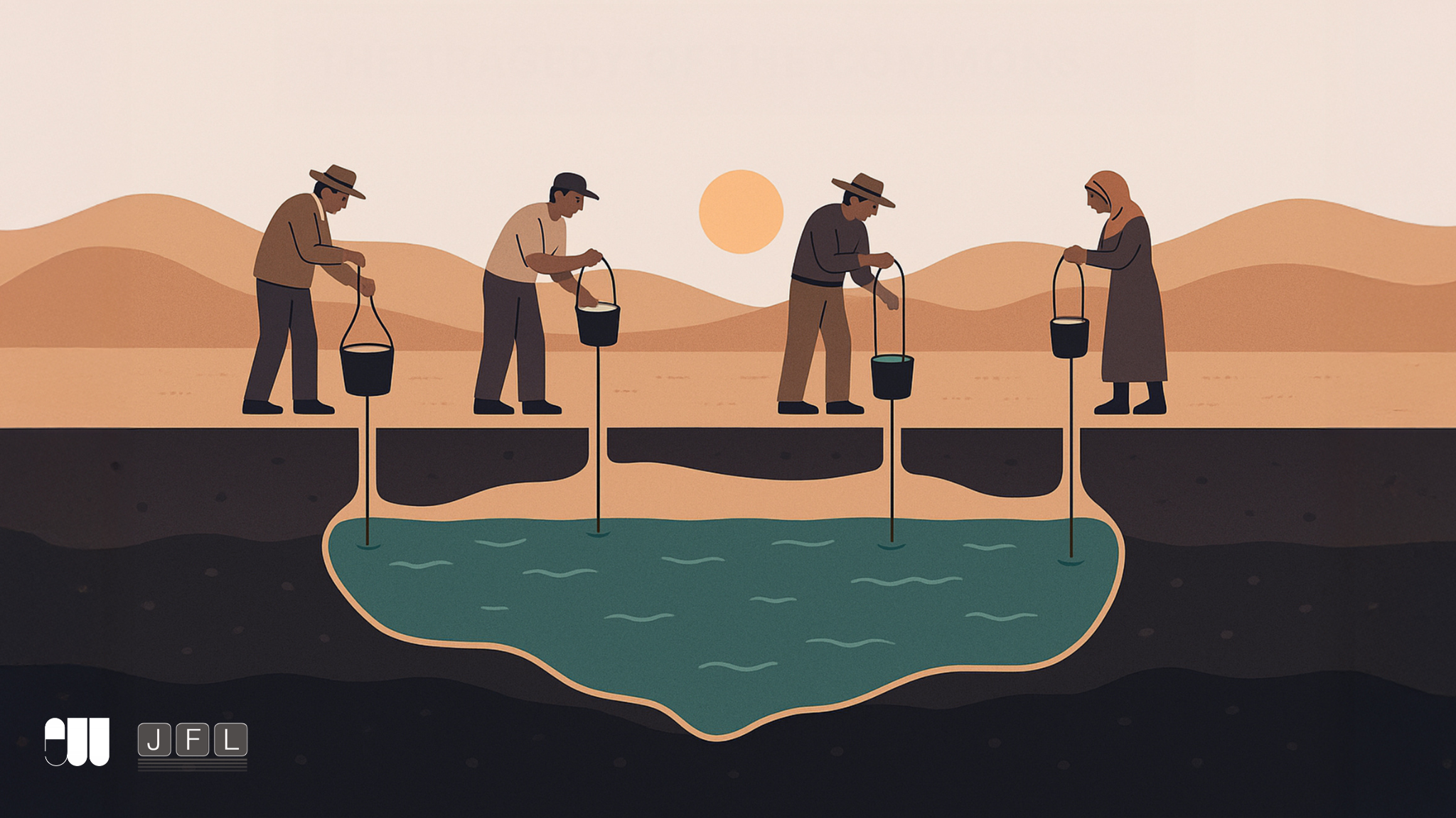
Cotton is a summer crop that consumes vast quantities of water, particularly groundwater, which the region is currently struggling to provide due to severe scarcity. This is compounded by the declining water levels of the Euphrates River. Furthermore, the availability of subsidized diesel is limited as a result of Turkey’s bombardment of oil wells, coupled with production levels that fail to meet the high demand across the agricultural, heating, and service sectors.
Qamishli, Syrians last stop between fear and nostalgia
25 November 2025
For his part, agricultural expert Asaad Mijbas, a lecturer at the Faculty of Agriculture at Al-Furat University in al-Hasakah, tells SyriaUntold that extracting water from deep wells requires immense energy and large quantities of fuel, particularly diesel. Prices for diesel spiked before the last season, while the price for a ton of raw cotton dropped from $800 to $600, a sum farmers consider highly unjust. In fact, Hasan asserts that no farmer even received a payment at that rate; invoices ranged from $500 to "500 and some change". A fair price, one that would allow for sustainable cotton cultivation, should be no less than $800 and preferably $1000. This is echoed by the expert Mijbas, who also argues that the high cost of mineral oils, spare parts, and fertilizers, along with the rising costs of land maintenance - compounded by the total absence of agricultural support - leaves the farmer with a choice between direct loss or spinning in a vicious cycle, unless the price is at least $1000.
On the other hand, Mustafa Ibrahim, the co-chair of the General Cotton Foundation in the region, states that the failure to purchase the crop during certain seasons has created a state of fear among cotton farmers regarding their ability to market their production at a fair price. This has opened the door for exploitation by traders, who purchase the harvest at bottom-tier prices.
Attempts to switch to solar energy were not a viable solution. The cost of a system capable of powering a 60-horsepower pump reaches $20,000, a temporary fix that requires panel replacements after a few years. Additionally, hiring a farmer to work the land demands a share of up to 28% of the crop’s total value. Jekdar used to cultivate at least 170 dunams in the past; today, he plants no more than 50.
From policy to the fields: why is cotton in decline?
In contrast to the farmers’ nostalgia-laden memories, Ibrahim, the head of the General Cotton Foundation, attributes the decline in production compared to 2011 to several factors. Most prominent among these are the conditions of war and their direct impact on agriculture in general, the deterioration of local seed varieties, and the reliance on imported seeds that offer no guaranteed yield and lack resistance to weather conditions, diseases, and pests. This is somehow corroborated by the farmer Ibrahim Salameh, who told SyriaUntold: “In the nineties, government support included free fertilizer, seeds, and readily available fuel; back then, the yield per dunam was never less than 400 kg”.
In this context, Mijbas recalls the previous agricultural plan, which used to allocate approximately 20% of irrigated areas to cotton cultivation, as it was the second primary source of income for farmers. In contrast, there is no clear agricultural plan today. In the absence of agricultural and banking support, farmers have been driven to evade planting cotton, viewing it as a financial burden and an exhaustion of energy, especially after the failure to purchase the wheat crop two seasons ago, which left farmers vulnerable to exploitation.
According to the General Cotton Foundation, cotton cultivation is currently concentrated in Raqqa, Deir ez-Zor, the Jazira, and the Euphrates regions, specifically in the Al-Haysha area. The expected production for the season was estimated at around 75,000 tons, while the cultivated area for the 2024–2025 agricultural season reached approximately 250,000 dunams. Ibrahim explains that the decline in cultivated areas is not constant but fluctuates from year to year, depending on a combination of factors.
From another perspective, Mijbas interprets this decline as part of a deeper crisis affecting agriculture as a whole. “Agriculture today is passing through a critical phase in terms of attention, development, and support from the relevant authorities” he states. “This is directly reflected in the cotton crop, given its status as the second strategic crop after wheat”.
How do you explain hunger to a child?
08 January 2021
In al-Hasakah governorate alone, cotton production used to average around 500,000 tons. It was considered the second most important crop after wheat, characterized by its stable prices and ease of marketing in the past. Today, however, both production and the cultivated areas "constitute no significant percentage" of the total land area in north-east Syria.
Under these circumstances, Mijbas considers the farmer to have become one of the most impoverished segments of society due to declining profits and the absence of banking support. He emphasizes the urgent need for support through "securing suitable seeds for the farmer, providing high-quality fertilizers, and ensuring sufficient, good-quality fuel at reduced prices". Furthermore, he calls for "providing cash loans that allow the farmer to sustain agricultural operations and setting fair purchase prices that cover costs and guarantee an encouraging profit margin". As he puts it: "If the farmer doesn't make a profit, why should he bother with the labor?"
The paradox today is that "the farmer is the fundamental building block of food security", as Mijbas says, yet this same farmer has not eaten meat for two years. This was shared by Ibrahim, who recalls how landowners used to motivate farmers or laborers with incentives as simple as a bag of sugar, something that is no longer possible. Today, farmers try in vain to recruit laborers; as a result, the cotton season, once a vessel for dreams, has become an open-ended account of loss. This is not measured in production alone, but in the homes that once hosted workers, the evening gatherings that united villages, and the bread that once sufficed for everyone.