
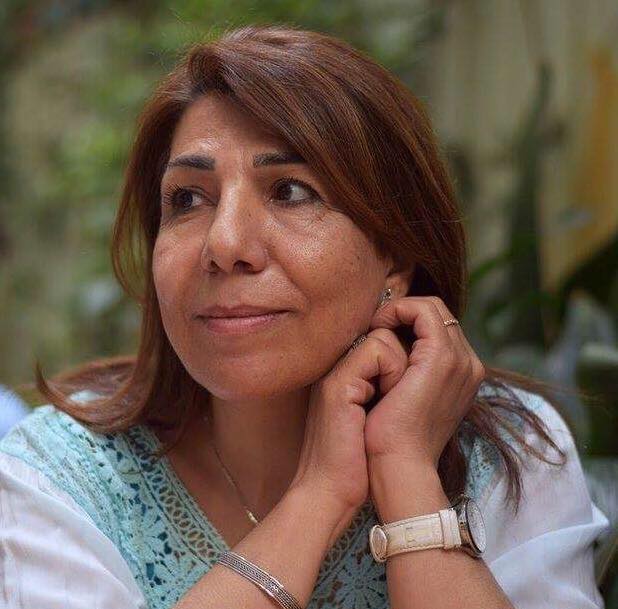
"The education system that prevailed in Syria did not give enough attention to teaching us the laws and ethics of work in gynecology, which intervenes in the patient's private life, in the secrets of the bedroom and almost the entire family” says Dr. Noura, a gynecologist in Sweida. “The patient needs to feel safe first, to trust her doctor's skill and ethics together. The doctor's ethics are no less important than his/her professionalism. Unfortunately they are not available to everyone in societies left to their fate like ours".
Patients need not only medical treatment, but also respect for their personhood, understanding, support, solidarity, and empathy; Dr Noura sees them no less important than the treatment itself, but rather as an integral part of it. In contrast, her work environment was governed by a narrow view of women and the birthing process, and by the government services' failure to respect women's privacy during labor, illness, and other challenges, and their inability to provide the comprehensive care necessary for a safe and supported delivery.
Women come to the gynecology clinic for consultations in cases of bleeding, high-risk pregnancy, difficult childbirth, emergency surgery, and due to infertility problems, both medical and psychological, where the medical aspect is intertwined with the social and economic aspects. Although the medical sector has its high particularity due to its general association with pain, gynecology specifically deals with cases of pain and those that pose a risk to life, which requires an integrated system, starting from a professional staff qualified efficiently, to centers equipped with modern technologies, to an administrative apparatus capable of running it.
Overcrowding and pain
Dr. Maha looks back on her long years of work with the awareness she has gained today. Her working hours were divided between two jobs: in the obstetrics department at the National Hospital, and her own clinic and private hospitals. "The work mechanisms were not identical in all of them. In the National Hospital, we performed our work according to the mechanism that we found the doctors who came before us following. The labor rooms in the National Hospital were more like a dormitory in a prison, rusty beds, torn sheets, cramped space and primitive services in relation to the number of women in labor. The screams of the midwives are still in my ears, five or seven women giving birth together in one labor room, among them, for example, a woman in her first birth, inexperienced and of course scared, and on the bed next to hers a woman in difficult labor, and a third who had gone through a previous difficult birth, carrying her story, her fears and her worries... All of them would transfer their panic to those whose labor was proceeding normally, so the situation would become more complicated than it already was".
The work is done without rules or organization. Women in the delivery room are not seen as human beings in a state of intense pain and anxiety, but rather as mannequins, mere illustrative tools! A woman undergoes a gynecological (vaginal) examination 10 or 15 times consecutively, by the specialist, the resident, the midwife, and the trainee, and sometimes more than once, without anyone asking her permission or giving her a way to protest. She doesn't know she has this right, and the person supervising her delivery doesn't give her a chance to express herself.
Dr. Maha adds: "In the last century, our work system in Syria operated like this... and to be honest, I don't know what it was like in other societies and governments. What I do remember about the general atmosphere in our Arab societies decades ago is that it paid more attention to major national issues than to our local problems, and the concept of 'individualism' or 'personality' wasn't common in our collective culture. I say this so that we don't place the blame on one side..."
For Five Days, Sweida’s Soul Was Crushed—Its People, Homes, Crops, and Livestock... and So Was Mine, Trapped in Berlin
04 August 2025
Syrian laws have lagged behind in updating themselves to meet contemporary needs. Until 2011, family planning laws remained largely unchanged since their enactment after Syria's independence. For example, if a husband filed a complaint with the judiciary, claiming that a doctor had performed a medical abortion on his wife without his knowledge, or even prescribed contraceptives, the doctor would be imprisoned and fined. Even with the couple's consent, abortion was prohibited unless the pregnancy posed a direct threat to the woman's life. Doctors often circumvented the law to protect themselves, requiring patients to obtain a report from a cardiologist or other specialist confirming the risk the pregnancy posed to their own health.
The most difficult challenge faced by gynecologists was managing pregnancies outside of marriage. At that time, doctors were legally obligated to report every pregnancy resulting from illegitimacy to the police, but they rarely did so. The matter was extremely complicated. The doctor found himself forced to either comply with the law and report this woman, which would destroy her reputation and that of her family, potentially harming them to the point of murder, as neither the law would do her justice nor would society have mercy on her.
The doctor may decide to arrange an abortion for the woman at his own risk, exposing himself to legal prosecution. Money and extortion also play a role here, as the doctor may exploit her need, demanding an exorbitant sum, knowing she is forced to comply against her will, despite her poverty or lack of any source of income, thus burdening her with a heavy financial strain on top of her fear of scandal.
Dr. Haifa, who has thirty years of experience in obstetrics and gynecology, recalls: "I will never forget the faces of the women brought to the maternity ward with pregnancies resulting from rape, under police escort, their hands in chains, and we couldn't even say, 'Untie them'. Within moments, all the medical staff would gather to witness the shocking situation, after the news had spread throughout the rest of the hospital. This sight still brings tears to my eyes. We couldn't question these women except in the presence of the police, and they were forced to answer in their helplessness. Do we think they would confess to rape, assault, or coercion? Most of these cases are perpetrated by male family members; incest is the most common cause of these pregnancies. Would they confess to an assault by their father, brother, stepfather, sister, uncle, or grandfather?"
The doctor continues in a tone tinged with pain: "And the most terrifying thing was going down to the morgue, and it was often after midnight, when some parents kill their daughters under the pretext of (honor killing). Scenes that make the body shudder... The doctor's role, as indicated by the judge, who is often a military man, was to write a report that exonerated the perpetrator (who is often one of her first-degree relatives). The doctor is perplexed here, how can he stand in the middle, and not have a report written about him or have eyes focused on him, if he tries to do justice to this victim, even after her death..."
Dr. Haifa recalls cases she encountered in her work where parents forced their daughters into early marriage. They would entice them with wedding dresses and celebrations, only for young girls, some truly children, to arrive at the hospital pregnant, with no say, no role, and no decision-making power. A quick disagreement between the couple could lead to divorce, a price paid by both parents and their child. Sometimes, the father and mother would reject the child, leaving the doctor perplexed and indecisive, requiring a judge to rule on the matter. Often, the judge would order the child to be placed in an orphanage. She remembers how many doctors, both men and women, protested these perplexing cases by resigning from their jobs to avoid the "headache".
“For women who needed assisted reproductive services, the situation was much more complicated”, says Dr. Noura, noting that in vitro fertilization (IVF), or what is commonly known as “test-tube baby”, was slower to reach Syria compared to neighboring countries. Women initially traveled to Amman, home to leading centers in the Middle East, and later to Beirut. Many women were successful in conceiving one or more children, but they also faced significant financial and logistical challenges. The already exorbitant cost was compounded by the low income levels in Syria compared to Jordan or Lebanon, and the depreciation of the Syrian pound against the Jordanian dinar and the US dollar.
A war on embryos
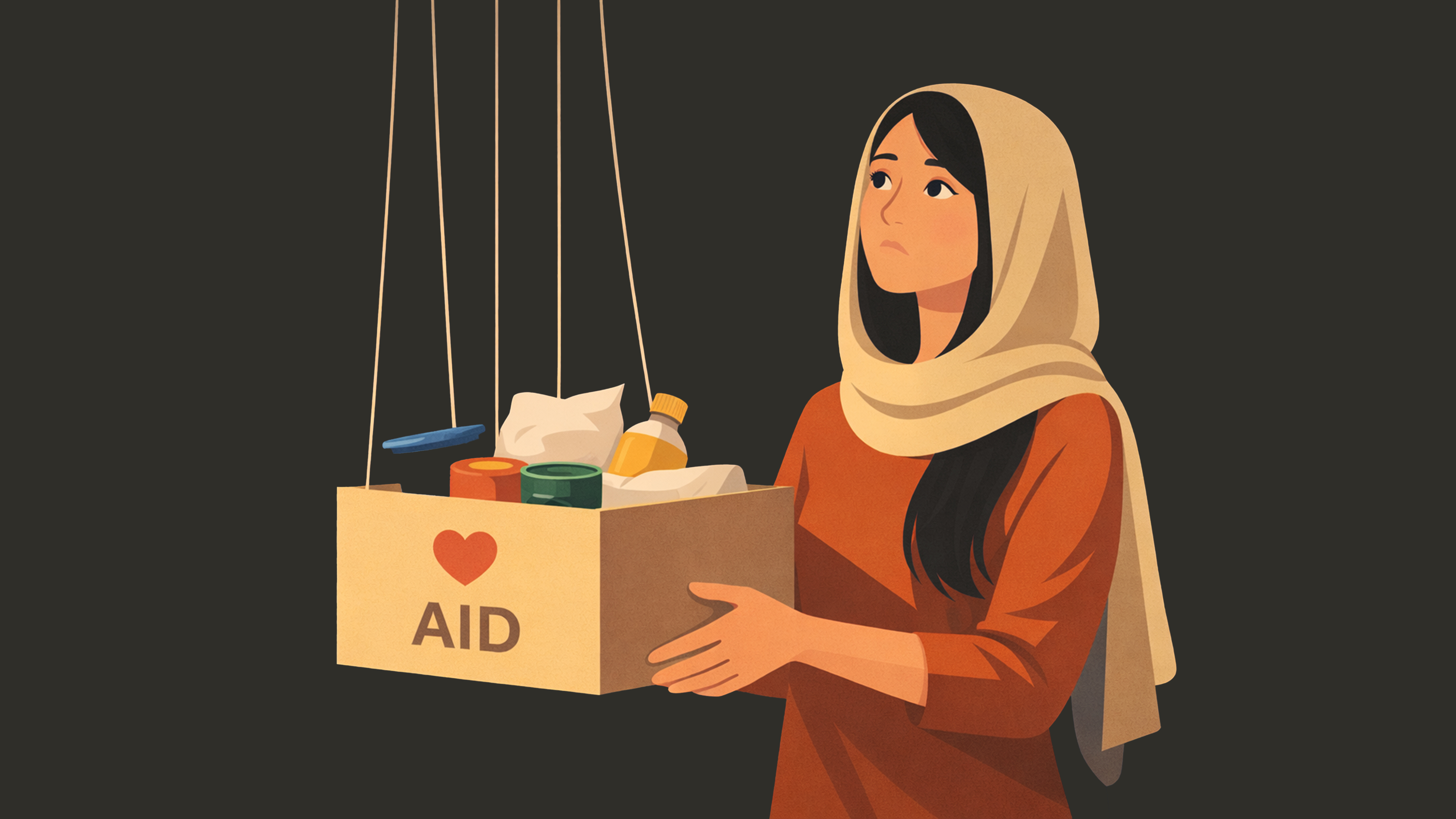
During the years of the revolution and then the war, the situation gradually deteriorated, accelerating year after year, as Ms. Ibtisam, a women's empowerment activist, explains: "Before, we enjoyed the free services of the Ministry of Health. While not ideal, they at least provided a minimum level of medical care for women. In recent years, these free services have practically ceased to exist". The Ministry abdicated its responsibility for providing primary care after women's clinics in health centers stopped offering prenatal care and monitoring services for women and their fetuses, and the distribution of essential food, aid and medications for pregnant women ceased. "We know that these supplies are stolen; the staff distribute them among themselves and their relatives, leaving nothing for the poor women, who are already malnourished. This leads to nutritional deficiencies in the fetuses, creating a generation with poor health".
Wafaa, from Sweida, agrees that prenatal care is lacking compared to pre-war years: "Even in emergency deliveries, ambulances don't come to transport the woman, few own a car, and taxi fares have become unaffordable. A woman would be lucky if a benefactor offered to transport her, and some resort to seeking support from charities. Ultimately, if it weren't for remittances from family and friends abroad, many would have died due to the absence of government care".
Sweida, Not to weep or laugh, but understand
24 August 2025
On the other hand, Angela, a young woman from Sweida, complains about the lack of medical awareness regarding gynecological diseases. She believes that while breast cancer awareness campaigns exist, they are incomplete or merely symbolic. When you go for a mammogram, the response is often that the machines are broken: "It's really (for some people and not others), and even when we do the scan at the hospital, the beneficiary receives it without a report, so she takes the laser disc to the doctor at his clinic and pays him. Some organizations used to conduct sexual awareness and reproductive health education, and distribute some medicines for free, such as painkillers and contraceptives, and some of them always sold them to the pharmacy, especially in recent years".
Samar believes that her family, with its limited income, cannot do without the services of government hospitals, especially in cases of childbirth and accidents, due to the availability of blood transfusions at the National Hospital: "Now even ambulances have stopped coming, citing a lack of fuel. Then there's the problem of getting an appointment for regular surgeries. Of course, favoritism is always present, and I don't have any acquaintances or relatives in the department. Once, I needed surgery (for uterine fibroids), and they gave me a very long wait, so I went to a private hospital, which was financially exhausting, and the service wasn't commensurate with the cost". Government hospitals usually refuse to perform abortions for unwanted pregnancies, so women resort to unsafe abortions that can endanger their lives.
But Dr. Rima, a young and enthusiastic obstetrician, has a different perspective. She believes that despite 14 years of war, the National Hospital has continued to provide services, and its maternity ward is operating far beyond its capacity, as few can afford private hospitals. "With the shortage of medications and the frequent power outages” she explains, “the time between a power cut and the generator starting becomes extremely dangerous during a cesarean section. The newborn may be exposed to cold and oxygen deprivation due to the lack of heating, leading to various complications and disabilities, the effects of which usually appear later. However, despite the difficult circumstances, complications are rare, and fetal and neonatal deaths are low".
Male doctors, and some female patients as well, often distrust female gynecologists, believing that male doctors are more skilled in surgical procedures. There is a misconception that female doctors are less competent than male doctors simply because they are women.
Government support is essential
Everyone I interviewed in the period following the fall of the regime agreed that public hospitals are a refuge for the poor, and their services are indispensable, however poor they may be. Dr. Rima laments, "We had hoped that things would begin to change, even if gradually, after the end of the Assad era. The transitional government promised reforms to overcome the legacy of corruption, but it hasn't presented any systematic plans. The health sector remains trapped in a vicious cycle: public hospitals barely clinging to life, private services prohibitively expensive, and citizens struggling to access their right to quality healthcare and health insurance. We haven't seen any signs of change yet. The economic situation remains dire, and we hope it doesn't deteriorate further".
It's impossible to talk about improving women's health services without a comprehensive plan to raise the overall standard of healthcare, starting with hospital renovations, from construction to upgrading medical equipment, alongside regulating labor laws. In the women’s field specifically, it is indispensable to activate the role of primary health care (clinics and medical points), and to equip them with staff, equipment and medicines, because of their major role in reducing the burden on hospitals.
Most women and mothers need primary healthcare, the minimum level of which can be achieved by empowering family physicians in clinics and authorizing them to make referral decisions to hospitals and specialized centers. Maternity and child health clinics, geriatric clinics, and chronic disease clinics should also be prioritized by the Ministry of Health, and assisted reproductive technology (ART) services (in vitro fertilization) should be included in its programs, as many women need them and consider them a priority, just like treating any other illness.
Dr. Haifa believes that the prevailing medical reality in Syria before the revolution reflected a comprehensive system, from the perception of women and the birthing process to the inadequacy of government services in providing sufficient medical care, not to mention the lack of security in subsidized and safe services. "I dream of having a dedicated maternity and children's hospital in every city” Noura says. “An independent, fully equipped hospital with all its needs for us as staff, for patients, and for their companions - not like the current situation where we work in a part of the hospital that wasn't designed to be a maternity ward".