
Mid-January 2026: most greenhouse vegetable farmers on the coast of the Syrian city of Baniyas, and along the western mountain slopes, did not sleep. Days earlier, they - along with other Syrians - had received mobile alerts from the Early Warning Department of the Ministry of Emergency and Disaster Management. The messages warned of snowfall at low altitudes, signaling that temperatures would drop below freezing. Their crops, a variety of fruits and vegetables housed within plastic greenhouses, faced certain death from frost unless the heating systems were ignited.
During those two days, the region's farmers, including Ramadan Mohammad, who owns several greenhouses near the village of Abtaleh on the Lattakia-Tartus highway, stayed awake without a wink of sleep. The farmer, a veteran of protected agriculture, recounts: “We installed coal and wood heaters and monitored the temperatures as they approached zero and plummeted rapidly. Every second mattered; any failure would have resulted in the loss of the entire season. There was no time for sleep”.
During this snowstorm, “the state, its institutions, and its media provided no instructions beyond that solitary emergency alert. There are farmers who do not know how to properly manage frost, quite apart from the exorbitant cost required to protect the plants and shrubs. In the past, agricultural cooperatives held seminars and consultations to clarify solutions for farmers, but today, no one is present”. Ramadan credits Artificial Intelligence for providing significant help in clarifying solutions to this and other problems: “It carried the burden the state dropped”.
Over the course of two nights, Ramadan and hundreds of other farmers collectively burned thousands of liters of diesel fuel purchased at market prices. “The state used to provide us with subsidized diesel for every dunum of land planted with vegetables or fruit trees, including olives. But this year, that didn’t happen, and we don’t know if this change is permanent”, Ramadan says.
Goodness and rain
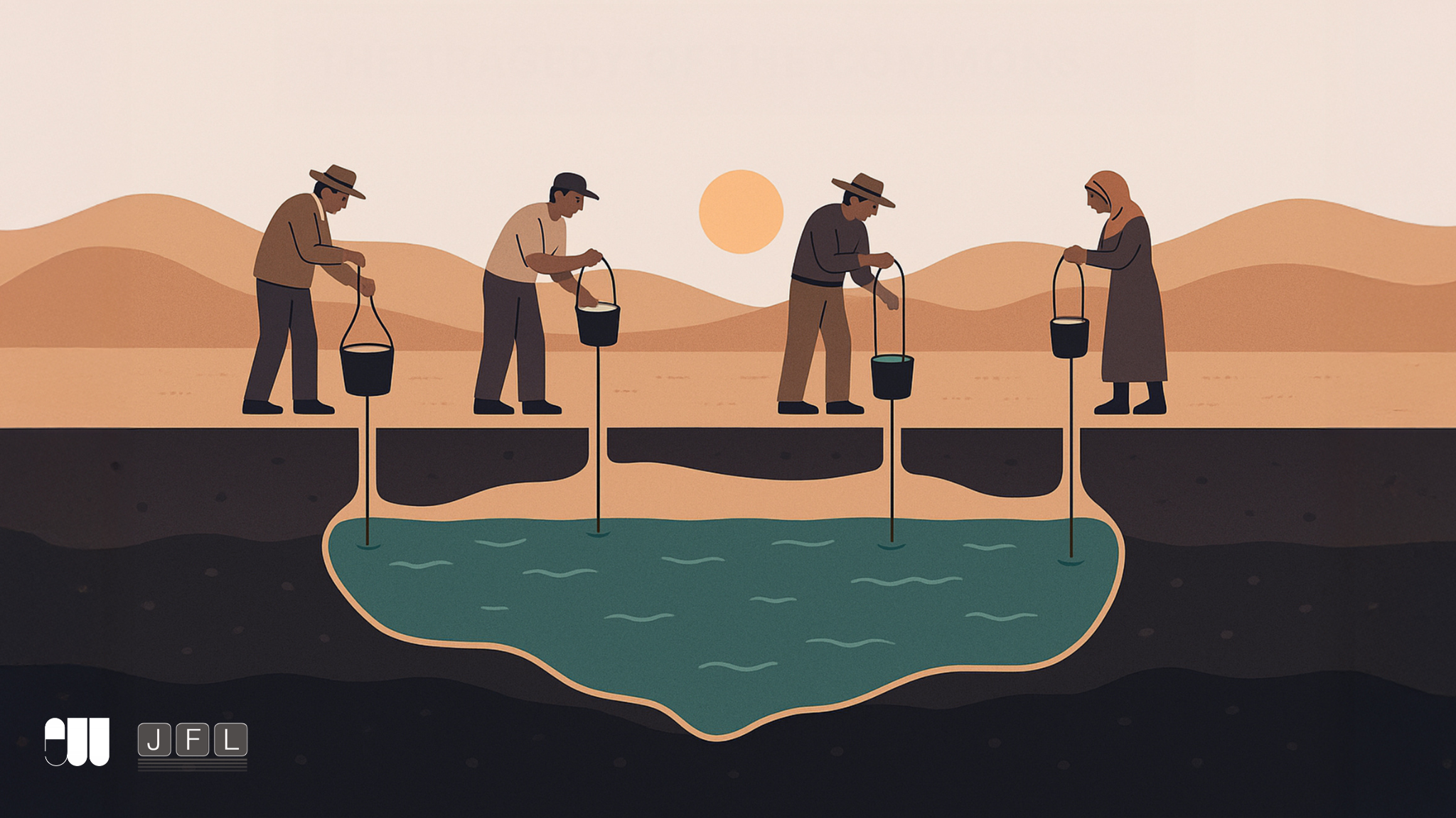
The drying up of wells on the coast, and across Syria, has posed a major challenge for farmers in recent years. The cost of irrigation per hour has surged, reaching 50,000 Syrian pounds, contingent upon waiting for one's turn and the actual availability of water. For a tomato season, for instance, this translates to roughly one million pounds, in addition to the skyrocketing prices of pesticides and seedlings. “By the end of the season, a farmer is lucky if they emerge with a small profit or simply without debt”, Ramadan and several other local farmers confirm.
The water availability crisis is on the verge of being resolved this year. Not far from Ramadan’s field, and after years of drought, the Joubar River - commonly known as the Baniyas River - has begun to flow again. Deep within its valley, springs have burst forth, washing away the remnants of the long dry spell. “This is a sign of great tidings; whenever the river flows, the agricultural season is bountiful”, muses Ali Deeb, a farmer from the nearby village of Ka'abiyat Farish. Yet, he quickly tempers his optimism, repeatedly uttering the word 'if', as if guarding his hopes with a cautionary sense of realism.
“The past season was a triple threat: a meteorological, agricultural, and hydrological drought”, Ahed Ismander, the former Director of the Syrian General Authority of Meteorology, explained to SyriaUntold. “It was the worst due to its nationwide scale. While the long drought period from 1998 to 2010 was frequent in terms of time and location, it wasn't comprehensive. However, the second period, from 2021 to 2025, has been the most severe. This is due to the failure of resource management, agricultural policies, and climate adaptation strategies. Furthermore, the collapse of infrastructure, coupled with rising temperatures, exacerbated the situation. This manifested in the loss of numerous crops and a scarcity of water for both irrigation and drinking, categorizing our country, unusually, as one of the most water-scarce nations in the world”.
Between Renewable Energy and Groundwater Sustainability
09 September 2025
Official data released by the Ministry of Agriculture indicates that rainfall across most Syrian regions has surpassed half of the annual average as of early February 2026. This climatic improvement could potentially shift the landscape of drought that has plagued Syria in recent years: a drought that left a devastating impact on the lives of Syrians and their food security, primarily centered around grain production.
Data from the Food and Agriculture Organization (FAO) reveals that total grain production in Syria plummeted in 2025 to approximately 1.2 - 1.25 million tons, a direct consequence of a severe drought and the lowest rainfall levels recorded in a decade. Official entities (both the Government and the Autonomous Administration) collected only about 673,000 tons of wheat in 2025, a stark contrast to the annual consumption requirement of 2.73 million tons (nearly 3 million tons), according to FAO estimates. Official figures further indicate that the per capita share of wheat available for consumption has collapsed from 205.2 kg/year in 2011 to less than 20 kg in 2024. This decline, coupled with a multi-fold increase in bread prices, signals a profound and critical food gap.
Mohammad Al-Ulabi, a Germany-based economist, asserts that "the core issue in the Syrian context is the near-total absence of baseline data - and this is not limited to agriculture alone. Figures are circulated without any means of verification, and ministries lack transparency. Furthermore, there is no genuine willingness to consult specialists or economists to formulate policies based on rigorous analysis, rather than mere impressions, rumors, and speculation”.
Other industrial-linked crops, primarily cotton, fared no better. Mohammad Maari, Director of the Cotton Bureau at the Ministry of Agriculture, stated in a press interview that the current state of cotton cultivation is “substandard”. He explained that while the 2025 agricultural plan targeted 40,000 hectares, the actual cultivated area did not exceed 25,000 hectares nationwide. Prior to 2011, cotton accounted for approximately 30% of total Syrian agricultural exports and was the third-largest source of foreign currency after oil and wheat, providing over 5.2 million jobs.
Furthermore, with barley production plummeting to near-zero levels (only 26,600 tons in 2025), the crisis has expanded to include fodder and livestock. This threatens a series of price hikes in meat and dairy, transforming the grain shortage into a comprehensive food crisis affecting the entire consumer basket beyond just bread. Daily bread consumption has become a genuine financial burden; an average family of five requires one bundle of 14 loaves daily, costing roughly $0.50. This totals $15 monthly—a significant portion of a government employee’s salary, which averages around $120.
The situation was no better outside the agricultural sector. The drought has severely compromised Syria’s water security, reaching terrifying levels. For the first time, the Orontes River (Al-Asi) was seen running dry. Similarly, the Ain al-Fijah spring, which serves as the primary water source for the capital, Damascus, recorded a frightening drop in its flow—a decline in water levels not witnessed since the late 1950s.
In interpreting the recent rainfall patterns, a study from Northeastern University in the United States explains that what we are experiencing is a manifestation of "Climate Whiplash". This phenomenon is characterized by prolonged droughts followed by wildfires, then short bursts of intense rainfall that trigger floods, only to be succeeded by even more severe wildfires the following year. Furthermore, the study notes that groundwater reserves require three to five consecutive rainy seasons to fully recover, meaning that the region remains firmly in the danger zone.
This situation is intrinsically linked to the fact that Syria is currently ranked among the world’s most climatically vulnerable nations, with an extremely low adaptive capacity. According to the United Nations Environment Programme’s GEO-7 report, published on 9 December 2025 - the world’s most comprehensive scientific environmental assessment - Syria has faced dwindling rainfall and recurring droughts. These factors have led to the deterioration of agriculture and food security, the destruction of natural habitats, and the extinction of several species, such as the Northern Bald Ibis. The report warns that agricultural production losses could skyrocket to as much as 65%.
Abandonment of farming
Nature and environmental shifts were not the sole drivers of Syria's extreme drought. Similarly, recent rainfall cannot be said to have alleviated the cumulative drought so rapidly; drought is a cumulative phenomenon whose effects ripple over years into the core of the economy, agriculture, and society (though improved rainfall will undoubtedly help mitigate it). This analysis aligns with Al-Ulabi’s perspective, which argues that "official discourse reduces the crisis to climate factors as a convenient excuse, whereas it is essentially a crisis of policy. Economically, this conflates an uncontrollable external variable (rain) with the tools of public policy that can be controlled”.
This disconnect between "weather variables" and "policy tools" was manifested in the state’s shrinking role, shifting from a supporter of production to a mere importer from abroad through a series of decisions that impoverished farmers. Chief among these was the near-total abandonment of agricultural subsidies. Just one month before the regime's fall, subsidies for agricultural diesel were slashed, and prices were hiked by 150%, while the distribution of fuel cards was suspended in several governorates. This was followed by the termination of seed subsidies; after the regime's collapse, the price of a single ton of sieved and sterilized wheat seed reached $500.
Mamdouh Ibrahim, a tobacco farmer from Baniyas, points to the cessation of seed distribution for nurseries, forcing farmers to rely on extracting seeds themselves. Furthermore, essential fertilizers must now be purchased on the black market at exorbitant prices, despite the recent resumption of operations at the Homs Fertilizer Plant.
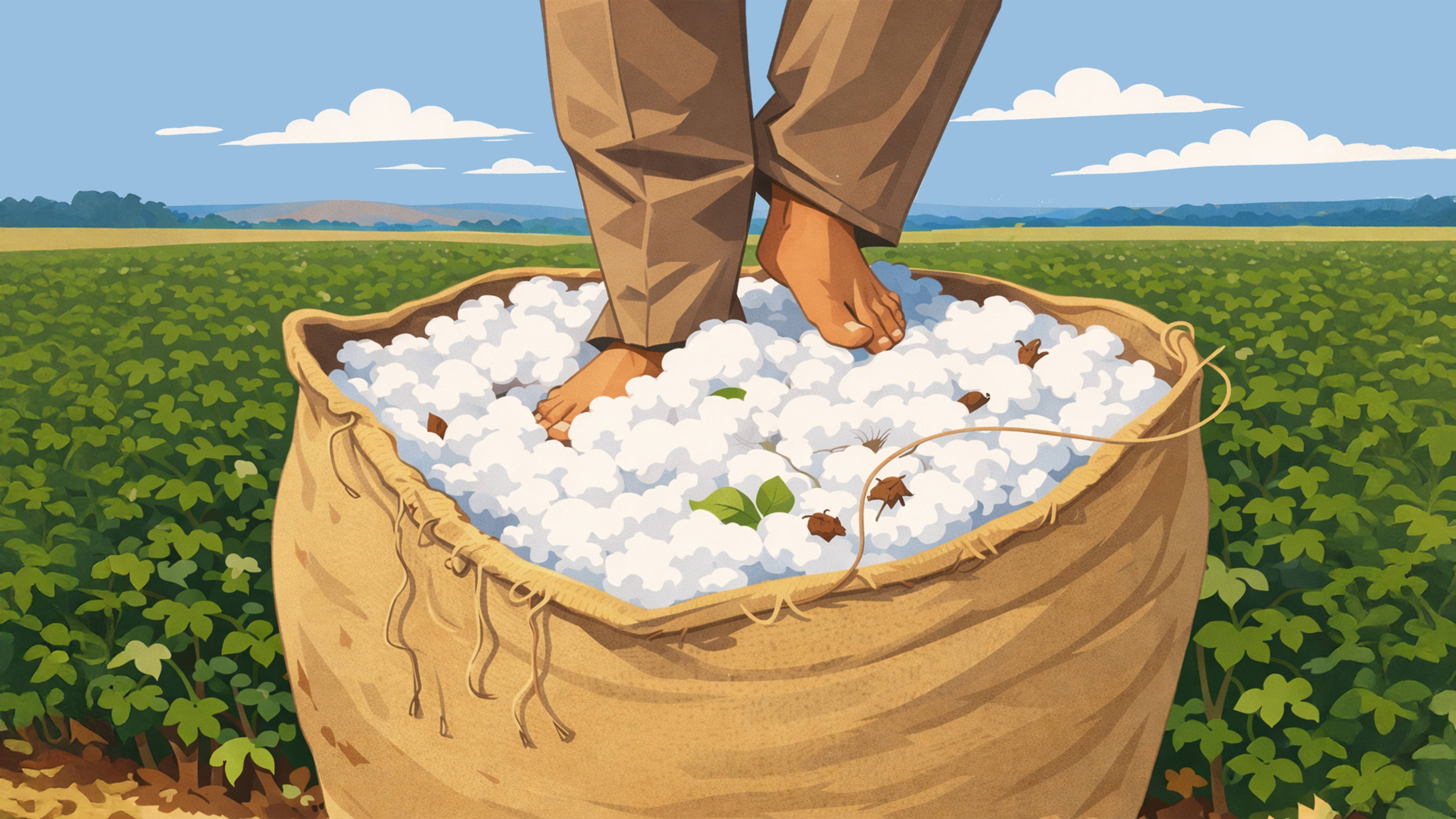
This precarious situation is forcing farmers to either abandon their lands or take on loans with crushing interest rates, transforming the farmer from a producer into a debtor. In the Syrian Jazeera region, cotton cultivation has plummeted from 52,000 hectares in 2011 to less than 7,000 hectares in the 2025 season. According to Fayez Moussa, a farmer from the Rmelan countryside in Al-Hasakah who stopped planting cotton this year, the reasons are clear. "The exorbitant costs of fuel, seeds, labor, and even shipping bags. In the end, when you deliver the crop, you don’t receive your full payment. It is a losing venture, and I will not repeat it”.
Will the cotton season return?
13 February 2026
The personal decision made by Fayez and others is precisely a "rational choice" within a shattered economic context, as analyzed by economist Al-Ulabi. A farmer enters the season already suffering from a liquidity crunch, facing soaring input prices, unstable energy supplies, and unpredictable pricing for his final product. In such an environment - even with improved rainfall - “the rational decision becomes to either downsize cultivated areas or exit the agricultural sector entirely”.
The marketing infrastructure itself poses a major crisis; this reality does not merely benefit local merchants but paves the way for broader monopolies in import and distribution. The lack of transparency and the collapse of local production have fostered a fertile environment for specific companies to dominate supply chains. A controversial case is "Iktifaa", a company specializing in fruit and grain production and agricultural research, managed by Basil Suwaidan (known as Abu Hamza Qasioun), the former Assistant Minister of Agriculture and former head of the Illicit Gains Committee. This overlap between official positions and commercial interests fundamentally erodes farmer confidence in any institutional reform promises.
In areas that witnessed heavy military operations, such as the Idlib countryside, there are "additional complications, including the destruction of irrigation canals and rainwater harvesting systems, such as surface ponds contaminated with war remnants", according to Yasser Douba, an agricultural engineer from Jisr al-Shughur. Douba also points to the potential presence of landmines in several agricultural plots. This occurs alongside the collapse of agricultural extension networks and acute water scarcity, all of which “severely diminish farmers' incentives to return to their lands”.
Regarding the link between rainwater and agriculture, Engineer Yasser observes a “complete absence of a national plan that correlates available water volumes with licensed cultivation areas; agricultural licenses are currently granted independently of hydrological studies". Today, there is a growing trend toward drilling new artesian wells in the Idlib countryside. Meanwhile, in the coastal regions, the shift toward cultivating tropical fruits - which are water-intensive crops - has led to the depletion of wells due to excessive water consumption.
In this regard, economist Al-Ulabi notes that “Syria’s struggle with water scarcity did not begin solely with modern climate shifts; this geography has faced this challenge for millennia, and the regulation of water and food was the very foundation upon which successive states were built”. This perspective adds a tragic dimension to the current management of this file. Syria remained food self-sufficient until 2011; historically, the agricultural sector contributed one-third of the state budget and employed millions of people - including technicians, traders, and manufacturers - all linked through various production chains.
Breaking free from the vicious cycles in this country requires, from a purely economic standpoint, a fundamental shift. As economist Al-Ulabi asserts, “Any recommendations for a sector as sensitive as agriculture and food security must be built upon clear quantitative data: the actual areas under cultivation, the cost of inputs and energy, per-hectare productivity, inventory levels, financing and supply capacity, and the risk margins borne by the farmer”.
Syria’s forests are vanishing
29 April 2024
Accordingly, he suggests that “while discussing policies in broad terms is possible, the operational details must be built upon functional feedback regarding agriculture, water resources, and energy. This bitter diagnosis raises a central question: why do official entities refuse to disclose their actual problems and data? No party can claim to possess a ready-made solution, for public policy here is being formulated in an information vacuum - a reality that is, in itself, a core component of the crisis”. Al-Ulabi’s economic analysis indicates that any genuine effort toward recovery must be grounded in three interconnected and fundamental transformations.
First, by replacing failed subsidies with a new social contract. It is no longer viable to rely on the haphazard subsidization of fuel or seeds, which tends to dissipate within intermediary networks. Instead, this must be transformed into a transparent contract between the state and the farmer. This would involve rapid seasonal financing and a "smart" input package—comprising climate-resilient seeds and seasonal fuel—in exchange for the farmer's commitment to specific water conservation standards and the cultivation of strategic crops.
Second, water as the governing constraint of agriculture. The narrative of water scarcity in Baniyas, Homs, and Idlib can no longer withstand further chaos. Any reform must begin by mandating a direct link between the decision of "what to plant" and the assessment of "what water resources are available". This involves halting licenses for water-intensive crops in arid basins and conditioning subsidies on the transition to drip irrigation systems.
Third, transparency as the primary defense against corruption and waste. This requires building an open-data system that publishes actual cultivated areas, production costs, inventory levels, and import contracts. This ensures that public policies are evidence-based rather than arbitrary.
Ultimately, improved rainfall may grant a temporary reprieve, but it does not offer a solution. Breaking free from this cycle requires a fundamental shift in the governance model itself: moving away from an authoritarian framework that bets on nature, places the full burden of risk on the producer, and fuels corruption within information vacuums, toward a model built on transparency and rational planning. Rain provides water, but only a rational system can transform a raindrop into a seed of security.