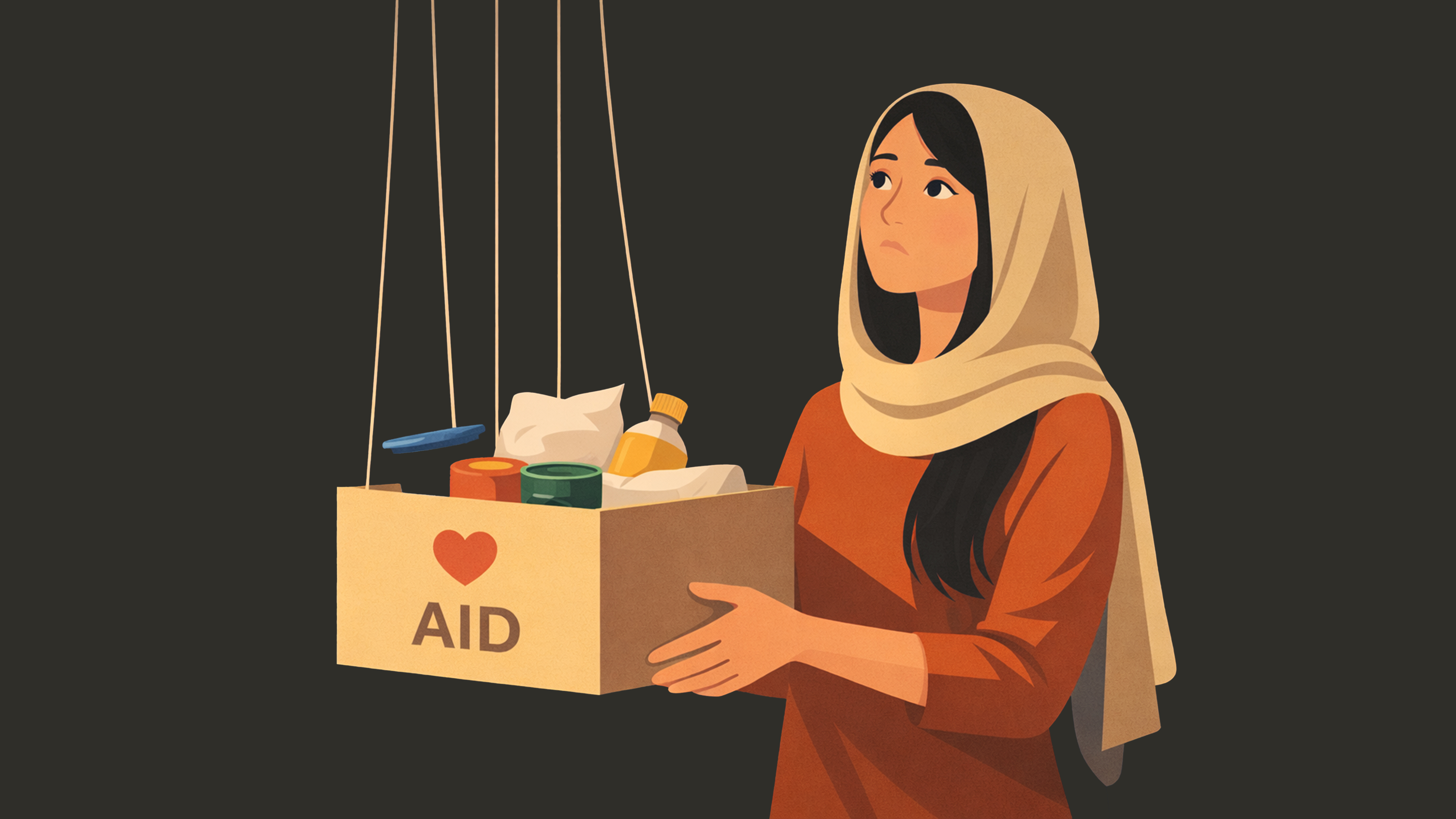

The media spotlight on the case of Batoul Alloush opened the floodgates for debate over Syrian women's freedom to choose their religious beliefs and lifestyles. A closer look at the grim reality on the ground reveals that for most women, engaging in such philosophical debates, is an inaccessible luxury. Broadly speaking, women remain systematically barred from exercising personal autonomy, as any semblance of independence is swiftly crushed, unless their choices align seamlessly with the rigid expectations of their families and surrounding communities.
Prior to the Syrian conflict, a young woman living independently was virtually unprecedented, save for rare instances of relocating to another governorate for employment. Defying familial authority by choosing a partner against their wishes carried severe repercussions, ranging from total ostracization to honor killings. Furthermore, women were routinely subjected to confinement, physical battery, and domestic abuse by fathers, mothers, brothers, or husbands whenever they dared to stray from their rigidly prescribed social roles.
Although the crucible of war - marked by mass displacement, forced exile, and the tragic fracturing of families - fragmented some of these traditional shackles, women continue to endure severe systemic pressures in areas spared from active combat, a reality that persists even in the post-conflict era. Ironically, certain social constraints have intensified following the collapse of the former regime, forcing a profound and unsettling question to the fore: Are we genuinely advocating for women’s bodily and personal autonomy? Or are we merely weaponizing social values to serve opportunistic political agendas?
Syria- Germany, and the absenteeism from home
“Samar (a pseudonym) reached out to me, pleading to stay at my place until she could secure a passport to flee the country”, recalls Rima, a 40-year-old activist and journalist who also operates under an assumed name. “A mutual friend in Germany had asked me to provide her with temporary shelter. Her family had forcibly brought her back to Syria last year, but she was desperate to return to Germany. The primary motivation behind this Damascus-born family's repatriation was to 'protect' their daughters from what they perceived as excessive Western freedoms and state intervention. Samar was the lightning rod for their anxiety, simply because she loved a young man whom they vehemently refused to let her marry”.
Rima recalls the intense fear that gripped her when asked to shelter a runaway girl. She is a feminist and she supports women in making their own choices with the utmost freedom. But she is also a former detainee. During her various periods in prison, she had witnessed firsthand the detention of young women who had fled their families or husbands. Their sole "crime" was "absenteeism from the home" - a charge sufficient to have them arrested and forcibly handed back to the complainant, whether a father, brother, or husband. Back then, Rima and her fellow cellmates used to mock the absurdity behind women's imprisonment. However, knowing that they are subject to arrest-and-summon warrants simply for leaving the family home, she consulted a lawyer about the legal repercussions of harboring a runaway girl. The lawyer confirmed her worst fears: she could face charges of human trafficking.
Despite the risks, Rima chose to support the runaway girl in freely determining her own fate. She hosted Samar, employing strict precautions, most of which she had mastered during her days evading the former regime’s intelligence services: utilizing a new phone and SIM card, minimizing contact with her surroundings, and fast-tracking the passport issuance before the family could take legal action. Within days, however, Samar was forced to abandon the idea of a legal border crossing. She fled to Lebanon via smuggling routes because her family had filed a missing person's report, making her liable to arrest at any Ministry of Interior checkpoint. In Lebanon, a specialized protection organization will assist her in traveling to Germany; its activists prefer not to speak publicly about their work to ensure the safety of both current and future beneficiaries.
Samar’s story is not the only one emerging in recent times.
Nada’s (a pseudonym) family brought her back to Syria along with her brother before she turned 18. Her family, originally from the eastern region, had decided to marry her off to a relative. Nada was kept virtually imprisoned in the family home, beaten by her brother, and barred from stepping outside for more than ten minutes. She was also forced to wear the hijab and strictly long dresses and skirts. Upon reaching the legal age, Nada contacted the aforementioned organization to preserve her German residency and return, as residency is forfeited after six months of absence from the country. Nada fled the family home and stayed with an old friend for two weeks until she could secure the funds needed for a passport. Upon arriving at the Immigration and Passports center, authorities detained her and forcibly handed her back to her brother, who subjected her to further insults, verbal abuse and beatings, awaiting her father's arrival from Germany to 'deal with her'. In her final WhatsApp message to the organization, Nada wrote: 'Do not contact me, I will delete the messages. Just try to stop my father from coming'.
Bound by custom: the forced return
Locally, there are very few avenues available to protect women, particularly those fleeing domestic violence. Consequently, Samar and Nada’s high-risk attempts to escape seem like a distant dream for many others. According to human rights lawyer Hussein Issa “Legally, nothing prevents young women over the age of 18 from living independently away from their families. However, if a woman leaves the family home and her parents report her missing, a search-and-locate warrant is issued against her, and she is forcibly returned to her family. Families also report missing males, but when they are located, they are granted the freedom to choose not to return home - unlike females, whose forced return is dictated by social custom”. In reality, as Rima notes: “Young women are arrested, jailed, and interrogated in a manner that implicitly accuses them of moral delinquency, only to be handed back to families who then subject them to a different kind of imprisonment".
The mechanisms employed by security forces - both under the former regime and currently following its collapse - when young women leave the family home without parental consent, do not appear to be grounded in legality. Rather, they are driven by a deeply entrenched system of traditions that views the independence and freedom gained by these women as a direct threat to patriarchal family authority. While these same mechanisms are never applied to males, they mirror a societal anxiety surrounding women's sexuality and their potential relationships with men who are deemed unacceptable by the family due to regional, class, or religious differences. The operational protocols of the judicial police and the public prosecution, which handle missing person reports, effectively shackle many women. These procedures leave them with no avenues to separate from their families unless they have been subjected to severe physical violence - a claim that must be legally proven through a formal complaint and a forensic medical report, after which they are referred to a specialized shelter if they are unable to live independently.
Very few institutions offer shelter to women - such as the 'Trust Helpline' connected to the Good Shepherd Shelter. Women in need though are rarely aware of their existence, and even when they are, they seldom dare to seek them out. Furthermore, even among feminist activists, information regarding the support that can be provided to women fleeing domestic violence from a husband, father, or brother is shared with extreme caution and scarcity.
In the shadow of corruption: women in government sector pay the heaviest price
05 May 2026
How to help young women in need of shelter is a question repeatedly raised within groups of feminist activists and human rights defenders, Rima recalls. The standard response is simply sharing the 'Trust Helpline' number and its social media account: “We do not know exactly what can be offered to those exposed to violence. They must struggle to secure their own livelihoods through personal assistance and navigate complex legal challenges involving husbands who refuse to grant a divorce or pay alimony - all without any legal protection against their own families”. In the suburb of Qudssaya, there is a government-run women's shelter, but with its architecture and barred windows, it resembles a prison. Movement in and out of the facility is strictly restricted out of fear that the residents might face retaliation from their families. This makes it a discarded option for many, particularly those who are not subjected to frequent physical abuse and insults.
Throughout the war years, shelters were opened in schools for displaced men and women fleeing active conflict zones. Conversely, areas that did not experience intense conflict largely remain resistant to supporting women’s choices that fall outside traditional family values, leaving them entirely unprotected should they fail to comply with these norms. In some cases, women may even be expelled from their homes based on the mere suspicion of violating social customs, or over differing religious or political views, finding themselves with no safeguards to protect them from exploitation.
In Wadi Barada, Sabah, a former detainee, shelters several of her fellow cellmates whose families refused to receive them upon their release from prison. “Word reaches some families that their daughters engaged in romantic relationships or collaborated with the former regime's forces during interrogation. Most of these rumors are completely fabricated, yet they are sufficient for families to bar these young women from returning to their villages or joining them in their displacement camps. This leaves women with no choice but to marry anyone who offers, or to rely on mutual solidarity with other former detainees by sharing housing and life”. Many have ended up in Sabah’s spacious, traditional, yet semi-ruined house - often following brief, failed marriages and accompanied by children - waiting for a chance to relocate elsewhere. They remain utterly ostracized by both society and the law, abandoned to an obscured and uncertain fate.
For young women seeking autonomy against their families' wishes, securing a path abroad is almost always the only viable avenue for survival. Remaining within the country leaves them perpetually exposed to the threat of a familial "missing person" report - a legal loophole weaponized by parents that inevitably culminates in the woman being tracked down by authorities and forcibly returned home to face prolonged captivity or forced marriage. This heavy-handed state and social surveillance stands in stark, jarring contrast to the handling of suspected kidnapping cases currently unfolding within Alawite communities. These recent incidents expose a glaring, institutionalized double standard: the state and society will aggressively defend a woman's personal freedom to choose her partner, beliefs, and lifestyle when it aligns with specific communal dynamics, yet penalize and criminalize those exact same choices when made by women from other backgrounds, particularly Sunni women.
The discourse surrounding the past controversy of Mira’s independent marriage, juxtaposed with the recent case of Batoul Alloush, serves as a stark, almost surreal manifestation of this selective outrage. It highlights a system capable of championing women’s liberation on one hand, while simultaneously deploying the full weight of custom and law to crush women making the identical choices on the other.